Truck Bed Dog Box vs Tether: Which Is Safer for Your Dog?
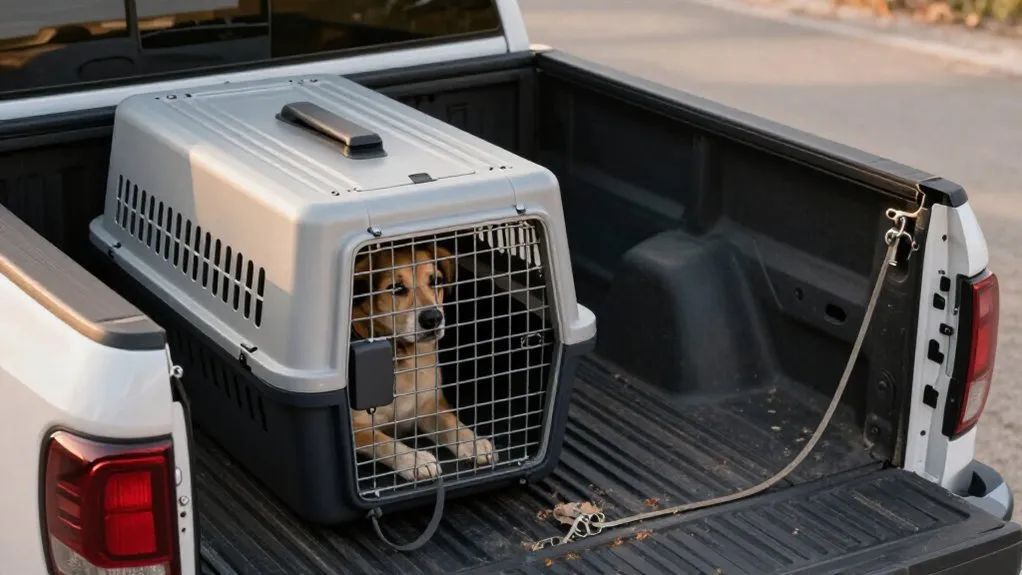
For your dog, choose a properly sized, rigid kennel anchored to manufacturer-rated truck-bed points rather than a tether.
Crash-test evidence shows certified crates can retain structure and prevent ejection, while tethers can’t control crash energy and may cause chest, spinal, or dragging injuries.
Provide ventilation, a secure latch, nonslip padding, and separate cargo restraint.
If a short bed forces tether use, fit a padded body harness, never a collar. It explains fit, costs, and setup.
Crash-Test Impact Comparison Chart
Crash-test evidence favors a properly installed, certified dog box over a truck-bed tether. Center for Pet Safety sled testing found roughly 85% of crates initially failed, while certified models like the GUNNER G1 retained structural integrity, held latches secure, and prevented ejection under frontal-impact conditions. Tethers lack this standardized scrutiny, most rely on tensile specs and anecdotal field reports rather than sled-test data, leaving failure modes like anchor pull-out and harness tearing largely unquantified.
| Factor | Certified Dog Box | Tether System |
|---|---|---|
| Crash testing | Standardized sled protocols | Mostly untested |
| Containment | High (certified models) | Variable, ejection risk |
| Failure mode | Latch/structural (rare, tested) | Breakage, pull-out, dragging |
You should treat certification as model-specific, not industry-wide.
Box Ventilation and Tether Anchors
A dog box only improves safety when it provides continuous airflow without exposing your dog to direct windblast, exhaust, or road debris. Choose a box with protected intake and exhaust vents that maintain airflow during travel, but don’t seal it beneath a topper or camper shell. Check the interior frequently for heat, humidity, panting, weakness, or distress; ventilation alone won’t prevent heat illness in extreme weather.
If you use a tether, connect it to a manufacturer-rated bed anchor or another vehicle-rated structural point, never a thin rail or loose cargo tie-down. Inspect the anchor, fasteners, tether, and harness before every trip for corrosion, cracks, fraying, or looseness. Use a well-fitted body harness, not a collar, to reduce concentrated neck loading. Keep cargo separately secured.
Ejection Risk at Highway Speeds
At highway speeds, sudden braking, a sharp swerve, or a collision can eject an unrestrained dog from an open truck bed in seconds, causing severe or fatal trauma. A tether may reduce complete ejection, but it doesn’t manage crash energy. If your dog reaches the bed edge, the line can tighten abruptly, risking neck, chest, spinal, or dragging injuries; weak anchors may fail under load.
A rigid, appropriately sized dog box that you anchor securely offers a more protective barrier against ejection. It should limit your dog’s internal movement without restricting normal standing and lying. Crash-tested, certified kennels provide the strongest available product-specific evidence, although no enclosure eliminates injury risk. Keep cargo secured separately: shifting objects can strike the box or dog during maneuvers.
Daily Loading and Setup Time
Beyond crash protection, you’ll want to weigh how each option fits into your daily routine. A tether is quicker: clip a properly fitted harness to a verified bed anchor, then check its length before every trip. Yet speed can encourage skipped inspections, and worn hardware, tangles, or unsecured cargo can turn convenience into preventable harm.
- The relief of a repeatable kennel routine can help you notice a loose latch or anchor.
- The worry of rushing shouldn’t replace a hands-on check of each tether connection.
- Your dog’s calm, predictable loading ritual matters; stress and struggling can increase handling errors.
Build in a brief pre-drive checklist: secure cargo, confirm ventilation, inspect restraint points, and never let departure pressure override safety checks.
Short-Bed Clearance and Dog Size
Short-bed trucks, typically under 6.5 feet, leave little margin for a properly sized kennel, so you’ll need to measure both the bed and your dog before choosing a box. Your dog needs enough room to stand, turn, and lie down without crouching; cramped kennels force awkward postures that increase impact risk during sudden stops or turns. If your bed’s too short for a kennel that meets these dimensions, you’re left with poor options: an oversized box that hangs over the tailgate (compromising anchoring and legal clearance) or an undersized one that restricts movement and worsens injury potential.
Measure your dog’s length, height, and weight first, then cross-check against kennel specs—don’t guess. For large breeds in short beds, tethering sometimes becomes the only space-compatible option, but it trades crash protection for fit, so weigh that tradeoff carefully before deciding.
Resale Value and Rust Repairs
A securely anchored kennel can help preserve your truck bed’s resale condition by limiting claw scratches, moisture exposure, and wear to the painted surface, while a tethered dog may move across the bed and accelerate abrasion. A washable liner beneath the kennel further separates damp bedding from metal, reducing the conditions that support corrosion.
- You protect the finish you worked hard to maintain.
- You avoid the sinking feeling of finding bubbling paint.
- You document conscientious care for a future buyer.
Inspect anchor points, liners, and drainage after wet trips. Promptly rinse road salt, dry pooled water, and repair chipped paint; exposed steel can corrode, weakening the bed and lowering buyer confidence. These routine checks also keep your dog’s transport area cleaner and safer each trip.
Tether Chafing and Collar Injuries
Although a short tether may reduce the chance of ejection, it can repeatedly rub the neck, shoulders, or chest as your dog braces, turns, and shifts with the truck’s motion. This friction often causes hair loss, raw skin, or pressure sores at collar contact points. A standard collar concentrates force on the trachea and cervical spine, raising the risk of tracheal injury or neck strain during sudden stops. Choke and prong collars worsen this risk by tightening under tension instead of distributing force evenly.
Choose a wide, padded harness that spreads pressure across the chest and shoulders instead of the throat. Check your dog’s skin and coat daily for chafing, swelling, or tenderness, since these signs indicate developing tissue damage that needs veterinary care.
Cost Per Mile Comparison
A tether costs less upfront, but its lower price doesn’t provide the crash protection or environmental shielding of a properly anchored kennel. You can compare long-term value by dividing each option’s purchase, replacement, and maintenance costs by the miles your dog travels. Include the potential veterinary cost of preventable injuries, since safety failures can quickly outweigh initial savings.
Upfront Equipment Costs
Upfront cost alone can make a tether seem cheaper than a truck-bed dog box, but its lower purchase price doesn’t equal lower safety cost per mile. A basic tether and hardware costs less than a rigid anchored kennel. Yet price should cover the components that reduce risk: a properly sized enclosure, bed anchors, latches, ventilation, weather shielding, and a padded floor. Evidence links truck-bed travel to trauma, while tethers can tangle, choke, or permit dragging after a fall. When you compare quotes, include every safety-critical item rather than only the strap or box.
- A low price can leave your dog exposed when you need protection most.
- Weak anchors can turn a reassuring purchase into a frightening failure.
- A fitted kennel offers confidence before departure.
Long-Term Mileage Value
Over thousands of miles, a securely anchored, appropriately sized kennel can deliver better value than a tether because it addresses ejection, impact, and weather-exposure risks that a strap can’t manage. Although purchase price is higher, you can spread a durable kennel’s cost across every trip and potentially avoid expenses linked to preventable trauma, emergency treatment, or replacement gear.
A tether costs less initially, but its value declines if hardware frays, attachment points fail, or you must add covers, padding, and frequent replacements to reduce exposure.
Calculate cost per mile by dividing total purchase, maintenance, and protective-accessory costs by expected travel miles. A kennel only earns that premium when you anchor it correctly, secure cargo separately, provide ventilation, and inspect it routinely before each trip.
Best Pick by Breed Size
For small breeds, choose secure, appropriately sized containment that limits shifting and protects against ejection. For medium breeds, you’ll need a well-anchored kennel that balances room to reposition with restraint during abrupt stops. For large breeds, select a heavy-duty, securely mounted box sized for their weight and strength rather than relying on a tether.
Small Breeds: Secure Containment
Small dogs need the most secure containment because their light body mass leaves them especially vulnerable to ejection, windblast, loose cargo, and impact inside an open truck bed. For your toy or small-breed dog, choose a rigid, enclosed kennel sized to let them stand, turn, and lie down while limiting dangerous internal movement. Anchor it directly to rated bed points, verify the latch, and secure every item of cargo separately. A tether alone can prevent ejection, but it can also tighten, tangle, or drag your dog after a fall.
- Your dog can’t brace against abrupt stops.
- A tiny neck and chest tolerate concentrated forces poorly.
- One unsecured jump can become a catastrophic injury.
If possible, transport your dog in the cab for greater protection.
Medium Breeds: Balanced Protection
Medium-sized dogs need a securely anchored, appropriately sized rigid kennel that limits dangerous shifting while giving them room to stand, turn, and lie down. For your spaniel, border collie, or similar dog, you’ll substantially reduce the chance of impact inside the enclosure during abrupt braking or turns. Choose a rigid kennel with robust latches and bed-rated tie-down points; crash-tested, certified models offer stronger evidence of collision performance than untested designs.
A tether alone may limit ejection, but it can tangle, choke, or leave your dog vulnerable to dragging and concentrated forces during sudden deceleration. Add a non-slip, padded waterproof liner, secure all cargo separately, and verify airflow. Shield the kennel from sun, rain, road debris, and wind. Check anchors and latches before every trip.
Large Breeds: Heavy-Duty Boxes
Large breeds need heavy-duty, rigid dog boxes that can contain greater body mass and withstand higher forces during abrupt braking, turns, or a collision. For a Great Dane, Mastiff, or other powerful dog, choose a crash-tested rigid kennel sized for standing, turning, and lying down, without enough extra room for dangerous momentum. Anchor it directly to verified bed tie-downs, secure its latches, and keep cargo separate. A tether alone can prevent ejection, but abrupt deceleration may load the neck or chest and can lead to tangling or dragging. Protect the companion who trusts you:
- Keep them from becoming a projectile.
- Give their joints a stable, padded surface.
- Shield them from wind, debris, heat, and fear.
Use ventilation and protection; transport inside cab whenever possible.
Crate Beats Tether, Hands Down
A properly anchored, appropriately sized truck-bed kennel is safer than a tether because it contains your dog without loading crash forces onto the neck or chest. Unlike a tether, it reduces the chance that your dog will jump, fall, become tangled, choke, or be dragged behind the truck. Choose a rigid kennel with secure latches and, preferably, independent crash-test certification.
Anchor it to rated bed points so it cannot slide or tip during hard braking. Size it to let your dog stand, turn, and lie down, but not shift excessively in a collision. Add a nonslip, padded liner, protect ventilation openings from debris, and shield the kennel from sun, rain, and temperature extremes. Secure all cargo separately. Use cab transport whenever possible, if available.
Conclusion
When you weigh crash forces, ejection risk, ventilation, and daily use, a properly sized, securely mounted crash-tested dog box gives your dog far better protection than a tether. Tethers can limit movement, but they don’t reliably prevent impact injury, strangulation, or road ejection. Choose a box with ventilation, drainage, and adequate clearance for your dog’s size. Secure it to rated anchors, inspect hardware regularly, and never transport your dog loose in an open truck bed.