Ford F-150 Dog Setup: Making the Crew Cab Dog-Ready
Make your F-150 Crew Cab dog-ready by measuring the rear bench, 60/40 split, and narrowest door opening before choosing a hammock or crate.
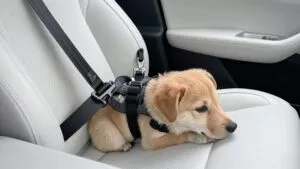
Use a crash-tested harness with a short seat-belt connection, or secure a crate to approved factory anchors; never use headrest-mounted tethers.
Add a waterproof, non-slip liner that leaves buckles clear, towel muddy paws, check window lockouts and under-seat storage clearance, and use a stable ramp if needed.
You’ll find setup checks below.
Crew Cab Rear-Seat Dog Setup
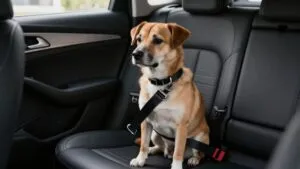
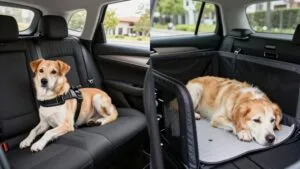
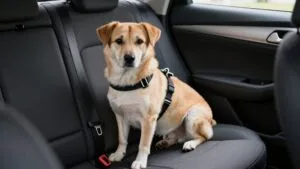
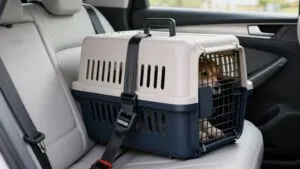
In an F-150 SuperCrew, the rear seat provides the most practical in-cab space for a dog, but you should set it up around secure restraint and clear access. Choose a crash-tested harness that clips to an appropriate rear seat-belt connection, and keep the tether short enough to limit forward travel. Alternatively, secure a travel crate against movement using compatible factory anchors or approved hardware; never rely on loose straps.
Lay a non-slip, waterproof liner beneath your dog’s area and confirm it doesn’t cover belt buckles or interfere with airbags. Keep rear doors unobstructed, check latch access before each drive, and use a foldable step or ramp if your dog can’t safely jump into the cabin. Remove it before driving to prevent movement.
F-150 Crew Cab Hammock Dimensions
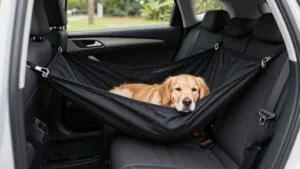
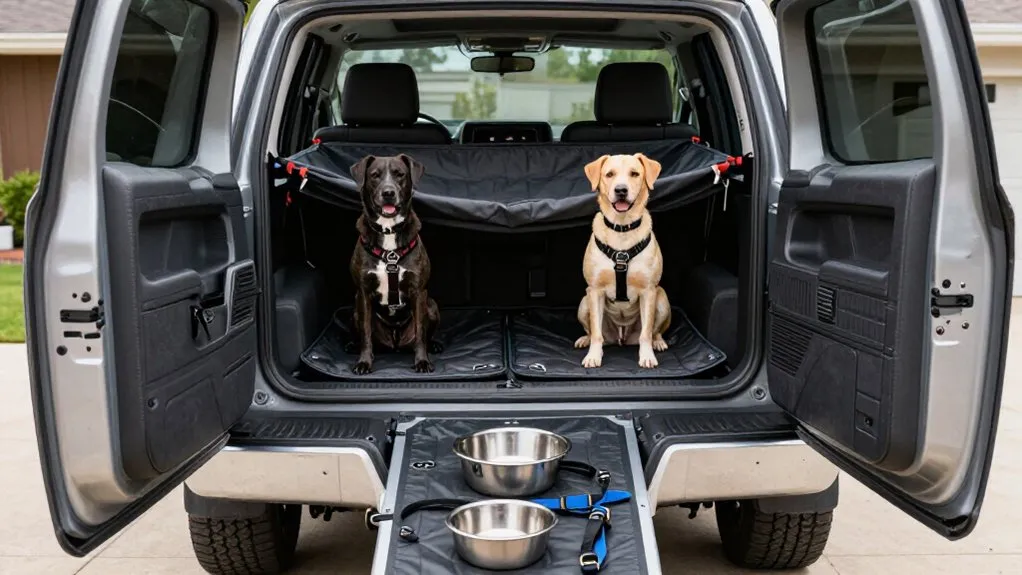
A rear-seat hammock can protect your F-150 SuperCrew’s upholstery while containing dirt and hair, but its fit must preserve access to seat belts, buckles, and rear-door latches. Measure from inner door trim to inner door trim, not exterior width. Most SuperCrew hammocks target 52 to 55 inches wide, but your model year, trim, and seat contours decide the final fit.
| Check | Practical target |
|---|---|
| Width | Measure cabin; compare with 52 to 55 in. covers |
| Length | Span rear cushion to front headrests without tight sag |
| Openings | Align belt slots and buckle access before travel |
Choose adjustable headrest straps and a waterproof, non-slip cover. Keep the hammock edges clear of door seals and latches, then test every buckle with the cover installed. Loose covers slide under braking; retighten straps after loading.
F-150 LATCH Anchor Locations
Before securing a dog restraint or kennel in an F-150, locate the lower LATCH anchors at the rear-seat bight, the gap between the seat cushion and seatback, and the top tether anchors on the rear seatbacks or cab wall, as identified in your owner’s manual.
Ford may mark these points with LATCH symbols, but don’t assume every visible loop is approved for pet gear. Check your model year’s manual, then inspect each anchor for accessible metal and clear strap routing. Use only restraints or kennel straps rated for LATCH use and the stated weight limit. Keep straps straight and snug, then pull firmly in several directions. Don’t connect a tether to a headrest post, cargo hook, or seat frame unless Ford specifically authorizes it in writing.
F-150 Rear Door Opening Width
Measure your F-150’s rear door opening at its narrowest point, then compare it with your crate’s outside dimensions before loading. SuperCab and SuperCrew configurations differ, so confirm door swing clearance and rear-floor space on your specific truck.
Leave enough room for your dog to enter without jumping awkwardly, and secure the crate without blocking doors, seat belts, or airbags.
Measuring Rear Door Width
For an F-150 dog crate setup, check the usable rear door opening, not just the rear-floor dimensions, because the narrowest point determines whether a kennel can enter safely.
Park on level ground, open the rear door, and measure the clear width at its tightest point, usually between trim, weatherstripping, and the seat edge. Measure at floor height and again at the crate’s mid-height; a tapered opening can change the usable path. Record the smaller number.
Then measure your assembled kennel’s widest outside dimension, including handles, hinges, latches, and protective corners. Leave clearance for controlled loading; don’t force a crate past door seals or interior panels. Test-fit an empty crate with a helper, keep fingers clear, and confirm it won’t interfere with the door latch or closing.
Comparing Cab Configurations
Although all F-150 cab styles can carry a dog, the SuperCrew generally gives you the most practical rear-door access and rear-floor room for loading a crate. Regular Cab has no rear seating area or rear door, so it’s least suited to an in-cab dog setup. SuperCab models add rear access, but their smaller rear section and narrower usable entry can make daily handling less convenient.
SuperCrew rear doors provide the clearest route for a dog, especially when you need to keep yourself balanced on the truck’s higher step-in height. Before buying covers, barriers, or restraints, measure the opening on your exact model year and trim. Check both sides with the doors fully open; nearby walls, curbs, or garage clearance can limit access in practice.
Dog Crate Loading Space
Rear-door access only helps if your crate can pass through the opening safely and without forcing it against trim, glass, or seat hardware.
On your F-150, measure the usable opening at its narrowest point, not just the distance between exterior door edges. Check width, crate height, and the protruding lip at the sill with a tape measure. Then compare those numbers with the crate’s largest outside dimension, including handles, latches, feet, and tie-down brackets.
Allow a small margin for a controlled lift; don’t count removable padding or flexible panels as clearance. Test-fit an empty crate first, with a second person supporting its weight. Protect painted sills and interior panels with blankets, then stop if it binds. A tighter crate isn’t safer in transit.
Door Swing Clearance
Door swing clearance determines whether you can load a dog crate without twisting it through a restricted path or striking the F-150’s door, trim, or seat hardware. On your SuperCrew, measure the usable opening with the rear door fully open, then measure again at the angle available in your garage, driveway, or trailhead parking spot. Record the narrowest width between the door edge and the cab opening, not only the crate’s final floor space.
Account for crate handles, protruding latches, protective mats, and cover edges. Keep the door supported in wind, and don’t use the crate to push it farther open; that can damage hinges, check straps, paint, or adjacent vehicles. Choose a crate width and loading orientation that leave a clear hand clearance.
Easy Entry For Dogs
Once your crate clears the opening, make the same rear-door width work for your dog’s daily entry and exit.
Open the F-150’s rear door fully only when you’re parked clear of traffic, and check that its swing won’t contact a curb, post, or another vehicle. For large, senior, or recovering dogs, place a non-slip foldable step or ramp squarely below the door opening. Keep it level, clean, and locked before asking your dog to climb.
Guide with a short leash and let them enter at a controlled pace. Don’t allow jumping from the seat or truck; it can strain joints. Confirm your restraint or crate door doesn’t snag the dog during exit. SuperCrew rear doors provide the most practical access for bigger breeds.
Measure Around the 60/40 Split
Before choosing a crate, measure your F-150’s rear floor width, seatback height, and both rear-door openings with the 60/40 seat split in the position you’ll actually use.
On a SuperCrew, check floor contours, center hump, and under-seat hardware instead of relying on published dimensions. Fold each section, then record usable base rectangle and clearance beside remaining seat. Measure each door at its narrowest point, including trim and seals. Compare numbers with crate’s outside dimensions, not advertised interior size.
Leave room for latches, locked seat sections, and HVAC airflow. Confirm crate won’t cover buckles, child-seat anchors, or airbag-related components. Test-fit a cardboard template before buying. It reveals interference from cupholders, console edges, and contours, helping you select a stable location without forcing crate through door.
Avoid Headrest-Mounted Restraints
Avoid restraints that loop around your F-150’s rear headrests, especially for a dog that pulls, shifts weight, or rides in a crate. In a hard stop or collision, a leash-style tether can load the headrest posts and allow too much forward travel. It may also twist your dog sideways across the rear bench, increasing injury risk and distracting you.
Instead, use a crash-tested harness with a short seat-belt pass-through connection when your dog rides on the seat. Follow the harness maker’s sizing and vehicle-use directions, and clip only to an appropriate belt position. For a crate, secure the crate itself to suitable factory anchors or approved mounting points, keeping straps low and tight. Check that nothing interferes with seat operation, buckles, or airbag areas.
Muddy Labrador After Creek Crossings
After creek crossings, keep your muddy Labrador contained on a waterproof, full-coverage rear-seat cover or removable rubber liner rather than letting wet paws roam the F-150’s cabin. Before loading, towel off the coat, belly, and paws at the rear door, checking between toes for grit, burrs, or cuts.
In a SuperCrew, use a liner contoured to the rear floor wells and seat backs, then secure its straps and anchors so it won’t slide under braking. Keep the dog on a non-slip surface and use its crash-tested harness or secured crate; mud doesn’t justify a loose ride. Store a towel, paw wipes, brush, and first-aid kit in under-seat storage.
At home, remove liner, shake out gravel, rinse it, and dry floor before odors set in.
Rear Window Lockout Checks
Check the F-150’s rear-window controls and child-safety window lockout before every trip with your dog in the back seat. Confirm the lockout disables both rear switches, then test each window from the driver’s panel. A curious paw or nose can’t lower glass when the system works properly. Keep windows fully closed while driving; airflow should come from the HVAC system, not from an open window.
- Verify the lockout indicator is active on the driver’s door before you leave driveway each trip.
- Watch your dog settle behind closed glass with no moving window edge within reach safely.
- Test rear switches once, listening for silence instead of the familiar motor whir briefly.
- Use climate controls to keep the cabin comfortable without creating an easy escape opening.
F-150 Under-Seat Storage Clearance
Before loading dog gear, measure the clearance beneath your F-150’s rear seat in its normal locked position. Check both height and usable width because storage tubs, trim, seat brackets, and wiring can reduce space. Your SuperCrew may offer more rear room, but under-seat layouts still vary by model year and trim.
- A low, lidded bin holding towels, a leash, and spill-proof bowl.
- A rubber mat stopping muddy boots and containers from sliding.
- A crate anchor strap routed clear of seat hinges and latch hardware.
- A soft first-aid pouch tucked where it won’t interfere with seat movement.
Never force the seat down over gear. Confirm it latches fully, inspect belt anchors, and keep items away from airbag components and rear HVAC vents. Use a flashlight.
Conclusion
Your F-150 Crew Cab can give your dog a secure, washable travel space when you measure before buying gear. Choose a hammock sized around the 60/40 split, confirm LATCH anchors and door clearance, and keep under-seat storage accessible. Skip headrest-mounted restraints; use a properly rated harness connection instead.
After muddy creek trips, clean the seat area and check rear-window lockouts. Test every setup with your dog before driving, then recheck straps, anchors, and access regularly.