Are Dog Seat Belts Safe? The Hidden Risk of Tethering to a Collar
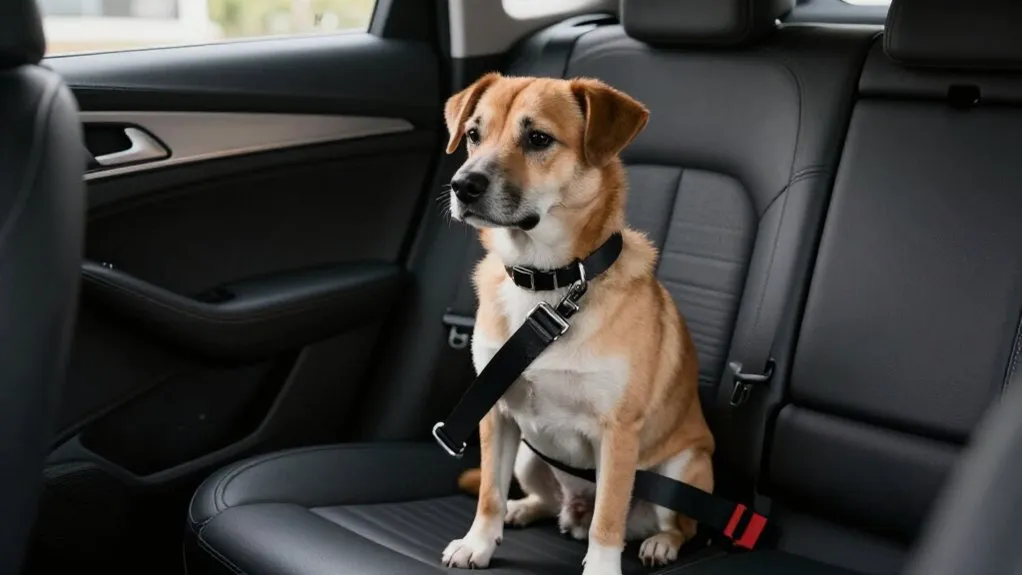
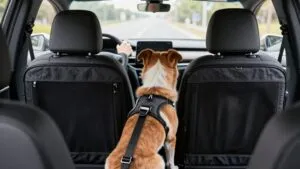
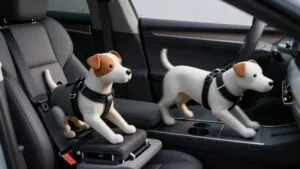
Dog seat belts can improve safety when you use a properly fitted, independently crash-tested full-body harness and the manufacturer-approved vehicle attachment.
Don’t clip a travel tether to your dog’s collar: during an emergency stop, the tether can concentrate force on the trachea, blood vessels, and cervical spine, causing serious injury or strangulation.
Secure your dog in rear area, inspect hardware, stitching, and replace damaged equipment.
The following guidance explains proper fit, tether choices, and limits.
Crash-Tested Harnesses Are Safer
Crash-tested harnesses are safer because they spread crash forces across the dog’s chest and shoulders instead of concentrating them on the neck. You should choose a full-body model evaluated in independent dynamic testing; don’t select one merely labeled “seat-belt compatible.”
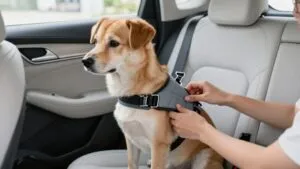
Controlled dummy tests indicate that performance varies substantially among products, so verify the tested weight range, vehicle attachment method, and stated impact conditions. Fit the harness snugly according to its instructions; loose webbing can increase excursion and allow contact with seats, doors, or windows.
Connect it to a short tether or approved vehicle anchor, then place your dog in the rear seat or secured cargo area. Inspect buckles, stitching, webbing, and connectors before travel. Replace the system after a collision, damage, or manufacturer-designated service interval.
Collar Tethers Can Injure Necks
A collar tether can turn a sudden stop or collision into a concentrated neck injury because it directs restraint force through a narrow band of tissue rather than across the torso. Instead of spreading load over your dog’s chest and shoulders, the collar compresses skin, soft tissue, the trachea, larynx, blood vessels, and cervical spine. A pull can twist or hyperextend the neck, increasing the risk of airway injury, bruising, nerve damage, or spinal trauma.
If the collar catches on a seat frame, latch, or other fixture, continued tension may cause strangulation. Evidence on travel-specific injury rates remains limited, but veterinary guidance and reported collar-related injuries support a precaution: don’t connect a vehicle tether to your dog’s collar. Use a properly fitted full-body harness.
At 30-MPH Emergency Stops
At 30 mph, an emergency stop can drive your dog’s body forward while a collar tether abruptly arrests the neck, concentrating deceleration forces on the trachea and cervical spine. The body may continue moving until the tether reaches full extension, so the load focuses where the collar contacts soft tissue. You can’t infer safety from ordinary braking; crash outcomes depend on dog mass, tether slack, hardware integrity, and stopping distance.
| Event | What occurs | Clinical concern |
|---|---|---|
| Forward motion | Body keeps traveling | Neck loading |
| Tether lock | Collar stops head | Airway compression |
| Hardware failure | Body can strike cabin | Blunt trauma |
Choose a fitted, full-body harness with independently documented crash performance, inspect it before travel, and seek prompt veterinary assessment after any collision, even when your dog seems normal immediately afterward.
Zipline Versus Buckle Tethers
Zipline tethers allow more side-to-side movement, while buckle tethers typically limit your dog’s forward range more directly. Either design can concentrate crash forces dangerously if you clip it to a collar.
Attach the tether to a properly fitted, full-body crash-rated harness to distribute load across the chest and shoulders.
Movement Range Differences
Buckle tethers usually keep a dog within a short, fixed radius, while zipline-style restraints let it move laterally along a rear-seat span. With a buckle-mounted tether, you can set a predictable boundary that limits access to the front seats, open windows, and door hardware. A zipline gives your dog more room to reposition, sit, or lie down, but its usable range changes with the attachment point and line length.
That mobility can improve comfort on longer trips, yet it’ll require careful fitting and routing. If the line sags or crosses behind the dog, it may snag on seat components or allow unwanted climbing and turning. Choose a configuration that keeps your dog in the rear seating area without restricting normal posture or breathing.
Collision Force Distribution
During a collision, both zipline and buckle tethers must transfer the dog’s forward momentum through the tether and into the vehicle anchor, but their geometry changes where that load concentrates. With a buckle tether, the load path runs from a fixed point to your dog, so deceleration can pull the body forward and sideways at offset angles.
A zipline slides along a belt segment before becoming taut, producing changing angles and delayed loading. It may broaden motion across the seat, but neither design lowers peak force. Added slack increases stopping distance only if your dog avoids contact. Testing is limited and varies by dummy mass, impact speed, and anchor configuration. You shouldn’t assume a zipline is safer; consider its hardware, path, and test data.
Proper Harness Attachment
Regardless of whether you use a zipline or buckle tether, attach it only to a properly fitted full-body harness, not to a collar, leash ring, or neck attachment.
Both designs limit movement, but neither makes a poor fit safe. A zipline lets your dog reposition along the rear seating area; select a range that prevents access to front seats, windows, or door hardware. A buckle tether fixes position and may reduce side-to-side travel during a crash. In either system, clip tether to the harness’s rear attachment point, as directed.
Confirm chest and shoulder straps lie flat, adjust them snugly without restricting breathing, and check buckles, stitching, and hardware before departure. Prefer crash-tested harness-and-tether systems; testing standards and performance vary. Replace equipment after collision, deformation, or webbing damage.
Dog Size and Chest Shape
Your dog’s size affects restraint loading, and small dogs can experience high forces when a tether stops sudden movement. If your dog has a deep chest, choose a harness that supports the sternum and distributes load across the chest and shoulders.
Check fit across all body types, since a loose or poorly shaped harness can shift force toward the neck.
Small Dogs, Higher Forces
Small dogs aren’t automatically safer in a crash: rapid deceleration can still generate forces that overwhelm delicate neck, airway, and spinal structures, particularly when a tether clips to a collar.
Your dog’s lower body mass doesn’t eliminate momentum; speed, stopping distance, and tether slack determine the load delivered at arrest. Because small dogs have narrower necks, lighter cervical musculature, and smaller airways, a collar concentrates that load over limited tissue. The head may continue moving after the torso stops, increasing traction and bending forces at the trachea and cervical spine. Don’t assume a lightweight dog can safely use a lightweight restraint. Choose equipment with size-specific, independent crash-test evidence, and follow its stated weight range and attachment instructions for the restraint you choose for travel.
Deep Chests Need Support
Chest shape changes how a restraint manages crash forces. If your dog has a deep, narrow thorax, such as a sighthound-type build, a neck attachment is especially hazardous: deceleration can pull the body forward while concentrating load at the cervical structures. A full-body harness should support the sternum and distribute force over the chest and shoulders, rather than allowing the torso to load against the throat.
Choose a restraint with crash-test evidence for a dog of comparable body mass and confirm that its load-bearing panels remain positioned over the bony chest during normal movement. Avoid designs whose tether connection transfers force upward toward the neck. Published pet-injury data prevent breed-specific risk estimates, but crash-testing principles favor broad, supported load paths over focal cervical loading.
Fit Across Body Types
Because restraint geometry must match the dog’s body, select a harness by measured girth, body mass, and chest shape, not label size alone. Broad-chested, barrel-shaped, narrow, or long-bodied dogs can’t safely share the adjustment pattern. Position the chest panel over the sternum and rib cage; it mustn’t ride onto the throat, soft abdomen, or shoulder joints.
You should follow the manufacturer’s weight and girth limits, then test fit while your dog stands, sits, and lies down. Two fingers should pass beneath straps, without allowing rotation or escape. Small dogs need proportionate hardware and short tether travel; large dogs need load-rated webbing and anchors. Recheck after movement, weight change, or coat trimming. A crash-rated harness that fits poorly may shift force toward the neck. Avoid collar anchors.
Securing Dogs in SUVs
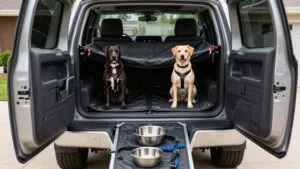
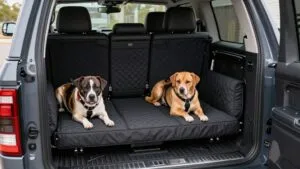
SUVs give dogs more room to move, but that space can increase injury risk unless you secure them to a vehicle-rated restraint. Keep your dog in the rear seating area or cargo space, following the restraint maker’s instructions. Attach a short tether only to a fitted full-body harness, never a collar; chest-and-shoulder load distribution reduces neck loading during abrupt braking. In cargo areas, use a vehicle-anchored, crash-rated crate or barrier-compatible system. Prevent access to front seats, windows, and interior hardware. Check anchors, webbing, buckles, and harness fit before every trip.
| SUV location | Preferred system | Key check |
|---|---|---|
| Rear seat | Harness and short tether | Limit forward reach |
| Cargo area | Anchored rated crate | Secure all anchor points |
Replace damaged equipment; acclimate your dog so it remains settled.
No Restraint Eliminates Crash Injury
Even a crash-tested harness, crate, or carrier can’t eliminate injury in a collision, because crash forces vary with speed, impact direction, vehicle design, restraint fit, and the dog’s size and position. These products can reduce motion and ejection risk, but they can’t control every injury mechanism.
A restraint may limit travel yet still allow contact with a seat, door, console, or barrier. It may also transmit substantial loads during abrupt deceleration. Test results reflect specific dummy sizes, configurations, and impact conditions; they don’t predict every vehicle or crash.
Treat any restraint as risk reduction, not protection from harm. Choose independently tested equipment, fit and secure it exactly as directed, inspect it regularly, and seek veterinary assessment after any collision, even when your dog seems normal.
Using Leashes as Tethers
Leashes are not appropriate vehicle tethers: their clips, webbing, handles, and attachment points generally aren’t designed or independently rated for crash loads. In a sudden stop, a leash may stretch, break, release, or allow excessive forward movement. If you clip it to a collar, force concentrates on your dog’s neck rather than the chest and shoulders.
- A handle can snag on seat hardware or door fixtures.
- A swivel clip may bind or disengage under unusual loading.
- A long leash can let your dog strike the seat or console.
Use a purpose-built, short vehicle tether only with a properly fitted full-body harness. Choose products with independent crash-test results or stated load testing, and secure your dog in the rear seating area. Don’t substitute a walking leash, including retractable designs, for restraint equipment.
Inspect Tether Stitching Monthly
Monthly inspection of your dog’s vehicle tether helps identify weakened stitching before a sudden stop loads the restraint. Check every load-bearing seam in bright light, then flex the webbing and compare sides. Loose threads, pulled bar tacks, discoloration, flattening, or separated layers indicate reduced margin; don’t assume intact hardware compensates for damaged stitching. Evidence from crash testing supports inspecting the complete restraint, because a failed tether can permit secondary impact and may redirect load toward the neck if you use a collar.
| Sign | Risk | Action |
|---|---|---|
| Fray | Failure | Replace |
| Loose tack | Separation | Retire |
| Abrasion | Weakening | Replace |
Remove tether from service after any collision or when manufacturer replacement guidance requires it. Don’t sew, knot, or tape a load-bearing repair. Attach only to a fitted, crash-rated harness.
Conclusion
Choose a crash-tested harness and tether that match your dog’s size, chest shape, and vehicle setup. Don’t clip a restraint to a collar, because sudden deceleration can concentrate force on the neck.
In SUVs, anchor the system to approved cargo points and limit travel distance without creating entanglement. Check stitching, hardware, and fit monthly. A restraint reduces movement and some injury risks, but it can’t prevent all crash injuries. Replace damaged components promptly when needed.