How to Keep Your Car From Smelling Like Dog: A Simple Weekly Routine
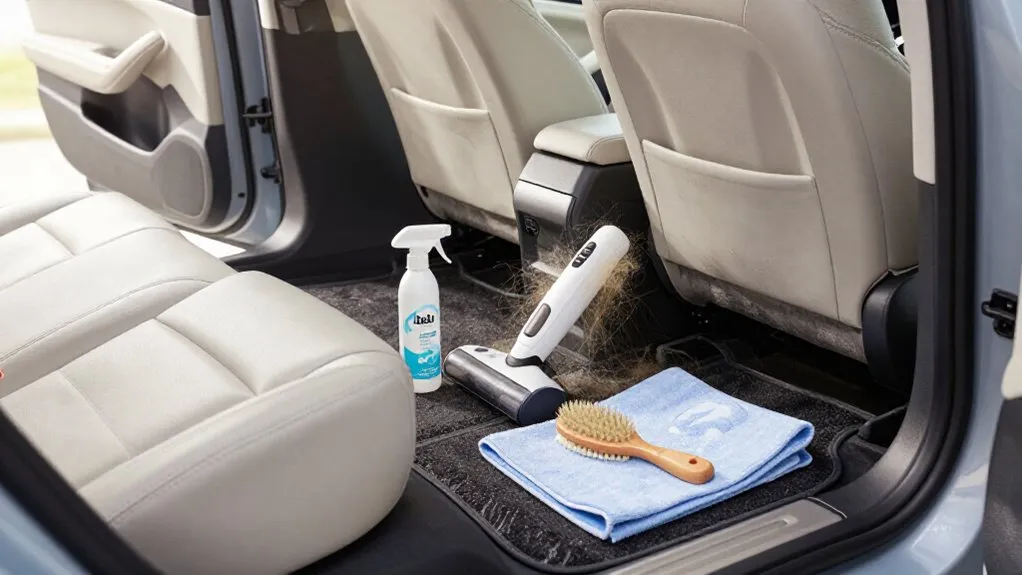
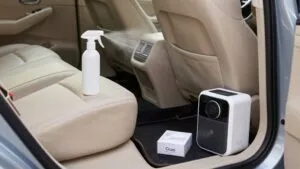
Each week, brush your dog outside, wipe paws, and use washable covers or a crate liner. Vacuum seats, seams, mats, buckles, and cargo areas before wiping, then treat drool, mud, and accidents with a vehicle-safe enzyme cleaner and microfiber towels.
On rainy days, towel-dry coats and remove damp gear. Wash and fully dry the liner Sunday, inspect the cabin filter, and dry carpets overnight. A few overlooked moisture traps can explain odors that keep returning.
Dog Odor Control for Commuters
For commuters, dog-odor control starts before your pet gets in the car. Brush your dog outdoors to remove loose hair and dander, then wipe paws and the undercoat with pet-safe grooming wipes. Towel-dry a wet coat thoroughly; moisture turns pet residue into the damp, musty cabin smell. Add a pet-safe conditioning spray if it helps control shedding, but don’t use heavily fragranced products that merely mask odors.
Line your dog’s seating zone with a washable seat cover, hammock, crate liner, or dedicated blanket. Use a tether or harness to limit roaming and keep contamination contained. Place a rubber travel mat beneath water bowls, and carry a lined trash container for treats and used wipes. After wet rides, run the fan to dry the cabin.
Enzyme Cleaner and Microfiber Towels
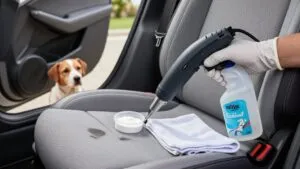
Enzyme cleaner targets the organic residue behind dog odors instead of covering it with fragrance. Keep a vehicle-safe enzymatic formula and clean microfiber towels in your weekly kit. After removing solids, blot liquid before treating the affected fabric, carpet, seam, mat, or cargo liner.
- Patch-test hidden fabric for colorfastness.
- Saturate the spot as the label directs.
- Let enzymes dwell for the stated time.
- Gently brush embedded residue only if permitted.
- Blot excess with a fresh microfiber towel.
Microfiber lifts moisture and loosened soil without redistributing it; switch towels as they load up. Open doors or windows while you work, and keep pets away until surfaces dry.
Treat accidents immediately, then inspect dog-heavy zones weekly. If odor survives repeated treatments, contamination may sit beneath padding.
Sunday Crate Liner Wash
A Sunday crate-liner wash keeps the fabric that absorbs the most dog oils, dander, moisture, and tracked-in dirt from reseeding your car with odor. Remove the liner, shake it outside, and inspect seams for oily spots or lingering dampness.
Pretreat those areas with a pet-safe enzyme cleaner; let it dwell as directed, then wash with fragrance-free detergent on the label-approved setting. Skip fabric softener, which can leave scent-trapping residue. Dry the liner completely before reinstalling it.
| Check | Odor-control move |
|---|---|
| Before wash | Enzyme pretreat |
| Wash | Fragrance-free detergent |
| Dry | Air-dry fully |
| Return | Smell-test liner |
If it still smells musty after drying, repeat the enzyme step instead of masking it with perfume. Keep a spare liner, so the crate never holds a damp odor reservoir during trips.
Vacuum Seats Before Wiping
Vacuum loose fur and dander from the seats before you apply any cleaner, since wiping can smear odor-holding debris into the fabric. Use an upholstery attachment and crevice tool to pull hair from seams, buckles, and seat tracks. You’ll get a cleaner wipe-down and better results from your odor-neutralizing product.
Remove Loose Fur First
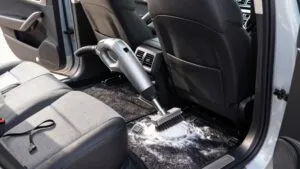
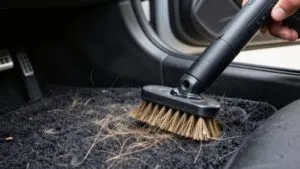
Before you wipe down the cabin, vacuum the seats, floor mats, seams, and crevices to pull out odor-holding fur, dander, and crumbs. Use a vacuum with an upholstery brush for fabric seats and a soft attachment for mats and carpet. Work in overlapping passes, moving front to back, so you lift debris instead of redistributing it.
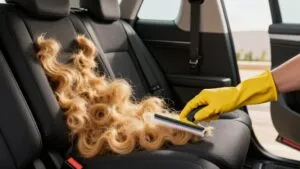
Empty canister or replace bag afterward; trapped pet debris can make your cleaning gear smell stale. Finish with a lint roller or rubber pet-hair brush on visible strands, especially where your dog rides. Removing dry contamination first keeps your microfiber towel and multi-surface cleaner from dragging oils and dander across hard surfaces. This order also lets odor neutralizers contact the actual residue rather than a layer of loose hair.
Reach Seat Crevices
Start at the seat seams, buckles, and narrow gaps where dog hair, dander, crumbs, and moisture collect out of sight. Vacuum these areas before you wipe anything else. Dry debris and damp organic residue lodge beneath buckle housings and along stitched edges, where they slowly feed a stale, wet-dog smell into the cabin.
Work one seat at a time, moving the seat fully forward and back to expose hidden tracks and gaps. Check beneath child-seat anchors and between the seatback and cushion too. Make slow, overlapping passes until the collected material is gone; rushing leaves odor sources behind. If you find a sticky or damp spot, note it for targeted cleaning after vacuuming. Empty the vacuum canister promptly; captured odor won’t drift back into cabin.
Use Upholstery Attachments
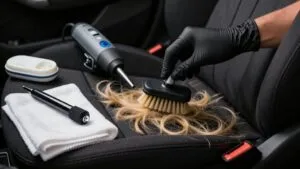
With loose debris cleared from the crevices, fit your vacuum with an upholstery brush or wide fabric tool and work across each seat panel before applying any cleaner. Make slow overlapping passes from the headrests to the seat bases, then vacuum bolsters, stitching, and the seat-back joint. The brush agitates clingy hair and dander while suction lifts the organic debris that feeds stale dog odor.
If your tool has adjustable airflow, lower it for delicate fabric and raise it for durable cloth. Empty the canister or replace the bag afterward; collected pet material can keep releasing odor in a closed car. Check the tool edge for trapped hair, especially after shedding season. Vacuuming first keeps dry particles from turning into residue when you wipe.
Protect Fabric From Smears
After you’ve vacuumed the seats, wipe hard surfaces and spot-clean fabric only as needed, using a lightly damp microfiber cloth rather than soaking the upholstery. Loose hair, dander, and grit act like tiny abrasives when you wipe, creating gray smears that hold onto dog oils and stale odor. Vacuuming first removes that dry debris so you’re treating the actual mark, not grinding residue deeper into seat fibers.
For a paw-print or drool spot, blot with a clean section of cloth and use a fabric-safe, low-moisture cleaner according to its label. Don’t saturate foam-backed cushions: trapped moisture can turn pet odor musty before the next ride. Keep a separate microfiber for upholstery so dashboard grime and interior dressing don’t transfer to the seats or carpeting.
Improve Wipe-Down Results
A thorough vacuum pass makes every wipe-down more effective because it removes the hair, dander, crumbs, and dry grit that otherwise smear across fabric and trap dog oils in the seat fibers. Use a crevice tool along seams, buckles, piping, and cushion gaps, where odor-producing debris settles. Follow with an upholstery brush to lift embedded fur without grinding it deeper. Empty the canister outside so dander doesn’t return to the cabin.
With debris gone, apply upholstery-safe cleaner to a microfiber cloth, not directly to the seats. Work in sections and change cloth sides as they soil. This stops damp grime from spreading and lets the formula contact oily residue that fuels lingering dog smell. Let seats dry before covers or your next dog ride.
Rainy-Day Mud Removal Steps
Remove muddy leashes, towels, and pet gear before they wick damp, doggy odors into the cabin. Clean seats and mats promptly with an upholstery-safe enzyme cleaner, then lift residue with a microfiber towel. Dry the interior thoroughly with towels and airflow so moisture can’t feed mildew smells.
Remove Muddy Gear
When rain turns a walk into a mud run, keep wet gear from reaching your car’s upholstery: towel-dry your dog’s paws, legs, and undercoat before loading up, then place them on a washable blanket, pet pad, or seat cover. Next, unclip the harness, leash, boots, and raincoat outside. Shake off loose grit away from the doors, and use fragrance-free pet wipes on buckles, boot treads, and the coat’s muddy hem. Put every damp item in a waterproof, zip-top gear tote lined with an absorbent microfiber towel; don’t leave it in the footwell or trunk. Moisture trapped in fabric feeds the sour, wet-dog smell you’re trying to prevent.
At home, hang gear to air-dry completely, then treat any organic residue with a pet-safe enzyme spray.
Clean Seats And Mats
Once the dog and muddy gear are out, clean seats and mats before damp soil dries into odor-holding fabric. Lift out rubber mats and knock loose grit into a bin, then rinse them with water and a pH-neutral all-purpose cleaner. For carpet mats, vacuum or brush away soil first; don’t grind wet mud deeper into the fibers.
Blot remaining marks with microfiber towels, then apply an enzyme upholstery cleaner to paw prints, drool, or organic stains. Let it dwell as directed and blot rather than scrub, so you don’t spread odor-causing residue. Treat cloth seats the same way, working cleaner lightly along seams and seat-belt anchors where hair and mud collect. Wipe leather or vinyl with a cleaner labeled for that surface, not enzyme spray.
Dry The Interior
Dry every cleaned area promptly, because trapped rainwater in carpet backing, seat seams, and floor insulation can turn a muddy-car smell into mildew. After you blot mud with microfiber towels, lift mats and press dry towels into carpet; don’t scrub moisture deeper.
Use a wet/dry vacuum to extract water from seams and under mat edges. Then leave doors open in a covered space or run the fan without A/C for several minutes to dry ducting. An enzyme cleaner belongs on organic mud spots before extraction; it breaks down residue rather than masking it.
Finish by placing activated charcoal bags inside overnight and checking the next day for damp seams or sour odors. If the carpet still feels or smells musty, repeat the extraction immediately.
No Odor After Overnight Parking
To keep your car neutral-smelling after it sits overnight, remove the odor source and the moisture that feeds it before you park. Take out used wipes, treat wrappers, and any damp blanket or pet pad. Vacuum visible hair from seats and mats, then blot fresh drool, muddy paw marks, or spills with a clean microfiber towel. For organic spots, apply an enzyme cleaner according to its label; it breaks down residue instead of covering it with fragrance.
Before locking up, run the fan without A/C for several minutes to clear humid air from the cabin. Leave activated-charcoal bags under the front seats to absorb lingering moisture and volatile odors. If the cabin still smells doggy, use a light odor-neutralizing spray only after cleaning. Ideally.
Persistent Mold Under Carpets
An odor that returns after cleaning often points to moisture and mold beneath the carpet, not on its surface. Lift the edge of the carpet and press the padding with a clean, dry towel. If it feels damp or releases a musty, dog-like smell, don’t simply shampoo the top layer. Find the moisture source: wet paws, a spilled bowl, clogged sunroof drains, or a door-seal leak.
Blot standing moisture, then use a wet/dry vacuum to extract water from carpet and padding. Treat affected material with an automotive-safe enzyme cleaner for pet residue, followed by a fabric-safe antimicrobial product labeled for mildew. Dry the area completely with airflow, a fan, and open doors. Put activated-charcoal bags nearby afterward. If padding remains stained or sour-smelling, have it replaced; trapped mold won’t clear with surface products.
Skipping Seat-Belt Buckle Cleaning
Seat-belt buckles and their recessed housings collect dog hair, dander, treat crumbs, and damp residue that can keep a sour odor alive after you’ve cleaned the seats.
Don’t skip them: contamination settles below the release button, where moisture feeds odor-causing bacteria. Add this detail to your weekly reset:
- Vacuum the housing with a narrow crevice tool.
- Lift loose hair using detail brushes, never metal picks.
- Wipe exposed plastic with low-moisture interior cleaner.
- Treat sticky residue with an enzyme cleaner on swab.
- Dry each recess fully before buckling passengers in.
Finish with an odor-neutralizing interior wipe around, not inside, the mechanism. If the buckle sticks or won’t latch, schedule professional service rather than flooding it with product. Clean weekly after wet-dog rides and treat-heavy trips.
Inspect Cabin Air Filter
Your cabin air filter can quietly recirculate dog hair, dander, moisture, and odor-causing debris through the vents when it’s overdue for replacement. During your weekly cleanup, switch the fan on and smell the airflow. A musty, dusty, or wet-dog note points to a loaded filter. Locate the filter housing using your owner’s manual, then remove the filter and inspect both sides under bright light.
Replace it if you see hair, gray buildup, damp spots, leaves, or a sour smell. Choose a vehicle-specific activated-carbon cabin filter; its carbon layer helps trap odor molecules, not just particles. Vacuum loose debris from the housing before installing the new filter, following the airflow arrow. If odor lingers, use HVAC evaporator cleaner; run fan without A/C afterward for drying.
Conclusion
Keep dog odor from taking over your commute by following the routine every week. Vacuum seats and crevices first, then use an enzyme cleaner with clean microfiber towels. Wash the crate liner on Sunday, tackle mud immediately after rainy rides, and wipe seat-belt buckles. Check beneath carpets for mold and inspect the cabin air filter regularly. These small, product-smart steps stop odors before overnight parking turns your car into a lingering reminder of yesterday’s walk.