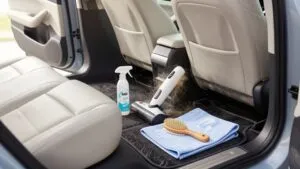
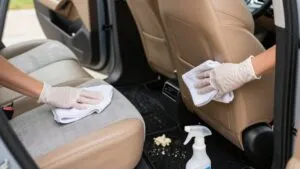
How to Get Embedded Dog Hair Out of Car Carpet for Good
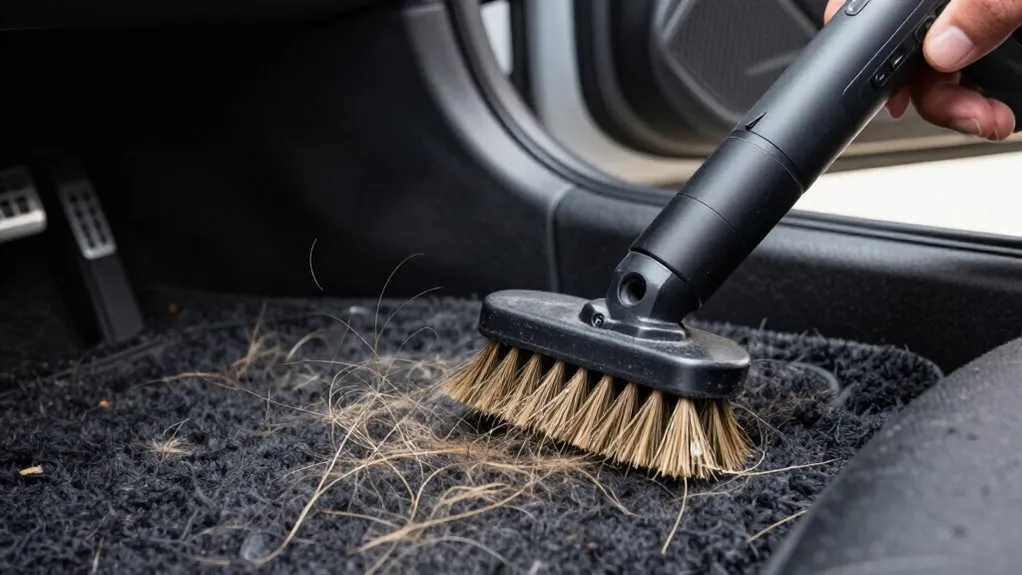
Remove mats, then vacuum both sides and inspect carpet edges, rails, and anchors. Lightly mist small sections with diluted fabric softener, wait two minutes, and pull hair into clumps using a rubber squeegee or silicone brush.
Vacuum slowly with upholstery and crevice tools, then use damp nitrile gloves for remaining fuzz. Check Velcro with tweezers, scan fibers under a low-angle flashlight, bag the hair, and reinstall dry mats.
Next, prevent repeat buildup with monthly touch-ups.
Moderate, 30-Minute Carpet Defurring
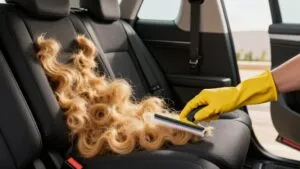
For a moderately hairy car carpet, set aside 30 minutes and work in a deliberate sequence: remove floor mats, slide seats as far as their rails allow, and start with a rubber carpet rake or damp rubber glove. Work the rake in short, overlapping strokes from seat rails toward open carpet, lifting hair into visible clumps. Gather each clump by hand and bag it immediately.
Switch to a rubber-edged squeegee for stubborn strips along door sills, seams, and the pedal area; pull in one direction rather than saw back and forth. Vacuum each finished section with a high-suction machine and upholstery nozzle, making slow passes that follow rake strokes. Use a crevice tool around seat mounts and trim edges. Rake mats, vacuum both sides.
Wear Nitrile Gloves for Static
After raking and vacuuming the bulk of the fur, put on snug, powder-free nitrile gloves to pull up the hair still clinging to the carpet pile. These tough synthetic-rubber gloves resist tearing, give you dexterity, and create useful friction and electrostatic attraction. Work methodically:
- Lightly mist one glove with water; it should feel tacky, not wet. Test an inconspicuous patch first.
- Drag your gloved palm across the pile in one direction using moderate pressure. Let hair roll into clumps.
- Pinch clumps away, place them promptly in a waste bag, and repeat. Finish with a vacuum for fine residue.
Step 1: Remove Floor Mats First
Start by removing every loose floor mat, including rear mats and the cargo mat, so you can clean both sides and reach the carpet beneath them. Place each mat on a clean, hard surface, then inspect its grooves, edges, backing, and retention clips for packed fur. Use a rubber-edged squeegee or silicone carpet rake to pull hair into small piles, working from the outer edge toward the center. Vacuum each side with an upholstery nozzle, and use a crevice tool around molded channels and mounting holes.
Set the mats aside in a clean area so loosened hair can’t transfer back to the cabin. With the mats out, inspect exposed carpet along seat rails, door sills, and pedal edges before you begin the deeper cleanup.
Step 2: Mist Carpet With Fabric Softener
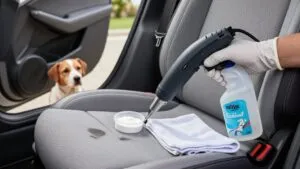
Lightly mist the exposed carpet with a diluted fabric-softener solution to reduce static that makes dog hair cling to synthetic fibers. Mix a few drops of liquid fabric softener with one cup of clean water in a trigger spray bottle. Shake gently, then test the mixture on a hidden carpet edge for colorfastness.
Hold the nozzle about twelve inches away and apply an even, sparse mist across one small section at a time. Don’t soak the pile or padding; excess moisture can leave residue and prolong drying. Let the surface sit for two to three minutes while you keep doors open for ventilation. Wipe any overspray from plastic trim and leather with a clean microfiber cloth. The carpet should feel barely damp, not wet.
Step 3: Brush Carpet With Rubber Squeegee
Use a clean rubber squeegee to draw loosened dog hair out of the carpet pile before vacuuming. Choose a flexible blade with an intact, smooth edge; chipped or dirty rubber can snag fibers or spread grime. Work in small sections, starting at the back of each footwell and moving toward an open area.
Hold the handle at a shallow angle and pull in firm, single-direction strokes. The rubber creates friction and static-reducing contact that gathers strands into visible rolls. After every few passes, lift the collected hair from the blade with a paper towel. Rework dense patches from a different direction, but don’t saw back and forth. Pay close attention to seat edges, door sills, and carpet seams, where hair collects and migrates readily.
Step 4: Vacuum With a Crevice Tool
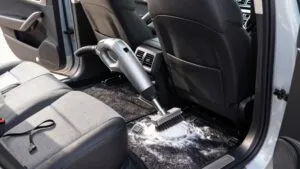
Once the squeegee has gathered hair at the surface, vacuum each section with a crevice tool to pull it from pile edges, seams, seat rails, and door-sill channels. Attach the narrow nozzle to a vacuum with strong, steady suction, and work one carpet section at a time. Hold the tool at a shallow angle, then make slow, overlapping passes in the same direction you’ve used with the squeegee.
Trace perimeter trim, stitched joints, mat anchors, and joins between carpet panels, keeping the nozzle mouth in contact with the fibers. Use short pulls rather than fast sweeps, so loosened hair enters the airflow instead of scattering. Check the tool opening after each section and remove any fur plug that restricts suction. Empty the bin often afterward.
Step 5: Target Seat-Rail Hair Buildup
Seat rails collect dense clumps of dog hair because their tracks, mounting points, and surrounding carpet edges catch fur that vacuum heads can’t easily reach. Slide the seat fully forward or backward, then inspect each exposed section with a flashlight. Use a narrow crevice tool to pull loose hair from the track channels, keeping the nozzle just above moving parts. Next, work a small rubber detailing brush or silicone-tipped pick along carpet edges and around bolt covers to lift packed fibers.
Hold a microfiber cloth beside the brush to catch released clumps. Don’t force tools into electrical connectors or lubricated rail components. Vacuum each loosened area in one direction, then reposition the seat and repeat until both rail zones look clear.
Step 6: Bag Hair Before Reinstalling Mats
Before reinstalling the mats, gather every vacuumed clump and loose hair from the footwells into a disposable bag. Use a narrow crevice tool or handheld vacuum to pull debris from corners, under pedal edges, and door-sill channels before it can drift back onto cleaned carpet. Keep the bag open beside you, then use a rubber glove or lint roller to collect stray strands from trim and mat mounting points.
Seal the bag immediately and place it outside the vehicle. Empty the vacuum canister or remove its sealed bin afterward, since trapped hair can escape during storage. Wipe the nozzle and tools with a microfiber cloth. Then reinstall only fully cleaned, dry mats, securing each retention clip firmly. This prevents loose fur from returning immediately.
Inspect Fibers With Flashlight
Use a bright LED flashlight at a low angle across the car carpet to reveal dog hairs still caught in the pile. Work section by section, beginning at door sills, seat tracks, seams, and the footwell edges. Hold the light nearly parallel to the surface; angled illumination makes pale, dark, and fine hairs cast shadows and stand out against the fibers. Move the beam slowly in overlapping passes, then change your viewing angle to catch hairs hidden in flattened tufts.
Mark problem patches with removable painter’s tape or note them on your phone. Check both bare carpet and removable mats before returning them. A clean-looking area can still contain short hairs below the visible surface, especially along high-traffic paths. This inspection tells you where further treatment is needed. It prevents fur spreading later.
Fix Hair Trapped in Velcro
Dog hair caught in Velcro fasteners needs targeted picking because vacuum suction rarely reaches fibers hooked deep in the loops. Open the fastener and hold it under bright LED light.
Use pointed tweezers to pull each tuft straight out; don’t drag sideways, which can fray hooks. You work from end to end, placing removed fur on tape.
| Tool | What you see | Action |
|---|---|---|
| Tweezers | Dark strands in loops | Pull upright |
| Toothbrush | Fine fuzz on hooks | Brush outward |
| Tape | Loose clumps | Lift remnants |
| Flashlight | Clean hook rows | Confirm clearance |
For stubborn residue, press duct tape into the hook side, then peel slowly. Clean the matching loop side with a dry toothbrush. Reclose only after both sides grip evenly; missed hair weakens the hold and invites buildup.
Schedule Monthly Lint-Roller Passes
Set a monthly reminder to run a lint roller over low-pile carpet, cargo-area edges, door sills, and other flat surfaces where loose fur settles. Use a fresh adhesive sheet and roll in overlapping straight passes, pressing lightly so you collect surface hair without grinding it into fibers. Start at the rear and work forward; this keeps dislodged fur from returning to cleaned sections.
Peel away the sheet once it loses tack, fold it inward, and discard it. Follow with a crevice vacuum along seams and seat rails. During heavy-shedding months, add a quick pass after trips. Keep a compact roller in the glove box so you won’t postpone touch-ups. This routine stops loose hair becoming deeply embedded between cleanings. Replace refills when tack fades.
Conclusion
With nitrile gloves, a spray bottle, rubber squeegee, flashlight, and lint roller, you can keep dog hair from permanently embedding in your car carpet. Remove mats, loosen fibers with a light fabric-softener mist, and pull hair into piles before bagging it. Check seams and Velcro under bright light, then reinstall clean mats. Finish with monthly lint-roller passes to catch new shedding early. This routine keeps your interior cleaner between deeper detailing sessions as needed.
Road Trip Stop & Water Planner
Turn your drive time and your vet-advised stop interval into a stop schedule, a total water amount and a bottle count. Arithmetic only.
Dog Car Harness Size Chart & Fit Finder
Enter your dog's chest girth and weight to see the matching Ruffwear, EzyDog and Sleepypod car harness size, with between-size and crash-test notes.
Airline In-Cabin Dog Size & Carrier Eligibility Checker
Check your dog carrier against Delta, American, Southwest or JetBlue published in-cabin size limits and see if a cargo option exists.