What Neutralizes Dog Odor in a Car? Enzymes vs Baking Soda vs Ozone
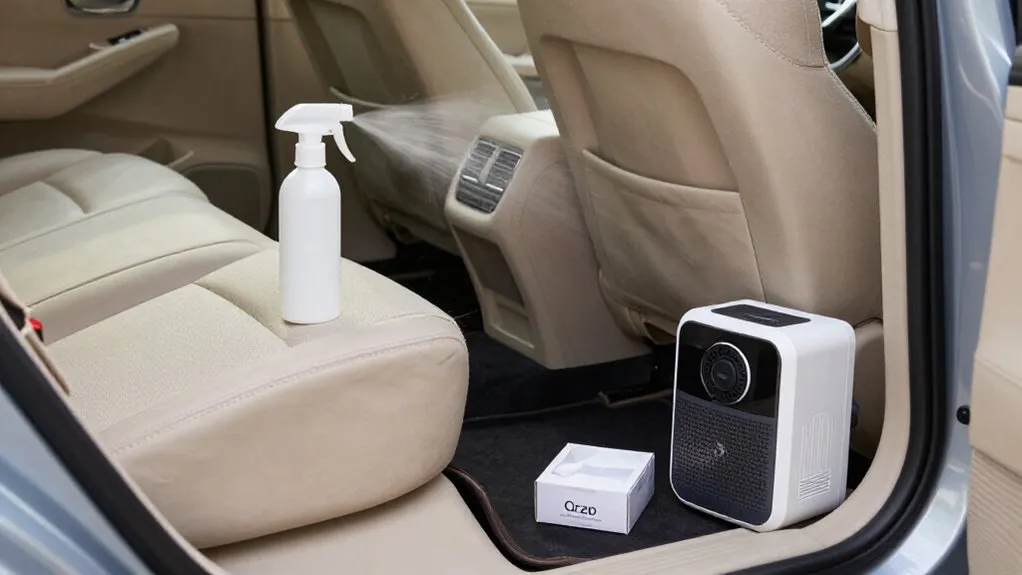
You’ll neutralize dog odor best by vacuuming hair and dander, then treating urine, drool, vomit, and oils with a fabric-safe or leather-safe enzyme cleaner.
Let it dwell as labeled, blot or extract, and dry the interior fully. Baking soda can absorb residual surface odor after drying, but it won’t remove embedded soil.
Don’t use bleach on urine or mix cleaners. Ozone only follows cleaning in an empty car with thorough ventilation. Further targeted checks can help.
Enzymes Remove Odor Sources
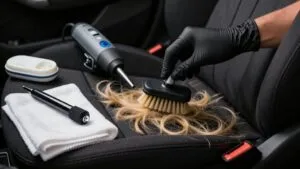
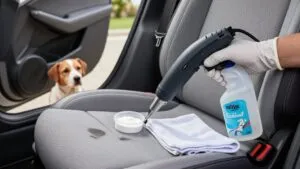
Enzymatic cleaners address dog odor at its source by breaking down the organic residues that produce it, including urine components, drool, vomit, proteins, and fats embedded in carpet or upholstery. First, remove solid debris and vacuum the affected area so the solution can contact exposed soil. Test a concealed section for colorfastness, then apply only enough product to wet the stain without oversaturating adjacent trim. Agitate gently with a soft brush, observe the label’s dwell time, typically 5 to 30 minutes, and blot or extract the dissolved residue. Don’t mix enzyme products with bleach, disinfectants, or strong solvents; these can impair enzyme activity or damage materials.
Allow the area to dry fully, then reassess. Repeat targeted treatment if odor remains. Enzymes remove odor permanently.
Odor Penetrates Seat Foam
Seat foam can hold dog odor long after the upholstery looks clean. Urine, saliva, skin oils, dander, and microbial residues can pass through face fabric and batting into open-cell polyurethane foam within minutes. Liquid contamination wicks along foam struts, depositing proteins, uric acid, and other odor precursors deep inside as it dries.
The foam’s large internal surface area adsorbs VOCs, while oils and semi-volatile compounds can partition into its polymer matrix. Covers, adhesives, and liners further slow release. You may notice odor rebound when warmth or humidity releases trapped compounds or reactivates residues. Vacuum first, then use an enzyme cleaner according to its label so it reaches the contaminated zone without oversaturating the seat. Test a hidden area, extract residue, and avoid ozone.
Rain-Soaked Upholstery Odor Treatment
When rain soaks upholstery, dry the vehicle promptly to prevent trapped moisture from driving musty microbial odors and mold growth. Remove wet seat covers, mats, and pet bedding, then launder and dry them completely. Blot seats and carpets with clean absorbent towels; don’t rub, which pushes water deeper.
Use a wet/dry extractor if available, working slowly across seams and under cushions. Open doors in a dry, secure area and run fans or a dehumidifier until padding is dry to the touch. Vacuum loose debris first; then apply an upholstery-safe enzyme cleaner only where dog soil or organic residue remains. Test a hidden area, follow dwell-time directions, and extract excess liquid. Once fully dry, sprinkle baking soda lightly, wait several hours, then vacuum thoroughly afterward.
Ozone Works in Empty Cars
Use ozone only in a completely empty car, because it irritates lungs and can harm people and pets. Run the generator only for the manufacturer’s specified treatment duration, avoiding longer exposure that can degrade interior materials. Afterward, open all doors and ventilate the cabin thoroughly before you reenter or transport your dog.
Why Ozone Requires Vacancy
Because ozone is a respiratory irritant, an ozone treatment must occur only in a completely unoccupied car—no people, pets, or plants inside. You can’t safely remain in the cabin, check progress from a window, or allow an animal nearby: inhaled ozone can inflame airways and aggravate respiratory conditions. Ozone doesn’t distinguish between odor molecules and biological tissue; its oxidation chemistry affects both.
Before operating any generator, remove keys, pet crates, bedding, food, water containers, and loose plants. Close the vehicle and prevent accidental entry by locking it and placing a clear warning notice on each door. Keep bystanders away from the vehicle’s immediate area, especially in garages or other enclosed spaces where ozone may migrate. Use only equipment with controls and follow its safety instructions.
Safe Treatment Duration
Even in an empty car, limit ozone exposure to the generator manufacturer’s specified treatment time and start with the shortest effective cycle. Remove your dog and all people before setup; ozone is unsafe to breathe at treatment concentrations. Clean urine, drool, hair, and soiled textiles first, because ozone cannot reliably remove embedded organic residue.
Position the unit securely on a stable, nonporous surface and use only its rated output and timer. Don’t extend a cycle merely because odor persists. Instead, reassess the source, repeat physical cleaning, and inspect materials for sensitivity. Excessive duration increases oxidation risk to rubber, foam, plastics, dyes, and electronics. Follow the device manual’s vehicle-volume guidance and never override its timer. Record cycle length, generator output, and date for consistency.
Ventilation After Ozone Use
Once the generator’s timed cycle ends, keep the car unoccupied and ventilate it thoroughly before anyone or any pet re-enters. Open every door, the hatch, and windows in a well-ventilated outdoor area. Let fresh air exchange for the generator manufacturer’s specified period; extend it if you detect any sharp, bleach-like odor. Don’t sit inside to “check” the air, and don’t rely on fragrance to judge safety.
Remove the generator, then run the HVAC fan with outside-air mode selected, not recirculation, to purge ducts and the cabin filter area. If your unit includes an ozone monitor, confirm concentrations meet applicable exposure limits before closing the vehicle. Inspect rubber seals, plastics, and fabrics afterward for oxidation-related changes. Ozone treatment doesn’t replace source cleaning: vacuum and use an enzyme cleaner.
Leather Versus Cloth Interiors
Cloth upholstery absorbs dog odor deeply, so you’ll need to vacuum first and use an enzyme cleaner with the specified dwell time. Leather is less porous, but you must remove residue promptly and use only leather-safe cleaners to prevent drying, staining, or finish damage. Test every product on a concealed area, limit moisture, and avoid ozone exposure that could degrade either material.
Odor Absorption in Cloth
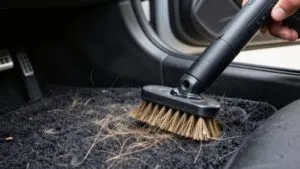
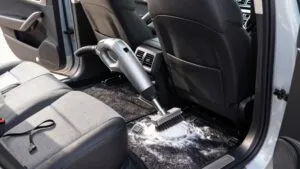
A fabric interior absorbs dog odor more readily than leather because its fibers, foam backing, and carpet padding trap hair, dander, drool, skin oils, and moisture below the surface. You should vacuum seats, seams, floor mats, and cargo carpet before applying odor treatment. Agitation releases debris while extraction limits the moisture that can sustain odor production.
For localized biological contamination, use a fabric-compatible enzymatic cleaner as directed and allow its stated dwell time; don’t saturate foam. Baking soda can adsorb residual surface odor after the fabric dries, but it won’t remove embedded organic soil. Keep pets and passengers away from wet areas, test products on an inconspicuous spot, and ventilate after cleaning.
| Surface | Trap | Action |
|---|---|---|
| Cloth | Oils, dander, hair | Vacuum |
| Padding | Moisture | Extract gently |
Leather Cleaning Considerations
Leather resists odor absorption better than cloth, but its seams, perforations, and the carpet beneath seats can still retain dog hair, oils, and moisture. Begin by vacuuming creases, seat tracks, and the junction between leather panels and carpet; a soft detailing brush lifts hair without driving debris deeper. Wipe surface oils with a pH-balanced leather cleaner on a microfiber applicator, working one small section at a time.
Don’t saturate perforations or seams, because trapped liquid can migrate into foam and create a new odor reservoir. For urine, drool, or vomit, locate the source before treating: contamination often sits in carpet, padding, or under-seat insulation rather than the leather face. Target enzymatic cleaner at biological residue, then dry the area completely according to label directions.
Treatment Safety by Material
Because upholstery and leather react differently to moisture and cleaners, match the treatment to the material before addressing dog odor. Vacuum first, then test every product on a hidden area. For cloth, use an enzyme cleaner sparingly, allow labeled dwell time, and extract or dry it completely. Baking soda works dry on fabric; vacuum it thoroughly. On leather, don’t saturate seams or use alkaline powders. Wipe with a leather-safe cleaner, then condition after drying. Avoid ozone unless you’ve removed the source and can isolate the unoccupied vehicle, ventilate it fully, and follow equipment limits.
| Material | Safest approach |
|---|---|
| Cloth | Enzyme spot treatment; dry fully |
| Leather | Minimal-moisture leather cleaner |
| Both | Patch-test; avoid ozone exposure |
Ventilate afterward until every treated surface feels completely dry.
Treating Crate-Transport Odors
Crate transport concentrates dog hair, dander, saliva, and occasional urine or vomit in a confined area, so remove the crate and any liner first, then vacuum the cargo area, seat crevices, and ventilation openings thoroughly.
Inspect the crate tray, seams, and tie-down points for residue. Wash removable hard components with a pet-safe cleaner, rinse, and dry fully before reinstalling. On fabric liners or cargo carpet, blot fresh moisture and apply an enzyme cleaner only after testing a hidden area. Keep the surface damp for the label-specified dwell time, then extract or blot excess moisture.
Once dry, sprinkle baking soda on the carpet for several hours and vacuum it. Don’t run ozone with people or pets inside; use it only after source removal and ventilation.
Avoid Bleach on Urine
Never use bleach on dog urine in your car: urine can release ammonia, and mixing ammonia-containing residue with bleach may produce irritating chloramine gases. Don’t spray, pour, or wipe bleach over a suspect spot, even after blotting. Open doors and ventilate the cabin if you’ve already used bleach, then avoid further cleaners until surfaces are dry.
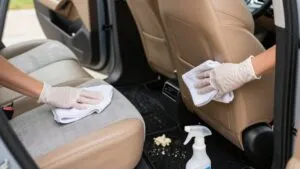
Instead, wear gloves, blot fresh urine with disposable towels, and remove contaminated mats or covers. Clean the area with an automotive-safe enzymatic urine cleaner, following its dilution, dwell-time, and extraction directions. Test hidden upholstery first. Don’t combine products or use bleach on leather, carpet, seat foam, or HVAC components. After cleaning, ventilate thoroughly and dry the material completely; residual moisture can support microbial growth and prolong odor problems.
Masking Odor With Air Fresheners
Air fresheners can make a car smell better temporarily, but they don’t remove dog odor or its source. Their fragrances merely compete with odorants in the cabin air, and heavy perfume can make contamination harder to identify.
- Choose a mild, low-VOC product only after you remove hair, dander, and organic residue.
- Avoid aerosol overuse; it can deposit residue on trim and irritate sensitive passengers.
- Don’t spray directly on seats, leather, electronics, or your dog.
- Ventilate the car before driving, and stop using the product if you notice coughing, eye irritation, or headaches.
Use fragrance as a short-term finishing step, not a cleaning method. To control odor reliably, you must remove the biological material and dry treated surfaces completely before you close the vehicle overnight.
Replace the Cabin Air Filter
Once you’ve cleaned the cabin, replace the cabin air filter if it smells musty, carries visible debris, or is overdue for service. The filter traps airborne dander, hair, dust, and spores before they recirculate through the HVAC system; it doesn’t remove contamination embedded in seats or carpet.
Consult your owner’s manual for the access panel and filter dimensions. Turn the vehicle off, remove old filter, and note its airflow-arrow orientation. Vacuum debris from the housing without pushing material into the blower.
Install a replacement, preferably activated-carbon if compatible, with the arrow facing the direction. Refit covers, then run the fan and air conditioning at several speeds. If odor persists, inspect the evaporator drain and HVAC ducts; don’t use ozone with occupants or pets present.
Conclusion
To neutralize dog odor in your car, remove the source before you deodorize. Use enzyme cleaner on urine, vomit, and wet upholstery, then extract and dry seat foam completely. Apply baking soda only after cleaning for light residual smells. Use ozone only in an empty, sealed vehicle and air it out thoroughly. Don’t use bleach or rely on fragrances. Clean crates, treat leather appropriately, and replace the cabin air filter when odor remains after cleaning.
Road Trip Stop & Water Planner
Turn your drive time and your vet-advised stop interval into a stop schedule, a total water amount and a bottle count. Arithmetic only.
Car Crate Fit Calculator
Size a large dog carrier for your car: IATA-based crate size for your dog, checked against your cargo area and hatch opening.
Dog Car Harness Size Chart & Fit Finder
Enter your dog's chest girth and weight to see the matching Ruffwear, EzyDog and Sleepypod car harness size, with between-size and crash-test notes.
Airline In-Cabin Dog Size & Carrier Eligibility Checker
Check your dog carrier against Delta, American, Southwest or JetBlue published in-cabin size limits and see if a cargo option exists.