Dog Car Barrier vs Crate: Which Is Better for Your SUV?
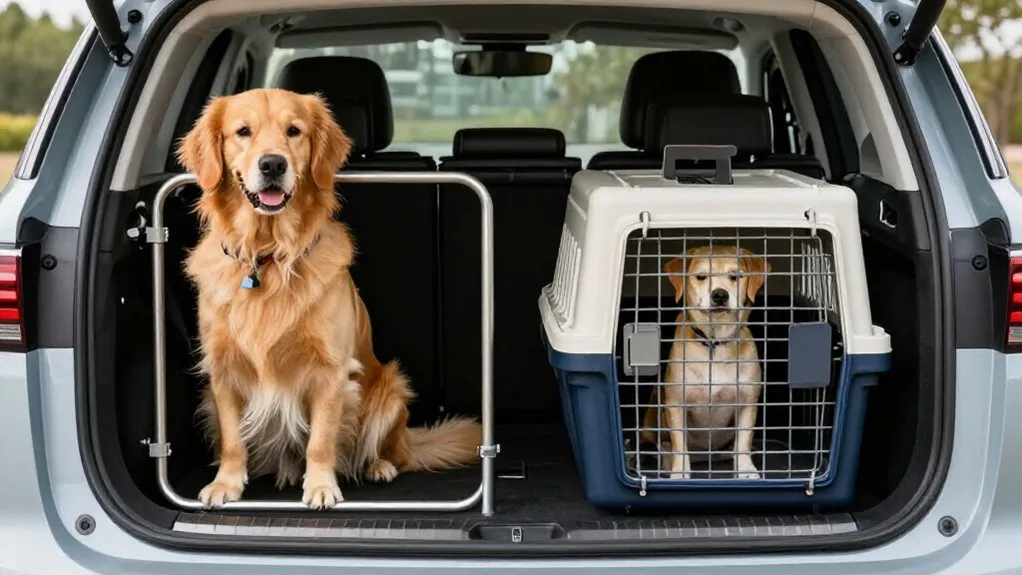
Choose a tightly fitted barrier if your calm dog rides well with dogs and you need flexible cargo space, cleanup, and access to third-row seats. Choose a properly sized, anchored crate if your dog is a puppy, senior, escape artist, chewer, or anxious traveler needing reliable boundaries.
Neither barrier alone provides crash protection; seek independently crash-tested crates when that matters.
Keep vents clear, secure cargo, and practice emergency release. Next, compare fit, airflow, and cleanup.
Ventilation, Visibility, and Cargo Space
A car barrier keeps the rear area open, so your dog gets the same cabin airflow from rear vents, windows, and cargo-area vents without an enclosure trapping heat. You can monitor posture through mesh, but airflow still varies with traffic and HVAC layout.
| Feature | Barrier | Practical check |
|---|---|---|
| Airflow | Open cabin | Aim rear vents |
| Visibility | Easy monitoring | Use mirror |
| Cargo space | Floor stays flexible | Secure loose gear |
| Heat risk | Variable | Add fan if needed |
An SUV with rear vents and an open cargo layout suits this setup. Position your dog where cool air reaches it, use safe window screens, and stop if panting rises. Keep luggage secured; an unblocked floor helps your dog shift comfortably without hiding it from view. Check temperatures before every trip.
Steel Grids vs Foldable Kennels
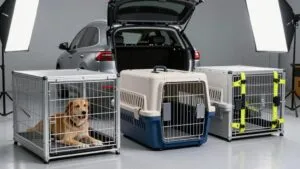
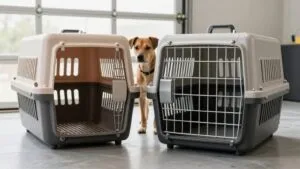
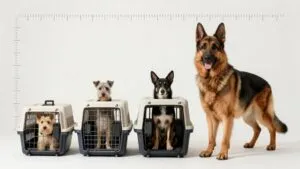
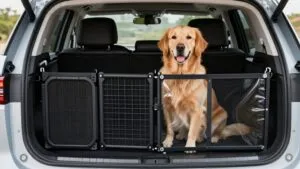
Once you’ve confirmed airflow and cargo space, choose containment based on what your dog can safely tolerate: a steel grid keeps it in the cargo area, while a foldable kennel provides enclosed confinement. Grids suit calm dogs that don’t climb, squeeze through gaps, or guard shared space. A kennel helps dogs settle, limits pacing, and separates pets when needed.
- Choose a steel grid for flexible cargo use and quick, reversible installation.
- Pick a foldable kennel if your dog needs predictable boundaries or gets carsick.
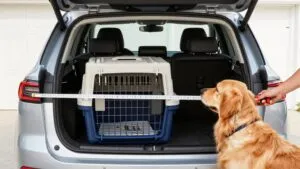
- Measure hatch clearance, third-row position, and your dog’s standing height.
- Secure either setup so it can’t shift, then check latches, straps, and gaps before every trip.
Use a mat behind the grid. Introduce it at home; reward calm entry.
Crash-Test Protection Results
Crash-test results draw a clear line: a barrier can keep your dog out of the front cabin, but it won’t reliably control the forces of a collision. It may reduce driver distraction by blocking a rushing dog, but it doesn’t stop that dog from striking cargo-area surfaces or becoming a projectile.
Choose a rigid crate with credible independent crash-test certification when collision protection is your priority. A properly sized crate creates a protective shell around your dog and attaches to vehicle anchors, limiting movement and helping contain your dog after impact.
Check the test information for the crate’s size range, attachment method, and vehicle compatibility. Don’t assume “heavy-duty” means crash proven. For anxious, escape-prone, or powerful dogs, secure containment is especially important during emergencies.
One-Person Setup and Removal
If you need to install and remove your dog restraint alone, a barrier is usually the easier option: most strap to headrests or clip into place within minutes and fold down for storage.
Before choosing, check that every strap is tight, the frame can’t shift, and your dog can’t squeeze through an opening. A crate takes more effort because you must lift it, position it, and secure it to approved anchors.
- Inspect attachment points before each trip.
- Practice loading while parked so your dog learns a calm routine.
- Use two hands to tension straps or anchor connections; don’t rush.
- Ask for help with a heavy crate or a struggling dog.
For errands, a properly fitted barrier reduces setup friction; still choose secure containment your dog needs.
Third-Row Seating Interference
Third-row seating can limit where you place both a barrier and a crate, so plan the restraint around how often passengers use those seats.
If you regularly carry people in the third row, a crate behind it may leave little ventilation or clearance and can block access to lift the seats. A barrier mounted behind the third row may preserve passenger space, but it gives your dog less room and doesn’t prevent movement within the cargo area.
For occasional passengers, choose a barrier that adjusts when seats are raised, or remove the crate before loading riders. Keep the restraint secured to anchors, and don’t let your dog ride loose beside third-row passengers. Watch for stress signals: panting, pacing, whining, or attempts to climb forward.
Powder-Coat Rust Resistance
Although powder-coated steel resists moisture and everyday scuffs better than bare metal, inspect a car barrier’s welds, corners, and strap-contact points regularly for chips or rust.
Your dog’s paws, wet coat, and repeated leaning can rub vulnerable areas, while road salt speeds corrosion. Check the barrier before each trip, especially after muddy outings:
- Clean off damp dirt and salt with mild soap; dry it completely.
- Touch up small chips promptly using a compatible coating.
- Replace frayed straps that grind through the finish.
- Retighten mounts only as directed; overtightening can crack coating or bend mesh.
Don’t rely on a rusted barrier to manage an energetic dog: weakened metal or loose hardware can fail when your dog shifts weight. Replace damaged parts before the next drive.
Emergency Exit Access Constraints
A barrier or crate must not block your ability to get your dog out quickly after a crash or breakdown. Before buying, practice opening the rear hatch and the restraint’s door. A barrier leaves the cargo area accessible, but it can complicate reaching a frightened dog that has moved behind luggage or into a corner. Choose a design with a quick-release fitting, and keep its release points clear.
With a crate, confirm that its door opens fully when the hatch, seats, and cargo are in their normal positions. Don’t stack gear against the door or depend on a side opening you can’t reach after impact. For anxious or escape-prone dogs, secure containment matters, but you should rehearse calm, fast removal using their familiar exit cue.
Cleaning Muddy Paws and Fur
After walks, wipe your dog’s muddy paws before loading up so slick floors and pedals stay safer. A crate with a removable liner contains dirt and loose fur, while a barrier leaves your SUV’s cargo area exposed unless you add a washable mat or cover. Choose the setup your dog accepts calmly, then clean it routinely to reduce odors, slipping hazards, and distraction.
Quick Cleanup After Walks
For quick cleanup after muddy walks, a crate usually keeps dirt, loose fur, and wet-dog odor more contained than a barrier does. You can pause at the tailgate, towel your dog’s paws, then guide them into a lined crate without letting them pace across the cargo area. A barrier leaves the whole rear compartment accessible, so a restless or excited dog may spread moisture before you can intervene.
- Keep absorbent towels and pet-safe wipes within reach.
- Wipe each paw, including between toes, before loading.
- Use a removable, waterproof crate liner and wash it promptly.
- With a barrier, add a secured cargo mat and supervise entry.
Avoid struggles. Reward calm waiting, check paws for grit, and dry surfaces fully before driving.
Fur Control Inside SUVs
Beyond muddy paws, loose fur can quickly cover an SUV’s cargo area, vents, and rear seats. A barrier keeps your dog behind the partition, but it won’t contain shedding; hair still reaches carpet, side panels, and exposed upholstery. Add a cargo liner, washable seatback cover, and nonslip mat to limit cleanup while helping your dog keep stable footing.
A crate concentrates fur inside a washable space when you use a removable liner. Vacuum it regularly and brush your dog before loading to reduce hair. Don’t block crate ventilation with blankets or overstuff it with bedding. For either setup, clean vents gently and remove fur before it builds up. If your dog sheds heavily or resists grooming, use reward-based brushing so travel preparation stays calm.
Puppies, Seniors, and Escape Artists
Puppies need secure containment because they can chew, climb, and wander when you’re driving. Senior dogs need a stable, easy-entry setup that limits sliding and supports sore joints. If your dog escapes barriers or squeezes through gaps, choose a securely anchored crate or tested restraint instead.
Puppies Need Extra Containment
Young dogs need more containment than a barrier alone can usually provide: they’re still learning car manners, may chew or squeeze through gaps, and can become overstimulated by movement.
A properly sized, secure crate gives your puppy a predictable travel space and limits rehearsals of unsafe behavior. Before each trip:
- Choose a crate your puppy can stand, turn, and lie down in.
- Anchor it to approved cargo tie-downs; don’t rely on a loose crate.
- Build comfort gradually with short, calm rides and a familiar mat.
- Check latches and ventilation, then remove chewable items and secure bedding.
If your puppy climbs, squeezes past panels, or panics in the cargo area, choose enclosed restraint rather than hoping a barrier will contain them safely at this stage.
Senior Dogs Need Stability
Senior dogs often need steadier support, not simply more room, during car rides. If your dog has arthritis, weak hind legs, or balance issues, a wide cargo area behind a barrier can let them slide or stumble when you brake or turn. A sized crate gives them walls, a non-slip base, and less room to brace awkwardly. Secure the crate to your SUV’s tie-down points, and use supportive bedding that stays flat.
A barrier can still suit a calm, mobile senior when you add a cargo mat and prevent loose items from moving. Watch how your dog stands, lies down, and rises. If they seem sore, unsteady, or reluctant to load, choose a more stable setup and ask your veterinarian about travel comfort.
Escape Artists Demand Security
If your dog climbs, chews, squeezes through gaps, or panics when confined, use a properly sized crate secured to the vehicle’s anchors rather than relying on a barrier alone. An escape-prone puppy can turn a loose strap or small opening into a route forward, while a stressed senior may struggle unexpectedly. Choose a crash-tested model when possible, then:
- Measure your dog standing and lying down.
- Fasten crate straps to rated cargo tie-downs.
- Inspect doors, latches, vents, and seams before every trip.
- Build comfort gradually; never use travel confinement as punishment.
Protect exposed straps from chewers.
Pick Barriers for Multiple Dogs
A car barrier can be a practical choice for multiple dogs when they travel calmly together in a shared SUV, wagon, van, or hatchback cargo area. It keeps them out of the front cabin, reducing driver distraction while preserving more floor space than several crates. Choose a rigid, adjustable barrier that fits tightly from side to side and leaves no climb-through gaps.
Add a non-slip cargo mat and, if possible, secure each dog with an appropriate travel restraint. Watch how your dogs interact: crowding, guarding, rough play, nausea, or stress can turn a shared space unsafe. Stop and separate them if tension appears. A barrier manages access, not crash forces, so it doesn’t equal crash-tested crates. For individual space or crash protection, choose crates.
Conclusion
Choose the setup that keeps your dog secure without creating new risks in your SUV. A properly fitted, vehicle-specific crate offers the strongest crash protection and suits puppies, seniors, or escape artists. A sturdy barrier can work well for calm, compatible dogs when you need cargo flexibility and ventilation.
Don’t block emergency exits, third-row access, or airflow. Test the fit, secure every attachment, and train your dog to ride calmly before any longer trips start.
Car Crate Fit Calculator
Size a large dog carrier for your car: IATA-based crate size for your dog, checked against your cargo area and hatch opening.
Dog Car Harness Size Chart & Fit Finder
Enter your dog's chest girth and weight to see the matching Ruffwear, EzyDog and Sleepypod car harness size, with between-size and crash-test notes.