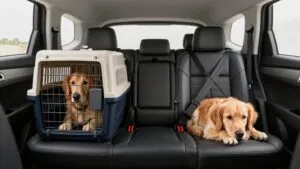
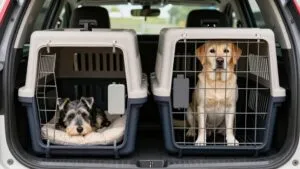
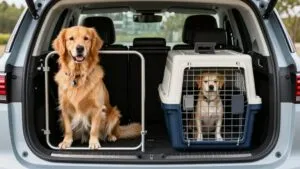
Plastic vs Aluminum Dog Crate: Is the Heavy-Duty Upgrade Worth It?
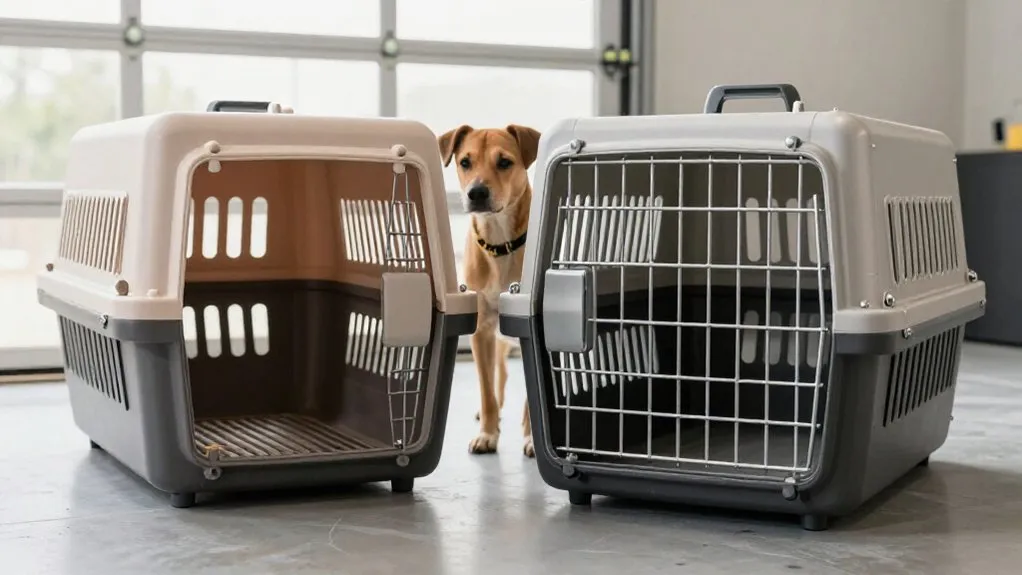
An aluminum crate is worth it if your dog chews, pushes doors, travels often, or shares a multi-dog home. You’ll get stronger panels, repairable hardware, and better airflow, but weight, rattling, and heat transfer demand attention.
Choose plastic for calmer dogs when easy cleaning, quieter containment, and airline-compatible sizing matter. Neither material proves crash safety or prevents overheating.
Measure your dog and vehicle, verify testing and anchoring, then compare fit, handling, and comfort details below.
Airline-Approved Crate Differences
For checked or cargo travel, both hard plastic and aluminum crates can qualify, but airline acceptance depends on exact IATA and carrier-specific construction rules, not the “airline-approved” label alone.
| Crate | Practical advantage | Check before flight |
|---|---|---|
| Plastic | Quieter, den-like containment | Metal bolts; compliant vents |
| Aluminum | Strong containment, cooler airflow | Approved openings; dimensions |
Measure your dog using IATA’s formula and confirm the carrier’s current rules before purchase. Your dog must stand, turn, and lie naturally; don’t gamble on a snug fit.
Plastic shells may dampen noise and visual triggers, but retain heat. Aluminum promotes airflow, yet bedding helps limit transmitted vibration. Choose metal doors and fasteners, and expect counter staff to reject any unsafe opening, latch, or modification because staff inspect each crate more strictly at check-in.
Riveted Panels vs Molded Shells
Riveted aluminum panels create a rigid, repairable crate structure that suits powerful dogs and demanding vehicle use, while a molded plastic shell forms a quieter, more enclosed travel space with fewer seams. You can inspect aluminum joints, tighten hardware, and replace damaged panels, which helps when your dog paws, leans, or tests boundaries. Look for smooth rivet heads, protected edges, secure door alignment, and a floor that won’t flex under your dog’s weight.
A molded shell is simpler to wipe clean and has no interior panel gaps to catch fur or moisture. Its enclosed walls may help a noise-sensitive dog settle, but reduced visibility or airflow can frustrate some dogs. Choose the layout that matches your dog’s behavior, daily cleaning routine, climate, and containment needs.
Crash-Tested Impact Resistance
Crash-tested impact resistance matters most when you transport your dog by car, because a crate must stay intact and secured during a collision—not merely contain your dog at home. Don’t assume aluminum automatically protects better than plastic. Choose a model with independent, vehicle-specific crash-test results, clear size limits, and instructions for anchoring it to your vehicle. Premium aluminum crates can retain structural integrity through hard use, while rotomolded plastic kennels can also perform strongly in impact testing. Material alone doesn’t prove safety.
Match the crate’s tested size range to your dog’s actual weight and dimensions. A nervous dog may brace, scramble, or slam against the door, so inspect latches, door frames, and tie-down points. Position crate exactly as manufacturer directs; keep nothing loose inside.
One-Person Assembly and Lifting
A crate can test well in a collision yet still be impractical if you can’t safely assemble, lift, and secure it by yourself. Before buying, check the weight, assembly steps, handle placement, and whether you can reach each latch without twisting or stretching. Aluminum’s strength-to-weight advantage may make a heavy-duty crate more manageable than a steel unit, but it isn’t automatically a one-person lift. Rotomolded plastic kennels can become awkward and heavy.
Practice setting up the crate before travel. Use handles, keep the load close to your body, lift with your legs, and clear route. Don’t drag a crate while your dog watches; clanging, instability, and frustration can make an anxious dog resist loading. If lifting feels marginal, get help or choose a lighter setup.
Breed Size and Vehicle Fit
Even the strongest crate won’t protect your dog well if its size or shape doesn’t fit both their body and your vehicle. Measure your dog standing: they should be able to stand, turn around, and lie naturally without excess empty space that lets them slide during braking. Include adult size for growing breeds, plus room for a thick coat or travel harness.
Before buying, measure your cargo area’s width, depth, height, hatch opening, and wheel-well clearance. A tall aluminum crate may suit a large shepherd but not clear a sloped SUV roofline. Plastic kennels often have tapered sides that fit some vehicles better. Secure the crate against movement, preserve airflow, and leave enough access to load your dog calmly. A cramped entry or unstable setup can increase travel stress and make handling unsafe.
Replacement Door Costs
Once you’ve confirmed the crate fits your dog and vehicle, consider what a damaged door will cost to replace. Plastic kennel doors may be less expensive upfront, but availability varies by model, and a cracked frame can make a simple door swap impossible.
Aluminum manufacturers often sell replacement doors, latches, hinges, and hardware separately, which can protect your investment after chewing, pawing, or an accidental bend. Before buying, check the brand’s parts catalog, warranty, shipping charges, and whether you can install the assembly securely.
Don’t keep using a door that sticks, gaps, or won’t latch fully: escape attempts can injure teeth, paws, or claws. If your dog repeatedly attacks the door, address confinement anxiety or training needs alongside choosing stronger, serviceable hardware for safety.
Aluminum Crate Noise and Rattling
Aluminum crates can rattle when panels, doors, or latches shift during travel, and that noise may unsettle a sound-sensitive dog. Before each trip, check every fastener, hinge, divider, and lock for looseness. Confirm the crate sits level and cannot slide against cargo-area trim. Use manufacturer-approved pads, straps, or rubber contact points where appropriate; don’t improvise changes that interfere with door operation or crash-tested installation.
Watch your dog’s response. Panting, trembling, refusal to enter, scanning, or frantic vocalizing can signal that vibration or noise is adding stress. Introduce the crate at home, pair it with calm rewards, and begin with short, quiet drives. A secure crate should feel predictable, not startling. If rattling persists, stop and inspect the setup, then contact the manufacturer for guidance.
Chewing Resistance and Cleanup
If your dog chews when stressed or confined, choose a crate that prevents damaged panels, sharp edges, and escape hazards. Aluminum generally withstands determined chewing better than plastic, while plastic’s smooth interior can be quicker to wipe after accidents. You’ll also want to clean promptly and inspect seams, doors, and corners so odors and bacteria don’t build up.
Chewing Resistance Comparison
For dogs that chew, bend, or pry at confinement, a heavy-duty aluminum crate generally offers far stronger escape resistance than a plastic kennel. Reinforced aluminum panels, welded corners, protected door edges, and secure latches give a determined dog fewer places to grip, flex, or bite. Plastic kennels can suit calm dogs and travel, but repeated chewing may gouge seams, weaken door hardware, or create sharp edges. Don’t assume a tougher crate alone resolves escape behavior.
Chewing and frantic breakout attempts can signal separation distress, inadequate exercise, poor crate conditioning, or an unsafe fit. Choose a crate large enough for comfortable movement, then introduce it gradually with positive reinforcement. Inspect latches, fasteners, and edges routinely. If your dog injures teeth, gums, or nails while attempting escape, stop unsupervised crating and consult a qualified trainer or veterinarian.
Cleanup And Odor Control
Cleanup matters as much as chew resistance when you crate a dog regularly. Plastic can trap odors and scratches, especially after accidents or stress-related drooling. Aluminum surfaces are nonporous and easier to wipe, but seams, drains, and corners still need attention.
- Remove bedding promptly after accidents.
- Use pet-safe cleaner; rinse and dry fully.
- Inspect chewed edges for sharp damage.
- Address repeated soiling with vet or training support.
Don’t use harsh fragrances or ammonia, which can irritate your dog or encourage remarking. A washable mat and regular airing reduce odor, while calm crate training helps prevent panic chewing and elimination. Choose a crate you can clean thoroughly before residue becomes a hygiene or safety problem during daily use, protecting your dog’s comfort and household hygiene.
Summer Heat Retention Comparison
In summer, you must consider how plastic and aluminum absorb heat and affect your dog’s comfort. Prioritize crates with generous ventilation, since trapped heat can quickly distress a confined dog. Use shade, airflow, and safe cooling measures, and never leave your dog crated in a hot vehicle.
Heat Absorption Differences
Although neither crate material makes a parked vehicle safe in summer, aluminum conducts and transfers outside heat more readily than insulated rotomolded plastic, so its interior can become uncomfortable quickly in direct sun. Plastic slows heat transfer, but it doesn’t prevent warming as sunlight and hot surrounding surfaces raise temperatures.
Your dog’s dark coat, stress, excitement, or inability to settle can increase heat strain. Treat either crate as temporary transport equipment, never summer containment.
- Park only where you can maintain a safe temperature.
- Shield the vehicle from direct sun before loading.
- Let cabin surfaces cool completely before your dog enters.
- Cancel the trip if conditions change or your dog shows distress. Pacing, drooling, frantic scratching, or lethargy require immediate cooling and veterinary guidance promptly.
Interior Airflow And Ventilation
Ventilation often matters more than the crate’s material once summer temperatures rise: open, well-spaced aluminum panels usually move cabin air more freely than the smaller vents on enclosed plastic kennels. That circulation helps your dog shed body heat and breathe comfortably after activity or during travel. Plastic’s enclosed shell can retain stale air longer, particularly when your dog’s body blocks a side vent.
An aluminum crate isn’t automatically safe, however: spaced panels, solid divider walls, gear packed against openings, or a dog pressed into one corner can restrict circulation. Choose a crate with ventilation on multiple sides and enough room for your dog to stand, turn, and lie naturally. Watch for persistent panting, drooling, restlessness, or frantic repositioning; these behaviors may signal heat stress.
Shade And Cooling Strategies
On hot days, neither crate material keeps a dog safe without shade and active temperature management. Aluminum conducts external heat quickly, while enclosed plastic can trap warmed air, especially in a parked vehicle. Neither difference makes summer crating safe unattended. Watch your dog’s behavior: frantic panting, drooling, restlessness, or weakness means you must cool them immediately and seek veterinary guidance if signs persist.
- Park only in full shade, never relying on cracked windows.
- Run vehicle air conditioning before loading your dog.
- Provide fresh water and a crate-safe cooling mat.
- Check temperature and your dog frequently; remove them at first distress.
Use reflective covers only when they don’t block ventilation. Plan travel during cooler hours, and never leave your dog crated in a vehicle alone.
Aluminum for Multi-Dog Households
For multi-dog households, aluminum crates provide durable, secure individual spaces that can withstand daily use, door pressure, and occasional conflict between dogs.
Unlike basic plastic, reinforced aluminum resists cracks and flexing when one dog paws, leans, or tests a latch nearby. Give each dog a correctly sized crate, separate feeding and high-value chews, and place crates far enough apart to prevent staring, fence fighting, or resource guarding. Choose smooth interiors, secure double latches, and ventilation that keeps every dog comfortable.
Never use crating to force dogs to “work it out” during tension. Instead, supervise introductions, rotate dogs when needed, and create calm routines. The higher upfront cost can make sense if you manage several powerful, escape-prone dogs and would otherwise replace damaged crates repeatedly. Check hardware regularly, provide rest breaks, and keep crates away from heat, drafts, and household traffic to reduce stress and accidental encounters.
Conclusion
Choose the crate that keeps your dog safest, calmest, and easiest to manage in your real routine. If you fly, need crash-tested protection, or share space with multiple dogs, aluminum’s strength and ventilation can justify the cost. If you want lighter lifting, quieter rides, simple cleanup, and occasional travel, a quality plastic crate may fit better. Measure your vehicle, watch your dog’s chewing and stress habits, and secure any crate always properly before every trip.