Jeep Wrangler Dog Setup: Barriers, Steps and Covers for Trail Days
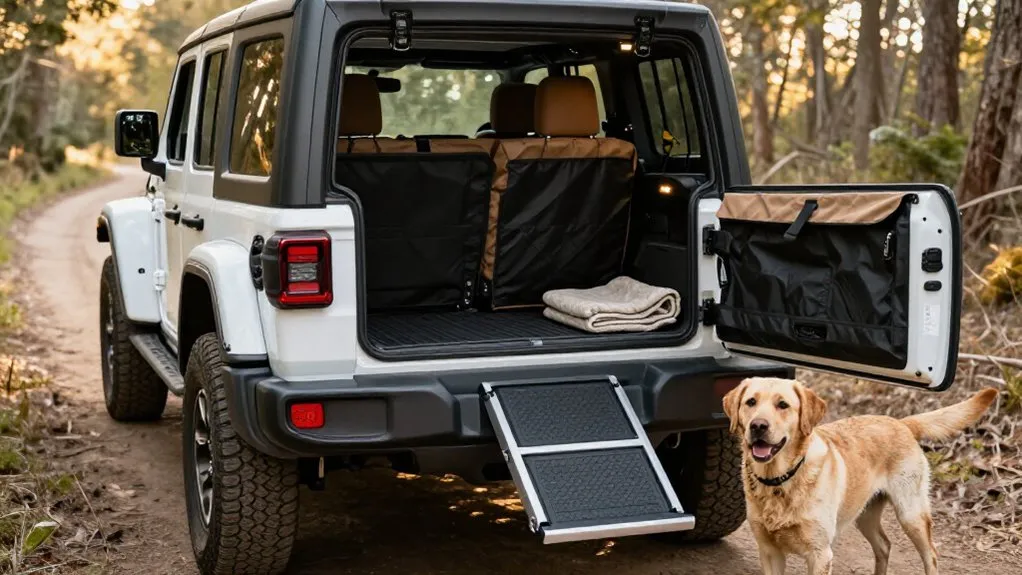
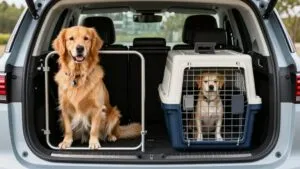
Build your Wrangler dog setup around factory rear cargo anchors or seat mounts, using a vehicle-specific barrier, secured crate, or crash-tested harness tethered behind the front seats.
Measure your two-door’s floor, wheel-well width, and cargo height before choosing a 30 to 36-inch barrier.
Add a grippy step or ramp sized for your dog’s hocks, keep paws off wet upholstery, and pack washable covers, towels, and a secured water bowl.
Next, you’ll find fit and trail-cleanup checks ahead.
Wrangler Rear Seat Anchor Points
Before adding a barrier, crate, or dog tether, identify your Wrangler’s factory rear cargo tie-downs and seat mounting points. These locations give pet equipment a load path instead of relying on trim panels, headrests, or straps. Check your owner’s manual and inspect anchors for rust, damage, or missing hardware before use.
Match brackets, clamps, and straps to your Wrangler generation, because roll-bar layouts and rear-seat hardware differ. Tighten hardware to the specified torque, then pull on the divider or crate to confirm it can’t shift. Route tether straps so they don’t cross sharp edges, pinch seat latches, or interfere with belt buckles.
A secure, vehicle-specific attachment helps protect your dog during braking, off-camber travel, and trail vibration while preserving access to rear-seat functions.
Two-Door Wrangler Cargo Measurements
A two-door Wrangler can carry a dog comfortably, but its short rear cargo bay demands measurements before you choose a crate, barrier, or ramp. Measure the narrowest floor, opening, and height with your rear seat in its normal position; trim, subwoofers, and tops can change usable space.
| Setup | Typical two-door space |
|---|---|
| Upright cargo | 26 to 32-in. floor length |
| Folded/rear seats removed | 60 to 65-in. usable length |
| Between wheel wells | 40 to 42 in. |
| Cargo height | About 30 to 36 in. |
JL capacity is about 13 cubic feet upright and 31 to 33 folded; JKs are similar. Test-fit your crate, confirm door clearance, and preserve standing and turning room. Secure it against trail movement.
Dog Harness Tether Lengths
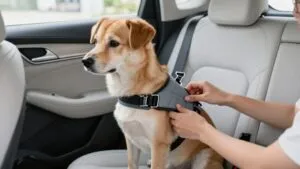
Choose a harness tether that lets your dog sit, stand, and lie down without reaching the front seats, open window, or tailgate. In a Wrangler, measure from the tether’s intended anchor to your dog’s harness ring while the dog is in its normal riding position.
Leave enough slack for comfortable posture changes, but not enough for lunging across the cabin or stepping onto a console. Clip the tether to a properly fitted, crash-tested harness, not a collar, to spread stopping forces across the chest and shoulders. Use a short, adjustable tether with a locking carabiner or seat-belt connector rated for vehicle use. Test it while parked, ensuring it remains clear of buckles and seat hardware. Replace worn webbing, frayed stitching, or damaged clips before trail runs.
Barrier Height: 30–36 Inches
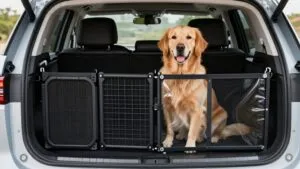
Measure your Wrangler’s rear cargo height before choosing a 30 to 36-inch barrier, then match it to your dog’s size and jumping ability. An adjustable, vehicle-secure barrier helps prevent seatback jumps while keeping your dog safely in the cargo area. Mount it firmly to suitable anchors or roll-bar points so trail gear can’t shift forward during rough travel or sudden stops.
Measuring Rear Cargo Height
Before buying a 30 to 36-inch dog barrier, check the vertical distance from your Wrangler’s cargo floor to the lowest hard point of the roof, hardtop, or roll bar. Measure at the barrier’s intended mounting line, not just at the tailgate, because roof contours and roll-bar geometry can reduce clearance farther forward.
Keep the tape vertical and account for cargo mats, raised platforms, and folded-seat hardware that change the true floor level. Compare your measurement with the barrier’s installed height, adjustment range, and required upper-mount clearance. Leave enough room to attach it without bending its frame or forcing straps against trim. Verify both sides. A square, tension-free installation limits rattles on rough trails and helps the divider stay secure during sudden braking on pavement or trails.
Matching Dog Size
With your cargo height confirmed, match a 30 to 36-inch barrier to your dog’s standing reach, athleticism, and travel behavior, not just its breed or weight. A calm, short-legged dog may stay comfortably behind a 30-inch divider, while a tall, agile dog that braces, climbs, or launches during excitement may need 36-inch coverage.
Watch how your dog behaves during loading: Can it place front paws high, squeeze through gaps, or clear low obstacles? Choose a height that keeps its head and shoulders inside the cargo zone through turns, bumps, and sudden braking. The barrier shouldn’t press against your dog’s resting space or block ventilation. Leave enough room for it to stand, turn, and lie down naturally, and reassess fit if you add a bed or cargo mat.
Choosing Adjustable Barriers
For a 30 to 36-inch target height, choose an adjustable barrier that locks firmly to your Wrangler’s roll bars, cargo anchors, or vehicle-specific mounting points rather than relying on loose tension alone. Measure from the cargo floor to mounting line, then confirm the barrier spans the width without bowing. A steel gate or reinforced mesh panel with positive-lock clamps handles trail vibration better than light netting.
Match the kit to your JL, JK, TJ, or YJ, because roll-bar geometry and anchor locations differ. Check that straps, clamps, and adjustment slides stay clear of trim, wiring, and tailgate operation. Tug-test the installed barrier before trips, inspect hardware for corrosion, and replace frayed webbing. Choose edges and a lower seal so your dog can ride comfortably without paws catching.
Preventing Seatback Jumps
A 30 to 36-inch barrier can stop most dogs from launching over the rear seatback when you mount it tightly from the cargo floor area to the Wrangler’s roll bars or upper anchor points. This height creates a clear physical boundary while preserving rearward visibility better than an oversized panel. Choose a vehicle-specific mesh or rigid gate that spans the usable opening without side gaps. Tension straps evenly, use factory anchors or roll-bar clamps, and recheck connections after rough-road vibration.
Your dog shouldn’t be able to nose beneath, squeeze around, or push the barrier forward. For tall, athletic jumpers, measure from cargo floor to top edge with rear seat upright; 36 inches offers margin. Before each drive, press the divider firmly and inspect buckles, webbing, and mounts.
Securing Trail Gear
Secure trail gear below or behind a tightly mounted 30 to 36-inch cargo barrier so it can’t slide into your dog’s space during a steep climb, hard stop, or off-camber section.
Choose a vehicle-specific steel gate or reinforced mesh barrier that attaches to factory cargo anchors or bolt-in points. Avoid loose strap nets for recovery gear; rough trails can make them flex, buzz, and shift.
Put tools, water jugs, traction boards, and bins low against the floor, then cinch each item to rated tie-downs. Keep hardware inside sealed containers, and leave your dog room to stand, turn, and lie down. Before rolling out, shake barrier, check fasteners, and confirm no gear reaches paws, tail, or bedding. A divider protects dog while keeping Wrangler’s load controlled.
Match Step Height to Hocks
At the tailgate, choose a step or ramp that lets your dog place its paws without forcing the rear legs into a deep jump. Check the height against your dog’s hocks: it should reduce the bend needed to load and unload while keeping footing stable. A low, wide platform suits dogs with stiff joints, aging hips, or shorter legs; a longer ramp helps when your Wrangler’s lift or oversized tires raise the cargo floor.
Choose rubberized or textured tread that stays grippy under wet paws and mud. Confirm the aid supports your dog’s weight without flexing, lock it before each use, and inspect hinges, feet, and mounting hardware after rough trails. Practice slowly on level ground, guide with a leash, and reward calm, controlled climbs.
Avoid Front-Seat Airbag Zones
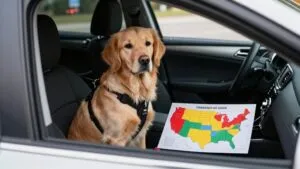
Keep your dog out of the front passenger area whenever possible, because an deploying airbag can seriously injure a restrained or unrestrained pet.
Place your dog in the rear seating area or cargo space, using a properly secured crate, vehicle-specific barrier, or crash-tested harness attached to an appropriate rear restraint point. Never tether a dog to the front seat or let it ride on your lap. A Wrangler’s upright cabin and short dash distance can put your pet close to the airbag module.
Before each drive, check that rear restraints stay tight and don’t interfere with seat latches or cargo anchors. If you carry passengers, choose a setup that keeps your dog separated, stable, and comfortably positioned behind the front seats.
Muddy Paws After Creek Crossings
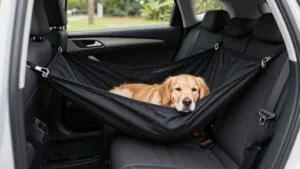
After a creek crossing, clean and dry your dog’s paws before they climb back into the Wrangler to limit slipping, protect interior surfaces, and prevent grit from working into seat covers and floor drains. Keep a microfiber towel, paw wipes, a soft brush, and a shallow drip tray near your tailgate. Check pads, toes, and nails for pebbles, cuts, burrs, or lingering moisture, especially after rocky water crossings.
Dry the belly and lower legs too, since runoff can soak a cover’s seams and leave odors behind. Guide your dog up a ramp or step with a textured, non-slip surface; don’t let them jump onto wet upholstery. Place a washable mat at the entry, then bag muddy towels separately. At home, rinse covers and cargo.
Stop Barrier Latch Rattle
Once your dog is clean and secured, eliminate any barrier latch rattle before heading onto rough roads. A buzzing gate can distract you, wear mounting hardware, and unsettle your dog when the trail gets choppy.
- Park on level ground and shake the barrier; locate every loose latch, clip, or roll-bar clamp.
- Tighten vehicle-specific fasteners to the maker’s specification, checking that brackets sit squarely against their mounts.
- Add thin rubber or felt anti-rattle pads where approved metal parts touch, without blocking latch engagement.
- Close and tug-test each latch, then drive slowly over a rough section and recheck it.
Don’t use improvised ties as primary retention. Your barrier must stay locked, clear of your dog’s reach, and firmly attached to approved anchors during every trail run.
Secure Water Bowl
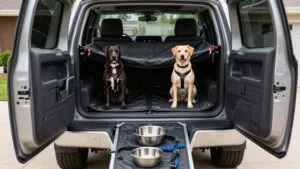
For trail travel, secure your dog’s water bowl in the rear cargo area so it can’t slide, spill, or become a projectile during a hard stop. A wide, non-skid bowl seated in a spill-proof holder protects your dog’s hydration and keeps water off carpet, wiring, and recovery gear. Attach the holder to a cargo surface or removable tray, not a loose blanket.
- Choose a weighted stainless-steel or silicone bowl with a locking base.
- Use factory cargo tie-downs or a purpose-built anchor strap.
- Fill it before breaks; rough trails can splash water.
- Pack water separately in a leakproof container.
Check the mount after washboard sections and offer water whenever you stop. Don’t leave a bowl accessible while moving; your dog could tip it.
Conclusion
Build your Wrangler dog setup around secure anchors, measured cargo space, and your dog’s comfort. Choose a 30 to 36-inch barrier, set tether length to prevent front-seat access, and use steps that protect aging hocks. After creek crossings, contain muddy paws with washable covers and secure the water bowl before trails get rough.
Silence loose latches, check every connection, and never rely on convenience over restraint. You’ll give your copilot safer miles wherever the trail leads.