How to Choose a Dog Seat Cover: Material, Fit and Features That Matter
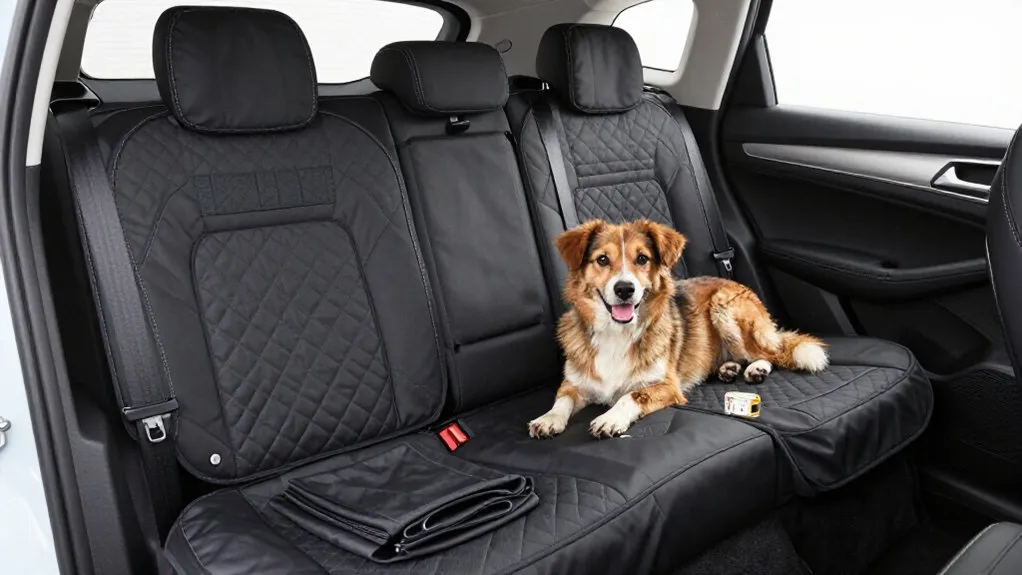
Choose a dog seat cover with a fully waterproof, wipe-clean laminate, nonslip backing, and secure headrest straps and seat anchors. Measure your rear bench’s usable door-to-door width, then make sure the cover lies flat without gaps, blocked buckles, or excess folds. Pick quilted padding for everyday comfort or a hard bottom for steadier support.
Confirm door coverage, child-seat anchor access, and headrest compatibility. Wash it as directed and dry it. More details can guide your choice.
Waterproof Hammock Covers for Shedders
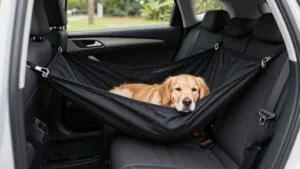
For a dog that sheds heavily, choose a waterproof hammock cover with a durable, wipe-clean top layer and a fully waterproof laminate rather than merely water-resistant fabric. Unlike water-resistant textiles, a laminate blocks urine, wet coats, and spills from reaching upholstery, reducing odor. Choose heavyweight quilting if your dog paws or scratches; it cushions joints while resisting tears.
A breathable face fabric limits heat buildup. Confirm nonslip silicone or rubber backing, secure headrest straps, and seat anchors keep it stable during turns or sudden braking. Keep belt-buckle openings clear and use a travel harness; a cover doesn’t replace restraint. Remove hair, wipe contamination promptly, and follow washing instructions. Inspect seams and the waterproof layer regularly; replace the cover if it leaks or loses grip.
Measure Your Backseat Width
Before you buy a dog seat cover, measure your rear bench from door to door at the widest usable point. Use a flexible tape measure across the seating surface. Record the width in inches or centimetres, then compare it with the manufacturer’s stated usable coverage rather than a vague vehicle-size label.
A cover that’s too narrow leaves upholstery exposed to muddy paws, shed hair, and spills. One that’s too wide can bunch, shift, or obstruct buckle access, which may compromise secure harness use. Check the measurement with the rear seat upright and after removing accessories. If your bench falls between listed sizes, choose the option designed to cover your measured width without excess fabric. A close fit supports anchoring, easier cleaning, and restraint access.
Check Door-Panel Coverage
A well-fitted seat cover protects the bench, but it won’t shield the door panels your dog may scratch, soil, drool on, or chew while entering, exiting, and riding. Measure each rear door’s height, width, seat-to-edge distance, armrest, controls, and attachment points before buying. Choose coverage that stays clear of window switches and handles; insecure flaps can shift, create gaps, trap dirt, and distract you.
| Option | Best use | Check |
|---|---|---|
| Integrated flaps | Routine travel | Pocket clearance |
| Separate panels | Adjustable placement | Secure straps |
| Molded liners | Heavy scratching | Vehicle fit |
| Universal flaps | Broad fit | Gap risk |
Clean fabric flaps as directed, remove hair from Velcro, and wipe rigid liners with mild detergent. Vehicle-specific liners minimize gaps and reduce moisture, odor, and contamination after muddy rides with your dog.
Quilted vs. Hard-Bottom Covers
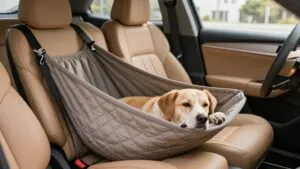
Choose a quilted cover when you want breathable cushioning and dependable moisture protection for everyday trips. For a larger dog, a hard-bottom cover creates a steadier platform, while non-slip backing and secure anchors help prevent shifting during stops. Check that either style blocks spills, wipes clean easily, and folds or installs without obstructing seat-belt access.
Comfort and Cushioning
Comfort depends on both the cover’s surface and the support beneath it. Choose a heavyweight quilted cover when your dog benefits from a softer resting surface on longer rides. Its padding can reduce pressure from seat contours, while durable quilting better withstands pawing than thin fabric. Select a breathable, waterproof top layer so spilled water, wet fur, and accidents don’t soak into the padding or vehicle upholstery.
A hard-bottom cover creates a flatter, more even platform over uneven cushions, which may suit dogs that dislike sinking into soft padding. Check that its surface is padded or topped with a washable mat; an unyielding panel alone can become uncomfortable. Clean either style promptly after mud, drool, or accidents to limit odor, bacteria, and skin irritation.
Stability for Larger Dogs
For larger dogs, stability matters as much as cushioning because a shifting cover can undermine footing and distract both dog and driver. A heavyweight quilted cover works well when your dog rides calmly on a sized bench: its padded layers reduce pressure, while a non-slip silicone or rubber backing, seat anchors, and tight headrest straps limit bunching during turns and braking.
Choose a hard-bottom cover when your dog is heavy, shifts often, or needs a flatter platform. A rigid base spreads weight across the seat and resists sagging into gaps for secure footing. Confirm it fits your vehicle, doesn’t block belt buckles, and keeps harness-tether access clear. Inspect straps and anchors routinely; replace a cover if the base warps, attachments loosen, or noticeable odors persist.
Spill and Dirt Protection
Although both styles shield upholstery, a waterproof quilted cover typically handles everyday mud, hair, and minor spills best because its layered, wipe-clean surface blocks liquid and cushions the seat. Choose a genuinely waterproof laminate rather than merely water-resistant fabric; water-resistant layers can saturate during prolonged exposure. Heavyweight quilting also resists claws and distributes pressure, helping protect seat fabric from abrasion.
A hard-bottom cover suits dogs that track in heavy debris or need a rigid, contained platform: its raised structure can keep wet grit and spilled water from pooling against upholstery. However, dirt can collect at seams and edges, so inspect those areas promptly. Whichever style you choose, make sure the surface stays dry and nonslip to reduce sliding during braking and limit bacterial.
Installation and Storage
Quilted covers usually install fastest: loop the headrest straps, press in the seat anchors, secure the clips, and align the buckle openings before attaching your dog’s harness tether. Check that the non-slip backing lies flat and that no strap blocks a belt buckle; a shifted cover can undermine stable restraint positioning.
Hard-bottom platforms need careful positioning during installation in your vehicle: fasten every anchor and confirm they don’t pinch split-seat hinges or obstruct belts. Their firm base can limit sagging and collect debris for removal, but wipe and dry it after wet trips to prevent odor and microbial growth. Before storage, remove hair, clean according to the label, and let either style dry completely. You can roll most quilted covers compactly; store hard-bottom models flat.
Covers for Motion-Sick Dogs
For a motion-sick dog, choose a fully waterproof, wipeable cover that keeps vomit from reaching your upholstery and supports fast sanitation. Secure a hammock-style cover with anchors, non-slip backing, and seat-belt access so it won’t shift during braking or turns. Raised edges help contain spills, while an easy-clean surface lets you disinfect the area promptly.
Waterproof, Wipeable Materials
If your dog gets motion sick, choose a truly waterproof seat cover with a laminated moisture barrier rather than a merely water-resistant fabric. Waterproof laminates stop vomit, bile, and cleaning liquid from soaking through to the upholstery; water-resistant textiles can eventually saturate. Choose a smooth, wipeable top surface with sealed or tightly bound seams, because absorbent quilting and exposed stitching can retain odor and residue.
After each episode, remove solids using towels, then clean surface with pet-safe cleaner according to its label and allow it to dry fully. Don’t rely on fragrance to indicate cleanliness. Check the manufacturer’s care instructions: repeated hot washing, harsh bleach, or high-heat drying may damage a laminate. A durable, nonporous cover supports cleanup and reduces contamination in your vehicle.
Secure Hammock-Style Fit
A securely fitted hammock-style cover helps keep a motion-sick dog from sliding off the rear seat or falling into the footwell during braking and turns. Measure your rear bench door to door, then choose a cover that lies flat without gaps, overhang, or loose folds. Attach headrest straps, seat anchors, and clips tightly, and recheck them before each trip.
Choose a non-slip backing to limit shifting beneath your dog, especially when nausea causes restlessness. The hammock should complement, not replace, a crash-tested car harness and correctly positioned tether; use belt openings so restraint hardware remains functional. After drooling or vomiting, clean the waterproof, wipeable surface promptly with a pet-safe product. Follow care instructions, because moisture and residue can cause odors and bacterial growth.
Raised Edge Protection
Raised edges and side flaps create a contained barrier that helps keep vomit, drool, and muddy runoff off seat seams, door panels, and the footwell. For a dog prone to motion sickness, choose raised sides that stay upright when your vehicle corners or brakes. The barrier should fit closely along the bench and extend toward the doors, limiting liquid’s path before it reaches hidden gaps.
Pair it with secure anchors and a non-slip base so the cover doesn’t shift and spill containment isn’t compromised. Check that side flaps don’t block seat-belt buckles or interfere with your dog’s crash-tested harness tether. A well-shaped perimeter also discourages sliding toward the footwell during sudden stops, supporting steadier travel while keeping contamination contained in one protected seating area.
Easy-Clean Design
For motion-sick dogs, choose a cover with a truly waterproof, wipe-clean surface that keeps vomit and other liquids from soaking into upholstery or padding.
Water-resistant fabric may repel a small spill, but it can saturate, trap odor, and expose the seat beneath during a longer cleanup. Prioritize a laminated moisture barrier, sealed or bound seams, and a smooth top layer you can disinfect promptly according to the maker’s instructions. Choose a cover that removes quickly, washes as directed, and dries fully before reuse; moisture left in folds can support odor and microbial growth.
Keep absorbent towels, disposable gloves, and a sealable waste bag in its pocket. After an episode, secure your dog safely first, then clean hands and affected surfaces thoroughly before driving again.
Verify Child-Seat Anchor Access
Before installing a dog seat cover, confirm that it leaves your vehicle’s child-seat anchor points and seat-belt buckles fully accessible. Check your owner’s manual to identify the lower anchors and top tether locations, because their placement varies by vehicle and seating position. Choose a cover with dedicated, reinforced openings that align without stretching fabric across the hardware.
After fitting, expose each anchor, attach the child restraint, and confirm that its connectors lock securely and its tether routes unobstructed. Don’t force a connector through a narrow slit or leave a buckle buried under loose material. Remove pet hair, dirt, and food debris from the openings regularly, so nothing obscures the anchors or compromises a secure connection. Recheck access after adjusting straps or converting the cover.
Machine-Washable Covers Reduce Replacement Costs
A machine-washable dog seat cover helps you remove mud, dander, saliva, and accident residue promptly instead of replacing a cover that has become stained or odorous. Regular laundering limits debris and odors that can make your vehicle hygienic for passengers and pets. Choose a cover with clear wash and drying instructions, colorfast fabric, and a waterproof layer rated to tolerate cleaning.
Follow the label’s temperature limit; excessive heat can damage laminates, cause shrinkage, or weaken the moisture barrier. Shake off loose grit first, pre-treat soiled areas as directed, and wash after accidents or outdoor trips. Dry the cover completely before reinstalling it, since trapped moisture can encourage mildew and odors. A durable washable cover lowers costs by extending service life and keeping upholstery cleaner.
Inspect Strap-Buckle Stitching
Inspect the stitching where straps, buckles, and seat anchors join the cover, as these high-stress points keep it from shifting while your dog moves. Examine each attachment before purchase and after washing; loose threads or torn webbing can let the cover bunch, expose upholstery to dirt, and distract you during braking.
Look for:
- Dense, even bar-tack or box-X stitches that spread pulling force across the strap.
- Webbing sewn through reinforced fabric, with no skipped stitches, fraying, puckering, or exposed needle holes.
- Buckle tabs and seat-anchor loops that remain firmly attached when you tug them by hand.
Strong stitching supports the non-slip backing and helps keep restraint openings correctly positioned, but it doesn’t replace a crash-tested dog harness. Clean straps promptly; replace cover if attachments loosen.
Confirm Headrest Compatibility
Confirm that your vehicle has adjustable headrests in the seating positions the cover uses, since most hammock and bench covers secure their upper straps around headrest posts. Check your owner’s manual and cover maker’s fit guide before ordering; fixed or integrated headrests may not provide a safe anchor. Never route straps around a headrest that interferes with seat operation, child-seat installation, or airbags.
- Measure post spacing and headrest height for flat, untwisted straps.
- Test it: it shouldn’t sag, slide, or block belt buckles.
- Inspect attachment points after trips; rinse contamination and dry straps thoroughly.
A secure fit helps limit cover movement during braking, keeps your dog’s tether accessible, and reduces moisture reaching upholstery. If uncertain, choose a vehicle-specific design or seat-anchor bench cover instead.
Conclusion
Choose a cover that matches your dog, vehicle, and cleaning routine, not just your décor. Measure carefully, confirm headrest and child-seat anchor access, and check door protection before buying. For shedding, muddy, or motion-sick dogs, prioritize waterproof, machine-washable materials and secure stitching.
Select quilted padding or a hard bottom based on stability needs. You’ll protect upholstery, reduce odor and bacteria buildup, and keep every passenger safer when straps, buckles, and fit stay secure in use.