How Long Can a Dog Stay in a Car? Safe Limits by Season
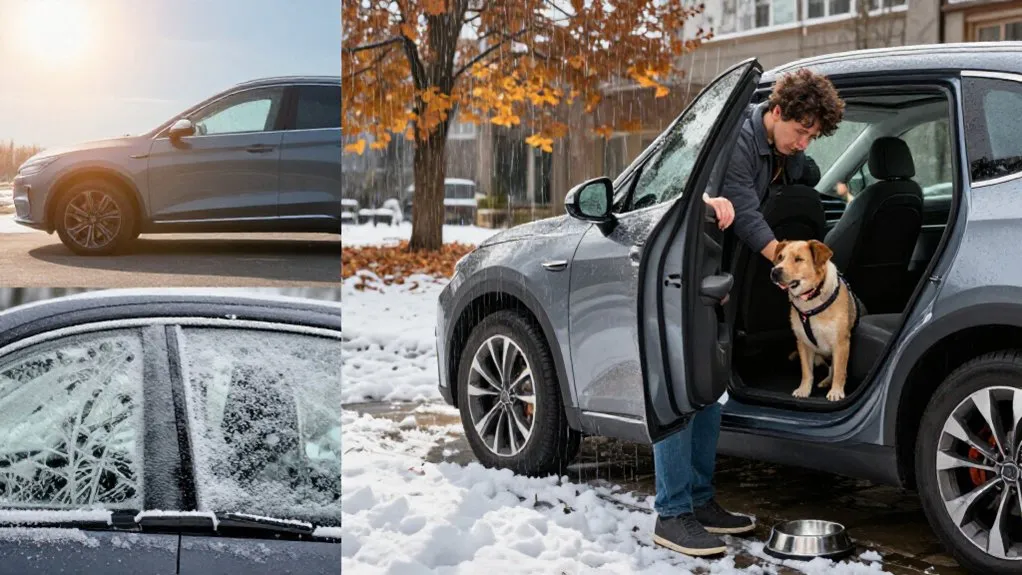
Don’t leave your dog unattended in a car in any season: there’s no reliably safe time limit.
On warm days, cabin temperatures can climb 10 to 20°F within five minutes, and even 70°F weather can become dangerous. In cold weather, cars can become hypothermia traps. Puppies, seniors, and flat-faced dogs face added risk. Cracked windows, shade, and remote starters aren’t safeguards.
Choose pet-friendly stops or leave your dog home; details below explain safer travel and emergency steps.
Seasonal Parked-Dog Safety Limits
How long a dog can safely stay in a parked car depends heavily on the season, but hot weather leaves virtually no safe margin for an unattended dog.
In warm conditions, don’t leave your dog parked; veterinary and animal-welfare guidance treats this as unsafe regardless of shade, cracked windows, or sunshades. Healthy adult dogs may tolerate only a few minutes during mild, roughly 60 to 65°F, weather when you can watch them directly and maintain airflow. Puppies, seniors, flat-faced breeds, and dogs with heart or breathing conditions need stricter protection.
In cold weather, cabins can become cold traps. Small, thin-coated, wet, young, or older dogs face hypothermia sooner. For any errand, choose the safer option: take your dog with you, leave them home, or arrange care.
Cabin Temperature Rises Within Minutes
A parked car can become dangerously hot within minutes because sunlight heats the cabin faster than trapped air can escape. Glass lets solar energy enter, while seats, dashboards, and other surfaces absorb it and release heat back into the enclosed space. Once parked, your vehicle loses the airflow that helps carry heat away.
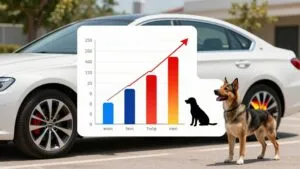
Measurements show cabin temperatures can climb about 10 to 20°F in five minutes and nearly 30°F in 20 minutes, depending on sun exposure, vehicle position, and conditions. Most of the increase happens during the first half-hour. Cracking windows doesn’t provide enough air exchange to stop this buildup.
Your dog can’t cool as efficiently as you do; panting may quickly become inadequate. Shade and sunshades reduce exposure, but don’t make cars safe.
70°F Can Turn Deadly
Even a 70°F day can put your dog in danger inside a parked car, particularly in direct sun. The cabin acts like a greenhouse: sunlight passes through the windows, then heat builds in the enclosed space. On a mild-looking day, the interior can climb above the outside temperature within minutes, leaving your dog unable to cool down.
Don’t rely on cracked windows, shade, or an errand to make the situation safe; each offers protection and conditions can change fast. The safest limit in weather is no unattended time. Take your dog with you, leave them at home, or choose pet-friendly stops. If you see heavy panting, drooling, weakness, vomiting, collapse, or seizures, move them to a cool area, offer water, and call a veterinarian.
Brachycephalic Dogs Need Shorter Limits
If you have a flat-faced dog, such as a Pug, Bulldog, or Boston Terrier, recognize that they face a higher heatstroke risk than many other breeds. Their shortened airways make panting less effective, so rising car temperatures can overwhelm them quickly, even in relatively mild weather. Don’t leave them unattended in a vehicle; take them with you or leave them safely at home.
Higher Heatstroke Risk
Because brachycephalic dogs, such as Pugs, Bulldogs, Boston Terriers, and Shih Tzus, have narrowed airways and less efficient cooling systems, they can overheat far faster than many other dogs. You shouldn’t treat a mild day or a quick errand as low-risk. A parked car’s temperature can climb about 20°F in 10 minutes, while your dog may develop dangerous heat stress before you return.
For these breeds, the safest warm-weather limit is zero: don’t leave them unattended in a vehicle. Choose a pet-friendly stop, leave your dog home, or have someone stay with them in a reliably climate-controlled car. Watch for heavy panting, drooling, weakness, vomiting, or collapse. Move them to cool air and seek urgent veterinary care if signs appear. It can worsen after removal too.
Airway Challenges Intensify
Their shortened airways make brachycephalic dogs especially vulnerable in a parked car: they can’t pant efficiently enough to shed heat as the cabin warms.
If you share your life with a Pug, French Bulldog, English Bulldog, Boston Terrier, or similar flat-faced dog, treat even mild warmth as a serious risk. Narrow nostrils, elongated soft palates, and other airway changes can restrict airflow and increase the work of breathing. Excitement, stress, obesity, heart disease, and age can reduce tolerance further.
Give your dog the coolest travel conditions, climate control, drinking water, and breaks in a cool place. Watch for noisy breathing, worsening panting, drooling, weakness, blue or pale gums, vomiting, or collapse. Stop the journey, get them into cool air, and call a veterinarian.
Never Leave Unattended
Never leave a brachycephalic dog unattended in a parked car, even for a quick errand or on a day that feels only mildly warm. Bulldogs, Pugs, French Bulldogs, Boston Terriers, and flat-faced dogs work harder to move air through shortened airways. As cabin heat rises, panting becomes less effective, so distress can escalate before you return.
Shade, cracked windows, sunshades, and a running air conditioner don’t create a dependable safety margin; conditions can change quickly, and equipment can fail.
Take your dog with you only when you can bring them indoors or keep them under direct supervision. Otherwise, leave them safely at home. If you notice frantic panting, heavy drooling, weakness, vomiting, collapse, or seizures, move them to cooling immediately and contact an emergency veterinarian.
Puppies Overheat Faster
Your puppy’s small body can heat up quickly in a parked car, while its ability to cool itself remains limited. Because puppies can also dehydrate faster, even a brief wait can become dangerous as cabin temperatures rise. Protect your puppy by taking it with you or leaving it safely at home.
Smaller Bodies Heat Quickly
Puppies can overheat faster than adult dogs because their smaller bodies and still-developing ability to regulate temperature leave them less able to cope with a hot, enclosed car. Their body temperature can rise quickly as the cabin warms, even when the outdoor temperature doesn’t feel extreme to you. A puppy may become dangerously hot before you return from what you expected to be a brief errand.
Don’t rely on shade, cracked windows, or a quick timeline to make a parked car safe. Young dogs also have less reserve when heat stress begins, so symptoms such as heavy panting, drooling, weakness, vomiting, or unsteadiness demand immediate action. Keep your puppy with you, leave them safely at home, or choose a pet-friendly destination. In warm weather, no unattended car stay is a safe choice.
Limited Cooling Capacity
A puppy’s cooling system isn’t as efficient or resilient as an adult dog’s, so it can’t shed body heat fast enough once a parked car starts warming. Puppies mainly cool themselves by panting, but their temperature-control mechanisms are still developing. In a confined, rapidly heating cabin, panting may not keep pace with rising heat, especially if your puppy is excited or stressed.
Don’t assume cracked windows, shade, or a brief errand makes the situation safe. Cabin temperatures can climb dramatically within minutes, and young dogs have little margin before dangerous overheating begins. Leave your puppy at home whenever possible. If you see frantic panting, heavy drooling, weakness, vomiting, collapse, or seizures, move your puppy to a cool, air-conditioned space and call a veterinarian for guidance.
Higher Dehydration Risk
Because puppies have smaller bodies and can lose fluids quickly through panting, they may dehydrate faster than adult dogs in a warming car. Don’t rely on a water bowl or cracked windows: rising cabin heat can overwhelm your puppy’s ability to cool itself. If you must travel, keep your puppy with you, offer water during stops, and never leave them unattended in warm weather.
| Warning sign | What you may notice | Act now |
|---|---|---|
| Early dehydration | Sticky gums, intense panting | Return to cool air |
| Worsening distress | Weakness, vomiting, collapse | Call a veterinarian |
| Best prevention | Take your puppy inside | Avoid the risk |
Heatstroke can progress rapidly and may be fatal. If you see severe panting, drooling, confusion, seizures, or collapse, start gentle cooling and seek emergency veterinary care.
Grocery-Store Stop Examples
Even a “quick” grocery-store run can put your dog in danger if the weather is warm: on an 85°F (29°C) day, a parked car may exceed 100°F (38°C) within 10 minutes.
If you need milk and bread, it may feel brief, but parking, checkout lines, and delays can stretch past 10 minutes. Don’t leave your dog behind in heat; leave them home, use curbside pickup, or have someone stay with them in climate-controlled conditions. Shade and sunshades can’t make errands safe.
Puppies, senior dogs, flat-faced breeds, and dogs with heart or breathing conditions face heightened risk, yet any dog can develop heatstroke. Watch for panting, drooling, weakness, vomiting, or collapse. Move them indoors, offer water, begin gentle cooling, and call a vet immediately.
Cracked Windows Offer Little Protection
Cracking the windows doesn’t make a parked car safe for your dog: it provides too little airflow to prevent the cabin from heating rapidly. On a warm day, temperatures can climb nearly 20°F in 10 minutes, even when windows are partly open. A narrow gap doesn’t remove trapped solar heat or create the steady ventilation your dog needs.
Shade and sunshades may slow warming, but they won’t make an unattended vehicle reliably safe. Dogs cool themselves mainly by panting, which becomes ineffective as cabin heat rises. Flat-faced breeds, puppies, seniors, and dogs with heart or breathing conditions face added danger. If you must stop, choose a pet-friendly option or leave your dog home. In mild weather, a cracked window still requires close, direct supervision.
Remote Starters Aren’t Safeguards
A remote starter or idling air conditioner can fail without warning, so it doesn’t make an unattended car a safe place for your dog. Systems can shut off after a preset time, lose power, malfunction, or deliver uneven cooling, while sunlight and cabin heat keep building. You can’t reliably verify your dog’s comfort once you leave.
- Take your dog with you only when the destination welcomes pets and you can keep them beside you.
- Leave your dog at home during errands, especially in warm weather or temperature extremes.
- Plan travel around pet-friendly stops, and never rely on a running vehicle as your backup safety system.
Your dog depends on you to choose a reliably safe environment every time you travel.
Call 911 for Trapped Dogs
If you see a dog trapped in a parked car and showing distress—heavy panting, drooling, weakness, collapse, vomiting, or seizures—call 911 or local animal control immediately. Note the vehicle’s location, color, license plate, and the dog’s condition; ask nearby businesses to page the owner while responders travel. Don’t delay for a cracked window or a running engine: cabins can heat dangerously within minutes.
| What to report | Why it matters |
|---|---|
| Exact location and plate | Helps dispatch find you fast |
| Collapse or seizures | Signals a life-threatening emergency |
Stay nearby if it’s safe, document conditions, and follow dispatcher instructions. Don’t break a window unless authorities direct you or local law clearly permits emergency rescue. Once freed, move the dog to shade, cool, and seek veterinary care.
Conclusion
You can’t rely on a quick errand, cracked windows, or a remote starter to keep your dog safe in a parked car. Cabin temperatures can climb within minutes, even on mild days, and puppies, older dogs, and flat-faced breeds face added risk. Plan ahead: leave your dog home, use pet-friendly pickup, or bring another adult. If you see a distressed dog trapped in a vehicle, call 911 or local animal control immediately for urgent assistance.