Dog Car Harness vs Crate: Which Is the Safer Way to Travel?
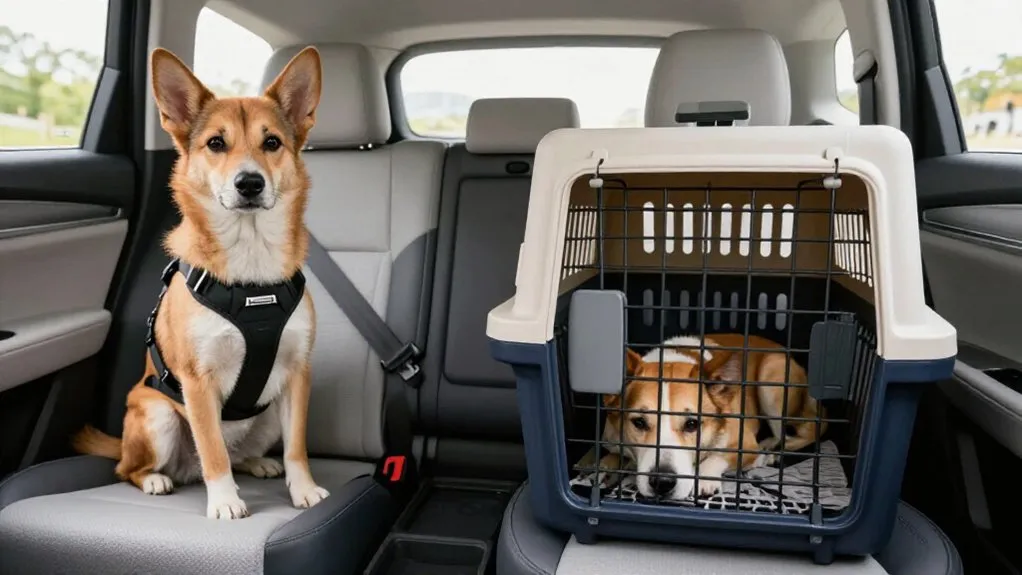
For your dog, neither option is automatically safer. You should choose a properly fitted, securely anchored restraint with independent crash-test evidence, ideally CPS certification.
A rigid crate can offer a protective shell when it fits your hatchback, stays ventilated, and is tied down; a rear-seat harness saves space and limits roaming when used exactly as tested. Check fit and hardware before every trip and keep releases accessible.
The practical tradeoffs below can help you decide.
Back-Seat Space Compared
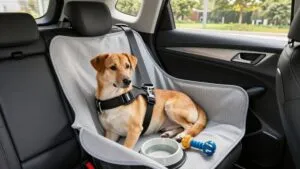
For back-seat space, a crash-tested harness usually makes the most efficient use of a typical passenger seat: it keeps your dog within a defined area while still leaving room for another passenger.
| Choice | Your dog’s space |
|---|---|
| Harness | Shared seat, close to you |
| Crate | A protected, larger zone |
| Trade-off | Passenger room shrinks |
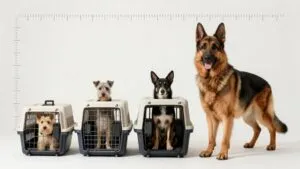
You preserve room in sedans, coupes, and compact SUVs, so a rider needn’t crowd your dog. A crate needs enough room for standing, turning, and lying down; its footprint can consume a rear bench or force cargo use. Large rigid models may require two people to lift and can scuff upholstery. A washable harness and seat cover create less disruption. Choose a restraint that fits without crowding your dog or blocking passenger seating.
Seat-Belt Anchors and Ventilation
Secure anchoring and airflow matter as much as the restraint you choose. Attach a travel harness only to the vehicle point its manufacturer specifies, usually the seat belt, and keep the tether short enough to limit roaming without forcing your dog to brace. For a crate, use compatible seat belts or cargo tie-downs so it can’t slide, tip, or become loose during routine braking. Check straps, buckles, and anchors before every trip.
- Fresh air helps your dog breathe calmly, especially when travel feels frightening.
- Keep crate vents uncovered; never stack bags or blankets against openings.
- Parking heat can become deadly quickly, so don’t leave your companion unattended.
On longer drives, offer water and breaks, and watch for panting, restlessness, or distress in your dog.
Crash-Test Outcomes Compared
Good anchoring and ventilation set the baseline, but crash-test results show why the restraint’s design matters. A rigid, crash-tested crate can preserve a protective shell, limit your dog’s secondary impacts, and reduce ejection risk when the structure stays intact. It protects well against crushing forces that can collapse soft carriers.
A properly fitted, independently crash-tested harness can also protect your dog by spreading deceleration forces across the chest and shoulders rather than concentrating them at the neck. However, test performance depends heavily on strong hardware, correct fit, and a restraint system designed for your dog’s weight. Neither option makes a collision safe. Choose products with credible dynamic-test results and size limits, not vague “crash-proof” marketing. Your dog deserves evidence-based protection, not an untested promise.
Harness Buckling Versus Crate Loading
Buckling a dog into a crash-tested harness is usually faster and easier in a passenger seat, while loading a rigid crate takes more space and planning. You can clip a tested harness to the approved seat-belt connection, check each buckle, and leave without lifting bulky equipment. With a crate, you must position it, secure it to compatible anchors, and load your dog calmly before driving.
- A rushed buckle can fail when your dog needs you most.
- An unsecured crate can become a frightening projectile.
- Careful loading gives your companion a calmer, protected start.
Follow manufacturer instructions for the restraint and vehicle anchors. Never use a collar attachment. Choose the option you can secure correctly each trip, because consistency protects your dog and everyone.
Sizing for Growing Puppies
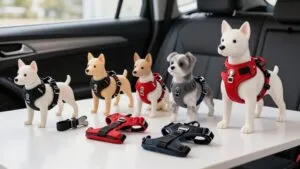
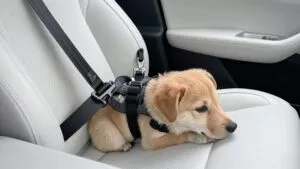
As your puppy grows, reassess the restraint’s fit often rather than buying far ahead in size. A roomy crate lets a puppy slide or strike its sides during a sudden stop; choose one that permits standing, turning, and lying down comfortably without excess floor space. For a harness, follow the manufacturer’s chest measurement and weight range, then adjust it so the chest panel sits securely across the breastbone and shoulders.
You should fit two fingers beneath the straps, not a loose fist. Check fit before every trip and after noticeable growth, weight change, or coat change. If your puppy falls between sizes, consult the maker rather than guessing. A correct fit limits dangerous movement while protecting breathing and natural posture during normal vehicle travel.
Replacement Straps, Crate Lifespan
Inspect a car harness’s straps, stitching, buckles, and tether hardware before each trip, and replace the entire restraint if you find fraying, cuts, corrosion, cracks, or crash damage. Don’t assume a replacement tether restores a compromised harness; follow the manufacturer’s approved parts and weight limits. After any collision, retire it, even when damage isn’t visible.
- Your dog depends on every stitched seam to hold when a stop turns violent.
- A bent crate door, warped shell, broken weld, or loose anchor can betray them.
- A sound crate gives your companion a calm, protective space.
Check crates regularly for cracks, rust, damaged latches, sharp edges, and weakened fasteners. Replace a crate after a crash or structural damage; its protective strength can’t be verified at home safely.
Emergency Exit Accessibility
After a crash or roadside emergency, you need a restraint that lets you reach and remove your dog without delaying your own exit or exposing them to traffic. A harness can allow quicker release when its buckle remains accessible and the seatbelt or tether hasn’t jammed. Practice releasing it one-handed, but don’t unclip your dog until you can control where they go.
A rigid crate can protect containment, yet its door may be blocked by damaged panels, shifted cargo, or a crushed rear hatch. Choose a crate with an accessible door, secure anchor points, and a release you can operate without tools. Keep a slip lead within reach for either setup. If unsafe to reach them, retreat and tell responders your dog is inside.
Driver Distraction Differences
A secured crate limits your dog’s movement, helping you keep your eyes and attention on the road. A properly fitted harness allows more seat-area mobility, which may create visual distractions if your dog shifts, climbs, or reaches toward you. Either option should also account for vocalization, since stress-related barking can divert your focus and signal that your dog needs a calmer travel setup.
Movement And Driver Focus
Because an unrestrained dog can shift, climb, or lunge during a drive, it can divert your attention at the exact moment you need to respond to traffic. A secured crate limits your dog’s movement in a defined space, helping you keep both hands on the wheel. A fitted, crash-tested harness prevents roaming, but a long tether can still let your dog reposition. Choose a restraint that fits your dog and vehicle, and secure it properly as instructed. You’re protecting more than convenience:
- Your dog won’t tumble into the footwell during a sudden stop.
- You won’t need to reach back when they shift.
- Everyone gets a calmer, controlled ride.
A crate should allow standing and turning without crowding; a harness should sit snugly over chest and shoulders.
Vocalization And Visual Distractions
While both options limit roaming, they affect visual and noise-related distraction differently. A properly secured crate usually blocks your dog’s view of passing traffic, people, and wildlife, which can reduce alert barking and head-turning that pulls your attention from the road. Its enclosed space may also help a crate-trained dog settle. However, some dogs vocalize more when isolated or anxious; don’t assume a crate is automatically quieter.
A crash-tested harness keeps your dog in a seat but leaves more visual access. An excitable dog may track movement, whine, or bark at triggers outside the window. Choose the restraint that helps your individual dog remain calm, fit and anchor it correctly, and train gradually with short trips. If distress persists, stop and consult your veterinarian.
Best Choice for Hatchback Trips
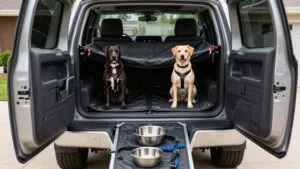
In a hatchback, measure the cargo area before choosing a rigid crate, and secure it to approved tie-down points so it can’t shift in a crash. If a crate won’t fit safely, use a properly fitted, independently crash-tested harness with a compatible seat-belt or vehicle anchor. Make sure your dog’s crate provides adequate ventilation and enough room to stand, turn, and rest comfortably.
Hatchback Cargo Space Considerations
For most hatchback trips, a crash-tested harness secured in the rear seat is the safer practical choice when cargo space can’t accommodate a rigid crate that’s properly anchored.
Measure the floor, wheel-well width, hatch clearance, and your dog’s standing and turning room before you buy. A crate that crowds the hatch or lets your dog slide during braking can’t provide its intended protection. Soft carriers can collapse under severe forces.
- A cramped crate turns calm travel into a frightening squeeze.
- A loose crate can threaten the companion you cherish.
- A well-fitted option protects room for people and essentials.
If a rigid, crash-tested crate genuinely fits your hatchback, it can benefit a crate-comfortable dog. Otherwise, choose certified protection that lets every traveler breathe easier today.
Harness Anchoring Options
A crash-tested harness anchored to the rear-seat belt is usually the best fit for hatchback travel, because it restrains your dog without relying on limited cargo-room space. Choose a model independently tested with the exact tether, connector, and attachment method you’ll use; certification applies only to the tested setup. Route the vehicle belt through the harness as instructed, or connect an approved short tether to a designated seat-belt buckle or lower anchor when the manufacturer permits it.
Never clip to a collar, a cargo hook, or a flimsy aftermarket extender. Keep the tether short enough to limit forward travel while allowing your dog to sit or lie down naturally. Check hardware, stitching, and fit before every trip. A snug chest-and-shoulder fit helps spread crash forces.
Crate Fit And Ventilation
Although a rigid crate can offer strong containment in a hatchback, it’s the best choice only when your vehicle provides enough cargo-room depth and you can anchor it securely to approved tie-down points. Measure inside: your dog should stand, turn, and lie naturally without sliding during braking.
A crowded crate compromises comfort; an oversized one permits dangerous movement. Choose rigid walls with unobstructed ventilation on several sides. Never cover vents, pack luggage against them, or leave your dog in a parked hatchback.
- Easy breathing helps your dog settle calmly.
- Clear airflow guards against frightening heat buildup.
- A stable fit limits harmful movement.
Check weight limits, instructions, and hatch clearance before travel. If the crate won’t anchor or restricts airflow, use a crash-tested rear-seat harness.
Prioritize CPS-Certified Restraints
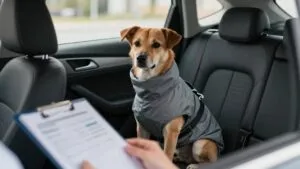
Prioritize restraints certified by the Center for Pet Safety (CPS) when choosing between a car harness and carrier. CPS certification means the product demonstrated performance in dynamic crash testing under specified conditions; it isn’t merely a marketing claim. Choose a model approved for your dog’s weight and follow its instructions exactly.
With a harness, position the straps snugly across your dog’s chest and shoulders, then use the required tether and vehicle anchor. Don’t attach it to a collar or substitute unapproved hardware. With a carrier or crate, confirm that its certification applies to your dog’s size and installation method, then secure it to approved seat-belt or cargo anchors. Certification can’t compensate for poor fit, loose straps, or an unsecured crate. Check connections before driving.
Conclusion
Choose the restraint that fits your dog, your vehicle, and the trip, not the one that merely seems convenient. For crash protection, look for current Center for Pet Safety certification and follow the manufacturer’s weight, anchor, and installation instructions. A properly sized, secured crate may suit hatchbacks; a tested harness can preserve back-seat access. Keep ventilation, emergency release, and distraction control in mind. Recheck fit as puppies grow quickly, and never let your dog ride unrestrained.