How to Choose a Dog Car Seat: Size, Safety Tether and Mounting Style
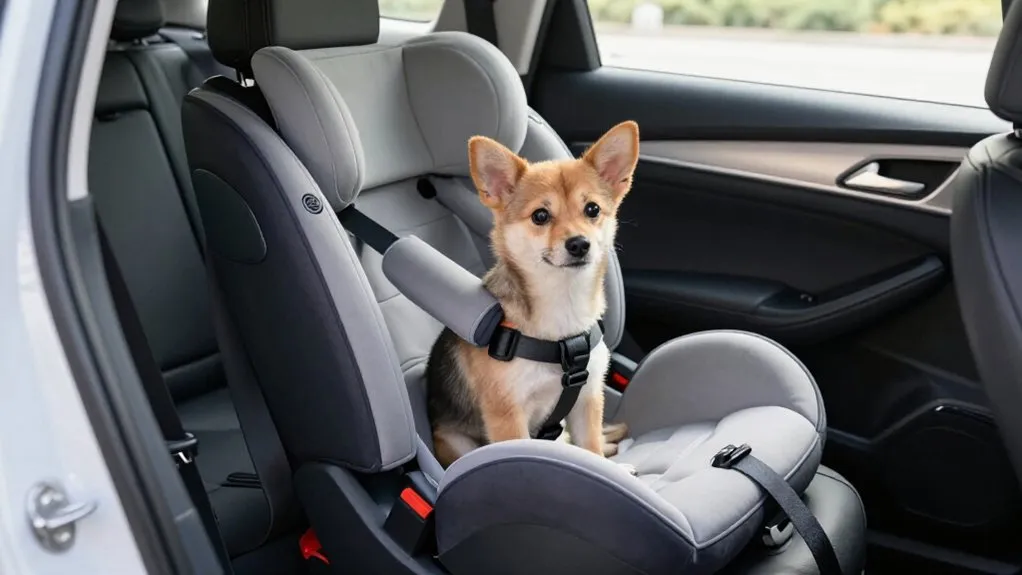
Choose a dog car seat by measuring your dog’s relaxed neck-to-tail length and weight, then selecting a seat with enough interior room and a stated capacity above both needs.
Install it in a compatible rear position, route every mounting strap correctly, and tug-test for movement. Attach the tether only to a well-fitted harness, never a collar.
Prefer independently crash-tested models, verify headrest-post compatibility and buckle access.
You’ll also find fit, style, and maintenance guidance ahead.
Measure Seated Dog Height
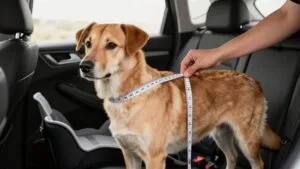
Before you compare dog car seats, measure your dog from the base of the neck to the start of the tail while they’re in a natural seated or relaxed position. This length shows the lie-down space the seat must provide. Record their current weight, too, because manufacturers usually list weight capacity first, and exceeding it can weaken the restraint system.
As a practical guide, medium seats generally suit dogs up to 22 pounds and 45 cm long; large models fit up to 44 pounds and 60 cm. Choose XL when either limit is exceeded. Don’t size by breed alone: two dogs of the same breed can differ substantially. Your dog should sit upright and lie down without extreme curling, dangling legs, or head overhang.
Account for Motion Sickness
A properly sized seat also helps manage motion sickness by giving your dog a stable, predictable place to ride. Choose a model that lets them sit or lie down naturally without sliding, curling tightly, or hanging their head over the edge. A supportive base and secure mounting reduce the shifting that can worsen nausea.
For a dog prone to carsickness, begin with short trips and gradually extend travel time. Keep the cabin cool, drive smoothly, and avoid feeding a meal before departure.
Stop safely for fresh air and water. An elevated booster may help small dogs feel calmer by providing a view outside, while an anchored crate with bedding can suit dogs that become overwhelmed by motion. Ask your veterinarian about vomiting or distress.
Check Crash-Test Certification
Crash-Test Certification
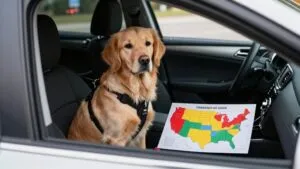
Crash-test certification gives you evidence that a dog restraint can withstand collision forces, not merely keep your dog from roaming the cabin. Choose independently tested equipment, especially Center for Pet Safety (CPS) products. CPS uses instrumented dog-sized dummies in frontal crash-sled tests to assess containment, anchor loads, and failures such as broken webbing, detached clips, or harness pull-out.
| Check | Why it matters | What you do |
|---|---|---|
| Test source | Independent results outweigh marketing | Find CPS reports |
| Weight class | Certification is size-specific | Match your dog’s weight |
| Attachment | Routing affects retention | Follow vehicle instructions |
Don’t assume a generic “crash-tested” claim equals certification. Confirm the listed model, tested mass range, and fit directions before buying. Manufacturer testing can inform your choice, but third-party results provide stronger evidence.
Console-Mounted vs. Booster Seats
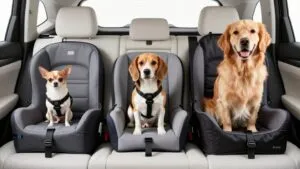
Choose a console-mounted seat only if your very small dog fits its weight limit and your vehicle provides a stable, secure mounting point. A rear-seat booster usually offers more room for sitting and lying down, while still giving your dog a reassuring window view. Whichever style you choose, install it tightly and tether your dog’s harness—not collar—to limit movement in a sudden stop.
Space and Placement
Where the seat sits in your vehicle matters as much as the size you buy. Console-mounted seats keep a tiny dog beside you, but they can distract you and may lack a stable vehicle-specific anchor. Use one only when the manufacturer approves your console and you can secure it without blocking controls, airbags, or your view.
A rear-seat booster usually offers a safer placement because it keeps your dog away from the front airbag zone. Install it on a level rear seating position, tighten every strap, and check that it can’t shift during turns or braking. Avoid placing either style on a seat with an active front airbag. Before each trip, confirm the seat doesn’t interfere with buckles, passengers, or safe driver operation ever.
Weight and Size Limits
Match the seat’s stated weight limit and interior length to your dog before considering convenience or style. Weigh your dog and measure from the base of the neck to the start of the tail for lie-down space. Never exceed the listed capacity; doing so reduces the seat’s safe restraint performance.
Console-mounted seats are for very small dogs only: your dog must sit, turn, and rest without crowding the console. Booster seats usually offer more room for small-to-medium dogs. Medium models commonly fit dogs up to 22 pounds and 45 cm long; large models may fit up to 44 pounds and 60 cm. Size up when your dog falls near a limit or curls tightly, has overhanging legs, or can’t reposition comfortably in the seat.
Installation and Stability
Although console-mounted seats can suit very small dogs, they need a stable, vehicle-specific fit: secure the mount exactly as instructed, keep all straps taut, and confirm the seat can’t tip, slide, or interfere with controls. Because console shapes, lid designs, and anchor locations vary, don’t assume a universal fit. Test the empty seat first, then apply firm pressure from several directions. Recheck mounting hardware after the first drive and whenever you move it between vehicles.
A booster seat generally offers a more secure option because its straps route around the vehicle seat and headrest. Install it in the rear seat when its instructions allow, tighten every connection, engage any non-slip base, and check that it stays level during turns and braking under normal driving.
Visibility and Comfort
Visibility can make a dog calmer on the road, but it shouldn’t come at the expense of stable restraint. Console-mounted seats keep very small dogs close and may offer reassurance, yet they fit only when the mount stays level, the dog remains within its stated weight limit, and a harness tether attaches securely. Avoid placing a dog where it can distract you or interfere with controls.
Booster seats usually provide a window view and more room for small-to-medium dogs to sit or lie down. Choose one with firm seat-belt anchoring, a non-slip base, supportive padding, and a short tether clipped to a well-fitted harness, never a collar. Adjust the tether to limit forward travel without forcing an awkward posture. Choose padding for long rides.
Elevated Seats for Window Viewers
Elevated seats can give your dog a calming window view while keeping them contained. Match the seat height and size to your dog so they can see out without climbing, leaning, or overhanging the sides. Secure the seat and clip its tether to a well-fitted harness, then watch for motion-sickness signs and lower visual stimulation if needed.
Benefits of Elevated Seats
For small dogs that like to watch the road, a securely mounted booster seat raises them to window level while keeping them contained in one travel space. The elevated position can give your dog a steadier visual reference, which may ease nervous pacing or motion-related unease on ordinary trips. It also helps you prevent climbing onto your lap, across the console, or underfoot, distractions that can compromise driving.
Treat the view as a comfort benefit, not a safety feature. Secure it, pull straps taut, and connect its tether only to a well-fitted harness, never a collar. Inspect buckles and the base for slipping or wear. Keep windows closed to prevent debris and lean-outs. A booster contains but doesn’t replace driving or tested restraint equipment.
Matching Seat Height
Match the booster’s height to your dog’s seated eye level and your vehicle’s window line, not simply to the tallest seat available. Your dog should be able to look out while sitting naturally, without stretching the neck, standing on the cushion, or pressing against the door. Measure from the vehicle seat cushion to the lower window edge, then compare that distance with your dog’s seated eye height and the booster’s compressed cushion height. Account for soft padding, which settles under your dog’s weight.
A low-sided booster may improve the view, but its walls should support relaxed posture. Choose enough interior depth for your dog to turn, sit, and lie down comfortably. If the window begins too high for a safe booster height, skip elevation. Never stack cushions or use improvised risers. Test fit while parked.
Securing Window Viewers
Once you’ve confirmed a booster gives your dog a natural window view, secure the seat itself before relying on its elevation. Install it on the rear seat according to the manufacturer’s instructions, threading every strap through the specified anchors and pulling each one taut. Engage any non-slip base, then press and tug the empty seat; it shouldn’t shift, tip, or slide.
Check that its rated weight exceeds your dog’s weight and that the mounting style suits your vehicle’s seat shape. Clip the built-in tether to a well-fitted harness, never a collar, and shorten it enough to limit forward travel while allowing normal sitting and lying. Recheck buckles, strap routing, and tether hardware before every trip. Visibility helps, but secure installation and restraint matter most.
Preventing Motion Sickness
An elevated booster can help a mildly motion-sensitive dog by giving it a stable window view and reducing the visual mismatch that may trigger nausea. Choose a seat sized for comfortable sitting and lying down, then mount it tightly according to the manufacturer’s instructions. Use the built-in tether only with a well-fitted harness, never a collar, and adjust it to limit forward movement without forcing an awkward posture.
Start with brief, calm rides and increase duration gradually. Keep the cabin cool, drive smoothly, and avoid feeding a large meal immediately before travel. Don’t assume a booster solves severe sickness: repeated vomiting, drooling, or distress warrants veterinary advice. Your vet can rule out medical causes and recommend training strategies or medication. Consider a secured crate.
Verify Headrest Post Spacing
Before buying a dog car seat that straps around headrests, measure the distance between your vehicle’s headrest posts and compare it with the manufacturer’s mounting requirements. Use a ruler or tape measure across the exposed metal posts, not the padded headrest cushion. Check both the center-to-center distance and the available clearance under the headrest, because seat brackets vary.
Confirm that your headrest is adjustable and supported by two posts; fixed, integrated, or unusually shaped headrests may not provide a secure anchor. Don’t force straps over incompatible posts or rely on a loose fit. During installation, tighten every strap, test for side-to-side movement, and recheck carefully after a short drive. A shifting seat alters tether geometry and increases your dog’s forward travel in an abrupt stop.
Replaceable Covers Reduce Lifetime Costs
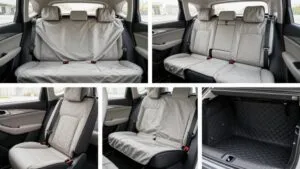
Choose a dog car seat with a removable, replaceable cover to protect the padding and structure from muddy paws, shedding, spills, and repeated washing. A washable barrier helps keep odor, allergens, and moisture from reaching foam, seams, and support panels, which can degrade faster when neglected. Check that you can buy the cover separately, not merely remove it, and confirm the manufacturer still stocks replacements.
Favor durable, water-resistant fabric and simple closures that stay covered during use. Follow laundering instructions; high heat, harsh bleach, and frequent over-washing can shrink fabric or weaken coatings. Keep a spare cover for wet-weather trips, illness, or heavy shedding seasons. You’ll reduce downtime, preserve the seat’s fit and cushioning, and replace an inexpensive wear item instead of the seat.
Plastic Tether Clips Crack
A replaceable cover protects the seat’s soft surfaces, but the tether hardware protects your dog during sudden braking. Plastic clips can become brittle from heat, UV exposure, repeated loading, or impact.
A cracked clip may release without warning, so don’t treat it as a cosmetic defect. Before each trip, inspect the clip, gate, swivel, and webbing for damage.
- Replace any clip showing cracks, whitening, looseness, sharp edges, or a weak return spring.
- Choose a tether with metal hardware, heavy-duty webbing, and a stated weight rating when available.
- Clip the tether to a properly fitted harness, never your dog’s collar, and adjust it to limit forward movement.
If manufacturer sells replacements, use compatible parts only. Retire damaged hardware; home repairs can fail under crash forces.
Confirm Seat Belt Buckle Access
Confirm that the dog seat’s mounting straps leave your vehicle’s seat belt buckle fully accessible before you drive. You must be able to latch the vehicle belt without twisting straps, forcing the buckle, or removing the seat. Blocked buckles can delay passenger restraint or encourage unsafe, improvised installations.
- Install the empty seat, then buckle and unbuckle the belt several times.
- Check that the buckle’s release button remains visible and presses freely.
- Verify every passenger position you’ll use still has clear access.
If a strap crosses the buckle, choose another mounting route only if the manufacturer permits it; otherwise, select a different seat. Never tuck a buckle beneath padding or rely on an extension unless your vehicle manufacturer approves one. Test access with all occupants.
Conclusion
Choose a car seat that fits your dog’s seated height, your vehicle, and your travel habits. If your dog gets carsick, prioritize stable positioning and washable, replaceable covers. Use only a securely mounted seat with accessible belt buckles, compatible headrest posts, and a robust tether; avoid brittle plastic clips. Crash-test certification adds reassurance. Whether you select a console model or elevated booster, don’t trade secure attachment for a window view. Check every connection before each trip.