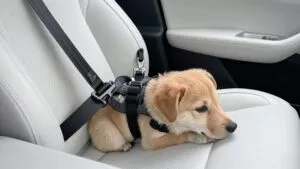
CPS-Certified Dog Car Harnesses List: Every Model That Passed
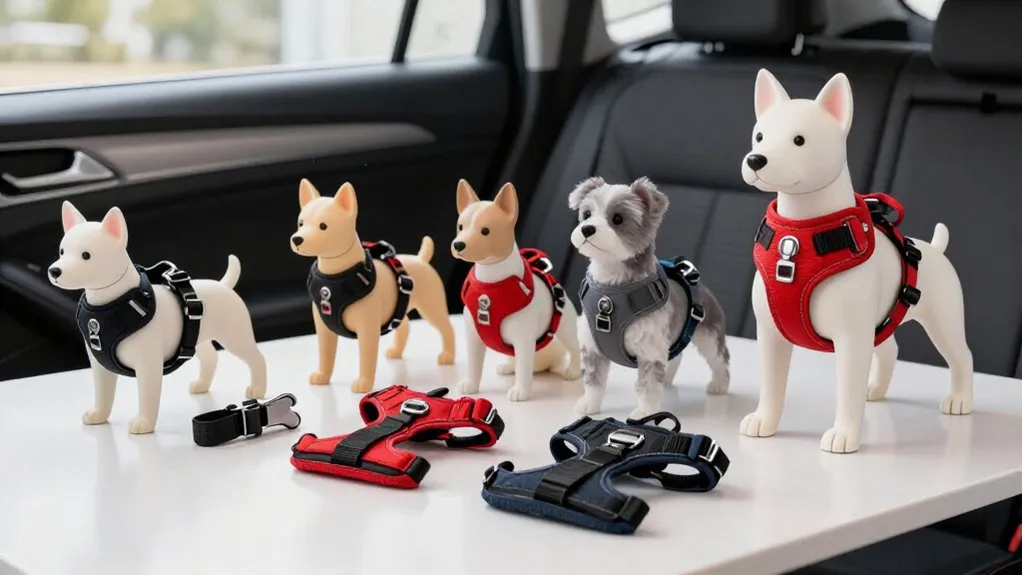
Buy only exact models and sizes shown on the current Center for Pet Safety (CPS) Certified Products list. Documented CPS-certified harnesses include Sleepypod Clickit Sport, with test evidence and a Five-Star listing, and Sleepypod Clickit Range.
Treat Clickit Utility as a 2013 Top Performer unless CPS currently lists it; don’t assume Ruffwear Load Up or Kurgo Impact are certified. Verify girth, weight limit, seat-belt routing, and vehicle geometry before travel.
Next, you’ll learn fit and inspection.
2024 CPS-Certified Models
Four models stand out in a 2024 search for crash-tested dog car restraints, but CPS certification—not a manufacturer’s “crash-tested” claim—should drive your choice.
Start by checking CPS’s public Certified list, not retail copy. The list separates harnesses from carriers and crates, so category matters. Sleepypod Clickit Sport has documented CPS evidence, including published test identifiers and a five-star listing; CPS also lists Clickit Range among certified safety harnesses. Clickit Utility earned Top Performer status in CPS’s 2013 study, but you should confirm its current listing before treating that historical result as current certification.
Ruffwear Load Up and Kurgo Impact appear in crash-tested-product roundups, yet the supplied evidence doesn’t establish CPS certification. Don’t substitute marketing, anecdotes, or a generic “tested” label for protocol-specific independent verification.
CPS-Certified Harnesses by Weight
CPS certification applies to specific harness models and size ranges—not to a brand’s entire lineup—so match your dog’s weight and measurements to the exact certified record. Use the CPS Certified Products list to verify the exact variant; a crash-tested Kurgo model isn’t automatically CPS-certified. For Sleepypod, Clickit Sport carries a Five-Star CPS rating; its documented small size suits dogs up to 25 lb. Larger Sport sizes require confirmation against the current record and your figure-eight measurement.
| Model | Weight evidence | Selection step |
|---|---|---|
| Clickit Sport | Small: ≤25 lb | Measure and verify |
| Other brands | Check CPS record | Don’t infer coverage |
Weight alone doesn’t establish safe fit: confirm chest/torso dimensions, buckle engagement, and the listed size. If your dog exceeds a documented limit, choose another currently certified restraint.
CPS Crash-Test Certification Terms
A CPS crash-test certification means a specific pet restraint model and its approved size range passed the Center for Pet Safety’s CPS-001-014.01 crashworthiness protocol. Certification applies to the tested configuration, not automatically to every product bearing the same brand name. You should confirm the exact model, size, and published weight rating before relying on a harness in a vehicle.
Certification relies on controlled crash testing and documented results, rather than a manufacturer’s unsupported “crash-tested” claim. CPS may inspect sizes for consistent construction, including webbing, stitching, and hardware, before approving a size family. Check CPS’s public Certified list for current status; products absent from it haven’t received CPS certification. A passing result demonstrates protocol-specific restraint performance; it doesn’t eliminate injury risk or replace correct fit.
Tether Length Requirements
You must use a tether length that keeps your dog positioned on the seat without restricting normal sitting or lying. Confirm that the tether is compatible with your vehicle’s seat-belt hardware, and follow the harness manufacturer’s instructions on minimum and maximum length. An adjustable tether lets you tailor restraint travel to your dog’s size while limiting forward movement in a crash.
Minimum Tether Length
Tether length directly affects crash performance: excess slack lets a dog accelerate farther before the restraint loads, increasing forces on the harness, seat-belt connection, and animal. You should not set a tether so short that it preloads the harness, twists webbing, or prevents your dog from sitting, turning, and settling naturally. Use the certified manufacturer’s prescribed connection method and any tether configuration documented for testing.
With your dog seated, adjust only enough length to keep the tether straight, untwisted, and free of constant tension during normal posture changes. Check that the attachment reaches the approved belt path or vehicle anchor without forcing metal hardware against the harness. Recheck after you buckle the seat belt; belt compression can change the length. Don’t add elastic extensions.
Maximum Tether Length
Maximum tether length should never exceed the configuration specified by the harness manufacturer and its crash-test documentation. A longer connection permits greater forward travel before restraint engagement, increasing stopping distance and the forces transferred to your dog, harness webbing, and attachment hardware during a collision. It may also allow contact with vehicle interior surfaces, undermining the protection demonstrated in the tested setup.
You shouldn’t assume that extra slack improves comfort safely; crash certification applies only to the product, size range, fittings, and restraint geometry evaluated under the applicable protocol. Follow the model’s instructions exactly, including any stated tether adjustment limit. Before trips, check that adjustment hardware remains locked and that the tether has no cuts, fraying, stretched sections, or damaged stitching. Replace compromised gear.
Seat Belt Compatibility
Because crash-tested harnesses rely on a defined restraint geometry, use only the vehicle seat-belt routing and buckle connection specified by the harness manufacturer. Certification applies to the tested configuration, not every belt or tether arrangement.
Route the lap-and-shoulder belt through the designated harness channels, and lock the buckle into a compatible vehicle receptacle. Don’t substitute a seat-belt extender, cargo anchor, or generic clip; these parts can alter load paths, slack, and release behavior.
Keep tether length within the manufacturer’s stated limit and position the belt as instructed. Before each trip, confirm that the latch plate engages, the belt webbing lies flat, and the retractor or locking mode works as required. If your vehicle’s buckle geometry conflicts, contact the manufacturer; don’t improvise a connection.
Dog Size Considerations
A correctly routed belt still needs the restraint length specified for your dog’s size and harness model. Use only the connection method and length in that model’s instructions or CPS-tested configuration. Length controls excursion: excess slack lets your dog travel farther before loading the harness, increasing the chance of contact with the seat, console, or vehicle interior. A restraint that is too short may alter harness geometry, load the wrong attachment point, or prevent normal seated positioning.
Check the size label, weight range, and measurement requirements before installation. A certified size family doesn’t make every configuration equivalent; certification applies to the tested product, sizes, hardware, and setup. Don’t assume a short dog needs a shorter connection, or that a larger dog can use extra slack.
Adjustable Tether Benefits
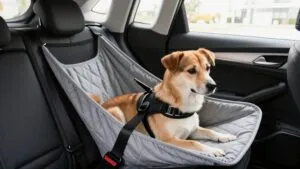
Adjustable tethers can help you set the restraint to the harness manufacturer’s required length, limiting forward excursion while still allowing your dog to sit or lie down normally. Check the certified harness’s instructions before adjusting anything: its crash-test performance applies only to the specified connection method, vehicle seating position, and tether configuration. A tether that is too long can increase travel distance before loading, raising the risk of contact with a seatback or interior surface. One that is too short may restrict normal posture, alter harness geometry, or place load on an unsuitable attachment point.
Connect only to the approved seat-belt path or vehicle anchor, as directed. Don’t substitute a leash, extension, or generic clip; those components may not match the tested system’s strength.
Verify Vehicle Seat-Belt Geometry
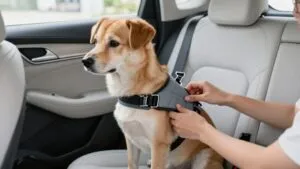
Before you buy a CPS-certified harness, confirm that your vehicle’s seat belt can route through or secure the harness exactly as the manufacturer specifies. Certification demonstrates performance only in the tested configuration; it doesn’t guarantee that every buckle position, belt path, or anchor geometry produces the same result. In the parked vehicle, follow the manual’s routing diagram without twisting the webbing. Check that the lap portion lies flat across the designated harness area and that the shoulder portion remains properly tensioned.
Buckle the belt, remove slack, and confirm the retractor locks as intended. Don’t route the belt around unapproved handles, attachment points, or padded sections. Test the setup with your dog positioned normally: the harness shouldn’t slide, rotate, or allow excessive forward movement. If the belt geometry conflicts with instructions, choose another approved seating position.
Front-Seat Airbag Exceptions
Even with correct belt routing, the rear seat remains the preferred location for a restrained dog because a deploying front passenger airbag can strike a dog with high force. If your vehicle permits you to deactivate the passenger airbag, verify the procedure in the owner’s manual and confirm the indicator shows OFF before travel. Use this exception only when you cannot secure the dog in a suitable rear seating position.
Move the front passenger seat fully rearward, and never place the dog where it contacts the dashboard. A CPS-certified harness addresses crash restraint performance; it doesn’t establish safety near an active airbag. Follow vehicle-specific warnings, and don’t assume that a small dog faces less risk. Airbags deploy at extreme speed and pressure during impact.
Two-Dog Back-Seat Setup
When you restrain two dogs in the back seat, give each dog a separate CPS-certified harness and its own seat-belt connection; never clip two harnesses to one belt or tether.
Choose models and sizes from the CPS Certified list, and keep each dog within its tested weight range. Certification applies to a specific harness configuration; it doesn’t show that a shared attachment manages combined crash forces. Route every harness through a separate vehicle belt path or approved connection, as instructions specify.
Place dogs apart so they can’t overlap, tangle, or strike each other under braking. Limit slack without restricting normal posture, because excess slack increases forward travel before restraint loading begins. Confirm each buckle latches and neither dog can reach the other’s belt connection.
Inspect Webbing After Crashes
After any collision or hard braking event, remove each dog harness from service and inspect all load-bearing webbing, stitching, buckles, adjusters, and seat-belt attachment points. Crash loads can permanently stretch fibers or deform hardware without obvious surface damage. Certification demonstrates performance of an undamaged specimen; it doesn’t guarantee protection after impact.
- Look for cuts, fraying, glazing, flattened sections, melted fibers, loose threads, or color changes near stress points.
- Flex each strap and operate every buckle and adjuster; stiffness, cracking, slipping, or incomplete latching requires replacement.
- Examine the vehicle belt path and attachment hardware for distortion, abrasion, or bent parts.
Don’t reuse the harness if you find damage or can’t verify its condition. Replace it according to the manufacturer’s post-crash guidance; contact support when unsure.
Measure Girth Before Buying
Before you buy a CPS-certified car harness, measure your dog’s girth and compare it with the manufacturer’s size chart rather than selecting by breed or weight alone.
- Stand your dog squarely and place a flexible tape around the deepest part of the chest, immediately behind the front legs.
- Record the measurement without compressing fur or pulling the tape tight; then use the stated girth range for that certified size.
- Confirm the harness also fits the model’s maximum tested weight and permits secure adjustment without slack, chafing, or restricted shoulder motion.
A correct girth fit keeps load-bearing webbing positioned across the torso during deceleration. If your measurement falls between sizes, follow the manufacturer’s instructions or contact support team before purchase. Don’t assume certification transfers.
Conclusion
Choose only a current CPS-certified harness that matches your dog’s measured girth and weight range, then confirm your vehicle’s seat-belt geometry supports the required tether length. Don’t assume certification covers every installation or front-seat use; airbags, belt routing, and two-dog arrangements can change risk. Keep dogs in the back seat whenever possible.
After any crash, retire damaged webbing, hardware, or stitching. Recheck CPS records before purchasing, because model status and approved configurations can change.