Dog Car Restraint Laws by State: Where Unrestrained Dogs Can Get You Fined
You can be fined for driving with an unrestrained dog when your state or local law treats it as a driver distraction, unsecured load, or animal-welfare risk.
New Jersey expressly requires restraint, while Maine and many other jurisdictions regulate dangerous transport through open-vehicle, traffic, or cruelty provisions. Pickup-bed rules often add enclosure or tether requirements.
Service-dog status usually doesn’t create an exemption. Check state and city codes before travel; details below cover penalties and safe equipment.
Unrestrained-Dog Fine Thresholds
Fine thresholds for an unrestrained dog vary sharply by jurisdiction because states often regulate the issue through different legal routes. You may face a traffic citation when an unrestrained dog distracts you, obstructs your control, or constitutes an unsecured load under vehicle-safety rules. Elsewhere, liability arises under animal-cruelty, neglect, or unattended-vehicle statutes only when the dog’s confinement endangers its health or safety. That distinction matters: a restraint violation can be enforceable even without injury, whereas a welfare offense may require proof of actual or threatened harm.
Don’t assume a brief stop, open window, or mild outdoor temperature eliminates exposure. Officers and animal-control personnel can assess ventilation, heat, cold, water, duration, and the dog’s condition. Local ordinances may impose additional requirements. Secure dogs before travel.
State-by-State Fine and Law Table
State laws don’t follow a single model for dogs in vehicles: a few jurisdictions impose a specific restraint duty and stated penalty, while many address unsafe transport through open-vehicle, animal-cruelty, neglect, or driver-control provisions. Check applicable state and local law before travel; enforcement can, in practice, depend on vehicle type, the dog’s exposure, and whether conduct impairs safe operation.
| Jurisdiction | Rule | Fine or enforcement |
|---|---|---|
| New Jersey | Restraint required under N.J.S.A. 4:22-18 | Reported $250 to $1,000; potential disorderly-person offense |
| Maine | Protect animals in open vehicles from injury or falling | Statutory enforcement; verify penalty |
If your state lacks a moving-vehicle rule, officers may apply cruelty, neglect, or driver-control laws when transport creates danger. Don’t assume an unattended-vehicle law governs driving conduct; it may impose exposure and rescue consequences.
Crates, Harnesses, and Tether Definitions
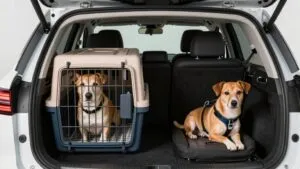
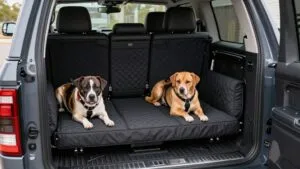
A crate, harness, and tether serve different safety functions, and the legal significance of each depends on the jurisdiction and how it’s used. A crate is an enclosed carrier that should be sized, ventilated, and secured so it cannot shift during travel.
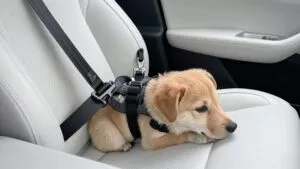
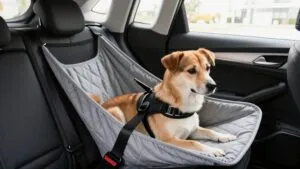
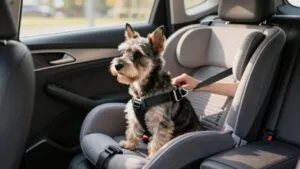
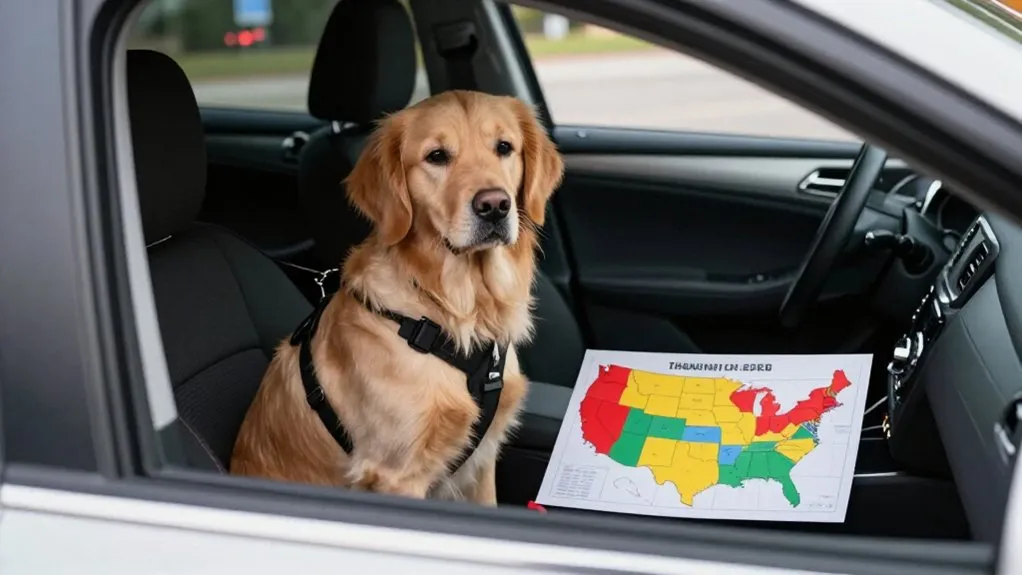
A vehicle harness attaches a dog’s body harness to a seat-belt system; a collar attachment can cause serious injury and may not satisfy a safety-based ordinance. A tether is a line limiting movement, but it isn’t automatically a legally adequate restraint. If it permits access to the driver, dangling outside the vehicle, or unsafe movement, an officer may cite you under distraction, animal-welfare, or unsecured-load rules. Check statute and code: they may define equipment, prohibit methods, or require restraint when a safety hazard exists.
Pickup Truck Bed Rules
When you transport a dog in a pickup bed, check your state and local rules, which may regulate tethering, crates, tailgates, or sidewall height. Don’t assume a closed tailgate alone satisfies the law or safely prevents ejection. An unsecured dog can expose you to traffic, animal-welfare, or local-code penalties, so use a properly secured crate or other jurisdictionally compliant restraint.
State-Specific Truck Bed Laws
Because pickup-truck bed rules vary sharply by jurisdiction, you can’t assume that an unrestrained dog is lawful simply because no statewide restraint statute exists. States may regulate dogs in open cargo areas through animal-welfare, vehicle-safety, or anti-cruelty provisions, while cities and counties can impose additional restrictions. For example, a jurisdiction may prohibit carrying an animal in a truck bed on specified roads, require protective sidewalls or tailgates, or treat hazardous transport as cruelty.
Even where no rule names pickup beds, an officer may cite you under careless-driving, unsecured-load, or endangerment laws if your dog can fall, jump out, or distract you. Check current state statutes and local ordinances before travel, especially when crossing municipal or state lines. Penalties include fines and animal seizure after violations.
Tethering And Crate Requirements
Tethering or crating a dog in a pickup bed may satisfy some local transport rules, but the required method varies by jurisdiction. You shouldn’t assume that a leash tied to the truck is lawful or safe. Where an ordinance permits tethering, it may require a short, secured tether that prevents the dog from reaching traffic, jumping free, or becoming entangled.
A tether must not create strangulation, dragging, or heat-exposure hazards.
A securely anchored crate can provide protection, but it doesn’t override cruelty or neglect laws. You must provide conditions suited to the weather and the dog’s health, and you can’t leave the animal exposed to harm. Check statutes and local ordinances: certain local rules may mandate enclosure, specify tethering limits, or prohibit open-bed transport.
Tailgate And Sidewall Standards
Tailgate and sidewall rules for dogs in pickup beds vary widely by state and locality. Some jurisdictions regulate open truck beds directly, while others address the issue through animal-cruelty, safe-transport, or unsecured-load provisions. You shouldn’t assume a raised tailgate alone satisfies the law. If your dog can climb, jump, or be thrown over a sidewall, the setup may create a safety concern even without a pickup-specific statute.
Before traveling, check the destination’s current state code and city or county ordinances. Requirements may turn on bed enclosure, sidewall height, a secured crate, or another restraint that prevents escape and ejection. Keep the tailgate closed whenever the vehicle moves, and use a properly anchored restraint or enclosed kennel suited to your dog’s size and travel conditions.
Penalties For Unsecured Dogs
A dog transported unsecured in a pickup bed can expose you to penalties under pickup-specific ordinances, animal-cruelty laws, safe-transport rules, or general unsecured-load provisions. Whether you receive a citation depends on jurisdiction and facts: local code may directly ban carrying an unrestrained dog in an open bed, while state law may apply only when transport endangers the animal or public. Officers may also cite you for distracted driving or an unsecured load when facts support those offenses.
Penalties range from civil fines to misdemeanor charges; repeat violations, injury, or reckless conduct can increase them. If the dog falls, is struck, or suffers exposure-related harm, prosecutors may pursue neglect or cruelty counts, bringing larger fines, impoundment costs, probation, or jail. Check local law; penalties vary.
Safe Pickup Bed Practices
Because pickup-bed rules vary by state and locality, you should treat an open bed as unsuitable for a dog unless applicable law permits the transport and you can prevent escape, falls, weather exposure, and crash injury.
Even where no statute expressly bans it, an unrestrained dog may trigger animal-cruelty, unsafe-load, or distracted-driving enforcement if conditions create danger. Check state statutes and municipal ordinances before traveling; rules may require an enclosed cargo area, a crate, or a tethered restraint.
Don’t rely on a collar or short tie-out: it can choke your dog or allow ejection in a collision. Use a properly secured, ventilated crate sized for standing and turning, protect against heat, cold, and debris, and never leave your dog unattended in the bed alone.
Compare State and City Rules
State law sets the baseline for dog travel and unattended-vehicle conduct, but city and county ordinances can impose stricter requirements. Before you drive, check the current state code and the rules where you’re traveling, including the destination’s municipal code. A state may address only animal endangerment or unattended confinement, while a local ordinance can separately regulate dogs in pickup beds, prohibit unrestrained transport, or set civil fines.
Local officers may enforce those provisions alongside state cruelty or traffic laws. Don’t assume a state’s silence permits a practice locally. Confirm whether the ordinance applies on public roads, parking areas, or private property open to the public. Use a secured crate or vehicle-rated harness whenever feasible, and comply with the stricter applicable rule at all.
Service Dog Restraint Exceptions
Although service dogs may need freedom of movement to perform trained tasks, no blanket federal rule exempts them from state or local vehicle-safety, animal-cruelty, or unattended-vehicle laws. Service-dog status doesn’t automatically override neutral, generally applicable safety requirements. If your dog needs movement to perform a disability-related task, choose the least restrictive setup that permits the task while preserving your control of the vehicle and the dog’s safety.
A secured crate, travel harness, or vehicle-specific tether may work when compatible with the task. Don’t assume a vest, certification, or trained status defeats a citation for distracted driving, unsafe transport, or dangerous unattended confinement. State laws and city ordinances differ; accommodations depend on setting and rule. Check local rules in each jurisdiction before claiming an exception.
Airbag Risks for Dogs
Vehicle seating choices matter even when no law specifically requires a dog restraint. Airbags deploy with substantial force and can seriously injure or kill a dog riding in the front passenger area, particularly a small dog held on your lap or positioned near the dashboard. You should place your dog in the rear seating area whenever practical and follow your vehicle manufacturer’s warnings concerning children, occupants, and airbag systems.
State restraint statutes don’t usually create an airbag-specific offense. Still, an officer may evaluate front-seat placement alongside applicable distracted-driving, reckless-driving, or animal-cruelty provisions after a crash. Local ordinances may impose additional transport duties. A properly sized rear-seat travel crate or crash-tested harness can reduce injury risk, but it doesn’t override manufacturer instructions or state law.
Incorrect Tether Attachment Points
Even a well-made tether can fail if you clip it to a weak or unsuitable attachment point, such as a seat headrest, cargo hook, or plastic interior trim not rated for occupant restraint.
Use only an anchor point that both the vehicle manufacturer and tether maker identify as compatible. A loose connection can let your dog become a projectile or distract you during braking, potentially supporting enforcement under applicable traffic, animal-welfare, or local safety rules.
- Check the owner’s manual and tether instructions before each trip.
- Don’t improvise with leash clips, handles, or cargo hardware of unknown strength.
- Keep the tether short enough to limit movement, without choking or entangling your dog.
Requirements vary by jurisdiction and can include local traffic ordinances.
Statute Citation Verification Links
Because restraint and unattended-animal rules can change and local ordinances may add requirements, verify any cited statute through the official state legislature or code publisher before relying on it. Use citation links to confirm the section, effective date, definitions, penalty, and cross-referenced cruelty or traffic provision. Check whether your city or county imposes a transport rule.
- Search your legislature’s code database, not a blog or outdated compilation.
- Read session-law notes and pending bills to see whether an amendment applies.
- Contact local animal control or a lawyer when wording, enforcement authority, or rescue immunity is unclear.
You shouldn’t assume an unattended-vehicle law mandates a moving-vehicle harness, or that a traffic rule covers animal welfare. For safety, restrain your dog and never leave it in dangerous conditions.
Conclusion
Before you drive, check the rules that apply where you are, including state statutes, local ordinances, and pickup-bed restrictions. You can’t assume a crate, harness, or tether satisfies every legal definition or protects your dog in a collision. Keep your dog away from front-seat airbags, use manufacturer-approved attachment points, and confirm any service-animal exception. Because penalties and enforcement standards vary, verify current official citations for each jurisdiction you’ll enter before travel with your dog secured.