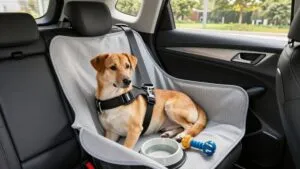
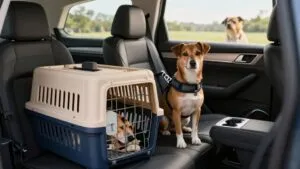
What Is a Crash-Tested Dog Harness? CPS Certification Explained
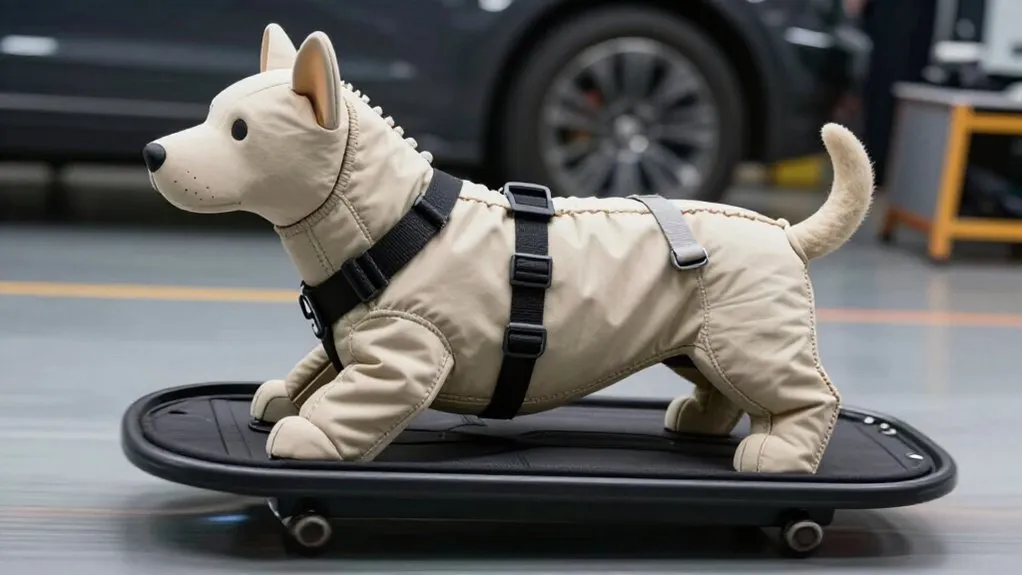
A crash-tested dog harness is a vehicle restraint designed to keep your dog contained and reduce injury risk during a collision. CPS certification means the specified harness size and dog-weight range passed independent sled testing with a biofidelic dog surrogate, rather than relying only on marketing claims.
You should fit it snugly, use the manufacturer’s rear-seat belt path, and attach only to the approved harness point—not a collar. Fit, routing, and emergency transport also matter.
CPS Certification: What It Means
CPS certification means a dog harness has passed independent crashworthiness testing by the Center for Pet Safety, rather than relying solely on a manufacturer’s “crash-tested” claim. When you choose a CPS-certified model, you gain evidence that an independent organization evaluated its performance and published meaningful findings. Certification offers more confidence than marketing language because CPS assesses whether the restraint remains intact and retains the dog during a collision scenario.
It also recognizes that size matters: you should verify the certification applies to your dog’s listed weight range and harness size. Check CPS’s current records and the manufacturer’s instructions before buying. A certified harness isn’t a guarantee against injury, but it provides a stronger basis for safer travel than unverified claims alone in your vehicle.
CPS Sled-Test Standards
Independent certification rests on the quality of the test itself, and CPS uses controlled sled testing to measure how a pet restraint performs under frontal-crash forces. In a laboratory sled pulse, your dog’s harness restrains an instrumented, biofidelic dog surrogate representing a relevant weight class. The controlled deceleration profile simulates the short, high-force loading of a frontal collision while preserving repeatability.
Sensors record acceleration, attachment-point loads, and movement, while high-speed video documents rotation, deformation, escape, or ejection. CPS then examines webbing, stitching, buckles, and hardware for breakage, migration, or elongation. To earn certification, the restraint must maintain structural integrity and retain the surrogate within CPS’s performance thresholds. Testing across weight classes helps verify results aren’t improperly assumed from one size to every dog safely.
Rear-Seat Belt Routing
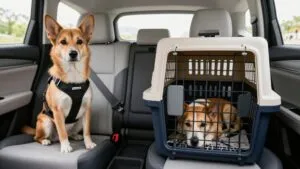
Route a crash-tested harness through the rear seat’s three-point belt exactly as its manufacturer specifies, with the dog positioned on the back seat rather than in the front passenger area. A three-point belt keeps the attachment aligned with the tested restraint path and reduces excess forward movement during a frontal crash. Don’t route the belt behind the dog, twist webbing, or substitute a cargo anchor unless instructions expressly permit it.
| Check | Why it matters | Your action |
|---|---|---|
| Secure | Limits excursion | Buckle, then remove slack |
| Verified | Preserves test configuration | Read manual |
Lock the retractor only if the instructions require it; some systems depend on normal belt operation. Before every trip, confirm the buckle is fully latched and the harness connection sits where the manual shows clearly.
Vest-Style vs. Strap Harnesses
Vest-style harnesses distribute restraint forces across broader chest coverage, while strap designs depend on precise adjustment to stay secure. You must fit either style snugly and use its specified belt routing to limit excursion. Don’t assume coverage or appearance predicts safety; rely on size-specific independent crash-test results.
Vest Harness Coverage
Although a vest-style harness spreads restraint loads across a broader area of a dog’s torso than a minimal strap design, coverage alone doesn’t establish crash protection. In a frontal collision, the restraint must manage rapid deceleration without allowing dangerous forward movement or concentrating force at a vulnerable point.
You should treat padded panels, wide chest sections, and torso coverage as design features, not proof of safety. Independent sled testing determines whether the complete system retains the surrogate, controls excursion, and keeps webbing, buckles, anchors, and stitching intact. CPS certification is more meaningful than a vest shape because it evaluates crash performance at tested weight points. Before you rely on coverage, confirm the product has independent, size-specific test results and follow its vehicle attachment instructions.
Strap Harness Fit
Proper fit matters more than whether a car harness uses a vest panel or narrow straps: it must sit snugly on the dog’s body, keep the chest load-bearing area correctly positioned, and limit forward excursion without restricting breathing or shoulder movement.
With a strap harness, adjust each strap so the girth section lies behind the front legs and remains flat without twists or gaps. You should fit two fingers beneath the webbing, following the maker’s instructions. Recheck adjustments after walking, because straps can shift.
A vest-style model may distribute contact over more surface area, while a strap design leaves more of the body uncovered. You can’t rely on either style to correct slack, misplaced chest straps, or throat pressure. Check buckles before each trip.
Crash-Test Performance
Crash-test performance depends on the specific harness design, attachment geometry, materials, and size tested—not simply whether it uses a vest panel or narrow straps. A well-engineered vest can spread loads across your dog’s torso, while a properly designed strap harness can control movement without concentrating force on the neck. Neither category guarantees protection.
In a 30-mph frontal sled test, you should look for secure retention, limited forward excursion, intact stitching, stable buckles, and no damaging hardware migration. A harness that passes only a tensile test or one mid-size surrogate doesn’t prove comparable performance for your dog’s size. Independent CPS certification is more meaningful because it evaluates crash behavior across specified weight points. Fit it snugly; use the required attachment. Excess tether length can undermine results.
Dog Weight Affects Fit
Match the harness to your dog’s current weight and use only sizes within the manufacturer’s stated, crash-tested weight range. Don’t assume a harness tested for one size will protect dogs at lighter or heavier weights. Adjust every strap for a snug fit that limits movement without restricting breathing or motion.
Match Harness To Weight
Your dog’s weight directly affects whether a vehicle harness can control movement safely in a collision. A heavier body generates greater momentum at the same crash speed, while a lighter dog can shift within oversized webbing. You should use your dog’s current weight alongside the maker’s fitting directions, then confirm that the chest piece sits centered and the straps lie flat.
| What you observe | Why it matters |
|---|---|
| Snug, even contact | Helps prevent frightening forward travel |
| Twisted webbing | Can concentrate crash forces |
| Chest piece off-center | May destabilize restraint |
| Slack at attachment | Allows dangerous extra excursion |
Weigh your dog regularly, especially during growth, illness, or diet changes. Refit after weight changes; a secure, comfortable harness protects the companion who trusts you completely when a crash happens.
Check Weight Range Limits
After confirming a secure fit, check the harness’s published weight range and verify that your dog falls within a size specifically tested or certified for that weight. A model’s advertised range isn’t evidence that every size performed identically in a sled test. Independent programs, including the Center for Pet Safety, evaluate weight points because crash loads, webbing forces, buckle performance, and restraint excursion change as dog mass increases.
Don’t assume a result from a 30-pound surrogate applies to a 90-pound dog, even when weights appear on a product label. Review the certification listing and test report for the size or weight category. If your dog sits near a maximum, choose only a model certified at that higher weight; otherwise, select a restraint appropriate for travel.
Adjust For Proper Fit
Fit the harness snugly to your dog’s chest and torso using the manufacturer’s adjustment points, then confirm that weight gain, loss, or coat changes haven’t altered that fit. A properly adjusted harness keeps restraint positioned over body areas it was designed to load during a crash. You should be able to slide two fingers beneath the webbing; it shouldn’t twist, gap, or shift when your dog walks, sits, or lies down.
Recheck every strap after bathing, grooming, shedding, growth, illness, or dietary changes. A loose harness permits greater excursion and may allow damaging hardware migration or escape. An overly tight harness can restrict movement or breathing. Follow certified model’s sizing instructions and attachment method exactly, because crash-test results apply only to that tested configuration.
Veterinary Emergency Transport
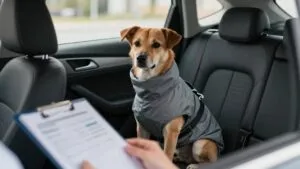
During veterinary emergency transport, a crash-tested, properly fitted harness can help keep your dog contained and reduce injury risk while you focus on driving safely to care. Secure the harness to the vehicle exactly as its manufacturer directs, using the specified seat-belt path or attachment point. Keep your dog in the rear seating area when possible, minimize slack, and don’t use an extension tether unless the system specifically requires one.
A certified harness isn’t a substitute for urgent veterinary guidance: call the clinic en route, explain the injury, and ask about safe handling. If movement worsens suspected spinal, breathing, or bleeding problems, follow the clinic’s instructions and avoid unnecessary repositioning. Inspect webbing, buckles, and anchors after any crash; replace any equipment showing visible damage.
Airbags Can Injure Dogs
Even with a crash-tested harness, you shouldn’t let your dog ride in the front passenger seat: a deploying airbag can strike a dog with enough force to cause serious or fatal head, neck, chest, or internal injuries.
Airbags inflate in milliseconds and are engineered to protect an adult human occupant, not an animal positioned low on the seat. Your dog’s smaller body and closer proximity to the dashboard can place its head and torso directly in the deployment path. Use the rear seat instead, where you can secure your dog with a properly fitted, independently certified harness and the vehicle’s approved belt routing. Follow the harness maker’s size, fit, and installation instructions, and keep your dog away from front-seat airbags at all times.
Never Clip Harness to Collar
Never clip a vehicle restraint or harness tether to your dog’s collar, because collision forces can concentrate on the neck and cause severe airway, spinal, or vascular injury. A collar is designed for identification and walking control, not crash-energy management. In a sudden stop, the tether can turn it into a narrow load path, increasing the likelihood of catastrophic trauma or collar failure. Instead:
- Attach the vehicle tether only to the harness point specified by its manufacturer.
- Use a certified harness that distributes restraint loads across the torso and stays securely positioned during impact.
- Inspect straps, buckles, and tether hardware before travel; replace damaged components immediately.
This setup helps protect your dog when deceleration loads peak without relying on the neck.
Measure Your Dog’s Chest Girth
Measure your dog’s chest girth at the widest part of the rib cage, typically just behind the front legs, using a flexible tape held snug but not tight. Keep your dog standing naturally, and record the measurement in inches or centimeters. Compare it with the harness maker’s size chart, not a general small, medium, or large label. If your dog falls between sizes, follow the manufacturer’s stated guidance or contact its support team before buying.
A correct girth measurement matters because crash-tested harnesses are validated only within specified size and weight ranges. An oversized harness can shift, increase forward excursion, or allow escape; an undersized one can concentrate load and compromise comfort. After fitting, confirm that you can slide two fingers under the straps. Recheck the fit after any weight or coat change.
Conclusion
A crash-tested dog harness gives you evidence that your dog’s restraint has passed defined CPS sled-test standards, but certification doesn’t replace correct use. You’ll protect your dog best when you measure chest girth, select the right vest or strap design for their weight, route the rear-seat belt correctly, and never attach the tether to a collar. Keep your dog in the back seat, away from airbags, and use secure restraint during veterinary emergencies.