Ram Crew Cab Dog Setup: Back Seat Platforms, Covers and Restraints
For a Ram Crew Cab, measure your rear-seat width, footwell depth, and fold geometry before choosing a platform; don’t trust universal charts.
Keep dogs centered over seat-frame support, able to lie down and turn, and test clearance through seat movement.
Use only restraint-maker-approved, manual-identified anchor points, not cover toggles.
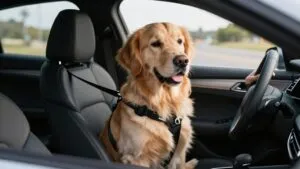
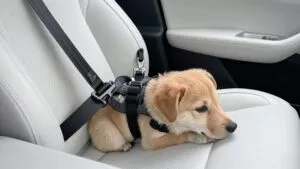
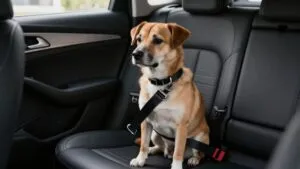
Secure each dog with a fitted crash-tested harness or crate, and keep hardware clear of airbags.
Below, you’ll find further essential fit, attachment, and clearance checks.
Ram Crew Cab Seat Dimensions
Before you purchase a cover, crate, or platform for a Ram Crew Cab, measure your truck’s rear-seat width, footwell depth, and seat-fold geometry for its specific model year. Ram Crew Cab cabins aren’t dimensionally identical across generations and trims, so don’t rely on another owner’s measurements or a universal product chart. Measure between usable interior edges, excluding protruding trim, buckle stalks, and seat-release hardware. Then record the depth from seatback to front-seat position you actually use.
Check whether your rear cushion folds upward or your seatback folds, and make sure a proposed platform clears every latch through full travel. Test-fit with front seats set for the drivers. For a large dog or crate, choose a base that spreads load across supported seat structure, not cushions.
Tether Anchor Locations by Model
For Ram Crew Cabs, locate and identify the factory child-restraint anchors in your exact model year’s owner’s manual before using them around a dog crate or harness. The manual distinguishes approved tether anchors from cargo hardware; it doesn’t publish pet-restraint ratings.
| Model years | Typical Crew Cab locations |
|---|---|
| 2009 to 2018 | Rear seatback access panel or rear shelf; lower LATCH outboard |
| 2019 to present | Seatback rear/behind-seat panel; lower LATCH outboard |
On 2500/3500 Crew Cabs, placement can resemble 1500 layouts but isn’t interchangeable across trims or folding-seat designs. Inspect each anchor, its cover, and strap path. Don’t drill near airbags, wiring, or sensors. Use only restraint hardware whose instructions explicitly permit that anchor; confirm fit and load guidance with Ram and the restraint maker before each trip with dogs.
Hammock Cover Attachment Terminology
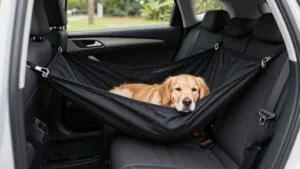
Once you’ve verified which Ram anchor points your restraint maker permits, identify hammock-cover attachment terms so you don’t confuse cover straps with load-rated dog restraints. Most crew-cab hammocks use headrest loops: webbing circles rear and front headrests to suspend the panel. “Seat anchors” are plastic or foam toggles pushed into the cushion-to-seatback gap; they prevent shifting but aren’t tied to Ram’s child-seat anchors.
Side flaps, door guards, and zipper pass-throughs describe upholstery coverage, not attachment strength. A “bench sling” spans the rear cushion and front-seat backs, while an “anti-slip backing” grips upholstery. Check that loops don’t obstruct head restraints, seat-belt buckles, or folding-seat latches. Tighten cover straps only enough to stabilize fabric. Use a manufacturer-approved canine harness or secured crate independently of the cover.
Dog Restraint Sizing by Weight
In your Ram Crew Cab, match a small, medium, large, or giant dog’s restraint to the manufacturer’s stated weight range, then confirm the harness fits snugly without restricting breathing or shoulder movement.
Weight is only a starting point: measure chest girth, neck size, and body length to prevent excess movement in a sudden stop. For large and giant breeds, use a crash-tested harness or properly secured crate with anchors rated for the intended load.
Small Dog Restraint Sizing
Although a small dog adds less load than a large breed, don’t size a Ram Crew Cab restraint by weight alone: choose a crash-tested harness or crate within the manufacturer’s stated weight range and confirm its fit at the chest, neck, and attachment point.
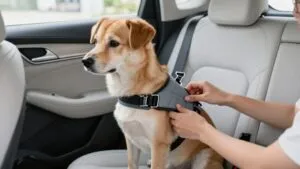
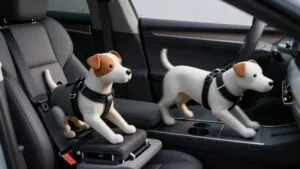
For a harness, follow the brand’s measurement instructions with your dog standing naturally. Snug straps should allow limited movement without compressing the airway or restricting shoulder motion. Position the tether so it connects directly to the Ram’s seat-belt system or approved anchor, never a cover loop or unsupported platform fitting.
For a crate, verify your dog can stand, turn, and lie down while the crate remains firmly secured against braking and cornering forces. Recheck fit after bulky coats or growth.
Medium Dog Weight Ranges
Most medium dogs fall roughly in the 30 to 60 lb range, but you should select a Ram Crew Cab harness, tether, or crate by the manufacturer’s tested weight limit and your dog’s actual body measurements, not the label alone. Measure chest girth, neck circumference, and torso length exactly as each restraint guide directs. In your Ram’s rear bench, route the tether to its approved seat-belt connection or designated anchor, never a cover strap or headrest. Keep tether length short enough to limit forward travel while allowing normal sitting and lying.
For crates, confirm both crate and tie-down ratings exceed your dog’s weight, then secure the crate against the seat base or a properly anchored platform. Recheck buckles, stitching, and fit before every trip on each departure.
Large Breed Harness Fit
Large breeds often exceed 60 lb, so fit a harness by the manufacturer’s crash-test limits, your dog’s chest girth, neck size, and body length, not weight alone.
In a Ram Crew Cab, measure girth at the ribcage point and compare it with the brand’s size chart; don’t assume an 80-pound dog fits every large size. Adjust straps so you can slide two fingers beneath them, while the chest plate stays centered and the shoulder joints move freely. The tether attachment should sit on the harness’s designated reinforced point, never a collar ring.
Before road use, buckle the harness to the rear seat belt, remove slack without pulling your dog off balance, and test it during stops. Recheck fit after growth, weight change, or heavy-coat shedding.
Giant Dog Restraint Options
For giant dogs, typically 90 to 100+ lb, choose a restraint by the harness or crate’s stated weight and size limits, then confirm chest-girth fit and anchor capacity in your Ram Crew Cab.
For dogs near 100 pounds, select a manufacturer-rated crash-tested harness with a vehicle-compatible seat-belt attachment or a crate rated for the dog’s weight class. A secured crate generally provides more containment than a tether alone, especially for dogs exceeding 100 pounds.
In your Ram, attach only to approved seat-belt paths or rated cargo anchors; don’t clip a giant-dog tether to cover straps, headrests, or unrated hardware. Match each restraint’s published capacity to your dog’s weight and inspect webbing, buckles, crate mounts, and anchor hardware before every trip. Replace damaged components before travel starts.
Measuring Beyond Body Weight
Weight is only the starting point when you size a dog restraint for a Ram Crew Cab. Manufacturer weight ranges help, but they don’t confirm fit or crash performance. Measure your dog’s chest girth, neck circumference, back length, and seated shoulder height; then compare them with the harness chart and adjustability limits. A harness must lie flat across the chest, keep straps off the throat, and allow breathing without excess slack.
In your Ram, also measure the available rear-seat position and belt path. A large, deep-chested dog may meet a tether’s weight rating yet lack enough strap length or stable chest coverage. Check that the tether reaches an approved anchor without crossing sharp trim or leaving the dog able to strike the front seats.
Platform Width for Two Dogs
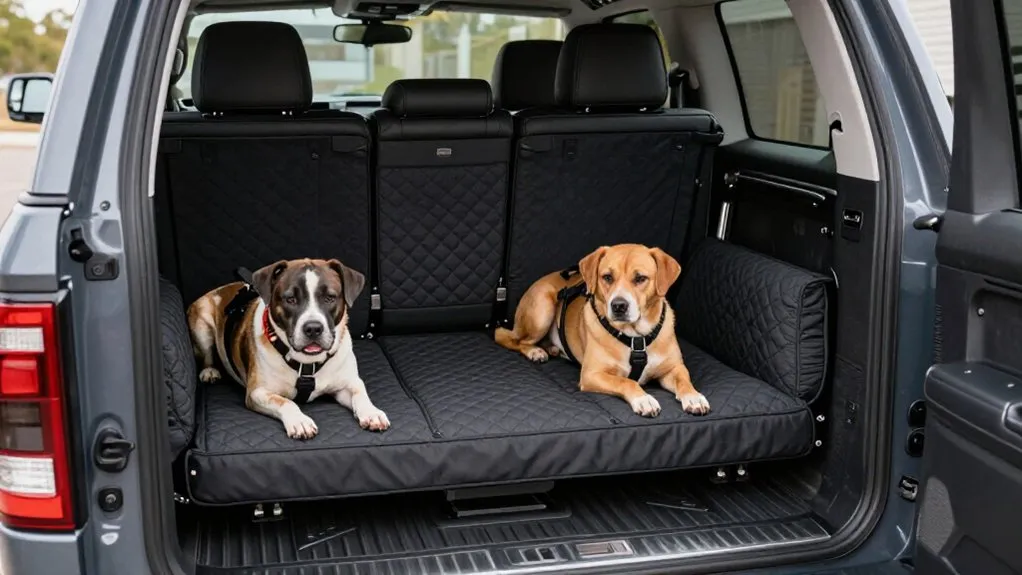
In a Ram Crew Cab, size a two-dog platform to the usable rear-seat width and each dog’s crate or resting footprint, not the cab’s advertised width. Measure between the actual obstructions at platform height, then subtract space occupied by side supports, trim, cover bulk, and crate hardware.
For two crates, use each manufacturer’s external width plus the required clearance for doors, latches, and tie-down straps. For uncrated dogs, mark each dog’s curled and fully stretched resting area; don’t assume equal halves fit equally well. Center the combined load over the seat-frame support area and avoid narrow edge overhangs that concentrate weight. Test-fit with both dogs aboard while parked, confirm they can lie down and turn without crowding, recheck strap tension and platform stability before travel.
Airbag Deployment Clearance
After confirming the platform fits both dogs, preserve clear airbag deployment paths before adding crates, barriers, or hard-mounted supports in a Ram Crew Cab. Your Ram’s owner’s manual and airbag warning labels identify protected zones, which vary by model year and trim. Don’t drill, screw, or route straps through marked airbag areas, wiring channels, seat frames, or roof-rail trim.
Keep platform edges, crate corners, and barrier mounts below and away from side-curtain airbag paths and any seat-mounted airbag seams. Avoid attaching hardware to pillars or headliner trim; those parts can conceal inflators and deployment hardware. Use OEM tether anchors or approved mounting points only, and verify their intended loads.
Before each trip, confirm nothing can shift into a deployment zone. Ask a Ram dealer.
Muddy Labrador Post-Hike Ride
For a muddy Labrador post-hike ride in a Ram Crew Cab, contain water, grit, and loose gear before driving: use a waterproof, non-slip 600D-or-heavier cover or a non-porous HDPE/epoxy-finished platform; then secure the dog in a properly anchored crate or crash-tested harness.
Brush off paws and coat outside first; towels alone don’t prevent wet debris from migrating into carpet, seat seams, or under-seat storage. Choose a cover with a grippy backing and protect folded seat bottoms if your Ram’s rear seats raise. Put boots, leashes, and recovery gear in a contained bin so they can’t become projectiles in a hard stop. Wipe the platform and cover after trip; non-porous surfaces limit odor retention and simplify salt removal. Inspect crate tie-downs and webbing before departure.
Headrest Strap Slippage Fixes
Why do headrest straps slip in a Ram Crew Cab? Smooth headrest posts, tapered cover webbing, and a loose adjuster can let a hammock or seat cover migrate during braking and turns. That movement can open a footwell gap or loosen the cover’s protective position.
- Route each strap around the headrest posts, not only the cushion, and center the buckle.
- Pull webbing snug, then recheck after your dog shifts weight or you fold seats.
- Use a cover’s supplied anti-slip sleeves or a compatible strap keeper; don’t modify OEM headrests.
On your Ram, keep straps clear of seat-release handles and don’t attach restraints to cover straps. For a dog, use a crash-tested harness or secured crate attached to rated vehicle anchors; inspect webbing for fraying.
Ventilation Window Guard Options
Secure the seat cover first, then address airflow with Ram Crew Cab compatible window guards that let you crack rear windows while limiting a dog’s access to the opening. Choose frame-mounted guards instead of loose mesh inserts; they should retain the weather seal and avoid glass, trim, and side-curtain-airbag paths. Never treat guards as restraints or leave your dog unattended in heat; cracked windows don’t prevent dangerous cabin temperatures.
- Measure the rear-door window channel for your Ram’s model year before ordering; Crew Cab trim dimensions differ.
- Select corrosion-resistant steel or coated aluminum guards with rounded edges and tamper-resistant mounting.
- Test guards with windows raised, then allow an opening too small for muzzle or paw passage.
Inspect mounts after rough roads; replace damaged guards promptly.
Conclusion
Your Ram Crew Cab can carry dogs safely when you match platforms, covers, and restraints to the truck’s rear-seat geometry and anchor locations. Measure your model before buying, keep tether straps clear of airbags, and use weight-rated restraints attached to approved anchors, not seat hardware. Secure hammock straps against headrest slip, preserve ventilation with guarded windows, and clean mud promptly. For two dogs, verify platform width and independent restraint travel before trip, especially on rough roads.