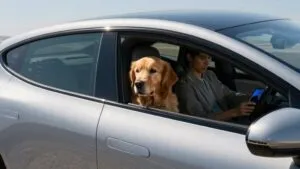
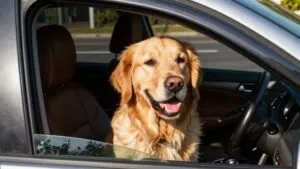
Is It Illegal to Leave a Dog in a Hot Car? Hot-Car Laws by State
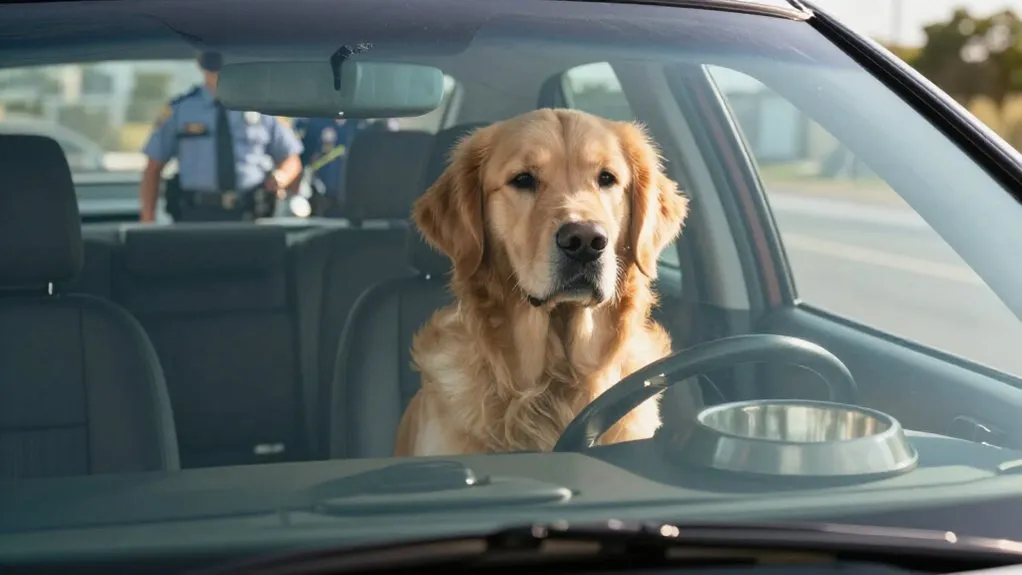
In many states, you can face animal-cruelty or vehicle-confinement penalties for leaving a dog in a hot car when conditions risk suffering, injury, or death.
California Penal Code §597.7 and New Jersey law focus on the animal’s actual danger, not merely whether windows are cracked or the engine is running.
About 22 to 25 states expressly address animals in vehicles.
Don’t break a window unless your state’s rescue law authorizes it.
More details follow below.
State Hot-Car Dog Laws
State hot-car dog laws vary widely: roughly 22 to 25 states expressly address animals left in vehicles, but the legal protections and penalties aren’t uniform. You must check your state’s statute because it may prohibit leaving a dog in a confined vehicle only when conditions reasonably threaten injury or death. California authorizes private rescuers to enter after meeting statutory steps; Texas limits entry authority to designated officials.
In contrast, some laws impose owner penalties without granting bystanders a break-in privilege. Coverage also differs: a provision may protect pets, domestic animals, or specified species. Penalties can range from civil fines to misdemeanors; repeat conduct may bring harsher consequences. Before acting, call police or animal control and follow your statute’s notice, entry, and immunity requirements.
Cabin Temperatures Rise Within Minutes
A parked vehicle’s cabin can become dangerous for a dog within minutes, even when the outdoor temperature feels mild. Sunlight passes through the glass, heats seats and dashboards, and leaves that heat trapped inside. During the first 10 minutes, cabin temperature can climb fastest; it may rise 20 to 30°F above the outdoor reading within 10 to 30 minutes. A 70°F day can produce an interior above 115°F.
For your dog, a cracked window doesn’t provide meaningful cooling. Panting cannot reliably offset the heat, particularly for flat-faced, older, overweight, thick-coated, respiratory-compromised, or cardiac-compromised dogs. Heat exhaustion can begin around a 103°F body temperature, and prolonged exposure above a roughly 104°F cabin temperature raises the risk of organ or brain injury. Some states prohibit confinement.
When Bystanders Can Break Windows
Breaking a car window to rescue an animal is lawful only where your state’s statute authorizes it or provides immunity; and only if you meet its conditions. In Arizona, California, and Tennessee, a private bystander may receive protection only after satisfying prerequisites; other states reserve entry authority to police, firefighters, or animal-control officers. Don’t assume that an anti-hot-car prohibition itself lets you break glass.
| Before entry | Why it matters |
|---|---|
| Call 911 and locate the owner | Many statutes require notice and a reasonable owner search. |
| Use necessary force; stay with the dog | Immunity often requires imminent peril and transfer to responders. |
Assess the dog: frantic panting, collapse, vomiting, or brick-red gums can show urgent heat distress. Photograph conditions, note the plate, and follow your state’s wording.
Civil vs. Criminal Penalties
If you leave an animal in a dangerous vehicle condition, your state may impose a civil fine, criminal charge, or both. The offense level and available penalties, from an infraction to a misdemeanor or, in limited states and circumstances, a felony, depend on the statute and harm to the animal.
If you rescue an endangered animal, you must satisfy your state’s immunity conditions to avoid civil liability or criminal exposure for vehicle entry.
Civil Fines and Liability
State law determines whether leaving an animal in a dangerously hot vehicle results in a civil fine, a criminal charge, or both. Where a hot-car statute creates an infraction or administrative violation, you may owe a fine even if the animal survives. Local ordinances can also impose separate civil penalties, so check city or county rules.
Civil liability can extend beyond a ticket. If your dog suffers heat injury, you may face a claim for veterinary costs or other damages under applicable law. Conversely, a rescuer who damages your vehicle may be protected from civil liability only if the state’s statute applies and the rescuer meets every condition. California conditions immunity on steps including first contacting law enforcement and using no more force than necessary.
Criminal Charges and Penalties
Criminal consequences for leaving an animal in a dangerously hot vehicle vary by jurisdiction, but many states treat the conduct as animal cruelty or create a separate misdemeanor offense when the conditions could cause injury or death. If you leave a dog where heat, ventilation, or confinement creates a foreseeable risk, prosecutors may charge under a vehicle-specific statute or general cruelty law. California Penal Code 597.7 makes the offense an infraction or misdemeanor; Illinois treats violation as a Class A misdemeanor, with harsher cruelty charges possible when harm results.
| State | Criminal classification | Animal-focused consequence |
|---|---|---|
| California | Infraction or misdemeanor | Risk of injury or death to an animal |
| Illinois | Class A misdemeanor | Dangerous vehicle confinement |
You may face seizure, forfeiture, or ownership bans under cruelty provisions.
Rescue Immunity Provisions
Penalties for leaving an animal in a dangerous vehicle don’t automatically authorize a bystander to break in.
Whether you can enter depends on your state’s rescue-immunity statute, not merely on the owner’s violation. Some laws protect only police, animal-control officers, or other specified responders. Others extend limited protection to private rescuers.
In states with a Good Samaritan provision, you usually must reasonably believe the animal faces imminent harm, contact law enforcement or emergency services, check that the vehicle is locked, use no more force than necessary, and remain with the animal until responders arrive.
Civil immunity generally bars property-damage claims; it doesn’t necessarily prevent criminal charges if you miss statutory conditions. Check current state law before acting. When danger is immediate, call 911 first.
Whether the Car Is Running
A running car doesn’t necessarily make it lawful for you to leave an animal inside. The cabin can still overheat, and an air-conditioning failure can quickly endanger your pet.
Your state’s statute may prohibit confinement under dangerous conditions regardless of whether the engine or A/C is running, though specific exceptions vary.
Running Cars Still Heat Up
Whether a car is running doesn’t make it safe to leave an animal inside: air-conditioning can fail, shut off, or provide uneven cooling, while sun exposure and confined conditions can still drive dangerous heat stress.
Legally, you shouldn’t assume an idling vehicle falls outside a hot-car law. Many state statutes focus on whether conditions could reasonably threaten an animal’s health, safety, injury, or life, not solely on whether the engine is on. If you leave a dog unattended, prosecutors or animal-control officers may evaluate the cabin temperature, duration, sunlight, ventilation, and the dog’s condition. A running engine won’t necessarily defeat a cruelty or vehicle-confinement allegation. Check your state’s statute: its terms may cover a “parked” or “unattended” vehicle, and local enforcement can apply them.
Air Conditioning System Risks
Air conditioning doesn’t make an unattended animal safe: a system can fail, cycle off, lose power, or cool the cabin unevenly, leaving a dog exposed to dangerous heat before you return. In states whose vehicle-confinement rules turn on conditions likely to injure an animal, a running engine isn’t a reliable safety fact; you remain responsible for foreseeable heat exposure.
| Risk | Why it endangers your dog |
|---|---|
| Shutdown | Cabin temperature can climb |
| Weak airflow | Rear areas may stay hot |
| Sunload | Glass intensifies heat |
Don’t treat a dashboard setting or a briefly cool cabin as proof of safe confinement. Dogs pant to shed heat, and brachycephalic or ill dogs can deteriorate faster.
Take your dog with you; it removes every mechanical and power-failure risk inside the cabin.
State Laws and Exceptions
Running the car doesn’t create a blanket exception to state hot-car laws. Whether you may leave a dog depends on the statute’s wording and the risk, not solely on an engine or air conditioner. California Penal Code § 597.7 prohibits leaving an animal unattended in a motor vehicle when heat, cold, inadequate ventilation, lack of food or water, or other conditions could reasonably cause suffering, disability, or death.
New Jersey similarly bars confining an animal in a vehicle under conditions that pose a risk to its health or safety. If cooling fails, fuel runs low, or the dog shows distress, you can face liability despite the car running. Check your state’s law; some statutes cover dangerous confinement, while others authorize officers or rescuers to intervene.
Grocery-Store Parking-Lot Scenario
If you spot a dog panting heavily or collapsing in a grocery-store parking lot, record the vehicle’s plate, location, and condition of the animal, then call 911 for obvious distress or contact local police or animal control for a welfare check. Also note the vehicle’s make, color, and time observed, and ask store management to page the owner. Don’t delay emergency reporting while searching. A confined dog showing severe heat-stress signs may need immediate veterinary care after responders remove it. Your authority to enter the vehicle depends on the state and statutory conditions. In California, a rescuer must first make reasonable efforts to find the owner, contact law enforcement, use no more force than necessary, and remain with the dog. Elsewhere, wait for officers.
Cracked Windows Don’t Prevent Heatstroke
Cracking a vehicle’s windows doesn’t make it safe to leave a dog inside: it provides too little ventilation to prevent the cabin from heating rapidly or the animal from developing heatstroke. In California, Florida, and Tennessee, a cracked window doesn’t negate laws triggered by conditions that endanger an animal; your dog’s actual risk controls, not the opening’s size.
| State | Legal focus | Window defense |
|---|---|---|
| California | Animal endangerment | No |
| Florida | Cruelty risk | No |
| Tennessee | Dangerous confinement | No |
Even where a statute doesn’t name cracked windows, prosecutors and animal-control officers can evaluate ventilation, temperature, exposure time, and your dog’s distress. Panting, vomiting, collapse, or red gums demand immediate intervention. Don’t rely on a gap in the glass: take your dog with you or leave the dog home.
Remote Starters Aren’t Safeguards
Although a remote starter may keep the air conditioning on initially, it doesn’t guarantee a safe cabin temperature or excuse leaving a dog in danger. A remote system can shut off, lose signal, or cycle the air conditioner without your knowledge; direct sun and vehicle heat can still overwhelm your dog. Laws generally measure the animal’s actual risk, not whether you activated climate control.
- In California, Penal Code § 597.7 prohibits leaving an animal unattended in a vehicle when heat, cold, inadequate ventilation, or other conditions could reasonably threaten its health or well-being.
- In Nevada, NRS 574.195 bars keeping an animal in a vehicle under conditions that endanger its health or safety.
- In other states, general cruelty laws may apply when confinement endangers dog.
Call 911, Give Exact Location
When a dog shows signs of heat distress in a parked vehicle, call 911 and give the dispatcher the exact address or parking-lot location, vehicle make, color, license plate, and the dog’s condition. Report whether the dog is panting heavily, vomiting, unsteady, collapsed, or has red or pale gums. State how long you’ve observed the vehicle and whether windows are closed or the engine is running.
911 is appropriate if distress seems immediate; otherwise follow local police or animal-control reporting instructions. Your report doesn’t authorize you to enter the vehicle. State rescue-immunity laws vary: some protect only designated officials, while others impose conditions on bystanders. Stay nearby if safe, update dispatch, and don’t delay professional response. Follow dispatcher’s instructions until responders arrive on scene.
Conclusion
Before you leave a dog in a vehicle, check your state’s hot-car statute and local animal-cruelty rules. You may face criminal charges, civil liability, or both, even if the engine runs, windows are cracked, or you plan a short stop.
Heat can endanger your dog within minutes. If you see a dog in distress, call 911, report the exact location, and follow your state’s rescue-immunity requirements before entering the vehicle. Only act when the law’s conditions are clearly satisfied.