How to Pack Dog Food for Travel: Portions, Containers and Freshness Tips
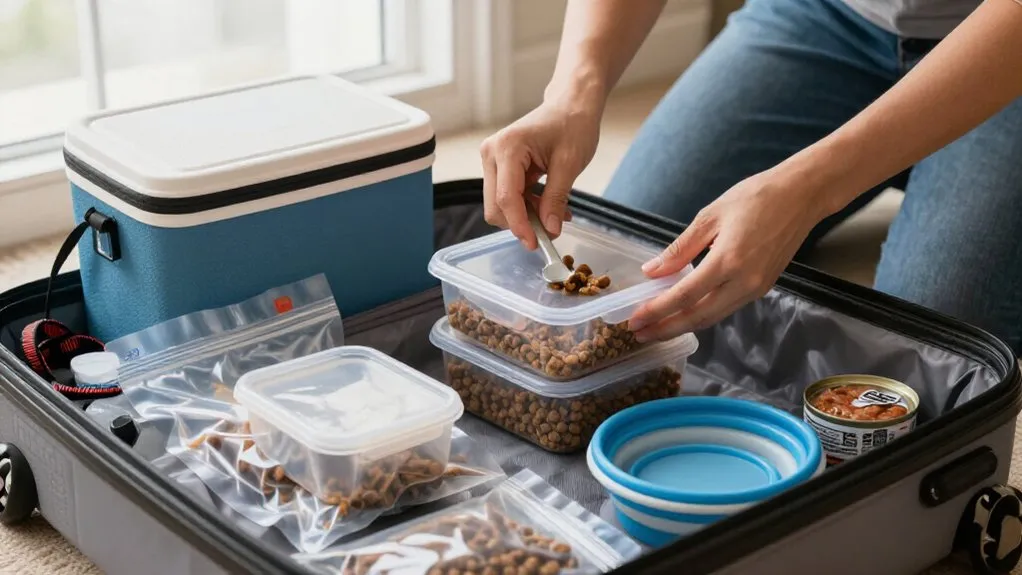
Pack your dog’s normal measured meals into clean, dry, airtight containers, labeling each with the date, meal, and serving size.
Use a scale or scoop to stay within 5% of the portion, and bring one or two extra days’ food.
Keep fresh or wet meals below 40°F (4°C); refrigerate opened wet food and use leftovers within 24 hours.
Check kibble for moisture, mold, damaged seals, or rancid odors before packing.
Continue for destination and freshness details.
Easy 15-Minute Portion Packing
Start by calculating your dog’s usual daily food amount, then divide it into single-meal servings using a kitchen scale or pre-measured scoop; keeping portions within about 5% of their normal amount helps preserve their established calorie routine.
Use your dog’s weight and activity level to confirm daily target; many dogs maintain on 20–30 kcal per pound daily, but your veterinarian’s recommendation takes priority. Pack meal in a labeled resealable bag or container, marking date and meal number. Add one to two extra days of food for delays. If you’re changing diets, bring three to seven days of current formula and shift, which helps limit gastrointestinal upset. Keep treats separate and count their calories, so they don’t displace meals or increase intake during travel days.
Verify Destination Feeding Rules
Before you seal those labeled meal packets, confirm that your destination, carrier, and lodging allow the food you plan to bring. Rules can restrict meat, dairy, raw diets, bones, or perishables, even when your dog relies on them nutritionally.
Check:
- Border and agriculture authorities: verify import permits, quarantine rules, declarations, and accepted commercial labels with ingredients, species, and expiry dates.
- Your specific airline, train, ferry, or cruise: confirm food type, packaging, temperature, and documentation requirements.
- Parks, campgrounds, and accommodations: identify raw-food bans, bear-proof storage requirements, and refrigerator or freezer access.
Carry paper and digital vaccination, health-certificate, microchip, and permit records. Contact local retailers before departure to confirm compatible replacement food. If rules bar your usual diet, ask your veterinarian for a safe replacement plan.
Step 1: Sanitize Containers Before Filling
Clean, dry containers protect your dog’s food from moisture, residual fats, and bacterial contamination during travel. Before packing, wash reusable food tubs, scoops, bowls, and lids with hot water and dish detergent, paying attention to seams, threads, and corners where grease and crumbs collect. Rinse thoroughly: detergent residue can alter food palatability and may upset sensitive dogs. Sanitize only with a food-contact-safe product used according to its label, then rinse if the label requires it.
Let every piece air-dry completely on a clean rack or towel; trapped water can promote mold and spoilage, especially in kibble and dehydrated diets. Don’t top off new food over old residues. Between uses, wash containers, particularly after holding wet, raw, or rehydrated meals, because protein-rich films support microbes.
Step 2: Choose Airtight Travel Containers
Once your containers are fully dry, choose airtight options that match the food and trip length. For dry kibble, use food-grade plastic or metal canisters with secure gasket seals; they block humidity, odors, and pests that can degrade texture and fat quality. Heavy-duty resealable freezer bags work well when space matters, provided you press out excess air and protect them from punctures.
For fresh, raw, or thawed meals, select leakproof, airtight containers or vacuum-sealed pouches and place them in an insulated cooler. Keep perishables below 40°F (4°C), and keep frozen meals solid for as long as possible. Choose containers sized to minimize empty headspace and repeated opening. Label each container with the food type, storage date, and instructions, especially for prescription or allergen-controlled diets.
Step 3: Measure Each Meal With Scoop
Use your dog’s usual measuring scoop to portion each meal, keeping servings within about 5% of its normal amount to preserve calorie intake and feeding routine. Check the scoop’s volume against your home serving before leaving; cup sizes vary, and a kitchen scale offers greater precision for small dogs or calorie-controlled diets.
Fill the scoop level, not heaped, and use the same method at every feeding. If your dog eats twice daily, divide its veterinarian-recommended daily ration evenly; don’t estimate from memory after long travel days. Include treats in the day’s calorie budget, especially if activity drops during driving or flying.
If appetite, stool quality, or medical needs change, contact your veterinarian rather than adjusting portions abruptly. Keep the scoop clean and completely dry.
Step 4: Label Bags by Feeding Day
Label each pre-portioned bag with the feeding day, date, and meal number, such as “Day 2, breakfast,” so you can follow your dog’s normal calorie schedule without relying on memory. Add your dog’s name, food type, and measured serving weight or scoop amount, especially if another person may feed them. This system helps prevent double-feeding, skipped meals, and unintended calorie changes.
Arrange bags in feeding order, keeping the next meal accessible. For fresh, raw, or thawed food, add “keep refrigerated” or “use by” and maintain it below 40°F (4°C). Mark medications or supplements separately with the exact dose and associated meal. Use waterproof labels or permanent marker because condensation can blur ordinary ink. Before departure, compare labels with your itinerary. After feeding, tick off that meal to maintain an accurate record and identify any missed serving promptly.
Step 5: Pack a Backup Day
Pack an extra one to two days of your dog’s regular food beyond the planned itinerary to protect their feeding routine against delays, cancellations, detours, or an extended stay. Calculate backup portions from the same daily calorie target you use at home, rather than estimating by volume. For most adult dogs, maintenance needs commonly fall around 20 to 30 kcal per pound of body weight daily, but your dog’s veterinarian-recommended intake, activity, age, and health status take priority.
Divide the reserve into labeled, single-meal servings, matching your usual feeding schedule and keeping portions within 5% of normal. Include the same therapeutic or prescription diet if your dog needs one; sudden substitutions can trigger gastrointestinal upset or undermine medical management. Verify destination availability for specialized formulas before departure.
Step 6: Press Out Excess Air
Once you’ve set aside backup servings, press as much air as possible from each resealable bag before sealing it. Less trapped oxygen slows oxidative rancidity in the fats that supply essential fatty acids and calories, helping dry food retain flavor and nutritional quality during travel.
Flatten each bag gently from the bottom upward, stopping before kibble is crushed, then close the zipper completely. For soft, fresh, or raw portions, use food-grade freezer bags or vacuum-sealed pouches; keep them cold at or below 40°F (4°C), or frozen, as appropriate. Don’t rely on air removal to make perishable food shelf-stable. It only reduces oxygen exposure and bulk. Check each seal by lightly pressing the closed bag: it shouldn’t reopen. Label the packet and store it away from sharp gear.
Inspect Kibble for Moisture
Before loading the bags, inspect dry kibble for moisture, clumping, mold, or an off, rancid odor. Kibble should feel dry and separate easily; soft, sticky, swollen, or fused pieces may indicate water exposure and a higher risk of microbial growth. Check the original bag’s seams and corners, where condensation can collect.
Look for fuzzy growth, discoloration, or damaged packaging. Don’t rely on a quick glance: pour a small amount onto a clean, dry surface and examine it under good light. If you find moisture or visible mold, don’t pack or feed that food. Keeping compromised kibble out of travel portions helps protect your dog from avoidable gastrointestinal illness. Use only food that remains dry, intact, and within its manufacturer’s storage period and best-by date.
Kibble Smells Rancid: Fixes
If kibble smells rancid, sour, paint-like, or unusually oily, don’t try to air it out, mix it with fresh food, or mask the odor with toppers; discard it and use a new, in-date supply. Rancid odor can indicate oxidation of fats, which reduces palatability and may degrade vulnerable nutrients. Check the best-by date, lot code, package seal, and storage history; heat, sunlight, and air accelerate oxidation. Don’t feed questionable kibble, even if your dog accepts it.
| Check | Action |
|---|---|
| Open bag smells normal, but portion smells off | Discard portion and inspect remaining kibble |
| Seal damaged or date expired | Replace bag; record lot code |
For travel, buy smaller bags you can finish promptly, retain the original label, and store portions in clean, airtight containers away from heat.
Refrigerate Opened Wet Food
Opened wet dog food needs prompt refrigeration to limit bacterial growth and preserve its intended nutrient quality. Transfer leftovers to a clean, covered container and keep them below 40°F (4°C) in a refrigerator or temperature-monitored cooler. Refrigerate within two hours of serving, or within one hour when temperatures exceed 90°F (32°C).
Don’t leave an opened can in a warm car or reuse food your dog hasn’t finished. Label the container with the opening date and time, and use refrigerated leftovers within 24 hours. For travel, portion food into single-meal containers before departure; this minimizes exposure and prevents repeated warming. If your cooler rises above 40°F, discard the food unless you can verify it remained safely chilled. Wash utensils, bowls, and hands after each meal.
Conclusion
Pack your dog’s food with the same care you use at home: confirm destination rules, clean and dry containers, and portion each meal with your usual scoop. Seal dry kibble in airtight containers after removing excess air, and discard any food that feels damp or smells rancid.
Keep opened wet food refrigerated and follow its label timeline. These simple steps protect freshness, preserve accurate nutrition, and help you avoid common, preventable digestive upsets during travel.