How to Get a Dog to Lie Down in the Car and Settle for the Ride
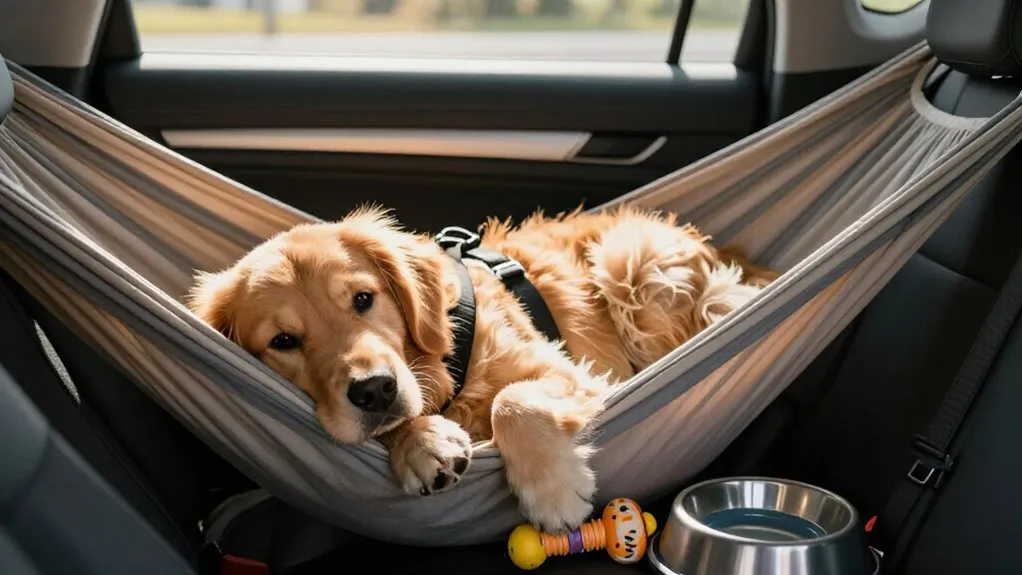
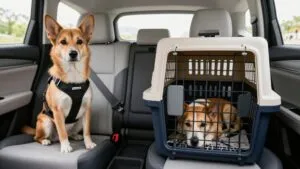
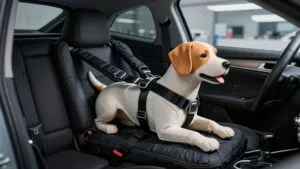
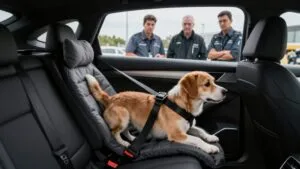
Teach your dog to settle gradually: in a quiet driveway, use a properly fitted crash-tested harness or secured crate in the back seat. With the engine off, cue “down” once and mark elbows touching a non-slip mat; reward brief calm stillness with tiny treats.
Build duration before trying a short drive. Keep windows closed or barely cracked, and watch for stress signs such as heavy drooling. Clear crumbs; wash the mat weekly. More guidance follows.
Dog Settles Within 10 Minutes
Most dogs can learn to settle within 10 minutes when you build the skill gradually rather than expecting a long down-stay on the first ride.
Begin in a quiet, familiar room. Say “down” once, then reward your dog immediately with a tiny, high-value treat for placing their body on the floor. Reward relaxed stillness at one or two seconds, then release them before they rise. Repeat brief sessions and extend duration only while they succeed.
Next, introduce the parked vehicle with its engine off. Reward calm entry, down, and quiet breathing. Then add engine noise and brief drives. A helper can reward calm behavior while you focus on driving. If your dog stands, paces, or shows distress, shorten the session and consult your veterinarian.
Crash-Tested Harness and Travel Mat
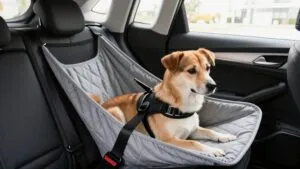
Once your dog can settle, make that calm down-stay safer with a properly fitted crash-tested harness and a stable travel mat in the back seat.
Choose a harness with published independent crash-test documentation, not just a marketing claim. Tests that adapt FMVSS 213 protocols and use appropriately sized dummies offer useful evidence of performance. A secure restraint limits forward and sideways movement during sudden stops, helping protect your dog and reduce driver distraction.
- Confirm the fit: snug at the chest, with straps positioned exactly as the manufacturer directs for use.
- Clip the harness to the vehicle’s designated belt points; never attach it to a collar or leash.
- Place a non-slip, washable mat beneath your dog, then reward relaxed, still body language with tiny treats.
Step 1: Choose a Quiet Driveway
Choose a quiet driveway or empty parking area for your first in-car practice, where you can focus on rewarding calm behavior without traffic, pedestrians, or tight spaces adding pressure. Pick a level, low-traffic location with enough room to park safely away from entrances and moving vehicles.
Use your dog’s secured back-seat setup and non-slip mat, and keep doors controlled while your dog is outside the car. This predictable, low-distraction setting lets you notice relaxed body language, such as soft eyes, a loose body, and slower breathing.
Mark and reward those calm choices promptly, using tiny treats, praise, or whichever reward your dog values most. If your dog appears worried or restless, increase distance from distractions and make the session easier. Don’t force progress yet.
Step 2: Start With Engine Off
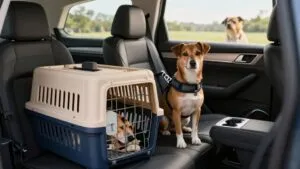
With the car parked securely and the engine off, invite your dog into their restrained back-seat area and reward calm stepping in, settling, and lying down. Use a crash-tested harness or secured crate sized to let them rest comfortably, never the front seat, where airbags can injure dogs.
Keep doors closed only if your dog remains relaxed; otherwise, reopen them and make the next repetition easier. Give your familiar down cue once, then wait quietly. Mark and treat calm behavior with tiny, high-value rewards.
Begin with brief, successful sessions, allowing your dog to exit on a release cue before they become restless. Repeat several times over days, gradually extending quiet time in the stationary vehicle. This practice reduces novelty and builds a positive association.
Step 3: Reward Elbows Touching the Mat
The moment your dog’s elbows touch the mat or bed in their secured back-seat space, calmly mark it (“yes” or a click) and deliver a tiny high-value treat. This precise timing teaches your dog that lowering into a stable down earns reinforcement. Keep the car parked, and use only a properly fitted crash-tested harness, secured crate, or barrier while you train.
If your dog pops back up, simply pause treats and wait for elbows to return; don’t scold or physically reposition them. At first, reward every correct repetition. Then build calm stillness by placing the next treat between their paws after a brief pause. This keeps the down comfortable, clear, and worthwhile. Watch for stress signs; end the session before your dog becomes overwhelmed.
Step 4: Take a Five-Minute Drive
Once your dog can settle in a parked car, take a calm five-minute drive with a helper in the back seat to reward the down-stay safely. Use a quiet, familiar route. Before leaving, secure your dog in the back seat using a crash-tested harness or secured crate with a nonslip mat for stability.
Ask for “down” before the car moves. Your helper should calmly deliver high-value treats while your dog remains lying down, beginning every few seconds. Reward relaxed body language, such as soft eyes and stillness, not position.
If your dog stands, pants heavily, drools, or appears worried, end the drive without punishment and return to an easier stationary session. Finish at a destination, release only when calm, and gradually lengthen successful trips.
Step 5: Lower Radio Volume and Retry
If your dog struggled to settle on the five-minute drive, lower or turn off the radio before trying again. Loud or unpredictable sound can add stimulation for a dog that’s still learning to relax in a moving vehicle. Create a quieter training session so you can tell whether your dog responds better to the motion and your down cue.
Park safely, then begin with calm, stationary practice. Ask for “down,” and promptly praise and reward relaxed body language, such as soft eyes, slow breathing, or resting hips. On the next short ride, keep sound low and let a helper reinforce calm lying down. Don’t add duration or volume at once. If restlessness continues, shorten the trip and consult your veterinarian about motion sickness.
Step 6: Clip Tether, Remove Treat Crumbs
Before the next practice ride, clip your dog’s tether to a properly fitted harness and clear away every treat crumb from the lie-down area. Use only a vehicle-rated restraint designed for your dog’s size, and attach it according to the manufacturer’s instructions. Never clip a tether to a collar, which can concentrate force on the neck during sudden stops. Keep the line short enough to limit roaming without pulling when your dog settles naturally.
Vacuum or wipe the bed, cover, and seat creases after training. Crumbs can prompt searching, standing, and unsafe reaching while you’re driving. Then reward the clean, calm down with one small treat delivered by a helper or when parked. This preserves the resting space and lets you reinforce the behavior.
Confirm Relaxed Breathing at Stops
At each parked stop, check that your dog’s breathing has returned to a calm, regular rhythm before you continue or open the door. Watch the chest and belly for smooth, even rises and falls, rather than rapid, shallow breaths or repeated panting. A settled dog often keeps a loose body, soft eyes, and relaxed facial muscles.
Keep your dog restrained while you assess them, and reward quiet lying down with a small treat or calm praise once breathing normalizes. If it doesn’t settle after a brief pause, extend the stop and lower demands; don’t ask for more travel yet.
Persistent labored breathing, marked distress, weakness, or unusual behavior warrants prompt veterinary guidance. These brief checks help you pace training below your dog’s stress threshold.
Drooling: Motion Sickness, Open Windows
Drooling during a car ride can signal motion sickness or rising anxiety, so treat it as useful feedback rather than a behavior to correct. If your dog drools, pauses, licks lips, or seems unsettled, shorten the trip and reward calm down-stays while parked. Avoid a full meal for several hours before travel, and ask your veterinarian about proven anti-nausea options if signs persist.
| Sign | Next step | Safety note |
|---|---|---|
| Mild drooling | Stop briefly | Offer calm praise |
| Heavy drooling | End trip | Call your veterinarian |
Keep windows closed or only slightly cracked: wind, noise, and fast-moving scents can increase arousal and won’t safely restrain your dog. Use climate control instead, secure your dog in the back seat, and build tolerance through short, positive rides. Reward relaxed breathing and lying down quietly.
Wash the Travel Mat Weekly
A clean travel mat helps your dog settle into a familiar, comfortable lie-down spot while removing saliva, dirt, and odors that can make car rides less pleasant. Wash the mat weekly, or sooner after drooling, muddy outings, or accidents. Follow its care label, use fragrance-free detergent, and rinse thoroughly; strong scents may discourage sensitive dogs from resting.
Dry it completely before reinstalling it, because damp fabric can harbor mildew and create slippery footing. Keep a spare mat so your dog’s secured back-seat area remains consistent while one is being cleaned. Before each ride, check that the mat lies flat and doesn’t interfere with the crate, harness tether, or non-slip surface. Then reward your dog for choosing the fresh mat and calmly lying down safely.
Conclusion
With calm practice, you can help your dog settle within 10 minutes by rewarding elbows on a secure travel mat and building duration before driving. Use a crash-tested harness and correctly fitted tether, then begin in a quiet driveway with the engine off.
At stops, check for loose posture and relaxed breathing. Don’t punish restlessness or drooling; open windows safely and ask your veterinarian about motion sickness. Clean the mat weekly to keep rides comfortable.