How to Stop a Dog From Climbing Into the Front Seat While Driving
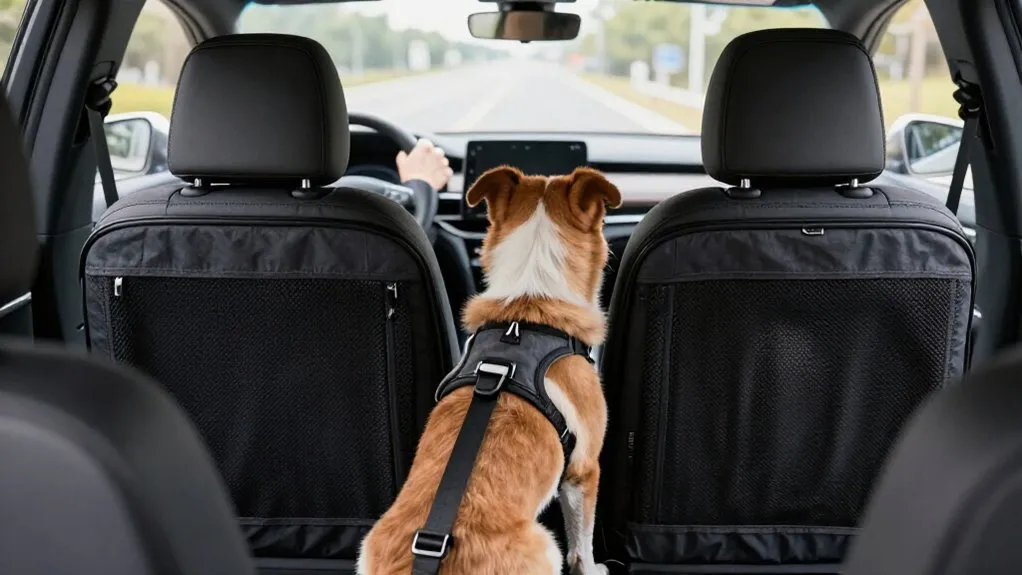
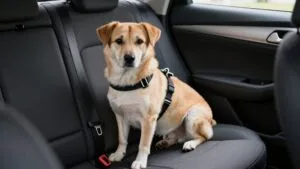
Keep your dog in the back seat with a properly fitted, crash-tested harness attached to a seatbelt tether, never a collar. Adjust it so they can sit, stand, turn, and lie down but can’t reach the front.
Add a sturdy vehicle barrier for backup, remove loose items, and reward quiet settling only when safely parked. Check every buckle, clip, and strap before driving.
If tether chewing or climbing continues, the steps below show safe fixes.
Easy 30-Minute Front-Seat Prevention
In 30 minutes, you can set a safer “back seat only” routine by pairing physical restraint with rewards.
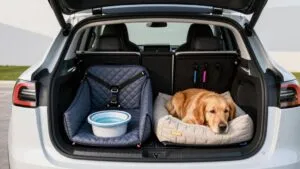
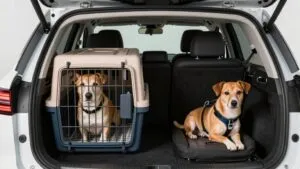
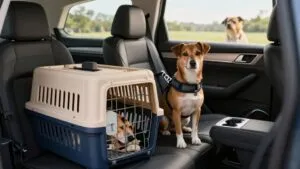
Before trips, exercise and toilet your dog, place them on a non-slip back-seat mat or in a secured carrier. Close doors before you start engine, and block access forward with a sturdy vehicle barrier.
Teach “settle”: wait for four paws in the area, say the cue, then deliver a treat and praise. Practice with the engine off, idling, then during drives. Have a passenger reward behavior; don’t reach back or offer treats while you drive. If your dog moves forward, pull over safely, reset them behind barrier, and withhold attention until they settle. Check equipment before leaving. This routine prevents airbag exposure, driver distraction, and serious injury.
Choose a Crash-Tested Dog Harness
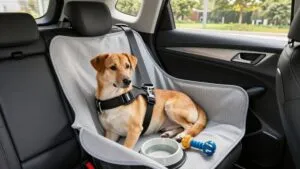
A back-seat routine works best when you pair it with a crash-tested travel harness. Unlike a walk harness, it secures your dog to seatbelt webbing or a vehicle anchor, limiting forward movement during sudden stops. That protects your dog, keeps them from reaching the front, and reduces driver distraction. Choose equipment based on proof, fit, and daily use:
- Look for CPS certification or published third-party crash-test results.
- Choose a full-body design with reinforced stitching that distributes force across the chest and torso.
- Measure chest girth, neck, and body length; adjust the harness snugly without restricting breathing.
- Prefer a direct seatbelt-webbing connection and confirm it limits forward excursion.
Reward calm harness wearing and back-seat settling with praise. Check buckles and connections before every trip.
Step 1: Park on a Level Surface
Park on level ground before loading or unloading your dog, especially if they’re young, senior, or mobility-limited. An incline can make footing unstable, increase joint strain, and encourage a nervous dog to scramble toward the front seat. Choose a flat, low-traffic spot, set the parking brake, and open doors only when you’re ready to guide your dog directly to their back-seat area.
Place a nonslip mat or bed where you want your dog to settle, then reward calm entry, footing, and four paws staying in that space. Use a ramp, steps, or supportive lifting aid when jumping could cause pain or fear. Don’t rush departures or exits. Practicing this routine builds confidence, limits wandering, and helps make the back seat your dog’s safe destination.
Step 2: Attach Seatbelt Tether Properly
Before you drive, clip a crash-tested seatbelt tether to your dog’s well-fitted harness—not their collar—and anchor it to the rear-seat belt system according to the manufacturer’s instructions. Choose a tether and inspect its stitching and clips before every trip. Adjust the length so your dog can sit, stand, turn, and lie down comfortably but can’t reach the front seats or center console.
Keep the attachment low and free of twists, and confirm the belt is locked or routed exactly as your tether maker directs. Pull on each connection before closing the door. Recheck the fit, since webbing can settle. Replace damaged gear immediately. A fitted tether manages movement without relying on force or punishment, protecting your dog, your focus, and everyone in the vehicle.
Step 3: Reward Back-Seat Calm Behavior
With the tether fitted to limit forward access, teach your dog that staying relaxed in the back seat pays well. Choose a designated spot, ideally on a nonslip mat or bed, and cue “settle” or “down.” Begin while parked: reward quiet sitting, lying down, and looking away from the front with small, high-value treats and praise. Keep sessions brief, then practice with the engine running before taking short trips.
If another adult rides along, have them deliver rewards; never reach behind you or handle treats while driving. Reward solo trips only when parked. Increase travel time gradually as your dog remains calm. Don’t reward whining, pawing, or attempts to move forward; wait for a moment of quiet, then reinforce. This builds a safer habit.
Step 4: Block Front-Seat Access With Barrier
A sturdy vehicle barrier adds a nonnegotiable safety boundary between your dog and the front seats. Install a model designed for your vehicle, following the manufacturer’s instructions and checking every mounting point before each trip. Choose a rigid metal barrier for determined, large, or highly active dogs; use mesh only when it fits securely and your dog doesn’t challenge it. The barrier must cover every practical route around or over the seats without blocking your safe operation of the vehicle.
Pair the barrier with a comfortable back-seat area and teach your dog that staying behind it earns praise and treats. Practice while parked, then on brief rides, rewarding calm settling only. Never let begging, whining, or climbing attempts earn front-seat access. Recheck fit after vehicle adjustments.
Step 5: Shorten Tether to Limit Reach
Use a properly fitted, crash-tested harness and seat-belt tether to limit your dog’s reach to the back-seat area. Adjust the tether so your dog can sit, lie down, and turn comfortably but can’t reach the front seats. Attach it only to the harness, never a collar, because sudden braking can injure your dog’s neck. Follow the harness and tether manufacturers’ size, fit, and vehicle-anchor instructions.
Before each trip, check buckles, stitching, and clips; retighten the connection after a few minutes if it settles. Practice while parked, then on short drives. Reward calm settling in the assigned spot at safe stops. Don’t adjust restraints while driving; pull over first. A correctly shortened tether prevents forward climbing and reduces distraction while preserving safer back-seat travel overall.
Step 6: Remove Loose Back-Seat Items
Before each trip, clear loose toys, treats, bags, and other items from the back seat so your dog doesn’t climb forward to chase or retrieve them. Store belongings in the trunk, a secured cargo area, or closed compartments. A rolling ball or fallen treat can turn a settled dog into a moving distraction, especially during turns or sudden stops. Keep only a stable bed or nonslip mat in your dog’s designated space.
Offer enrichment only when you can secure it in place. Before driving, cue “settle” on the cleared bed, then reward calm, four-paws-down behavior with praise or a treat before departure. If your dog searches for items, wait for calm rather than offering attention. This routine makes back-seat calm rewarding on every trip.
Test Buckle Under Gentle Pull
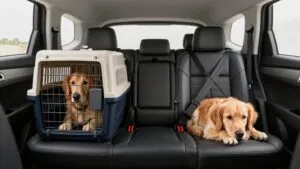
After buckling your dog’s harness tether or securing the crate, give the connection a firm, gentle pull to confirm it’s fully latched and anchored. Check the buckle, seat-belt tongue, tether clip, and crate straps before every trip. The hardware shouldn’t twist, slide, or release when you apply steady pressure. Make sure the tether is short enough to prevent a move into the front seat while still allowing a comfortable sit or lie-down.
For a crate, verify the belt or approved anchor holds it level and stable. If anything shifts or feels loose, don’t drive; refit it or replace damaged equipment. Once the setup passes, cue “settle” and reward your dog for calm, back-seat behavior. Recheck after loading and following the first few minutes of driving.
Tether Chewing: Diagnose and Solve
A secure tether still won’t protect your dog if they chew through it, so treat chewing as a safety issue rather than a nuisance. Watch when it happens: chewing at departure often signals arousal, while chewing after movement may signal stress, boredom, or poor fit. Stop safely; never correct while driving. Replace a damaged tether before another trip, then reward quiet settling and give a durable, vehicle-safe chew before departure.
| Clue | Response |
|---|---|
| Leaves immediately | Offer chew, practice parked |
| Chews when moving | Shorten trips; reward calm |
| Targets tether only | Add barrier; consult trainer |
Don’t spray repellents or leave loose toys within reach. If chewing continues, pause travel training and ask your veterinarian or qualified behavior professional to assess anxiety. Use a barrier as backup; it prevents front-seat access.
Inspect Harness Stitching Monthly
Monthly, inspect your dog’s travel harness for frayed stitching, loose webbing, cracked buckles, or damaged metal hardware; a restraint can’t protect your dog if its seams fail in a sudden stop. Run your fingers along every seam, especially where the tether and chest straps meet. Pull webbing firmly, test each buckle’s lock, and check metal rings for bends, rust, or sharp edges.
Replace the harness immediately if you find damage; don’t repair load-bearing seams with tape, glue, or home stitching. Confirm the harness still fits snugly, allowing two fingers beneath the straps, then attach it to the back-seat belt anchor. After inspection, reward your dog for calm harness handling with praise and a treat. Routine keeps restraint training positive while helping prevent front-seat access.
Conclusion
Keeping your dog in the back seat protects everyone in the vehicle. Use a crash-tested harness and correctly attached seatbelt tether, then reward calm behavior every trip. Don’t rely on loose barriers, improvised clips, or punishment. Check the buckle, tether, and harness stitching regularly, and address chewing before it weakens the restraint.
With consistent setup and positive reinforcement, you’ll build a safer travel routine and help your dog settle comfortably where they belong.