Back Seat Extender vs Hammock for Dogs: Which Gives Big Dogs More Room?
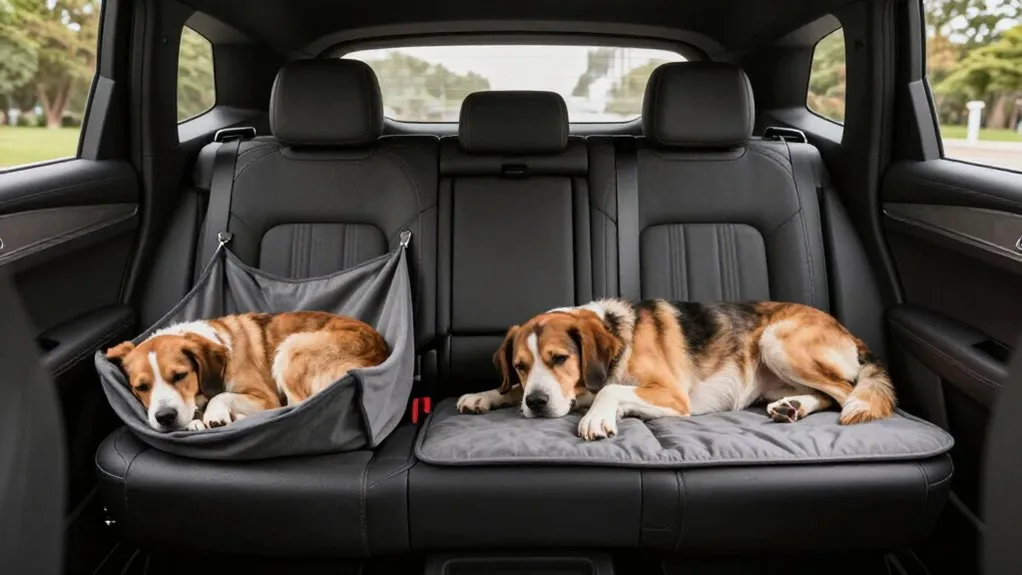
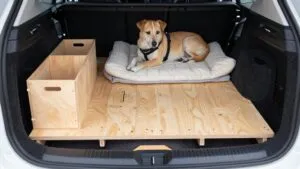
For a big dog, you’ll get more dependable room from a hard-bottom back-seat extender than a fabric hammock. The extender bridges the footwell, creating a level, load-bearing platform with roughly 30 to 40% more usable area and better footing during stops and turns.
Hammocks install faster, but their suspended fabric can sag under concentrated weight. Measure bench width, gap depth, buckle access, and door clearance, then use a crash-tested harness and tether. More fit guidance follows below.
Usable Rear-Seat Floor Space
For a big dog, usable rear-seat space means more than a cover’s dimensions: it’s the contiguous, load-bearing area where your dog can stand, turn, and lie down without dropping into the footwell. For dogs over 50 pounds, measure flat, accessible footprint, not overall cover size. Comparisons find extenders add roughly 30 to 40% usable area, creating a rectangular place to sprawl. Hammocks may look roomy, yet reduced stable space near the footwell can limit standing and turning. Check your vehicle’s gap depth, center hump, and front-seat position; poor fit can limit footing during braking.
| What you see | What your dog gets |
|---|---|
| Rear bench plus gap | One continuous resting zone |
| Footwell dip | Less dependable standing room |
| Center hump | Measure before travel safely |
| Wide rear row | More room to turn |
Platform Panels Versus Fabric Slings
Hard-bottom extenders use reinforced panels to turn the rear seat and footwell into one level, load-bearing platform, while hammocks suspend fabric from headrests and leave an unsupported void beneath your dog. A rigid bridge spreads weight across its base, creating a floor-like zone where a large dog can stand, pivot, and stretch without sinking into a sling.
- Picture a mastiff placing four paws on a flat panel: the usable surface stays broad and predictable.
- In a fabric hammock, the center can dip beneath concentrated weight, narrowing the area available for turning or lying long.
- Check the maker’s load rating, vehicle measurements, and front-edge support; advertised extender capacities commonly reach 300 to 420+ pounds, but you’ll need a model that fits your vehicle securely.
Braking Stability for Large Dogs
During braking, a rigid back-seat extender gives a large dog a continuous, level surface instead of allowing its paws or body to slide into the footwell. That extra supported depth matters when momentum carries a heavy dog forward: it can brace on a firm floor rather than collapse into a fabric dip.
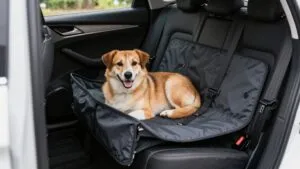
A hammock cover helps contain loose hair and blocks the gap, but its suspended center can flex or sag under concentrated weight. That movement may reduce traction and make it harder for your dog to regain balance after a stop. Choose an extender with a verified load rating, a rigid base that reaches the seat edges, and a fit matched to your vehicle’s footwell. A platform isn’t crash protection; use appropriate restraint.
Strap Setup and Removal Time
Although both styles attach to headrests, a hammock usually installs and removes faster because you clip four straps and adjust the sling. For quick errands, that simple routine keeps your seating usable when your dog isn’t riding.
A hard-bottom extender typically takes longer: you secure its headrest straps, unfold or position the rigid panels, and fasten stabilizing straps before loading your dog. Check every connection each trip; neither style should rely on loose webbing or a headrest alone to restrain a dog.
- Clip hammock buckles, then tug each strap until the sling sits evenly.
- Set extender panels flat, lock their supports, and confirm they can’t shift.
- On removal, unclip carefully and inspect straps for fraying or stressed seams before the next drive.
Bench Width and Door Clearance
Measure your rear bench from door to door and the gap to the front seats before choosing either design. A hard-bottom extender adds usable room when its stated width fits between the bolsters without buckling or covering buckle access. Many models span about 50 to 53 inches, so a narrow sedan bench may leave raised edges or prevent a flat platform. Check the product’s minimum front-to-rear clearance with the front seats set for driving.
A hammock adapts easily to modest bench widths, but its panels and door flaps can bunch at the doors. Confirm that doors close, trim isn’t pinched, and your dog can’t step into an uncovered footwell. Keep seat-belt slots reachable for a harness tether; neither design replaces restraint.
Replacement Panel Costs and Washability
Hard-bottom extenders usually cost more to replace than hammock covers because their rigid panels, reinforced edges, and fitted bases must match the vehicle’s seat gap; check whether the maker sells individual panels, removable covers, or only a complete unit. For large dogs, this matters: a cracked extender panel can reduce the level floor that keeps paws out of the footwell, while a torn hammock may sag and lose usable space.
- Choose waterproof, wipe-clean surfaces for muddy paws and spills; clean them promptly so grit doesn’t abrade seams or panel covers.
- Machine-wash only if the label permits it; heat and harsh detergents can damage coatings or foam.
- Measure the installed platform before ordering replacements; correct fit preserves stable, full-depth coverage during routine cleaning.
Seatbelt Buckle and Airbag Access
Because seatbelt access and airbag clearance affect every trip, choose a back-seat extender or hammock that keeps rear buckles, belt paths, and any seat-mounted airbag zones unobstructed. Before buying, locate each buckle and read your vehicle manual for side-impact airbag locations. Choose a cover with clearly positioned buckle slots or zippered pass-throughs, then confirm you can latch and release each belt without pulling fabric across the webbing.
For a large dog, use a crash-tested harness and vehicle-compatible tether; don’t attach it to a concealed buckle or route it near deployment areas. Rigid extenders often include dedicated openings, while hammocks can obscure buckles if they’re poorly fitted. After installation, press the seat, check straps, and verify airbags retain their specified deployment space during travel.
Under-Seat Storage Access
A back seat extender’s rigid platform can cover the footwell, so you’ll often need to fold or remove it to reach under-seat storage safely. A hammock also blocks direct access, but its flexible panels may lift more easily, without providing stable footing for your dog. Check your vehicle’s storage location and secure both setup and cargo before driving.
Access With Back Seat Extenders
How easily can you reach under-seat storage once you install a back seat extender? Most rigid models bridge the footwell, so the platform typically covers items beneath it. You may need to unclip straps, fold back a panel, or remove the extender before reaching a first-aid kit, jumper cables, or cleaning supplies.
- Before driving, place emergency gear in a reachable door pocket or cargo bin.
- Keep nothing hard or loose beneath the platform; sudden braking can shift items forward.
- Check your vehicle’s seat rails and storage area after installation; a secure, flat fit protects footwell space and prevents panel movement.
Measure access before buying and follow the manufacturer’s load and installation instructions; extender designs vary, so you shouldn’t assume every panel lifts quickly safely.
Hammock Storage Limitations
While a hammock cover doesn’t place a rigid panel over the footwell, its suspended fabric and attachment straps can still limit quick access to under-seat storage. To retrieve a first-aid kit, leash, or travel supplies, you may need to unclip straps, lift the cover, or move your dog first. That interruption matters during roadside stops or emergencies, when you need supplies without creating an escape route or distracting the driver.
The fabric sling also conceals items in the footwell, so loose gear can be overlooked or shift beneath it. Store emergency essentials in reachable door pockets or a secured cargo organizer instead. Before departure, check that storage choices won’t interfere with seatbelt anchors, front-seat movement, or your dog’s tether. Keep heavy items secured elsewhere always.
Arthritic Dogs: Better Choice
For an arthritic dog, you’ll usually want a hard-bottom extender because its level, firm surface better supports sore joints than a sagging hammock. It can also create a steadier path for entry and exit while expanding usable rear-seat space. Secure it correctly and use a crash-tested harness tether, as the continuous platform helps reduce sliding during stops and turns.
Stable Support for Joints
Although neither option replaces a properly fitted crash-tested restraint, a hard-bottom back seat extender is usually the better choice for an arthritic dog because it creates a firm, level surface from the rear bench to the footwell. That continuity spreads your dog’s weight across a broader area, helping prevent paw slips and abrupt joint-loading shifts during normal cornering or braking. A hammock can feel soft, but its suspended fabric may sag under a big dog’s concentrated weight.
- Picture your dog standing without a dipping center, keeping hips and shoulders more evenly aligned.
- Choose a model whose stated load rating exceeds your dog’s weight.
- Secure straps tightly, confirm the front edge stays supported, and use a harness tether through seatbelt openings properly.
Easier Entry and Exit
A hard-bottom back seat extender also gives an arthritic dog a steadier path when getting in, repositioning, or climbing out. By bridging the rear bench and footwell, it removes the open drop that can make an older, big dog hesitate or overreach. The added, level floor space lets you guide your dog through shorter, more deliberate steps rather than asking them to balance on a suspended fabric sling.
A hammock can protect upholstery, but its flexible surface may dip or tilt as your dog shifts weight near the door or footwell. For painful hips, knees, or elbows, that uneven route can demand extra joint effort. Choose an extender with verified dimensions, front-edge support, and load capacity that fits your vehicle. Use a ramp.
Reduced Sliding During Rides
Because a hard-bottom extender creates a level, supported platform, it can reduce the sliding and weight shifts that aggravate an arthritic dog during braking, turns, and uneven roads. You give your dog a broader, stable area to brace, stand, and settle without stepping into the footwell. A hammock may protect upholstery, but its suspended fabric can sag under a large dog’s concentrated weight, allowing more sway.
- Picture your dog planting all four paws on a flat surface as you stop.
- It can turn around without the floor dipping beneath its hips.
- A fitted harness tether limits travel while preserving room to lie flat.
Check fit, straps, and manufacturer load rating before each trip. Secure it tightly; don’t rely on it alone.
80-Pound Dogs: Choose Extender
For an 80-pound dog, choose a hard-bottom back seat extender over a standard hammock. Its rigid base bridges the footwell, turning the rear seating area into a level, continuous platform. That added depth matters when your dog stands, turns, or stretches out; product measurements commonly show extenders increase usable rear-platform depth by roughly 40 to 52%.
Unlike a suspended fabric hammock, an extender distributes your dog’s weight across reinforced panels and the seat structure. This reduces sagging and helps prevent a forward plunge into the footwell during braking. Check the manufacturer’s stated load rating, measure the gap between seats, and tighten every strap before travel. Use the extender’s belt openings with a crash-tested harness and vehicle-mounted tether. Don’t rely on the cover alone for collision protection.
Conclusion
For a big dog, you’ll usually gain more usable room with a rigid back-seat extender than with a hammock. A properly fitted extender creates a flatter platform over the footwell, helping an 80-pound dog stand, turn, and brace during braking. Still, you should confirm its weight rating, seat compatibility, buckle access, and door clearance. Choose a hammock when you need quicker installation or easier under-seat access, but don’t treat either option as a crash-tested restraint.