What Is a Back Seat Extender for Dogs? How It Works and Who Needs One
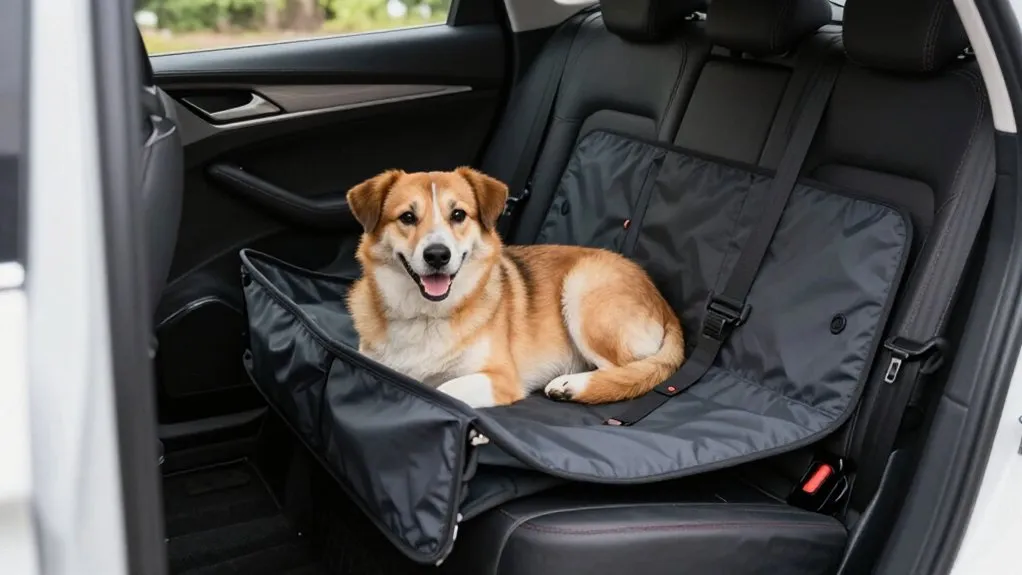
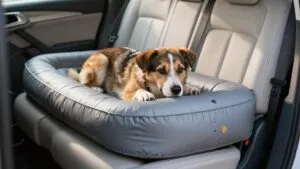
A back seat extender for dogs bridges the rear footwell, turning the bench and floor gap into a flatter, stable riding platform.
It helps keep paws and legs from slipping during stops and turns, while giving your dog room to lie down or reposition.
Choose rigid models for large, older, or restless dogs, and secure a crash-tested harness to a belt—not the extender.
The right fit, anchoring, and airflow details can make each trip safer.
Bridging the Rear Footwell
A back seat extender bridges the recessed rear footwell, turning the seat cushion and floor gap into one flatter area for your dog. It helps prevent paws or legs from slipping into the well when you brake, corner, or pull away. That added support can help a dog settle rather than scramble toward the front seats.
You can choose a strap-supported fabric model or a rigid extender, based on your dog’s size, weight, and activity level. Before buying, measure the rear seating area, footwell, and headrest positions. Secure every strap, anchor, or panel before each trip; a loose extender can shift and undermine stability. Check its stated weight limit, non-slip backing, and harness-compatible pass-throughs. An extender supports travel, but it doesn’t replace crash-tested restraints.
Creating a Flat Riding Platform
Beyond filling the footwell, a well-fitted extender creates a level riding platform where your dog can lie down with supported paws and a more natural spine position. This continuous surface removes abrupt height changes between the rear cushion and footwell, giving your dog room to rest or reposition without dangling limbs. Rigid versions use hardboard, molded plastic, or reinforced foam to carry weight across the gap.
Folding models deploy panels and braces, then secure them with straps, seat-belt pass-throughs, or side supports. A durable waterproof cover or padded top adds comfort while protecting the structure and upholstery. Before travel, measure rear-seat area and confirm weight rating suits your dog. Check deployed platform sits level and anchors engage. Use a fitted restraint separately for travel.
Preventing Dogs From Sliding
Keeping your dog from sliding starts with a securely fitted extender that stays level under shifting weight. Tighten every attachment according to the manufacturer’s directions, and check that seat anchors, straps, and nonslip backing haven’t loosened before each trip. A stable surface helps your dog brace naturally when you brake, accelerate, or turn, reducing scrambling and the risk of paws slipping into an open footwell.
Encourage calm riding by giving your dog a familiar blanket or bed with a grippy underside. Don’t let them ride loose or move between seats. Still, use a properly fitted vehicle restraint attached to a harness; an extender supports balance, but it doesn’t protect against crash forces. Stop and readjust if you notice sagging, shifting, or persistent pacing there.
Rigid Panels Versus Hammocks
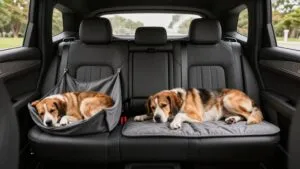
Rigid panels give your dog firm, footwell-filling support, while hammocks rely on straps and can sag if you don’t tension them correctly. Choose the steadier platform for large, restless, or anxious dogs, and use a harness restraint regardless of extender type. Hammocks usually fold and wash more easily, but rigid designs may provide a more stable surface and require more storage space.
Structural Support Differences
Although both designs cover the rear footwell, rigid-panel extenders create a firmer, more level platform than strap-supported hammocks. Rigid models use solid inserts or panels that bridge the gap and transfer your dog’s weight across supported surfaces. This structure suits larger dogs, active repositioners, or vehicles with deep wells, because it is less likely to dip when weight shifts.
Hammocks rely on headrest straps, seat anchors, and tensioned fabric. They can block access to the footwell, but their support depends on correct installation and strap condition. Check attachment points before each trip and follow the maker’s weight limit. If your dog paws, digs, or repeatedly changes position, inspect for sagging or loosening. Choose a design that fits your seat contours without gaps or shifting.
Comfort And Stability
Your dog’s comfort depends on how evenly the extender supports its body as the vehicle moves. Rigid-panel extenders create a firm, level floor that helps distribute weight across your dog’s paws, hips, and chest. They’re often the steadier choice for large dogs, older dogs, or dogs that reposition frequently, because the surface is less likely to dip during braking or turns.
Hammock-style extenders can feel softer and more enclosed, which may help a nervous dog settle. However, straps must stay tight and anchors secure; a sagging hammock can make your dog brace, slide, or lose confidence. Choose a design that remains level under your dog’s weight, has non-slip coverage, and doesn’t wobble. Practice while parked and use a properly fitted travel restraint on trip.
Cleaning And Storage
Cleaning needs often determine which extender fits your routine: hammock-style models usually fold up quickly and many have machine-washable, waterproof fabric, while rigid-panel designs may require wiping panels and removing or laundering a separate cover.
After each trip, shake out hair and grit before they settle in seams. Spot-clean mud, then dry every layer completely; trapped moisture causes odors and may make a reluctant dog avoid the seat. For rigid units, check panel edges, fasteners, and non-slip surfaces. Store folded hammocks in a dry bag away from chewing. Disassemble or secure rigid panels so they can’t become loose projectiles.
Before reinstalling, inspect straps, anchors, and tether openings. A clean, assembled extender helps your dog settle calmly, but you should still use a fitted restraint.
Seat Belt Anchor Placement
Locate your vehicle’s factory seat-belt anchors before fitting the extender, and never attach a harness to the extender itself. Align its belt pass-throughs with the anchors so you can buckle or clip in without twisting the restraint. Secure your dog’s crash-tested harness connection with enough room to lie down, but not enough to reach the front seats.
Locating Factory Anchor Points
Before you fit a backseat extender, identify the rear seat-belt buckles, belt pass-throughs, and lower belt mounting locations so the platform won’t cover or obstruct them. Consult your vehicle manual to distinguish child-seat lower anchors, seat-belt hardware, and approved cargo tie-downs. Don’t clip extender straps to belt buckles or load-bearing belt anchors unless the extender and vehicle manufacturer permit it. Those components must remain available for passengers and for your dog’s restraint.
Press the seat cushions down and check that each buckle stands upright, releases, and isn’t trapped beneath a rigid panel. Test the seat belt’s pull and retraction after installation. A dog that shifts, paws at buckles, or becomes anxious can dislodge a poorly secured setup, so recheck the area before every trip.
Aligning Extender Openings
After you position the extender, align its belt pass-throughs or cutouts directly over the rear seat-belt buckles and any approved harness attachment points. Keep each opening always fully visible and reachable, rather than covered by fabric, foam, or a rigid panel. A blocked buckle can delay you when loading or unloading your dog and may tempt you to shift the extender out of place.
Check that the material lies flat around each opening and doesn’t press against the buckle release button. If an opening sits off-center, reposition the extender or adjust its panels and straps until vehicle hardware remains unobstructed. This setup helps you preserve easy buckle access while keeping the platform stable for a dog that shifts, turns, or resettles while you drive.
Securing Harness Connections
Secure your dog’s travel harness to the vehicle’s designated rear seat-belt buckle or approved anchor point, not to the extender’s fabric, straps, or rigid panels unless the manufacturer specifically rates that attachment for restraint use.
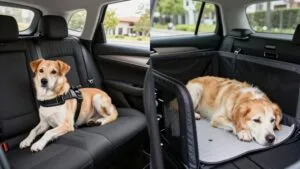
Thread the restraint through the extender’s belt pass-through, if provided, so the buckle connects directly to the vehicle. Use a well-fitted, crash-tested harness rather than a collar; collars can concentrate force on your dog’s neck during abrupt braking. Keep the tether short enough to limit climbing toward front seats, yet long enough for your dog to sit, lie down, and reposition comfortably.
Check that clips lock, webbing isn’t twisted, and no panel presses against the release button. Before each trip, pull firmly on the connection. If your dog chews, panics, or tangles repeatedly, stop and adjust the setup.
Supporting Senior Dogs’ Joints
For senior dogs with arthritis, stiffness, or reduced balance, a back seat extender removes the unstable footwell gap that can strain joints when they brace during turns or climbs. A level, nonslip surface lets your dog place each paw predictably, settle without constantly correcting their stance, and avoid awkward stretching after a stop. Choose a firm, well-secured design that stays flat across the seat and footwell, then add a washable cushion for gentle pressure relief.
Introduce it while parked: let your dog step on, sniff, and lie down at their own pace. Keep entry and exit low-impact by using a ramp or helping them with a supportive harness. During rides, watch for panting, shifting, reluctance to lie down, or difficulty standing. Consult your veterinarian about new pain or mobility changes.
Observe Manufacturer Weight Limits
Check the manufacturer’s stated weight limit before each dog rides on a back seat extender, and choose a margin above your dog’s current weight—especially if they shift, stand, or share the space with another pet. A rating reflects the product’s materials, panel support, straps, anchors, and intended setup, not a guarantee that it’ll remain stable under every condition. Add the combined weight of all dogs plus any bedding or gear resting on it.
If your dog approaches the limit, select a stronger, rigid-bottom model rather than relying on a suspended design. Recheck the installation after your dog settles, turns, or braces during travel. Tighten straps, secure anchors, and stop using the extender if it sags, tilts, or shifts. A properly rated extender supports steadier footing.
Blocking Rear Air Vents
Avoid covering rear air vents with a back seat extender, its rigid panels, or bedding, because restricted airflow can leave your dog overheated or uncomfortable. Before each trip, run the climate system and confirm air reaches the rear seating area.
- Keep vent outlets fully visible and clear of blankets, straps, and loose toys.
- Aim airflow toward your dog’s resting space, especially during warm weather or long drives.
- Watch for panting, drooling, restlessness, or repeated position changes; these can signal heat stress or discomfort.
- Stop safely if your dog seems distressed, offer water, and cool the cabin before continuing.
Don’t assume a cracked window provides enough cooling. Direct sun and dark upholstery can raise temperatures quickly. Secure any cover so it can’t slide across outlets.
Measure Your Rear Bench Width
Before buying a back seat extender, measure the usable width of your rear bench from door-side seating edge to door-side seating edge, accounting for raised bolsters, center consoles, and seat-belt hardware. Use a flexible tape measure and record the narrowest usable span, not the widest point across the cushion. Then measure seat depth and the footwell gap, because a wide extender can still buckle, sag, or shift if its panels don’t match your seat shape.
Compare your measurement with the manufacturer’s stated minimum and maximum width, leaving clearance for buckles and door closure. Check that rigid side panels won’t press against a console or captain’s-seat gap. A close fit prevents shifting when your dog braces, turns, or resettles. Keep belt pass-throughs accessible for harnesses.
Conclusion
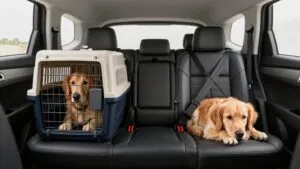
A back seat extender gives your dog a flatter, more secure place to ride by filling the footwell and reducing sliding. Choose a rigid, weight-rated design that fits your rear bench, keeps vents clear, and doesn’t interfere with seat belt anchors. Pair it with a properly fitted crash-tested harness or secured crate. For senior, anxious, or large dogs, the added support can improve comfort, but you should still supervise every trip and monitor their behavior.