Is It Bad for Dogs to Stick Their Head Out the Window? Hidden Dangers
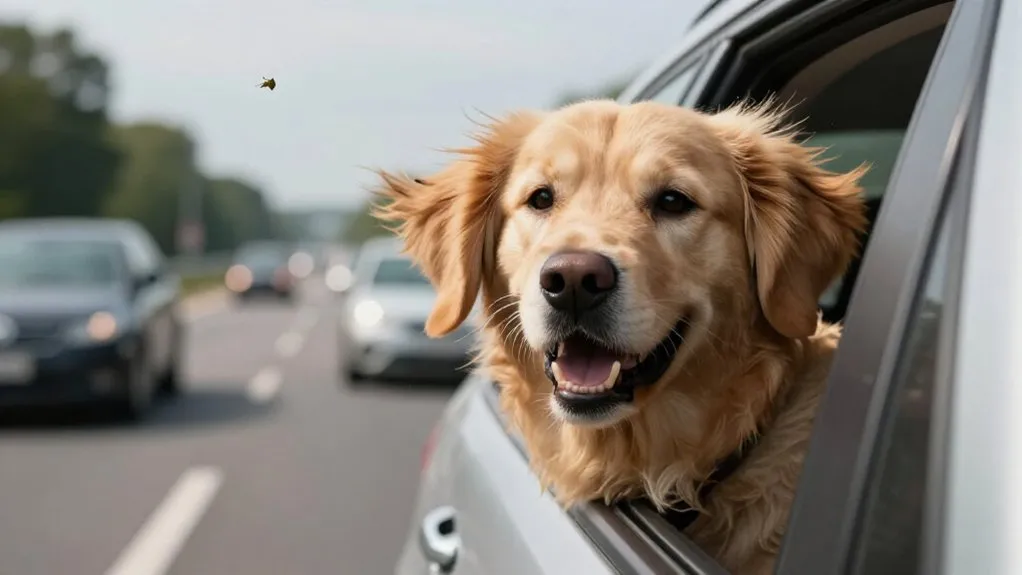
Yes. When you let your dog ride with its head out a moving window, windblown gravel, insects, and dust can injure the eyes, while turbulence and noise may stress the ears.
A sudden brake, swerve, or startled lunge can cause a fall or ejection, leading to severe trauma.
Keep your dog restrained in the back seat, use window locks, and limit openings.
The safety steps below explain how to protect your dog on every trip.
Eye Injuries From Road Debris
Road debris can injure your dog’s eyes in seconds when it sticks its head out of a moving car window. Gravel, insects, dust, and other particles strike the eye at speed and may cause corneal abrasions, conjunctival inflammation, or embedded foreign material. Your dog may squint, paw at its face, blink excessively, tear, or develop redness, swelling, cloudiness, or light sensitivity.
Don’t assume symptoms will resolve: a scratch can become infected or form an ulcer that threatens vision. Keep windows closed or open only too narrowly for your dog’s head to pass through, and use a crash-tested harness or secured crate. If an eye is painful or looks abnormal, prevent rubbing and seek same-day veterinary care. Prompt examination allows staining tests and treatment.
Wind Noise Hearing Damage
Beyond the risk of eye injury, high-speed wind can expose your dog’s ears to intense turbulence and broadband noise. Airflow creates rapidly changing pressure and sound energy that can stress the eardrum and middle ear while overstimulating the cochlea. Excessive intensity or repeated exposure may injure delicate cochlear hair cells, causing temporary threshold shifts or permanent sensorineural hearing loss.
Dogs hear higher frequencies and softer sounds than people, so noise that seems tolerable to you may pose more concern for them. Direct studies of car-window wind are limited, but canine kennel-noise research found measurable hearing changes after chronic hazardous noise exposure. Keep windows raised enough to block head exposure, use climate control, and schedule sniff breaks instead. Ask your veterinarian about new hearing changes.
Sudden Swerves and Ejection Risk
Even a calm dog can lose balance or launch toward a sight or scent when you brake hard, turn suddenly, or swerve. With its head outside, your dog’s center of gravity shifts farther from the vehicle, so abrupt motion can pull it against the door or through an opening. A startled dog may also jump toward another animal, noise, or smell before you can react.
A fall or ejection at road speed can cause severe trauma, including fractures, chest injuries, head injury, internal bleeding, and fatal wounds. An unrestrained dog can also strike occupants during a sudden stop, adding injury risk and distracting you when control matters most. Keep window openings too small for your dog’s head or shoulders to pass through at all.
Crash-Tested Canine Car Restraints
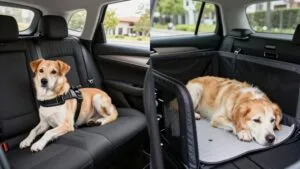
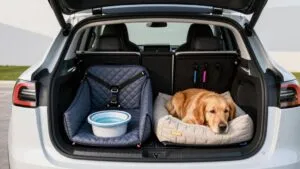
Crash-tested canine restraints help limit ejection and blunt-force injuries during a crash or sudden stop. Choose a restraint independently certified for your dog’s size and weight, rather than relying on an untested tether or harness.
Fit it snugly and install it exactly as directed so it can’t allow your dog to reach an open window.
Why Crash Testing Matters
A restraint’s real value becomes clear in a sudden stop or collision, when an unrestrained dog can be thrown into the cabin, ejected, or injured by the force of impact. Crash testing measures whether a system limits movement and distributes loading across safer body regions, reducing risks of head, chest, spinal, and internal trauma.
During a crash, momentum doesn’t disappear; your dog continues forward until a restraint, seat, or interior surface stops that motion. A poorly controlled stop can turn your pet into a projectile and may also injure you.
| Crash force | What testing evaluates |
|---|---|
| Forward motion | Occupant excursion |
| Sudden loading | Harness integrity |
| Cabin contact | Injury potential |
| Ejection risk | Containment |
It shows whether restraint performance can protect your dog when ordinary driving conditions fail.
Choosing Certified Restraints
With crash-test performance in mind, choose a canine car restraint that has undergone independent testing for your dog’s size and travel setup, not simply a product labeled “safe” or “crash-tested.” Look for clear manufacturer documentation on the test standard, weight range, vehicle compatibility, and correct installation; a restraint must limit forward movement and prevent ejection without concentrating force on the neck or abdomen. Prioritize models evaluated by a recognized third-party program and designed to distribute forces across the chest and back.
Avoid restraints that clip only to a collar, since abrupt deceleration can injure the cervical spine or airway. Review test details rather than marketing claims: reports should identify dummy size, impact conditions, and pass/fail outcome. If documentation is unavailable or vague, select another product.
Proper Fit and Installation
Proper fit and correct installation determine whether a crash-tested canine restraint can protect your dog in a sudden stop or collision. Follow the manufacturer’s weight, chest, and neck measurements; don’t size up “for comfort.” A loose harness can shift, concentrate force, or permit ejection.
| Check | Correct setup | Why it matters |
|---|---|---|
| Harness | Snug; two fingers fit | Limits shifting |
| Tether | Attach to vehicle anchor | Prevents window access |
| Crate | Secure it to vehicle | Reduces projectile risk |
Place harness low across chest, never around neck, and connect only to designated seat-belt point or child-seat anchor specified by instructions. Don’t clip a tether to a collar. Before travel, pull system firmly, close windows beyond head width, and replace webbing, buckles, or stitching. Have veterinarian examine injuries after any crash.
Dog Size and Window Height
Small dogs can slip through window openings that seem too narrow, placing them at disproportionate risk of falls and ejection injuries. Match window height and opening width to your dog’s size and reach, but don’t allow enough space for their head, shoulders, or body to pass through.
Use a properly fitted restraint or carrier to keep your dog safely seated away from open windows.
Small Dogs, Higher Risk
Toy and small-breed dogs face an especially high risk around open car windows because they can slip through gaps that may seem too narrow to an owner. Their lighter body mass and smaller chest circumference make it easier for them to pass through an opening during a sudden lunge, turn, or startle response. Once outside the vehicle, a small dog can suffer serious trauma from a fall, road contact, or being struck by debris. Their size also leaves less margin for recovery if they are ejected in a sharp maneuver or crash.
Don’t assume a calm dog won’t react instantly to a scent, animal, or noise. Secure your dog in a properly fitted crash-tested harness or vehicle crate before travel. This protects both passengers.
Window Height and Reach
Window height doesn’t reliably predict safety: a determined dog can stand, climb, or lunge far enough to reach an opening that initially seems inaccessible. A low-slung dog may use the door panel or armrest for leverage, while a tall dog can extend its neck and forequarters over a window surprisingly quickly.
Excitement, sudden braking, wildlife, and unfamiliar smells can turn a calm posture into an abrupt launch. Don’t judge risk by your dog’s standing height alone; consider its ability to stretch, brace, and react. Any opening that permits your dog’s head, shoulders, or body to pass through can enable escape or expose the face to windborne debris. Check reach while the vehicle is parked, but don’t test it by encouraging window access. Prevent passage.
Safe Seating by Size
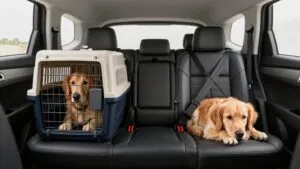
In a moving car, your dog’s size changes the safest seating setup, but it doesn’t make open-window access safe. Toy and small dogs can slip through openings that appear narrow, so secure them in a properly sized carrier or crash-tested harness on the back seat.
Don’t elevate a small dog near a window; booster seats may improve visibility but can increase reach unless the window stays closed and the restraint limits movement. Medium and large dogs can still lunge over a low door line or toward a partly open window. Choose a setup that keeps your dog’s head and shoulders inside the vehicle during turns or sudden stops. Use climate control and sniff breaks instead. This prevents ejection, reducing wind-related eye and ear injuries.
Use Rear-Seat Window Locks
Rear-seat window locks give you a simple way to prevent a dog from lowering a window farther and creating an escape or injury hazard.
Activate the lock before every trip, then confirm the opening remains too narrow for your dog’s head or shoulders.
| Check | Why it matters | Your action |
|---|---|---|
| Lock engaged | Prevents window changes | Test switch |
| Opening limited | Reduces fall risk | Verify clearance |
Use the driver’s master control only when you can monitor your dog, and don’t rely on a lock as a substitute for a secured crate or crash-tested harness. After any attempted jump, fall, or facial impact, arrange prompt veterinary assessment; eye injuries and soft-tissue trauma aren’t always obvious.
Keep the rear windows locked even during short, familiar drives with excitable dogs.
Brachycephalic Dogs Overheat Faster
Flat-faced dogs, including Pugs, Bulldogs, and Boston Terriers, can overheat quickly in cars because their shortened airways make panting less efficient. Even if your dog seems keen to feel the wind, an open window doesn’t reliably prevent heat stress. Brachycephalic dogs already have restricted airflow, and excitement, humidity, warm cabins, or exertion can rapidly raise body temperature.
Use air-conditioning, keep your dog out of direct sun, and plan short trips during cooler hours. Never leave your dog parked, even briefly. Watch for noisy or labored breathing, excessive drooling, weakness, vomiting, bright-red or pale gums, or collapse. If these appear, stop, move your dog into a cool area, begin gentle cooling, and seek urgent veterinary care. Don’t rely on wind alone to lower risk.
Attaching Tethers to Collars
Never attach a car tether to your dog’s collar, because a sudden stop or collision can focus force on the neck and cause serious cervical, tracheal, or airway injury. Instead, choose a well-fitted, vehicle-rated harness designed to distribute crash forces across the chest and torso. Secure the tether only to the harness’s designated attachment point and follow its size, weight, and vehicle-use instructions. A collar tether can tighten or jerk during braking, causing soft-tissue trauma even without a crash.
Avoid fastening tethers to any leash, head collar, or training collar instead.
- Ensure the tether is short enough to limit window access.
- Check hardware for wear before each trip.
- Use a crash-tested crate if your dog can’t travel safely in a harness.
Practice “settle” Before Driving
Before you drive, practice a reliable “settle” cue so your dog learns to remain calmly in a secured harness, carrier, or crate rather than rushing toward the window. Begin in a parked vehicle with doors closed and windows up.
Guide your dog into its travel space, say “settle” once, and reward relaxed body language: lying down, soft eyes, and quiet breathing. Keep sessions brief and end before arousal rises. Then add the engine, short stationary waits, and gradual low-speed trips. Don’t reward pawing, whining, or lunging by opening a window; that can strengthen unsafe window-seeking. Use a crash-tested restraint or secured carrier throughout. If your dog panics, drools heavily, or can’t settle, stop training and ask your veterinarian about motion sickness or anxiety support.
Conclusion
Letting your dog ride with its head out the window may look joyful, but it exposes them to debris-related eye injuries, damaging wind noise, overheating, and falls or ejection during sudden stops. You can reduce risk by keeping windows partly raised, using rear-seat locks, and securing your dog in a crash-tested harness or crate.
Never clip a tether to a collar. Practice calm “settle” behavior before trips, and give flat-faced dogs extra cooling and monitoring.