Dog Car Seat Size Chart: Match Seat Size to Your Dog’s Weight and Breed
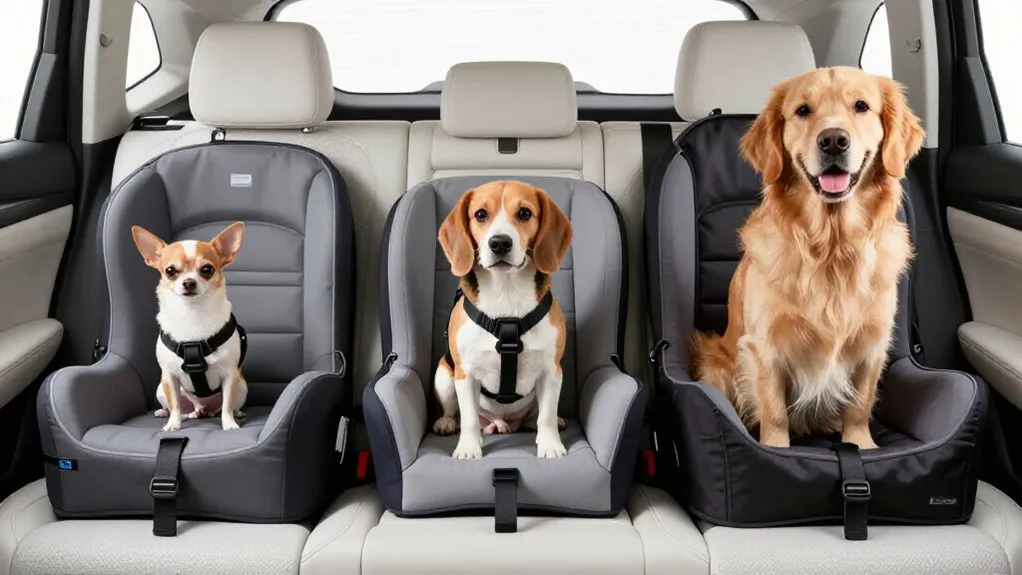
Use weight only as a starting point: 10 lb or less fits a small booster, 11 to 25 lb a tethered bolster, 26 to 50 lb a reinforced seat, and 51+ lb a crate or cargo restraint. You’ll measure seated height, body length, chest girth, and rear-bench footprint.
Choose breathable clearance for Pugs, spine-supporting length for Dachshunds, and a harness tether, never a collar. Next, you’ll avoid seats exceeding crash limits and check bolsters, tether range, and door clearance.
Measure Your Dog’s Seated Height
Measure your dog’s seated height from the vehicle seat cushion to the top of their head while they’re sitting naturally. Keep their spine neutral, don’t stretch their neck, and measure after they’ve settled. This check helps you identify whether seat walls, canopy frames, or headrest-adjacent designs could crowd their head or force an awkward posture. Your dog should be able to sit upright, turn comfortably, and breathe without facial pressure or neck compression.
Consider breed structure and anatomy. A flat-faced Pug may need open airflow, while a long-necked Whippet or upright-eared Shepherd mix needs overhead clearance.
If your dog has arthritis, spinal disease, or reduced mobility, avoid seats that require crouching or climbing. Test installation, secure harness tether, and watch for relaxed posture.
Weight-to-Seat Size Chart
Weight offers a quick starting point for choosing a dog car seat, but it can’t replace the product’s stated capacity, inner dimensions, and restraint requirements. Use it to shortlist options, then honor each product’s limit and restraint instructions carefully.
| Dog weight | Safer starting option |
|---|---|
| Toy: ≤10 lb | Small booster or bucket |
| Small: 11 to 25 lb | Booster/bolster with tether |
| Medium: 26 to 50 lb | Reinforced seat or bench harness |
| Large/giant: 51+ lb | Secured crate, cargo restraint, or barrier |
Breed averages help compare weighted dogs. A Pug may suit a small booster, while a Border Collie often needs more room. Large dogs outgrow boosters. Prefer rear-seat installation where instructions allow, and verify anchors, restraint compatibility, and crash-test information. If arthritis affects your dog, choose stable, supportive access.
Pounds, Inches, and Harness Terms
Pounds tell you whether a seat can safely support your dog, while inches determine whether your dog can sit, turn, and lie down without strain. Check the manufacturer’s weight limit first; a 22-pound Pug and a 22-pound long-bodied Dachshund may need very different interior space. Measure body length from the base of the neck to the base of the tail, then measure chest girth at the widest ribs. Compare both measurements with the seat’s usable inner dimensions, not its outside dimensions or breed label.
For restraint, use a well-fitted vehicle harness, not a collar. A harness should distribute sudden-stop forces across the chest and shoulders without restricting breathing or rubbing the armpits. Confirm that its attachment hardware is compatible with the seat. Reassess fit regularly.
Bolster Height and Tether Length
Choose bolster height that supports your dog’s body without pressing on the shoulders or limiting head movement, using shoulder height as your guide. Adjust the harness tether so your dog can sit or lie comfortably but can’t climb out or create excessive seat movement during a sudden stop. Short-legged, compact breeds may need lower bolsters, while taller or deep-chested dogs need adequate wall clearance and a securely fitted harness.
Choosing Proper Bolster Height
Bolster height should keep your dog securely contained without pressing on the chest, restricting head movement, or obstructing the view that helps reduce travel anxiety. Choose walls that support a small, low-slung breed, such as a Dachshund or Pug, while allowing unobstructed breathing and natural repositioning. Deep bolsters can help prevent a nervous dog from stepping out, but overly tall sides may worsen motion stress or limit ventilation.
Attach the tether only to a well-fitted, crash-tested harness, never a collar. Adjust it so your dog can sit, turn, and lie down, but can’t climb over the bolster or reach the front seat. Check that slack won’t let your dog become tangled during braking. For strong, long-bodied dogs, use manufacturer-approved restraints; some outgrow booster seats.
Measuring Your Dog’s Shoulder
Measure your dog from the floor to the top of the shoulder (the withers) while they stand naturally, then compare that height with the seat’s inner bolster height and tether range. This standing measurement shows whether the bolster supports your dog’s chest and sides without pressing into the throat, shoulders, or forelimbs during normal posture.
Use a level floor and keep your dog relaxed; crouching, stretching, or raised hackles can distort the result. Short-legged breeds, such as Dachshunds and Pugs, may sit low behind a tall wall, whereas long-legged breeds need enough shoulder clearance to shift comfortably. Compare your dog’s individual wither height with the manufacturer’s interior specifications, not breed averages alone. If your dog has arthritis, shoulder pain, or limited mobility, ask your veterinarian.
Tether Length Safety Guidelines
Once the bolster height suits your dog’s shoulder level, set the tether so it permits comfortable sitting or lying down without allowing a jump over the seat wall. Attach it to a vehicle-travel harness, never a collar; sudden braking can concentrate force on the neck, trachea, and cervical spine. With your dog seated, adjust the tether to allow a head turn and curled resting posture while keeping the chest and shoulders inside the bolster. Recheck it when your dog lies down.
Short-nosed breeds need unrestricted breathing; prevent chest straps or tether hardware from pressing against their airway. Long-backed breeds, including Dachshunds, need room to settle without twisting their spine. For tall, agile dogs, use higher bolsters and shorter tethers to reduce escape risk during travel.
Preventing Excessive Seat Movement
Although a roomy seat supports comfort, excessive shifting can destabilize your dog and increase injury risk in a sudden stop. Choose bolsters that reach high enough to support your dog’s chest and sides without pressing on the neck or restricting shoulder motion. Low walls let a leaning dog roll or climb outward; overly tall bolsters can crowd short-legged breeds or limit head movement.
Secure the seat tightly to the vehicle according to its instructions, so it can’t slide during turns. Set the harness-mounted tether short enough to prevent reaching the seat edge, yet long enough for comfortable sitting and repositioning. Check that your dog stays centered when braking gently in a parked vehicle. A well-positioned restraint reduces abrupt body displacement and helps protect the spine.
Adjusting Fit for Breeds
A secure seat still needs breed-specific adjustment: bolster height and tether length should match your dog’s build, posture, and mobility. Short-legged, low-riding breeds, such as Dachshunds and Corgis, need bolsters low enough to enter without jumping, which can strain the back and joints. For deep-chested dogs, confirm the bolster doesn’t press against the sternum or restrict natural sitting.
Set the tether so your dog can sit, turn, and lie down, but not climb over the wall or reach the vehicle floor. Attach it only to a well-fitted, vehicle-rated harness, never a collar, to reduce neck injury risk during braking.
Brachycephalic breeds need unobstructed head and airway space; tall, long-necked dogs need enough clearance to avoid forced crouching. Recheck fit as puppies grow, weight changes, or mobility declines.
Verify Rear-Seat Footprint
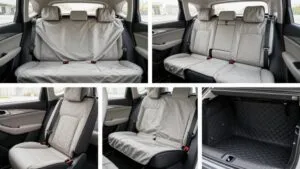
Before you buy, map the car seat’s interior footprint on your rear bench with tape or cardboard, then have your dog sit, turn, and settle within that space. This quick test reveals whether the listed inner dimensions suit your dog’s actual body and your vehicle’s usable bench area. Check that the planned seat leaves room for secure belt routing and doesn’t crowd adjacent passengers or buckle access.
Compare the template with your dog’s neck-to-tail length and chest girth, not weight or breed labels alone. Long-backed Dachshunds, broad-chested mixed breeds, and restless young dogs may need more interior room, while curlers can fit a snugger space.
Brachycephalic Dogs: Extra Airflow
Because brachycephalic dogs such as Pugs, French Bulldogs, Boston Terriers, and English Bulldogs can struggle to cool themselves and breathe efficiently, choose a car seat with open sides or breathable mesh rather than deep, enclosed walls. Check the seat’s height and tether placement so your dog can sit without chest or throat pressure against an edge. Use a well-fitted harness, never a collar attachment, and keep the tether short enough to prevent climbing while allowing head movement.
During travel, maintain cool cabin temperatures, avoid sun, and offer breaks on trips. Watch for noisy or labored breathing, excessive panting, blue-tinged gums, weakness, or distress; stop and seek veterinary advice if signs persist. Weight limits matter, but airflow and upright comfort deserve priority for heat-sensitive breeds.
Dachshund: Long-Back Fit
Dachshunds need a car seat that supports their long spine without forcing them to curl tightly, perch on an edge, or twist during travel. Measure your dog from the base of the neck to the base of the tail, then compare that length with the seat’s usable inner dimensions. Weight offers a starting point, but it won’t capture a Dachshund’s low, elongated shape.
Choose a footprint that lets your dog lie down naturally or turn without spinal bending, while raised sides provide steady containment. Check chest girth and sitting height so the harness fits cleanly and your dog’s head clears the rim. Attach the tether to a well-fitted body harness, never a collar. For active or anxious Dachshunds, select extra room for repositioning.
Ignoring Crash-Test Weight Limits
A car seat may fit your dog comfortably, but it isn’t a safe choice if your dog exceeds its crash-test weight limit. Crash testing evaluates how the seat, straps, and tether perform under collision forces; comfort measurements can’t replace that rating. An overweight dog can overload attachment points, increasing the risk of abrupt forward motion and traumatic injury. This matters especially for dense, muscular breeds and mixes whose build outweighs their apparent size.
- Verify the manufacturer’s tested maximum, not just its suggested size.
- Weigh your dog regularly, including expected adult weight for puppies.
- Account for muscular French Bulldogs, Pugs, and stocky terrier mixes.
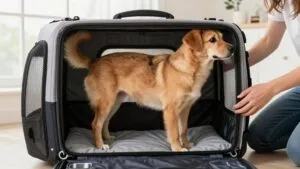
- Use a crash-rated vehicle crate when your dog exceeds the limit.
- Attach the tether only to a well-fitted harness, never a collar.
Check Door Clearance
Before you install a dog car seat, open and close the vehicle door with the seat in place to confirm it doesn’t obstruct the door, window controls, or seat-belt path. A seat that presses against a door or blocks belt routing can shift during braking, pinch straps, or prevent safe exit. Check clearance with your dog’s expected position, especially for broad-chested Pugs, long-bodied Dachshunds, and growing mixed breeds. This prevents chest compression, awkward posture, and delayed access if your dog needs emergency removal.
- Close the door gently; don’t force it against bolsters.
- Test rear window switches and child-lock access.
- Confirm belts lie flat without twisting or rubbing.
- Leave room for harness tether movement, not jumping.
- Choose a crate instead for dogs exceeding seat limits.
Conclusion
Choose a dog car seat by measuring your dog while seated, then confirming weight, harness, bolster, and vehicle-fit limits. You’ll protect comfort and reduce distraction only when the seat supports your dog’s body without restricting breathing or movement. Give brachycephalic breeds extra airflow, accommodate a Dachshund’s long spine, and never exceed crash-test ratings. Before every trip, check tether adjustment, door clearance, and rear-seat stability. When in doubt, size up safely and ask your veterinarian first.