Tesla Model Y Dog Setup: Best Gear for Back Seat and Cargo Area
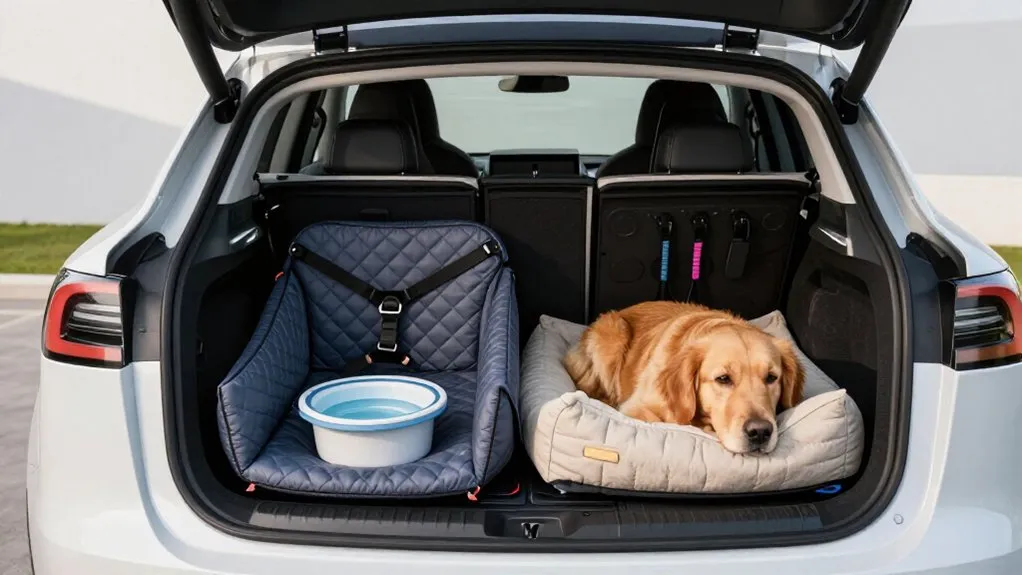
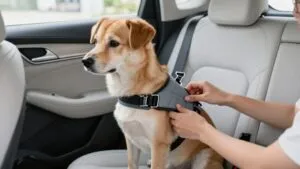
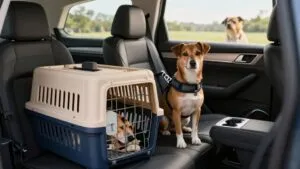
Set up your Model Y with either a crash-tested rear-seat harness or a low, tie-down-secured cargo crate sized to clear the hatch.
Use a non-slip waterproof liner, seatback protection, and a Model Y-specific rated barrier.
Keep bedding clear of rear airflow, use Dog Mode only for short stops, and monitor battery and climate in the app.
Never place your dog in the front seat.
Next, you’ll find fit, cleaning, and climate details that matter most.
40/60 Seat Split Setup
A 40/60 rear-seat split lets you preserve one or two passenger seats while expanding the Model Y’s dog area. Fold the larger section for a broad, flat resting surface, or fold the smaller section when you need more room for a passenger. Before driving, confirm each upright seatback has latched and that the folded section lies securely; an unsecured seatback can shift during hard braking.
Cover exposed seatbacks and the load floor with a washable, non-slip surface so your dog can stand, turn, and settle without sliding. Keep your dog’s weight low and centered behind the rear seats, rather than near the hatch. Make sure airflow reaches the space, limit direct sun, and stop regularly for water and movement. It keeps passenger seating stable.
Dog Gear by Cargo Zone
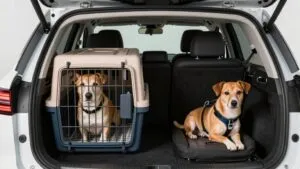
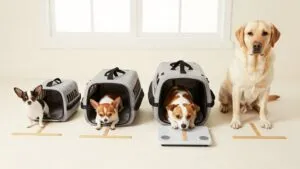
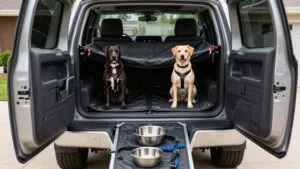
Map your dog gear to the Model Y’s distinct cargo zones so heavy items stay secure, daily supplies remain accessible, and your dog retains a stable, comfortable space. Use Zone A, the rear cargo floor, for a non-slip liner and a correctly sized crate; check its outside dimensions against the roughly 48 to 52-inch width before buying. Keep the crate low, use OEM tie-downs, and confirm payload limits for your specific Model Y. Zone B, with rear seats folded, suits larger kennels or modular crates; protect seatbacks and leave HVAC airflow around your dog.
| Zone | Gear | Comfort-focused placement |
|---|---|---|
| A | Non-slip liner + crate | Low, stable floor |
| C | Bowls + cleanup kit | Underfloor, out of paws |
Use the frunk only for lightweight supplies, and measure every item before loading.
Cargo Barrier Load Ratings
Once you’ve positioned the crate and daily supplies, choose a Model Y cargo barrier by its documented load rating—not its appearance. Confirm that the rating covers the force and weight you’ll realistically place against it, including a shifting crate or your dog during hard braking. Choose a barrier engineered for your Model Y’s cargo anchor points, not a universal pressure-fit gate. Follow the maker’s installation instructions, tighten every mounting point, and inspect it after loading.
A load rating doesn’t automatically equal crash certification, so check for explicit vehicle-use or crash-test claims. Keep bedding clear of mounts and preserve ventilation around the crate. Recheck fasteners regularly, especially after rough roads, and replace bent or worn hardware promptly to protect your dog and cabin occupants alike.
Rear Footwell Hammock Fit
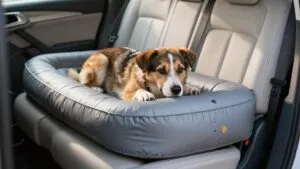
Measure your Tesla Model Y’s rear footwell span, then confirm the hammock clears the seat rails and won’t bunch beneath your dog’s paws. Secure its anchors to appropriate points, adjust tension for a stable padded surface, and keep the fabric away from door seals and latches. A correctly fitted hammock helps your dog ride comfortably while preserving safe rear-seat access.
Measure Footwell Span
A tape measure and a few careful checks will tell you whether a rear-seat hammock can span your Tesla Model Y safely. With the rear doors open, measure the usable width across each footwell from one lower door-side edge to the other. Then measure front-to-back distance from the rear seat cushion edge to the front seatback at your chosen driving position.
Compare both figures with the hammock’s stated base dimensions, rather than its full fabric size. Leave room for curved trim and a relaxed fit. The platform should sit level enough to support your dog’s paws and bedding without pulling tight. Check both footwells, because mats, seat positions, and accessories can change usable space. Choose a hammock with a firm, nonslip base and washable padding.
Check Seat Rail Clearance
With the hammock’s footprint confirmed, slide each front seat to your normal driving position and inspect the Model Y’s exposed seat rails in both rear footwells. The hammock’s lower panels should lie flat beside, rather than across, the metal tracks and moving seat hardware. Run each front seat forward and back through its full travel while the cover is loosely in place.
Nothing should snag, bunch beneath a rail, press against wiring, or prevent the seat from locking securely. Check both sides, because your preferred driver and passenger positions can leave different gaps. If a panel bridges a rail, choose a hammock with narrower lower sections or adjustable openings; don’t force fabric into the mechanism. This protects fabric and gives your dog a comfortable ride.
Position Anchor Points
Once the seat rails move freely, locate the hammock’s lower anchor straps in the rear footwells and position them clear of the Model Y’s rails, wiring, and seat-adjustment hardware. Route each strap along the outer footwell area, where it won’t sit beneath a passenger’s shoes or your dog’s paws. Use only the hammock maker’s intended attachment loops or approved anchors; don’t hook straps around moving seat components.
Keep buckles facing away from your dog and cover any hard edges with the hammock’s padded panel. Before loading your dog, slide both front seats through their range and confirm nothing catches, pinches, or blocks rear foot space. An unobstructed footwell lets the hammock create a barrier while preserving a stable, comfortable place for your dog to settle.
Adjust Hammock Tension
Tighten the rear-footwell hammock straps until the panel sits taut and level between the front and rear seats, but don’t pull so hard that it bends seat trim, strains attachment points, or restricts front-seat travel.
In the Model Y, leave enough give for the hammock to support your dog’s weight without sagging into the footwell. Press down on the center and check that the fabric stays stable rather than bottoming out.
Recheck each buckle and strap adjuster after loading your dog, since loose webbing can shift under braking or cornering. Keep the surface flat so paws have secure footing, then confirm your dog can lie down comfortably without pressure on its legs or joints. Test the fit before every trip while your dog waits.
Maintain Door Clearance
Before closing either rear door, check that the hammock’s side panels, straps, and buckles sit fully inside the Model Y’s rear footwell and don’t touch the door seals, latch area, or window controls. A trapped edge can prevent a proper seal, create wind noise, wear trim, or let your dog pull loose material into the cabin. Open and close each door slowly after installation, then inspect the lower sill and B-pillar gap from outside.
Reposition straps toward the seat base, tighten excess webbing, and keep buckles padded or tucked away from paws. Make sure the hammock doesn’t bunch near the rear HVAC vents or reduce your dog’s stable standing space. If the cover shifts during a drive, stop safely and reset it before continuing.
Rear Vent Climate Settings
Because the Model Y’s cargo area relies on cabin airflow, set a comfortable climate temperature and confirm air reaches your dog’s crate or resting area before driving. Aim vents toward the rear seating area and keep bedding, blankets, or crate covers from blocking airflow. Check conditions at your dog’s level, especially after loading a tall crate or cargo barrier.
Use Auto climate only after verifying it maintains steady rear comfort; adjust fan speed if the cargo space feels stuffy. On hot days, reduce sun with shades and precondition the cabin before loading. In cold weather, avoid directing strong hot air continuously at your dog.
Check the climate screen during charging stops and recheck airflow after any software setting changes. Offer water and take breaks.
Airbag Risks for Front-Seat Dogs
Climate control protects your dog from heat and cold, but seating position matters just as much: don’t carry a dog in the Model Y’s front passenger seat. A deploying passenger airbag inflates with enormous force and can seriously injure or kill a dog, even on a short trip. Don’t rely on the seat’s occupancy sensing system to make this arrangement safe; it’s designed around human passengers, not canine bodies or travel positions.
Instead, secure your dog in the rear seating area with a crash-tested harness attached to an appropriate anchor, or use a correctly sized rigid crate in the cargo area. Keep the setup low, stable, and well-ventilated, with padding that won’t slide. A rear barrier helps prevent roaming and lets your dog relax.
Muddy Paws After Hikes
After a wet or muddy hike, protect your Model Y’s cargo area before your dog jumps in: use a waterproof, non-slip boot liner with raised edges, plus a washable towel or absorbent mat at the hatch. Wipe paws and belly before loading, including the hatch sill. A folding ramp with a grippy surface helps a large, senior, or tired dog climb aboard safely without slipping on wet pavement or straining joints. Secure the liner so it can’t bunch beneath paws, and cover rear seatbacks if you’ve folded them flat.
Keep a microfiber towel, paw-cleaning cup, waste bags, and pet-safe cleaner in the underfloor compartment. Remove damp gear promptly after arriving home, then rinse and thoroughly dry the liner to prevent odors, mildew, and slippery residue.
Dog Mode Battery Warnings
Dog Mode can keep your Model Y’s cabin comfortable during short stops, but you should check the battery level and remaining range before leaving your dog inside. Heat, direct sun, a long errand, or a weak cellular connection can turn a safe plan into a risk. Dog Mode uses energy to run the HVAC system, and battery consumption can rise quickly in extreme weather.
- Set a conservative minimum charge before parking; don’t rely on arrival estimates alone.
- Check the Tesla app regularly for climate status, temperature, and alerts.
- Return immediately if Dog Mode reports a climate-control limitation or battery warning.
- Keep water, shade, and a backup plan ready; never treat Dog Mode as all-day care.
If conditions change, bring your dog with you instead.
Measure Crate Hatch Clearance
Before buying or loading a crate, measure your Model Y’s hatch opening at its narrowest width and lowest point, then compare those figures with the crate’s outside dimensions—not just its interior size. Leave extra room so you can angle the kennel past the hatch lip without scraping trim or startling your dog. Check:
- Width: Measure between the tightest side trims.
- Height: Check hatch opening with liftgate fully raised.
- Depth: Confirm crate clears seatbacks and your dog can turn.
- Stability: Test it on a non-slip liner, then secure it to cargo anchors.
Don’t force a crate through the opening or let it rest against liftgate. A fit protects your pet and keeps sightlines unobstructed ahead during every trip, day or night.
Conclusion
Your Model Y can carry your dog comfortably when you match each setup to the trip. Secure crates or barriers to approved anchor points, preserve rear-seat and airbag safety, and keep vents flowing to the cargo area. Protect seats and footwells from mud, then check hatch clearance before driving. Use Dog Mode only with adequate battery charge, and monitor conditions remotely. With stable gear, cool airflow, and sensible restraint, you’ll make rides safer and calmer.