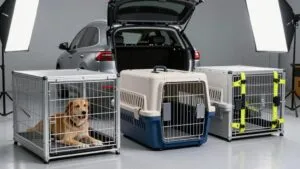
Dog Hammock vs Seat Cover: Which Protects Your Back Seat Better?
Dog Hammock vs Seat Cover: Which Protects Your Back Seat Better?
A dog hammock protects your back seat better than a basic bench cover because it spans the front-seat gap, helping stop your dog sliding into the footwell and containing mud and water. Choose one that fits your bench, keeps belts and LATCH anchors accessible, and doesn’t interfere with side airbags. Secure your dog with a crash-tested harness; the hammock isn’t a restraint. Next, compare fit, cleanup, passenger space, and rigid-floor support for your dog’s needs.
Hammocks Block Footwell Access
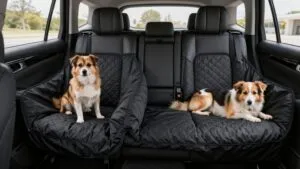
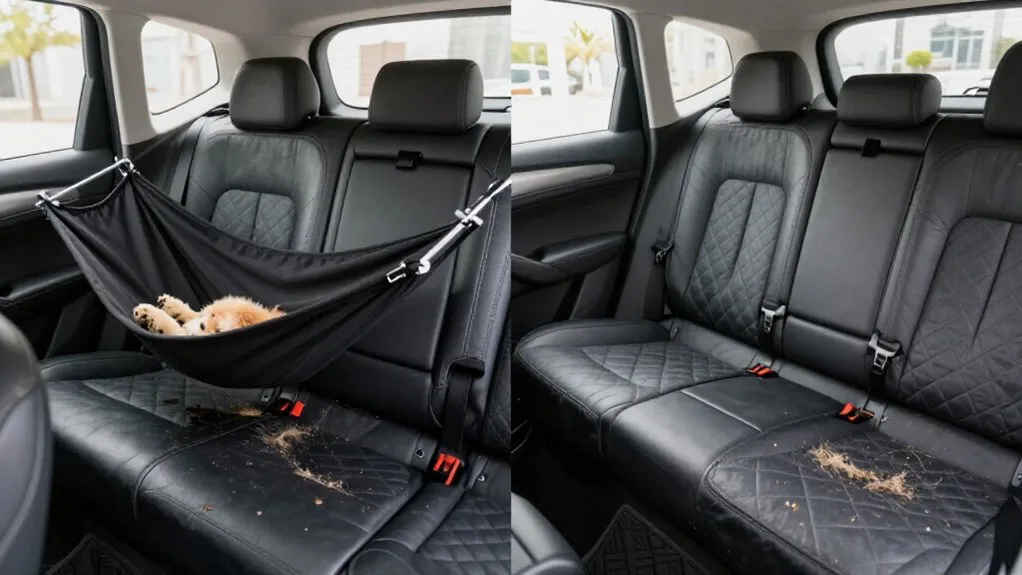
A dog hammock blocks footwell access by stretching from the rear seat to the front headrests, creating a barrier that keeps your dog on the back seat during normal driving and braking.
| Cover type | Footwell result |
|---|---|
| Hammock | Barrier limits dog entry |
| Bench cover | Gap stays exposed |
| Hard-bottom variant | Adds stable coverage |
| Practical check | Verify tension and fit |
Manufacturers describe hammock mode as reducing dirt and waste in the footwell. A bench cover protects the cushion but leaves the front gap open, so your dog may slide down when you brake. Choose a rigid floor-extender for a flatter, more stable surface for an unsteady dog.
Check vehicle fit and buckle access. You still need a harness or restraint; a hammock improves containment, not crash protection.
Hammocks Attach to Headrests
Most dog hammocks create that footwell barrier by looping adjustable straps around the front and rear headrests, suspending the cover between the seats. That design gives you a fast setup, but it makes adjustment essential. Check that each strap sits below the headrest posts, lies flat, and remains clear of airbags, buckles, and child-seat anchor access.
Tighten all four straps evenly; loose webbing can let the cover shift during braking. Remember, headrest straps support the cover, not your dog in a crash. Use a fitted, crash-tested harness connected to a vehicle anchor.
- You’ll feel calmer when the cover stays taut.
- Your dog gets a steadier space on turns.
- Your passengers retain safety hardware.
- You avoid a slide during stops.
Protection Against Muddy Pawprints
Muddy pawprints test more than a cover’s waterproof label: full coverage, sealed seams, and stable edges determine whether dirt stays on the cover instead of reaching your seats, doors, and footwells.
A hammock protects the seatback and footwell better than a bench-only cover when it includes side flaps, but exposed doors can still collect grime. Choose a design with waterproof multilayer fabric and sealed seams; otherwise, muddy water can wick through stitch lines or run beneath loose edges. Non-slip backing helps prevent shifting that opens gaps.
For frequent wet-weather trips, full-perimeter covers with bolstered side walls and wipe-clean surfaces contain splatter, and you’ll simplify cleanup. Check that seatbelt buckles and LATCH anchors remain accessible, so you can secure your dog without blocking restraint access.
Hammock Installation Takes Two Minutes
Because universal dog hammocks attach to the front and rear headrests with adjustable straps, you can usually install one in about two minutes. Loop each strap around its headrest, tighten it, then press any rubber anchors into the seat gap. This fast setup makes spontaneous trips less stressful when your schedule changes suddenly.
Before driving, check that straps sit clear of airbags, buckles, and child-seat anchors. A hammock is a barrier, not a crash restraint: secure your dog with a certified harness connected to an appropriate vehicle anchor.
- You’ll feel ready for an unexpected vet visit.
- Your dog gets a defined travel space quickly.
- You can spot a loose strap before sudden braking tests it.
- You protect passengers by keeping belts and anchors accessible.
Bench Width Determines Fit
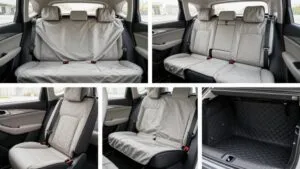
Quick installation won’t compensate for a poor fit: measure your rear bench’s usable width, seat depth, and headrest spacing before choosing a hammock or rigid-base cover. A cover that’s too narrow leaves cushion edges, door-side trim, or the footwell exposed; one that’s too wide bunches, shifts, and can obstruct buckle access. Check the manufacturer’s fit range against your measurements, not simply your vehicle class.
Also confirm that straps align with adjustable headrests and that openings preserve seatbelt, LATCH, and armrest access. Universal hammocks suit many benches, but their straps and wedge anchors may slide on deeply contoured seats. A model-specific cover generally follows the bench shape more closely. For a rigid-base cover, verify the base spans the seating area without lifting at the edges.
Waterproof Fabric Affects Replacement Costs
Waterproof fabric can lower replacement costs by keeping spills, drool, wet coats, and minor accidents from reaching the upholstery beneath. You’ll protect resale value only when the material’s waterproof barrier, seams, and edges resist leaks; water-resistant fabric alone may eventually soak through. Both hammocks and seat covers can use multilayer 600D fabric, but construction matters more than the label.
- A sealed, wipe-clean surface lets you handle muddy paws quickly, before moisture stains foam.
- Reinforced seams reduce leak paths that can leave you facing expensive odor removal.
- Full side and door coverage shields vulnerable trim from wet shake-offs and scuffs.
- Inspect tears after trips; prompt replacement protects your vehicle and keeps a small mishap from becoming a stressful upholstery bill later and needless financial strain.
Side Airbags May Be Obstructed
Although a dog hammock or seat cover can protect your interior, it mustn’t cover or interfere with side-airbag deployment zones. Many rear-seat side airbags deploy from the seatback’s outer seams, though locations vary by vehicle. Check your owner’s manual and look for airbag labels before fitting any cover. Don’t assume a universal hammock is safe because its straps fit around the headrests; loose fabric, thick padding, side flaps, or bunched material can obstruct a seam or alter how the cover tears during deployment.
Choose a vehicle-specific product labeled airbag-compatible, with engineered breakaway stitching or clear cutouts where required. Follow its directions exactly, and keep the cover smooth and secured. If maker can’t confirm compatibility for your model, remove it or choose another design.
Hammocks Limit Rear Passenger Space
A hammock uses the rear bench as your dog’s space, so you’ll have little room for passengers. Its suspended panel can also block easy access to seatbelts, buckles, and LATCH anchors. If you regularly carry people, choose a cover that preserves usable seating and restraint access.
Reduced Rear Seating Room
When you use a hammock configuration, the suspended panel spans the rear bench and front-seat headrests, so it generally makes the rear seating area impractical for passengers while a dog rides.
That trade-off matters when you need the back seat for family, carpools, or emergency travel. A hammock turns the entire bench into your dog’s zone, whereas a bench-style cover can preserve usable seating when your pet isn’t occupying it. Before buying, check how often you’ll carry both people and your dog.
- A crowded bench can force uncomfortable compromises on longer trips.
- Your child’s seating plan shouldn’t depend on moving a dirty cover.
- Predictable space helps you plan safer family travel.
- Choose a convertible cover only if you’ll reconfigure it before carrying rear passengers.
Limited Passenger Access
Because a hammock spans the rear bench and attaches to the front headrests, it limits safe, practical passenger access to that seating row while your dog rides.
Can’t safely use covered positions without converting or removing the hammock. Seatbelt buckles, LATCH points, and center armrests can become harder to reach, so installing a child seat or securing a passenger takes longer.
Don’t place a passenger beside an unrestrained dog or ask someone to sit on sagging fabric; sudden braking can shift both occupants. If you regularly carry people, choose a cover with zippered buckle access, split-seat compatibility, and preserved anchor access. Use a vehicle-specific bench cover when passengers share the rear seat. Restrain your dog with a certified travel harness independently of the cover.
Senior Dogs Need Flat Entry
For a senior dog, you’ll want a flat, stable surface that supports careful, joint-friendly entry. A hard-bottom seat cover can reduce the stepping height and prevent the sagging that makes a suspended hammock harder to navigate. Pair it with a properly fitted harness so your dog stays steadier during entry and travel.
Easier Joint-Friendly Access
Senior dogs benefit from a hard-bottom seat cover because its flat, supported surface won’t sag beneath their weight as they step in, turn around, or settle down. Unlike a suspended hammock, it gives your older dog dependable footing while shifting position, which can matter when joints are stiff or balance is limited. Choose a genuinely rigid insert, high-density foam or a sturdy board, rather than thin plastic that can warp and lose support. Watch your dog’s comfort cues:
- They’ll place paws more confidently instead of bracing against a moving surface.
- You’ll reduce stressful slips and awkward twisting during routine rides.
- A stable base helps them reposition without sinking into fabric.
- Secure straps and non-slip backing keep the platform steady; still use a properly fitted harness.
Reduced Stepping Height
A hard-bottom seat cover creates a flat, stable landing area that can make rear-seat entry feel less awkward for an older dog with stiff joints or limited balance. It doesn’t lower your vehicle’s door sill, so you should still use a suitable ramp or steps when the jump is too high. However, once your dog reaches the seat, a load-bearing base stays level instead of dipping beneath their paws.
That reduces the extra crouch or scramble a suspended hammock can create, particularly when weight shifts toward the middle. Choose a genuinely rigid insert, not thin plastic that may warp. Check vehicle fit, keep door access clear, and pair the cover with an appropriately secured harness for safer travel. Check fit before buying a rigid cover.
Stable Senior Dog Entry
Because aging dogs often have reduced balance and joint comfort, they need a flat, non-sagging surface to step onto once they enter the vehicle. A suspended hammock can bend beneath your dog’s paws, creating wobble just when arthritic hips or weak legs need predictable footing. Choose a hard-bottom cover with a genuinely rigid, load-bearing insert; thin plastic or corflute may warp and lose support.
- Your dog can place each paw confidently instead of scrambling.
- A stable base limits slips during turns, braking, and entry.
- Bolstered sides help prevent lateral sliding and door impacts.
- Harness-access slots let you secure a certified restraint without blocking buckles.
Check vehicle fit and preserve seatbelt and LATCH access. Test it parked; a firm landing protects comfort and confidence daily.
Quilted Covers Resist Claw Snags
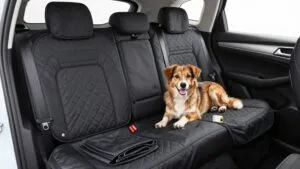
Quilted seat covers can resist claw snags better than thin, single-layer hammocks when they use tightly woven, multi-layer fabric and reinforced stitching. That construction spreads repeated paw pressure across several layers instead of leaving one thin panel to take the abrasion. Still, quilting alone doesn’t guarantee durability.
Check for dense weave, abrasion-resistant outer fabric, reinforced edge binding, and stitched seams rather than heat-bonded channels. Loose stitching can catch nails, while exposed waterproof backing may tear after repeated loading. Keep your dog’s nails trimmed and remove grit promptly; sand and dried mud act like abrasives.
For safety, replace a cover with torn straps or openings that could shift under your dog or expose the seat. Choose a snug fit before each trip, and restrain securely.
Conclusion
Choose a dog hammock when you want the strongest barrier against muddy paws, dropped toys, and footwell access. You’ll get fast headrest-mounted coverage, but check bench width, secure every strap, and confirm it doesn’t interfere with side airbags. Choose a quilted seat cover if you carry rear passengers or your senior dog needs flat, easy entry. Neither option replaces a properly secured crate or crash-tested restraint. Inspect fabric and anchors regularly for wear over time.