Dog Road Trip Packing List: Everything to Bring (Printable Checklist)
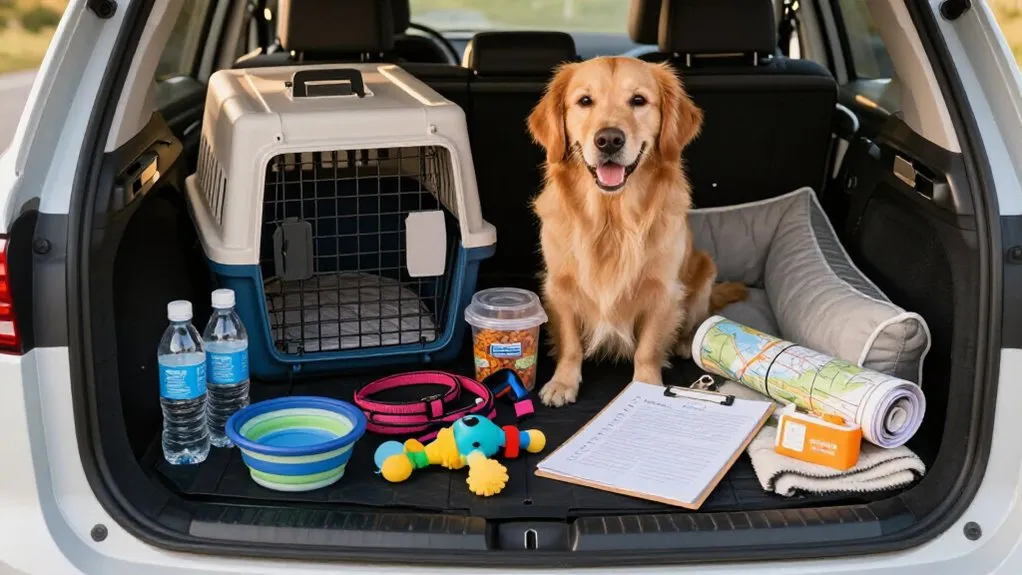
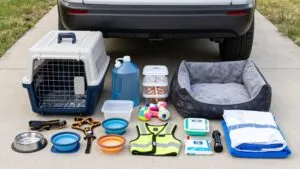
Pack a fitted harness and leash, backup leash, properly sized secured crate or crash-tested restraint, water jug and bowl, familiar pre-portioned food, medications, records, and ID supplies.
Bring cooling gear, cleanup towels, wipes, and a ramp if your dog needs help entering the car.
Keep food safely stored, offer water every two to three hours, and time medicines by dosing interval.
Use the checklist below to prepare for safer stops, heat, hotels, and delays ahead.
Leash, Water, and Records
Before you leave, pack three nonnegotiables within easy reach: a sturdy leash, plenty of clean water, and your dog’s records.
Use a well-fitted leash and harness at every stop; they reduce the chance of a sudden dash into traffic or unfamiliar areas. Pack a backup leash if yours breaks or gets lost.
Bring a portable jug and travel bowl, offering water regularly, especially in heat or after activity. Don’t rely on unknown sources; clean stored water helps you manage hydration safely.
Keep vaccination records, medication details, and a recent veterinary summary accessible. Some parks, lodgings, and state crossings may request them. Confirm your ID tag and microchip contact information before departure, and save a current photo in your phone for rapid recovery efforts.
Travel Crate Size Guide
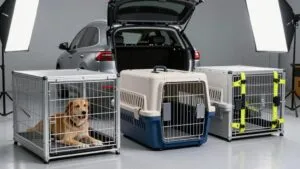
A properly sized travel crate keeps your dog secure in the car while allowing enough room to stand, turn around, sit without touching the roof, and lie down comfortably. Measure your dog standing naturally: record length from nose to tail base and shoulder height from floor to scapula. Add 2 to 4 inches to each measurement; choose width that exceeds chest width by 2 to 4 inches.
| Check | Target |
|---|---|
| Length | nose-to-tail-base + 2 to 4 in |
| Height | shoulder height + 2 to 4 in |
Verify internal, not exterior, dimensions and confirm the crate’s latches, ventilation, and cleanable surfaces. A correctly fitted crate lets your dog change position without excess space that can increase instability during travel. For puppies, select expected adult dimensions and use a divider while they grow. Check manufacturer instructions before packing.
Canine Car-Restraint Terms
Use crash-tested to mean a product evaluated in controlled crash conditions; it doesn’t mean every harness marketed for travel is proven protective. A seat-belt tether connects a harness to a belt, but it isn’t a substitute for crash testing or correct fit. A crate anchor secures a carrier to vehicle tie-down points.
A cargo barrier separates cabin from cargo space; it doesn’t safely restrain a dog by itself. Check fit according to manufacturer instructions, attach equipment as directed, and replace damaged parts promptly.
Dog Food Storage Quantities
Calculate your dog’s usual daily portions and pack enough for the full trip plus two or three extra meals for delays. Keep kibble in airtight, travel-safe containers, and use a cooler with ice packs for fresh or refrigerated foods to limit spoilage. Bring clean water in a portable jug and collapsible bowls so your dog can drink safely at every stop.
Calculate Daily Food Portions
Pack enough of your dog’s usual food for every planned meal, plus two or three extra meals for traffic, weather, or itinerary changes. Before leaving, confirm your dog’s normal daily ration from the food label and your veterinarian’s guidance. Multiply the measured amount per meal by the number of scheduled feedings.
Use the same measuring scoop you use at home; calorie-dense formulas vary widely. Pre-portion each day’s meals into labeled, airtight bags or containers, noting feeding times and any medication instructions. This system helps prevent missed meals, accidental double-feeding, and abrupt diet changes that can cause vomiting or diarrhea. If travel reduces activity or appetite, offer the usual schedule, monitor intake and stool, and call your veterinarian promptly if concerns persist beyond 24 hours.
Pack Extra Meals
Bring two to three extra meals beyond your planned itinerary to protect your dog’s routine if traffic, weather, vehicle trouble, or a delayed return extends the trip. Add this reserve to the total amount you calculated for each travel day, rather than estimating by handfuls. Keeping your dog on their usual food and measured portion size helps limit sudden dietary changes, which can contribute to vomiting, diarrhea, or refusal to eat.
Include extra food for any overnight stop, especially where pet supplies may be limited, closed, or unfamiliar. If your dog eats a prescription diet, allergies restrict options, or they have a sensitive stomach, carry a larger margin after consulting your veterinarian. Check the food’s expiration date before departure and review feeding plans again.
Choose Travel-Safe Containers
Store your dog’s planned meals and extra reserve in durable, travel-safe containers that protect food from moisture, heat, pests, and spills. Choose food-grade, BPA-free, airtight containers with secure, leak-resistant lids; they help preserve kibble quality and prevent contamination if luggage shifts. Pack the exact number of regular meals needed for your itinerary, plus two or three additional meals for traffic, weather, or lodging delays.
Pre-portion dry food into labeled daily or meal-size bags inside a rigid bin, and include a clean measuring scoop to keep servings consistent. Keep the original food label, so you can confirm ingredients, feeding guidance, and lot details for reference. Inspect seals daily; discard food that becomes wet, moldy, or smells unusual. Replace damaged containers immediately to avoid accidental spills.
Store Food In Coolers
For fresh, refrigerated, or canned meals, use an insulated cooler with frozen ice packs and keep food at or below 40°F (4°C) to limit bacterial growth. Pack enough of your dog’s usual food for every planned meal, plus two or three extra meals for traffic, closures, or other delays. Portion refrigerated food into labeled, single-meal containers before leaving, so you won’t repeatedly expose the full supply to warm air.
Place meals against ice packs, keep the cooler shaded, and open it only when needed. Use a refrigerator thermometer to verify the temperature, replacing melted packs promptly. Don’t feed food that has remained above 40°F for more than two hours, or one hour in temperatures above 90°F. Keep kibble dry in sealed containers outside the cooler.
Bring Portable Water Bowls
Once your dog’s food is packed safely, set aside a collapsible bowl and a dedicated jug of clean water where you can reach them at every stop. Offer water during planned breaks, ideally every two to three hours, and more often in hot weather, after exercise, or if your dog pants heavily. A portable bowl lets you control the water source rather than relying on questionable taps, puddles, or communal bowls that may carry contaminants.
Wash the bowl daily with soap and safe water, then let it dry between uses. Pack enough water for the route, expected weather, and delays; bring extra if you’ll travel through remote areas. Don’t force large drinks at once if your dog is carsick. Instead, offer small, frequent amounts.
Medication Timing Across Time Zones
When your road trip crosses time zones, keep your dog’s medication schedule anchored to the dosing interval—not simply the new clock time. Before leaving, ask your veterinarian how to adjust each prescription, especially insulin, seizure medicines, steroids, heartworm preventatives, and drugs that must be given with food. Keep medications in original labeled containers and carry written instructions listing dose, timing, and the prescribing clinic.
Set phone alarms based on the last dose, not destination time, and record each dose immediately to prevent accidental repeats or missed doses. Don’t double a dose unless your veterinarian specifically directs you to. If delays, vomiting, or a schedule change affects dosing, call the prescribing veterinarian or a local emergency clinic for guidance. Pack extra medication, a dosing syringe, and written instructions.
Heatstroke Emergency Cooling Supplies
Alongside medication planning, pack a dedicated heatstroke-response kit for warm-weather driving and stops: cool (not ice-cold) water, absorbent towels, a spray bottle, a portable fan, and a rectal thermometer. Heatstroke can escalate quickly, so keep this kit accessible. If your dog pants heavily, drools, seems weak, vomits, collapses, or has bright-red or pale gums, move them into air-conditioning or shade.
Apply cool water to the body, especially the belly, inner thighs, and paws, then fan them to promote evaporation. Don’t use ice, force water, or delay veterinary care. Check rectal temperature only if safe; stop active cooling near 103°F (39.4°C) to avoid overshooting. Call the nearest emergency veterinarian while you travel there, even if your dog seems better. Never leave them in a parked vehicle.
Muddy Paws at Hotels
Because wet, muddy paws can track bacteria, allergens, and stains into a room, keep a small cleanup kit by the car: absorbent towels, pet-safe wipes, a paw-cleaning cup or rinse bottle, and a sealed bag for dirty items.
Before entering, stop on a washable mat or outside surface and inspect each paw, including between toes and around pads. Rinse away visible grit with clean water, then dry thoroughly; trapped moisture can irritate skin and make hard floors slippery. Avoid fragranced disinfectant wipes, bleach, or essential-oil products, which may irritate paws or harm your dog if licked. Use only products labeled pet-safe, and follow directions.
Check paws for cuts, redness, or lodged debris after walks. Keep dog off furniture until paws are clean and dry.
Spare Collar Tag Essentials
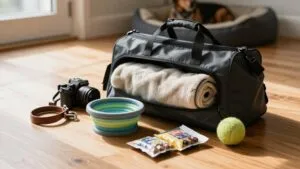
Pack a spare collar with a durable ID tag in an easy-to-reach travel bag, since collars and tags can break or go missing during rest stops, hikes, or hotel check-ins. A readable tag aids recovery if your dog becomes separated, and a fitted collar prevents escapes. Check the fit: two fingers should slide underneath comfortably without rubbing skin.
- Engrave your current mobile number and an alternate contact number.
- Add your dog’s name and temporary lodging address if space permits.
- Carry a backup tag, split ring, and small tag silencer to reduce loss and noise.
Confirm your microchip registration matches the tag information; tags provide identification, but microchips offer backup when a collar is lost. Inspect hardware after each stop and replace cracked rings promptly.
Portable Dog Ramp Options
A portable dog ramp helps your dog enter and exit the vehicle without repeated jumping, which can strain joints and increase injury risk, especially for puppies, seniors, large breeds, and dogs with arthritis or back problems. Choose a ramp rated above your dog’s weight and compatible with your vehicle’s cargo height.
A gentler angle and high-traction surface improve footing; avoid narrow, slippery models. Practice at home with treats before departure.
- Telescoping ramps adjust for SUVs and often store compactly; lock them fully before use.
- Folding ramps suit smaller vehicles; check each hinge and latch for wear.
- Bi-fold platforms provide wider walking surfaces for unsteady dogs but require secure storage.
Place the ramp on level ground, keep it dry, and steady it until your dog steps safely inside.
Conclusion
With the right supplies, you can keep your dog safer, healthier, and more comfortable from departure to check-in. Pack water, food, records, medications, restraints, and cleanup gear before you leave, then confirm your crate and ramp fit your dog securely. Plan for heat, time-zone medication schedules, and muddy stops rather than improvising.
Keep identification current, watch for stress or overheating, and contact a veterinarian promptly if concerns arise. Your preparation makes every mile safer, too.