Types of Dog Car Ramps: Folding, Telescoping, Side-Door and Hitch Styles
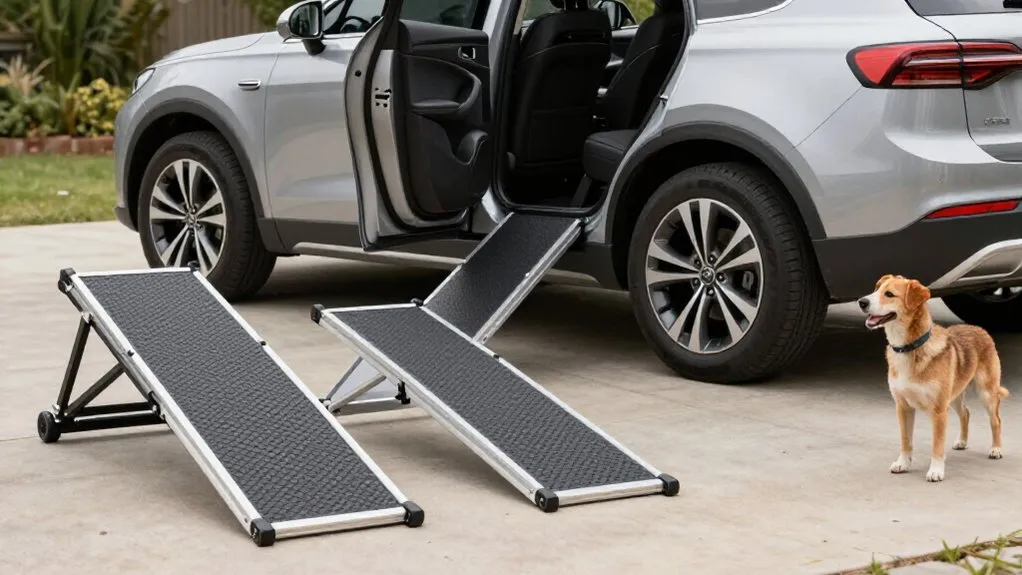
Choose a dog car ramp by matching its style and length to your vehicle’s entry height and your dog’s mobility. Bi-fold ramps store compactly and provide a broad surface. Telescoping ramps extend for gentler slopes on SUVs and trucks.
Side-door ramps or adjustable steps can serve minivans. Hitch-mounted styles need secure attachment and clearance checks. Use nonslip traction, locked hardware, stable contact points, and an appropriate weight rating. Continue for measuring, training, and safe setup.
Vehicle Access Height Drives Design
Vehicle access height determines the ramp design your dog needs. Measure from the ground to the actual entry point, cargo floor, bumper lip, bed, or side-door threshold, before choosing equipment. Sedan entries commonly sit 18 to 28 inches high, SUV cargo floors 24 to 36 inches, and pickup beds 30 to 40 inches or more.
As height rises, you need more ramp length to control the incline. Aim for 18° or less when your dog is senior, arthritic, large, or unsteady; a 30-inch rise needs roughly 97 inches at 18°. Choose a stiff, adequately rated deck with secure anchoring, nonslip traction, raised side rails, and stable feet. Longer spans require stronger materials and careful inspection for flex, joint wear, and movement before each use. Confirm rated capacity exceeds your dog’s weight.
Bi-Fold Ramps Save Cargo Space
Bi-fold ramps give you a practical compromise between a full-length walking surface and limited cargo space. They fold once at a central hinge, reducing their stored footprint while preserving a broad, stable path for your dog. Typical designs pair molded plastic or aluminum with textured traction and raised edges.
| Feature | Mobility benefit |
|---|---|
| Locked hinge | Limits movement |
| Folded profile | Frees cargo room |
Before each use, lock the hinge fully, inspect the traction surface, and confirm both ends rest securely. Choose a model whose width and weight rating suit your dog. Carry it by its handle, keep fingers clear of the hinge, and train your dog on level ground. Replace worn traction promptly; don’t use ramps with cracks, flex, or loose hardware during normal vehicle loading.
Telescoping Length Adjusts Slope
A telescoping ramp lets you adjust its length to create a safer, gentler slope for your dog and your vehicle’s height. You can extend it for senior, arthritic, or large dogs, then confirm its width and weight rating support stable use.
When collapsed, it stores compactly, but you should inspect the sliding locks and traction surface before each trip.
Adjustable Length Benefits
Telescoping ramps let you extend the walking surface to match your vehicle’s entry height, directly controlling the slope your dog must climb. This adjustment lets one ramp serve a low sedan, taller SUV, or truck without forcing you to buy separate equipment. For a senior dog, a large breed, or a pet with arthritis, added length can reduce the effort required for each step and support a more natural gait.
You can also shorten the ramp when space is limited, making loading and storage more practical. Because the sections retract, you gain useful reach without carrying a permanently long platform. Choose a model whose extended length, width, and weight rating fit your dog’s body size. Check the sliding sections move, lock securely before use.
Slope Control For Safety
Slope control is the primary safety advantage of an adjustable-length ramp. By extending a telescoping model, you create a gentler walking angle that reduces force through your dog’s shoulders, elbows, hips, knees, and spine. This matters most if your dog is older, arthritic, recovering from injury, large-bodied, or hesitant on inclines.
Use the longest practical setting when your dog shows shortened steps, slipping, reluctance, or a need to pull upward. A lower incline supports steadier paw placement and helps prevent sudden acceleration on descent. Keep the ramp fully locked, place its lower end on level ground, and confirm that its traction surface is clean and dry. Introduce the ramp, beginning on a shallow angle. Don’t force fearful dog; pause and rebuild confidence through practice.
Vehicle Height Compatibility
Vehicle height directly determines the ramp length you’ll need for safe, comfortable entry. Measure the vertical distance from the ground to the vehicle’s loading point, then select a telescoping ramp that extends far enough to keep the incline manageable. For a low sedan, a shorter setting may provide stable access; a tall SUV, van, or truck usually requires substantially more length.
Extend the ramp rather than accepting a steep angle, especially if your dog is senior, arthritic, large, weak, or recovering from injury. Confirm that both ends sit securely before use, and verify the ramp’s weight rating for your dog. Choose adequate width and raised edges when balance is limited. Recheck vehicle height after suspension changes or tire replacements, as clearance can alter slope.
Storage And Portability
Portability shouldn’t force you to accept a steep, joint-stressing incline. Telescoping ramps solve this storage-to-mobility trade-off by sliding into a shorter package for your cargo area, then extending when you need a gentler approach. You can match ramp length to vehicle height, keeping climbing demands lower for senior, arthritic, or hesitant dogs.
Before each use, fully extend and lock the sections, confirm the upper lip sits securely on the vehicle, and keep the ramp straight during deployment. Inspect sliding tracks for dirt, moisture, or binding; clean them and preserve the tread’s grip. When stowing, collapse the ramp carefully so fingers, fur, and loose items stay clear. Choose a storage location that prevents shifting, impact, or traction damage between trips. This protects reliable daily use.
Weight Capacity Considerations
Choose a telescoping ramp with a rated capacity that comfortably exceeds your dog’s weight, accounting for movement and repeated use rather than treating the stated limit as a target.
Look beyond body weight: a dog shifts load during use. For a large, senior, or mobility-impaired dog, select an aluminum-frame model rated above its weight. Confirm the manufacturer’s rating applies at the full extension you’ll use because length changes slope and may affect flex. Extend the ramp sufficiently to create a low, controlled incline, reducing joint compression and reluctance during entry or exit. Check width, too; a broad walking surface supports steadier paw placement. Inspect the frame, slides, traction surface, and contact ends regularly. Replace the ramp if it bends, cracks, or develops excessive flex.
Secure Extension Locking
A properly rated telescoping ramp still needs secure extension locks to remain stable at the length that creates a safe incline. Before each use, extend both rails evenly and engage every lock fully. You should confirm that spring pins or latches seat in their matching holes, and that neither rail shifts when you press down or pull outward.
Choose the longest locked setting that keeps the slope manageable for your dog’s mobility needs, especially with arthritis or hind-end weakness. Don’t rely on friction alone or use a ramp with worn catches, bent channels, or incomplete engagement. Keep sliding tracks clean and dry, then inspect locks for corrosion and damage. Recheck them after positioning the ramp; vehicle movement or uneven ground can alter alignment unexpectedly.
Short-Legged Dogs Need Gentle Slopes
Short-legged dogs benefit from gentle slopes because steep climbs can overload their joints and compromise footing. Choose a longer ramp that keeps the incline low, ideally near or below 18 to 20 degrees when your vehicle setup allows. This reduces strain during entry and exit and gives your dog safer, more controlled vehicle access.
Why Gentle Slopes Matter
Because their low clearance and compact stride make each rise more demanding, short-legged dogs need a long, gently angled ramp rather than a steep entry surface. A sharp incline forces your dog to shift more body weight through the shoulders, elbows, hips, and knees with every step. For Dachshunds, Corgis, Basset Hounds, and other low-set breeds, that loading pattern can increase hesitation, slipping, and abrupt jumping at the vehicle threshold.
A gradual path lets your dog maintain a more natural gait and controlled paw placement. Choose a rigid, well-anchored surface with dependable traction and raised edges where appropriate. Watch for flex, wobble, or paw scrambling, and stop use if your dog shows pain, weakness, or reluctance during ascent or descent. Consult your veterinarian promptly.
Ideal Ramp Lengths
Ramp length directly determines the incline your dog must manage: longer ramps create gentler approaches and reduce joint loading during entry and exit.
For short-legged dogs, select enough length to keep each step controlled and proportionate to their stride. A low vehicle may work with a 60 to 62-inch folding ramp, while taller SUVs, vans, and truck access usually require a longer telescoping model. Extend the ramp fully when clearance increases; a compact setting can become too steep even if the ramp fits the cargo area. Aim for an incline below about 18 to 20° when possible, especially for dachshunds, corgis, and other low-set breeds. Measure from ground contact to the vehicle threshold and confirm the deployed length before purchase. Make sure the ramp rests securely at both ends.
Reducing Joint Strain
Although vehicle access may seem routine, a steep ramp can overload a short-legged dog’s shoulders, hips, spine, and knees during both climbing and descent. Breeds with compact limbs, including Dachshunds and Corgis, must flex their joints more deeply to manage abrupt inclines. Choose a longer ramp that spreads the vehicle’s rise across more distance, allowing shorter, controlled strides rather than forceful pushing or braking.
You should watch for altered gait, hesitation, repeated stopping, or reluctance after travel; these changes can indicate discomfort or excessive loading. Keep the slope consistent whenever possible, because frequent changes in ramp angle can aggravate compensatory movement. For dogs with arthritis, prior orthopedic injury, or back disease, ask your veterinarian or rehabilitation professional to recommend an appropriate incline and use plan.
Safer Vehicle Access
Safer vehicle access starts with matching the ramp’s slope and surface to your dog’s limb length, balance, and mobility limits. Short-legged dogs take more steps across a steep incline, which can increase paw slips, backward loading, and hesitation. Choose the longest practical telescoping ramp or a low folding model to reduce the angle; aim below 18 to 20° when possible for dogs with arthritis, weakness, or poor confidence. Confirm the ramp rests firmly on level ground and against the vehicle threshold.
Use high-traction rubber or turf, side rails, and locked hinges or slides. A wide walking surface supports short strides and reduces lateral missteps. Introduce it flat first, reward crossing, and supervise every ascent and descent. Stop using it if it flexes, shifts, or loses traction.
Measure Tailgate Lip Clearance
Before choosing a dog car ramp, measure the tailgate lip—the raised edge at the cargo opening—to confirm the ramp can rest securely without slipping or creating an abrupt step. Check the lip’s depth, height, and contour with the tailgate fully open and the vehicle parked on level ground. Compare those measurements with the manufacturer’s required landing surface and attachment design.
A shallow, rounded, or uneven lip may not support every folding or telescoping ramp. Confirm that the upper end sits flat, maintains full contact, and cannot shift sideways when your dog transfers weight. Also note trim pieces, bumper curvature, weather seals, and cargo mats that could reduce contact or create instability. If clearance is limited, select a model specifically designed for your vehicle instead. Test stability before asking your dog to climb.
Clean Grit From Hinges
Once the ramp sits securely on the tailgate lip, keep its folding hinges free of sand, mud, road salt, and pet hair. After each outing, fold the ramp slowly and inspect hinge channels. Brush away debris with a soft nylon brush, then wipe the joints with a damp cloth. Dry metal components after winter driving or beach trips to limit corrosion.
Don’t force a hinge that feels rough, binds, or fails to close evenly. Remove buildup following the manufacturer’s cleaning instructions; use only approved lubricant if the manual permits it. Check that hinge locks engage fully before your dog climbs. A clean, smooth-moving hinge helps the ramp open flat, stay stable, and avoid abrupt movement that could unsettle an older, weak, or recovering dog.
Weight Ratings Exclude Ramp Angle
A ramp’s stated weight rating doesn’t guarantee safe use at every angle. Manufacturers generally test capacity under specific conditions, often with the ramp properly supported and positioned at a moderate incline. A steep setup increases the force pushing your dog downward, raises slip risk, and can expose flex, hinge movement, or loss of contact at the vehicle edge.
Choose length based on vehicle loading height and your dog’s mobility, not capacity alone. Extend an adjustable ramp fully when practical, and aim for a gradual incline, especially if your dog is senior, arthritic, weak, or recovering from injury. Confirm that both ends rest securely, locks engage, and the surface remains dry and grippy. Observe each crossing: hesitation, paw splaying, or jumping indicates an unsuitable angle.
Side-Door Ramps for Minivans
For minivan access, side-door ramps and adjustable step units address a different mobility problem than rear-hatch ramps: they help your dog reach the cabin without a high jump or steep climb. Choose steps if your small or medium dog can manage short rises; choose a ramp when joint pain, weakness, or balance loss makes each step unsafe. Confirm the unit’s height range, tread width, traction, and rated capacity before travel.
- You give an anxious dog a predictable, low-impact route, reducing hesitation at the open door.
- You protect sore hips and knees by securing the unit on level ground and preventing lateral movement.
- You build confidence through slow, rewarded practice, but stop if your dog slips, refuses, or appears painful during entry or exit.
Conclusion
Choose a ramp that matches your vehicle’s access height, door location, and your dog’s mobility needs. You’ll save space with bi-fold designs, adjust slope with telescoping models, and improve side entry with minivan-specific ramps. For short-legged, senior, or recovering dogs, prioritize a longer, gentler incline.
Measure tailgate lip clearance before buying, follow stated weight limits, and keep hinges free of grit. Inspect traction surfaces regularly so your dog can enter and exit safely.