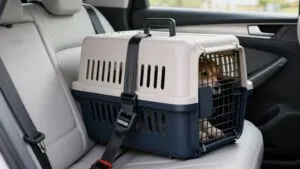
Toyota RAV4 Dog Setup: How to Outfit the Cargo Area and Back Seat
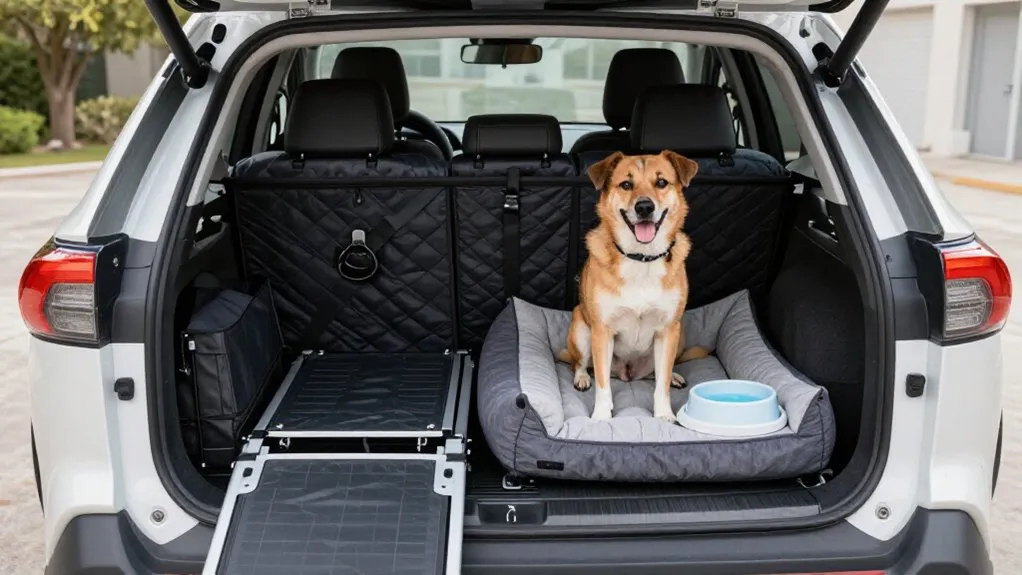
Measure your RAV4’s cargo floor, wheel-well width, and hatch clearance before choosing a crate, then secure it low to factory cargo tie-downs with rated straps. Leave airflow around the crate and keep hybrid-battery vents unobstructed.
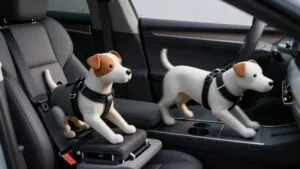
In back seats, use a properly fitted, tested harness with its approved belt or tether connection. Give two dogs separate restrained spaces, lock rear window switches, and use HVAC for ventilation.
The details below help you build a safer setup.
RAV4 Cargo Tie-Down Anchor Points
Before you secure a dog crate or cargo barrier in a Toyota RAV4, locate the cargo-area tie-down points and confirm that each attachment point is solid and unobstructed. Check your owner’s manual for model-year locations and load guidance. Use rated straps and locking carabiners; don’t use bungees, rope, or the cargo cover. Route straps away from sharp edges, the liftgate latch, and chewing access.
Keep the crate low against the rear seatbacks, then tension opposing straps to control forward and sideways movement. For a headrest-mounted barrier, tighten cargo-side supports and inspect every fastener. Push and pull the setup firmly before each trip. Recheck it after rough roads, hard braking, or shifting other cargo. Replace worn straps promptly; keep loose gear outside your dog’s reach.
RAV4 Cargo Floor Dimensions
Measure your own RAV4’s cargo floor before buying a crate, barrier, or bed, since usable length changes with front-seat position, rear-seat angle, model year, and powertrain. On 2019-present models, check the wheel-well pinch point and floor height, not cargo-volume claims.
Community measurements place folded-seat length at roughly 68 inches with front seats back and up to 81 inches forward; Prime packaging can alter underfloor space. Lay a tape measure along the exact crate footprint, then confirm the rear hatch closes and the load stays low and stable.
| Setup | What to measure | Why it matters |
|---|---|---|
| Seats up | Floor depth and wheel-well width | Prevents a bed from shifting |
| Seats folded | Tailgate-to-seatback length | Helps you select a properly sized crate |
Recheck after moving seats or adding liners.
Crate Ventilation Clearance
Leave several inches of open space around your dog’s crate—especially at the rear hatch and along the sides—so the RAV4’s cabin air can circulate through its vents. Don’t press the crate against the hatch trim, wheel-well panels, or rear-seat backs, because those positions can restrict airflow and trap heat. Keep blankets, cargo bags, and sunshades from covering crate doors or side vents.
If you use the cargo area with the rear seats raised, direct the HVAC toward the rear and check the crate-level temperature before departure and at every stop. A small, secured fan may help circulate air, but it can’t replace the vehicle’s climate control. Avoid parking with your dog inside, even briefly, in warm or cold weather. Before loading, confirm hatch clearance.
Crash-Tested Harness Weight Limits
Check the crash-tested harness’s stated weight range and fit it to your dog’s current size, not just its breed. In your RAV4, attach it only through the rear seatbelt or approved LATCH/tether point as the harness maker directs, and verify its testing or certification claims. Replace the harness when your dog outgrows its rating, shows wear, or no longer fits snugly.
Understanding Weight Ratings
A crash-tested harness must match your dog’s actual weight, not just its apparent size, because each model is certified only within a stated weight range. Weigh your dog on a reliable scale, then compare the result with the manufacturer’s published minimum and maximum limits for that exact harness and its approved vehicle connector.
In a Toyota RAV4, use the rear seatbelt routing or attachment method the harness maker specifies; a different tether, LATCH connection, or belt guide can fall outside the tested configuration. Don’t assume a heavier dog gains protection from a larger-rated product, or that a lighter dog is covered by a stronger setup. Check labels before every trip, replace damaged components, and keep the restraint within its certified limits during normal use.
Matching Harness To Size
Match your dog’s measured weight to the exact crash-tested harness size range before securing it in your Toyota RAV4. Don’t choose by breed label or appearance; weigh your dog on a reliable scale and check the manufacturer’s current chart.
A properly rated harness must fit your dog’s chest, neck, and body shape as the instructions specify. Adjust it snugly enough that you can slide two fingers beneath the straps, without pinching or allowing rotation.
Before each RAV4 trip, inspect webbing, buckles, and stitching for wear. Follow the harness maker’s approved rear-seat installation method and retest fit after a bath, haircut, growth, or weight change. A harness outside its tested range may not manage crash forces as intended. Replace it if its fit or hardware changes.
RAV4 Anchor Point Limits
Although your RAV4’s rear seatbelts and LATCH/tether anchors provide attachment locations, they don’t set a universal dog-harness weight rating. The limit comes from the specific harness, its supplied connector, and its approved installation method. Check the manufacturer’s stated dog-weight range and don’t assume a stronger-looking RAV4 anchor raises it.
For rear-seat travel, use the outboard belt path or LATCH connection only as your harness instructions direct. Clip tether-style hardware to the designated rear tether anchor, not a cargo hook, headrest post, or seat frame. Keep your dog’s weight within the harness limit, remove slack, and replace damaged straps or buckles immediately. If your dog exceeds the listed range, choose a correctly sized travel crate secured to suitable cargo-area tie-downs according to its instructions instead.
Testing Standards And Certification
Crash-tested dog harnesses aren’t interchangeable: choose one certified or tested to a recognized protocol and sized for your dog’s actual weight, not the RAV4’s seatbelt or LATCH-anchor capacity. Look for a manufacturer-stated test standard, a published weight range, and instructions that identify the approved vehicle connection. Certification from an independent program, such as the Center for Pet Safety, provides stronger evidence than marketing phrases like “crash proof.”
Follow the harness maker’s limits exactly, including any separate limits for the tether, carabiner, or seatbelt loop. In your RAV4, route the restraint through the designated rear outboard belt path or connect only as the manufacturer permits. Don’t assume a stronger-looking clip improves protection. Check snug chest fit and minimal attachment slack before each RAV4 trip, too.
Replacing Outgrown Harnesses
Replace your dog’s RAV4 travel harness as soon as its current weight reaches or exceeds the manufacturer’s tested range. Don’t rely on a roomy fit or a tightened strap to extend its service life. Crash-test ratings apply only to the dog weight, size, and harness configuration the manufacturer tested. Weigh your dog monthly during growth, then compare the result with the label and instruction manual.
In your RAV4, install the replacement harness on a rear outboard seat using the seat belt or approved LATCH connection exactly as directed. Check that the belt path, tether, and buckle remain clear of seat-cover openings and that your dog can sit and lie down without reaching the front seat. Retire harnesses with stretched webbing, cracked hardware, frayed stitching, or any crash involvement.
Match Crate Size to Dog
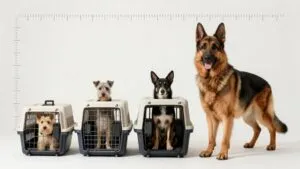
Choose a crate that lets your dog stand, turn around, and lie down comfortably without leaving enough extra room to slide during braking. Measure your dog’s height from floor to head, body length from nose to tail, and shoulder width, then compare those numbers with the crate’s interior dimensions.
In the RAV4, keep the crate low and square to the cargo floor or rear seat, rather than angling it between wheel wells. With rear seats up, confirm the hatch closes without contacting the crate. Large dogs may need the rear seats folded, where roughly 54 inches of floor length and about 44 inches between wheel wells can accommodate a larger crate. Test fit before travel, then tether the crate to cargo anchors so it can’t shift.
Keep Hybrid Battery Vents Clear
Once the crate is secured, keep the RAV4 Hybrid’s battery cooling air intake vents free of dog beds, blankets, crates, and loose fur. Check your owner’s manual to identify the vent locations for your model year, since placement can vary. Don’t drape seat covers or hammock panels over them, and leave a clear air path around each intake.
Vacuum the surrounding trim regularly, especially after shedding season or muddy outings. Before every trip, inspect the area after loading gear and reposition anything that could slide over a vent. Restricted airflow can reduce battery cooling performance and may contribute to warning messages. If you see a hybrid-system alert or notice unusual fan noise, stop loading the area, clear the vents, and follow the manual’s guidance.
Two-Dog Road Trip Layout
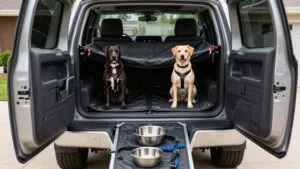
For two dogs, give each animal its own restrained space rather than letting them share the RAV4’s cargo area loose. Use two automotive-rated crates when possible, positioned side by side behind the rear seats only if their combined footprint fits without crowding the tailgate. Anchor each crate to the cargo-floor tie-downs, and place a rigid barrier behind the second row to limit forward movement.
If one dog rides in back and one uses the rear bench, install a secure cargo divider and an approved rear-seat restraint. Keep heavy bags low and forward, separated from both dogs by a net or divider. Add non-slip liners, washable pads, water, and rear HVAC airflow. At each stop, check latches, anchors, temperature, and comfort again during every trip.
Fix Twisted Harness Seatbelts
Before every drive in your Toyota RAV4, untwist the seatbelt webbing and confirm the dog harness connector lies flat against the belt. A twist can concentrate force, reduce adjustability, and let the restraint sit crooked during a sudden stop. Check each rear outboard belt after your dog climbs in and whenever you move the harness.
- Pull the shoulder webbing slowly from the upper guide to the buckle, watching its surface stay smooth.
- Rotate the latch plate until the belt forms one flat ribbon across the seat.
- Buckle it into the RAV4’s rear outboard receiver and tug firmly; the click should feel positive.
- Position the harness attachment low and centered, then remove slack without pinching your dog’s coat.
Don’t route the belt behind the headrest.
Disable Rear Window Switches
Lock the RAV4’s rear window switches from the driver’s door before traveling with your dog. The window-lock button prevents an excited paw from lowering a rear window, creating an escape or injury risk. Before you pull away, test the lock with each rear switch, then confirm the driver’s controls still operate.
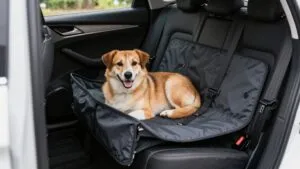
- Picture your dog resting on a hammock-covered rear seat while the glass stays safely closed.
- Keep windows adjusted from the front only, leaving a small, supervised ventilation gap if needed.
- Don’t rely on a partially open window for airflow; use the RAV4’s HVAC vents instead.
- At stops, check that every window remains locked before opening a door or tailgate.
This check keeps paws, heads, and curious noses safely inside your vehicle while driving.
Conclusion
Your RAV4 can carry your dog safely when you measure the cargo floor, choose a properly sized crate or crash-tested harness, and use factory tie-down anchors correctly. Keep crate vents and hybrid battery vents unobstructed, and leave airflow clearance around every kennel.
For two dogs, separate their spaces and secure each restraint. Untwist seatbelts, lock rear window switches, and recheck all connections before every daily drive. You’ll protect your dogs, passengers, and vehicle, too.