Why Does My Dog Pant and Shake in the Car? Anxiety, Nausea or Heat?
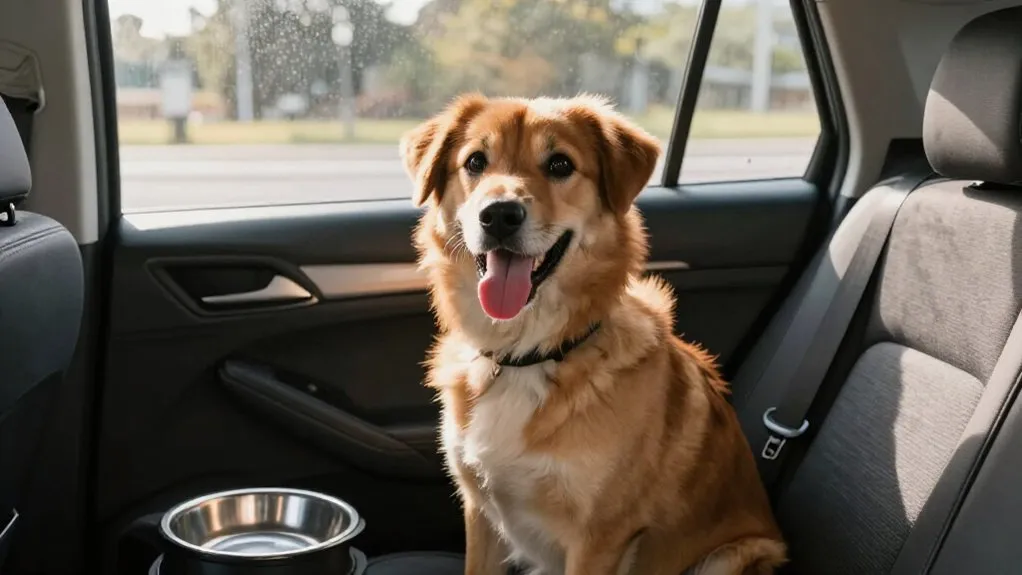
Your dog may pant and shake in the car from anxiety, motion sickness, overheating, or a combination. Signs before departure, such as pacing, whining, or trembling, favor anxiety; drooling, swallowing, retching, or vomiting after motion begins suggest nausea.
Keep the cabin cool, shaded, and ventilated, especially for flat-faced breeds. Stop safely and seek urgent veterinary care for weakness, labored breathing, abnormal gum color, or collapse.
You’ll find practical clues and safer travel steps ahead.
Anxiety, Nausea, or Overheating?
Panting and shaking in the car most often reflect anxiety, motion sickness, overheating, or a combination of these triggers. If signs begin before you drive, anxiety is likely; pacing, whining, lip-licking, yawning, drooling, wide eyes, or refusal to enter support that pattern. Signs that start after motion begins, especially drooling, retching, or vomiting, more strongly suggest nausea from vestibular mismatch.
Puppies may be susceptible. Panting that worsens in a warm, sunny, poorly ventilated cabin suggests overheating, particularly in flat-faced breeds. Use air conditioning, shade, and restraint or a carrier. Offer positive practice sessions in a stationary car, gradually add driving. Don’t feed immediately before travel. Ask your veterinarian about anti-nausea or anxiety medication if episodes recur. Seek emergency care for weakness, collapse, or unresponsiveness.
Checking Your Dog’s Gums
A quick gum check can help you judge whether your dog’s panting and shaking may signal more than travel stress. Lift the lip gently in good light. Healthy gums are usually pale pink to bubble-gum pink, moist, and slightly tacky. Press a fingertip against an unpigmented area until it blanches, then release: color should return within two seconds.
Dry or sticky gums can indicate dehydration. Pale or white gums, a refill time over two to three seconds, or pinpoint bleeding warrant urgent veterinary advice. Brick-red gums with lethargy, overheating, or collapse can indicate heatstroke and need urgent care.
Blue, purple, brown, or gray gums signal an emergency because they may reflect dangerously low oxygen or toxin exposure. Yellow gums also need prompt veterinary evaluation.
Ten-Minute Drive Clues
After confirming that your dog’s gums look normal, use the first 10 minutes of a drive to note when signs begin and what accompanies them. Panting or trembling before you pull away, especially with whining, yawning, lip-licking, pacing, or attempts to climb forward, more often indicates anticipatory anxiety. Signs that start only once the car moves, particularly with repeated swallowing, retching, or vomiting, are more consistent with motion sickness.
Check the cabin conditions at the same time. Increasing panting in direct sun, poor airflow, or a warm vehicle points toward heat stress, especially in flat-faced dogs. Run air conditioning and move out of sunlight. If your dog becomes weak, unsteady, collapses, or seems unresponsive, stop safely, begin cooling, and seek emergency veterinary care without delay.
Drooling Patterns During Motion Sickness
Watch for sudden, heavy drooling that begins after the car starts moving, especially if your dog also lip-licks, retches, or vomits. A small amount of saliva can occur with stress, but strings of drool or a soaked chest more strongly support nausea. Note when drooling starts and stops, as signs that resolve after the ride are consistent with motion sickness.
Recognizing Nausea-Related Drooling
Nausea-related drooling often begins soon after the car starts moving and may become heavy, stringy, or foamy as the ride continues. This timing helps you distinguish motion-linked nausea from drooling that appears while the vehicle is parked. You’ll often see repeated swallowing, lip licking, quietness, or unease before retching.
| What you see | What it suggests |
|---|---|
| Wet chin, repeated swallowing | Early nausea |
| Ropy saliva during turns | Motion-related stomach upset |
Because vestibular and visual signals conflict during travel, saliva production can increase as nausea develops. You’ll want to note whether the pattern starts only once the car is in motion and settles after you stop. That consistent sequence supports motion sickness rather than a response to a parked car. A veterinarian can help you confirm the cause.
When Drooling Becomes Excessive
Excessive drooling during a car ride typically means nausea is escalating, particularly when saliva becomes ropy, foamy, or runs continuously from your dog’s mouth. This hypersalivation often accompanies lip-licking, repeated swallowing, retching, or vomiting because nausea stimulates salivary production. A damp chin alone isn’t always concerning, but soaked bedding, pooled saliva, or difficulty keeping the mouth closed signals a more substantial episode.
Keep your dog safely restrained, maintain a cool, well-ventilated cabin, and offer water once you’re stopped and settled. Don’t give human anti-nausea medicines without veterinary guidance. Contact your veterinarian if episodes recur, vomiting develops, or drooling occurs with weakness, breathing difficulty, pale gums, or collapse. Prescription antiemetics can effectively reduce nausea when a veterinarian determines they are clinically appropriate for your dog.
Timing Drool During Travel
When drooling begins can help distinguish motion sickness from travel anxiety: saliva that increases only after the car starts moving, especially alongside lip-licking, repeated swallowing, retching, or vomiting, strongly suggests nausea from motion.
If your dog drools while parked, at engine start, or before departure, anxiety is more likely if you see pacing, whining, yawning, trembling, or avoidance. Nausea-related salivation commonly fades soon after travel ends, whereas anxiety may linger.
Track carefully when signs start, and how quickly they resolve. Keep the cabin cool and well ventilated, use restraint, and avoid a meal for several hours before travel. For recurring drooling, ask your veterinarian about gradual ride conditioning and proven anti-nausea medication. Seek veterinary care if drooling accompanies weakness, red gums, overheating, collapse, or breathing difficulty.
Recent Meals and Medication
Consider when your dog last ate, since a full meal shortly before travel can worsen nausea during motion. Review any recent medications with your veterinarian, as some can cause gastrointestinal upset or affect alertness. Offer small treats and water as tolerated, but avoid overfeeding before a ride.
Meal Timing Before Travel
A full meal shortly before a car ride can worsen nausea and vomiting in dogs prone to motion sickness, so avoid feeding a large meal for several hours before departure. You don’t need to withhold water; offer normal access, unless your veterinarian gives different instructions. For a long trip, provide a small, familiar snack after your dog has settled, rather than a rich or unfamiliar food.
Keep treats modest during rest stops, particularly if drooling, lip-licking, or retching has occurred. If your veterinarian has prescribed travel medication, give it exactly at the recommended time, since some products need to be administered before the journey begins. Don’t change a prescribed dose or add over-the-counter remedies without veterinary guidance. Note your dog’s meal and medication timing.
Medications That Cause Nausea
Some medications can upset your dog’s stomach and make car-related panting, drooling, shaking, or vomiting more likely. Antibiotics, anti-inflammatory drugs, certain pain relievers, chemotherapy agents, and some heart or parasite-control medicines may cause nausea as a side effect. If signs began after you started a new prescription or changed its dose, contact your veterinarian promptly. They can assess whether the timing suggests a medication reaction, an underlying illness, or another travel-related problem.
Don’t stop, skip, or change a prescribed medication without veterinary advice. Ask whether the dose requires a different specific schedule; instructions vary by drug and condition. Your veterinarian may adjust the dose, timing, formulation, or treatment plan. Seek urgent care if your dog has repeated vomiting, weakness, facial swelling, or trouble breathing.
Treats, Water, and Motion
Recent meals, water intake, and the timing of medication can also affect how your dog feels once the car starts moving. A full meal shortly before travel can worsen nausea, while unrestricted water may increase discomfort in some dogs. Offer small treats for training, keep water available in sensible amounts, and follow your veterinarian’s medication instructions.
| Situation | What you can do |
|---|---|
| Full meal within hours | Schedule travel before feeding when feasible. |
| Small training treats | Use tiny portions and stop if drooling begins. |
| Water before departure | Offer normal access; avoid forced large drinks. |
| New medication | Confirm timing and food directions with your veterinarian. |
Panting with drooling or retching after motion begins supports nausea. If signs are severe, repeated, or occur despite these steps, contact your veterinarian for advice.
Using a Rear-Seat Hammock
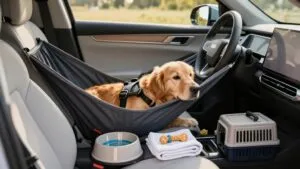
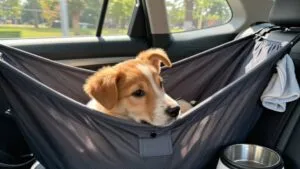
Using a rear-seat hammock can give your dog a more secure, contained travel space while helping prevent climbing between seats or falling into the footwell during braking. By limiting roaming, it may reduce instability and visual distractions that can worsen anxiety or nausea for some dogs. Choose a well-fitted, durable model that attaches securely to headrests, but don’t treat it as a crash-tested restraint. Pair it with a fitted harness and seat-belt tether, or use an appropriately secured crate when possible.
Introduce the hammock gradually in a parked car with praise or treats. Keep the cabin cool, maintain ventilation, and watch for signs. If panting, drooling, shaking, or vomiting continues despite these changes, ask your veterinarian to assess anxiety, motion sickness, and medical causes.
Brachycephalic Dogs Need Extra Caution
Brachycephalic dogs, such as Pugs, Bulldogs, and Boston Terriers, need extra caution in cars because their shortened airways make panting less effective for cooling. Their narrowed nostrils, elongated soft palates, and other airway changes can limit airflow, so warm cabins, excitement, and exertion may overwhelm them quickly.
Before travel, have your veterinarian assess any noisy breathing, exercise intolerance, or previous breathing episodes. Keep the cabin air-conditioned, block direct sun, and plan short trips with stops in cool locations. Never leave your dog in a parked car. Use a secure harness or well-ventilated crate that doesn’t compress the neck or restrict chest movement. If your dog develops labored breathing, weakness, blue or gray gums, vomiting, or collapse, stop, begin cooling, and seek veterinary care immediately.
Mistaking Panting for Normal Cooling
Panting can be normal cooling after activity, but in a car it may also be an early warning of stress, nausea, or dangerous heat exposure. Don’t assume your dog is simply warm, especially if the car is parked, sunlit, poorly ventilated, or becoming hot. Check the cabin temperature and your dog’s overall behavior. Cooling panting should ease when you provide cool air and shade; it shouldn’t intensify or accompany distress.
- Stress clues include pacing, lip-licking, yawning, whining, or shaking before travel begins.
- Nausea is more likely when drooling, retching, or vomiting begins after motion starts.
- Red gums, weakness, unsteady walking, or collapse signal possible heat emergency.
Stop the car, cool your dog safely, and seek urgent veterinary care for heatstroke signs or persistent symptoms.
Record a One-Minute Car Video
A one-minute video of your dog in the car can help your veterinarian distinguish anxiety, motion sickness, and heat-related distress. Film safely while another adult drives, and include behavior before movement, during travel, and briefly after stopping. Capture your dog’s whole body, face, cabin conditions, and any drooling, retching, pacing, or weakness.
State the time, temperature, ventilation, and whether signs started before the car moved. Don’t delay emergency care to record: collapse, red gums, confusion, or unsteadiness require immediate cooling and veterinary attention.
| What you record | Why it matters |
|---|---|
| Signs before movement | Supports anticipatory anxiety |
| Drooling or retching after motion | Supports nausea |
| Panting worsening in warmth | Supports heat stress |
Bring the unedited clip to your appointment; it provides context that memories alone may miss.
Conclusion
Panting and shaking in the car can signal anxiety, motion sickness, overheating, or a combination. You can narrow the cause by checking gum color, timing symptoms, drooling, recent meals, and the vehicle’s temperature. Keep your dog cool, secure them safely in the rear seat, and take brachycephalic breeds seriously. Record a short video for your veterinarian. Seek urgent care immediately if you see pale or blue gums, collapse, labored breathing, or ongoing vomiting during travel.