Why Do Dogs Get Car Sick? The Real Causes Behind Motion Sickness
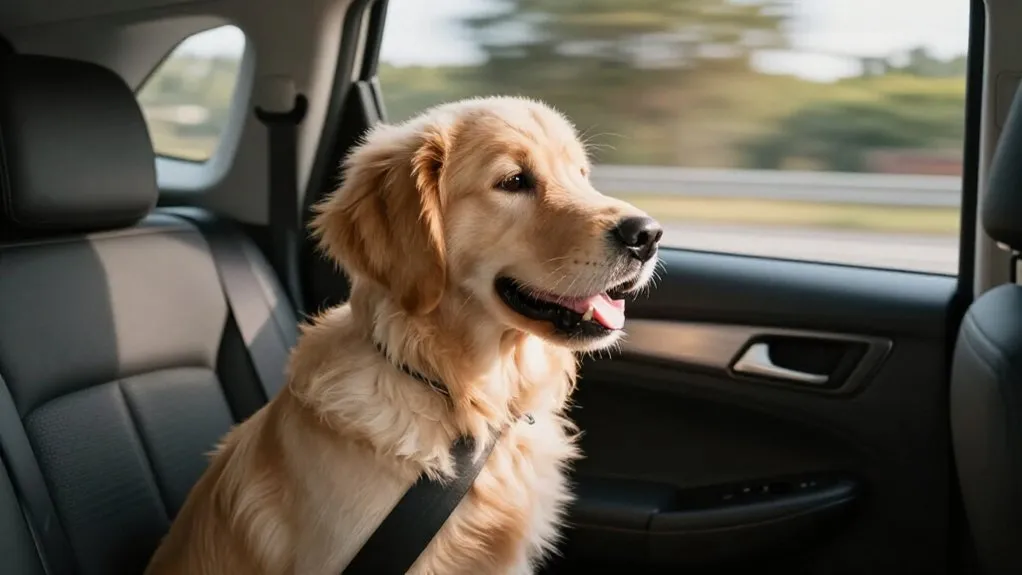
Your dog can get car sick when the inner ear senses turns and acceleration that eyes and body position don’t match. This sensory conflict is common in puppies because vestibular pathways are still maturing.
Winding roads, stress, and a pre-trip meal can worsen nausea. If sickness starts suddenly, persists in adulthood, or comes with imbalance, see your veterinarian to rule out ear or neurologic disease.
Next, you’ll find travel changes and treatments that can help.
Inner Ear Imbalance in Puppies
Puppies often get car sick because their inner-ear vestibular system, the system that helps the brain track balance and movement, hasn’t fully matured. During travel, your puppy’s brain may receive signals that don’t agree: the ears detect acceleration and turns, while the eyes and body position provide different information. This sensory conflict can activate nausea pathways, leading to lip-licking, excessive drooling, yawning, whining, lethargy, or vomiting.
Symptoms may begin before vomiting, so you can intervene early by stopping safely and offering calm reassurance. Car sickness isn’t your puppy’s fault, and it doesn’t mean they’re being difficult. If signs are severe, occur outside travel, or start suddenly in an adult dog, ask your veterinarian to assess for ear disease, neurologic problems, or other medical causes when appropriate.
Vestibular System Still Developing
That inner-ear imbalance reflects a normal developmental stage for many young dogs: their vestibular system, the inner-ear sensors and brain pathways that track head movement, gravity, and balance, is still maturing. Your puppy’s semicircular canals and otolith organs may send less precisely calibrated signals, while brainstem and cerebellar networks are learning to integrate motion, vision, and body position. That mismatch can activate nausea and vomiting reflexes. Many puppies improve as these systems mature, although timing varies and research hasn’t established a definitive universal age.
| Component | Developmental role | Travel effect |
|---|---|---|
| Canals | Detect rotation | Noisy signals |
| Otoliths | Sense gravity | Mismatch risk |
If signs persist into adulthood or begin suddenly, ask your veterinarian for an assessment of vestibular disease promptly. They can distinguish developmental sensitivity from illness and guide care.
Curving Roads Trigger Nausea
Because winding routes force constant, unpredictable shifts in acceleration, they overwhelm the vestibular and visual systems faster than straight highway driving does. Every curve sends new signals to your dog’s inner ear, while her eyes struggle to track a shifting horizon. This mismatch: sensory conflict, confuses the brain’s balance centers and triggers the emetic pathways that cause drooling, lip-licking, and vomiting.
You’ll notice symptoms intensify on mountain roads, winding backstreets, or routes with frequent turns, since these demand rapid, repeated recalibration from her vestibular apparatus. Straight, steady roads give the inner ear time to adjust; curves don’t. If you’re traversing twisty terrain, keep her secured facing forward, crack a window for steady airflow, and limit sharp, frequent turns when possible to help her senses keep up.
Stress-Triggered Motion Sickness
If your dog fears car rides, anxiety can trigger nausea before the vehicle even moves. Watch for stress signals such as drooling, lip-licking, whining, yawning, or trembling. You can help by pairing gradual, low-pressure car exposure with calm, rewarding experiences that build positive travel associations.
Anxiety Before Car Rides
Although your dog’s nausea might look purely physical, anxiety often drives, or amplifies, the vomiting you see on car rides. If your dog associates the car with vet visits, boarding, or other unpleasant experiences, you’ve likely created a conditioned response: dread builds before the engine even starts, and that dread alone can trigger vomiting, independent of motion. You’ll often notice this pattern in dogs who whine or resist getting in, even for short trips. The fix isn’t just physiological, it’s behavioral.
Gradual desensitization helps: let your dog sit in a parked car, reward calm behavior, and build positive associations slowly, without immediately driving anywhere stressful. Short, enjoyable rides, to a park instead of the vet, can retrain your dog’s expectations and reduce anticipatory nausea over time.
Stress Signals and Nausea
Stress-related car sickness often announces itself before your dog vomits. You’ll notice drooling, lip-licking, yawning, or restless whining minutes into the drive—these aren’t random quirks; they’re your dog’s nervous system signaling distress. Anxiety triggers the same physiological cascade as true motion sickness, so a stressed dog can feel nauseous even when the car’s barely moving.
This happens because fear activates pathways that overlap with the body’s nausea response, amplifying whatever vestibular discomfort already exists. You might see a dog who’s fine on short, calm trips suddenly retch during longer or more chaotic rides. Recognizing these early cues matters: catching stress signals before they escalate lets you intervene with calming strategies, giving your dog’s body a chance to settle before nausea takes over completely.
Building Positive Travel Associations
You can help break the car-nausea cycle by pairing travel with calm, rewarding experiences rather than only veterinary visits or other stressful events. Start with short, stationary sessions: let your dog sit in the parked car, offer treats, and end before anxiety builds. Gradually progress to brief drives around the block, pairing each trip with praise, favorite toys, or high-value treats.
This counterconditioning approach retrains your dog’s emotional response, reducing anticipatory drooling, whining, and vomiting linked to fear rather than vestibular input. Consistency matters more than speed; rushing the process can reinforce negative associations instead of resolving them. If anxiety persists despite gradual exposure, ask your veterinarian about anxiety-reducing medication alongside behavioral conditioning. Over time, your dog learns car rides predict comfort, not sickness.
Pre-Trip Meals Affect Nausea
What your dog eats, and when, can influence nausea during car travel. You can reduce stomach distension by avoiding a large meal immediately before departure and discussing an appropriate feeding interval with your veterinarian. If your dog needs food before a trip, offer a small, familiar, easily tolerated portion rather than a rich or novel meal.
Timing Meals Before Travel
Because a full stomach sloshing around during a bumpy ride practically invites nausea, timing your dog’s meals before travel matters more than most owners realize. Feed your dog at least three to four hours before you hit the road, giving the stomach time to empty and reducing vomiting risk from motion-triggered sensory conflict. If you’re leaving early, consider skipping that morning meal entirely and offering it after you arrive.
Avoid feeding right after a stressful event too, since anxiety slows digestion and compounds queasiness. Keep water available until departure, withholding it won’t prevent sickness and only risks dehydration. This simple scheduling habit works alongside gradual desensitization and good ventilation to keep your dog settled and comfortable throughout the ride.
Portion Size And Nausea
A large pre-trip meal can increase the likelihood of nausea and vomiting by leaving more stomach contents to shift during vehicle motion. When your dog’s vestibular system detects movement, the brain activates nausea and vomiting pathways; a fuller stomach doesn’t cause sensory conflict, but it can make vomiting more likely. If your dog has car sickness, avoid an unusually large serving before departure.
Keep the pre-travel amount modest and consistent with veterinary advice, especially for puppies, seniors, or dogs with medical conditions. Watch for drooling, repeated swallowing, lip-licking, yawning, or restlessness. If symptoms persist despite smaller portions, or begin outside travel, contact your veterinarian. They can assess gastrointestinal or vestibular illness and recommend prevention options. Don’t restrict water unless your veterinarian instructs you to.
Choosing Gentle Pre-Trip Foods
Food choice can complement a modest pre-trip portion, although it won’t correct the sensory mismatch that causes true motion sickness. If your dog tolerates food before travel, choose its familiar, complete diet rather than introducing rich treats, fatty table foods, or novel ingredients. Abrupt dietary changes can independently cause gastrointestinal upset and obscure the reason for nausea. Offer water normally, unless your veterinarian gives different instructions, and monitor for lip-licking, drooling, or vomiting. Call your veterinarian if signs persist, begin outside travel, or accompany imbalance.
| Option | Why helpful | Avoid |
|---|---|---|
| Usual kibble | Familiar digestion | New formula |
| Canned diet | Only if established | Rich additions |
| Plain treats | Small, familiar reward | Greasy snacks |
| Water | Supports hydration | Forced drinking |
Your veterinarian tailors prevention medication when dietary steps aren’t enough.
Crate Positioning for Stability
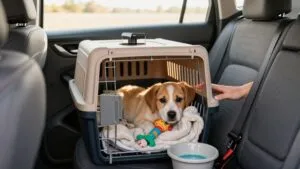
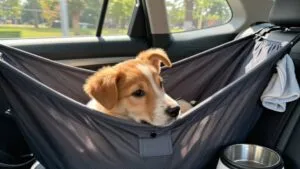
Where your dog rides matters almost as much as whether the car’s moving at all. A secure crate placed low and centered—near the vehicle’s center of gravity—reduces the jostling that confuses your dog’s inner ear. Position the crate so your dog faces forward, ideally with a clear view out the windshield rather than side windows.
This forward orientation aligns visual input with vestibular signals, easing the sensory conflict that drives nausea. Avoid wedging the crate in the far back or cargo area, where sway and vibration peak. Strap it down tightly; a sliding crate adds unpredictable motion that worsens drooling, whining, and vomiting. Good ventilation around the crate also helps regulate temperature and airflow, supporting overall comfort during travel.
Rule Out Ear Infections
Because the vestibular apparatus lives in the inner ear, infections there can masquerade as ordinary car sickness—or make it worse. If your dog develops nausea suddenly, especially after previously comfortable rides, ask your veterinarian to examine the ears and assess vestibular function. Ear inflammation or deeper middle- or inner-ear disease can disrupt balance signals and cause head tilt, stumbling, abnormal eye movements, facial weakness, ear pain, discharge, odor, or hearing changes.
Not every infection produces obvious external signs, so a normal-looking ear flap doesn’t exclude disease behind the eardrum. Seek prompt care if you notice imbalance at home, repeated vomiting, or neurologic signs. Your veterinarian can examine the ears and select treatment, helping restore comfort and clarify whether motion sickness is also still present.
Cracked Windows Won’t Help
Although fresh, cool airflow can make a warm car more comfortable, cracking a window alone won’t correct the sensory mismatch that causes true motion sickness. Your dog’s inner ear still senses movement his eyes and body can’t confirm, and that conflict—not stuffy air—triggers nausea. Picture what he experiences on a winding drive:
- His vestibular system registers turns and stops he can’t anticipate.
- His eyes, fixed on the seatback ahead, show no matching motion.
- His stomach tightens as drooling and lip-licking begin.
A cracked window won’t close that gap; it only adds a breeze. You’ll get better results by improving his view, securing his position, and gradually desensitizing him to travel, since these steps target the sensory conflict driving symptoms, not the air he breathes.
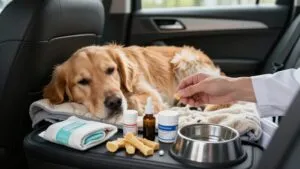
Ask Your Vet About Cerenia
If your dog continues to vomit during car rides, ask your veterinarian whether Cerenia® (maropitant citrate) is appropriate. This prescription medication blocks NK-1 receptors in your dog’s emetic center, directly targeting the neurochemical pathway that triggers motion-induced nausea and vomiting. Unlike antihistamines, which work through a different mechanism, Cerenia addresses the substance P signaling that drives this response, making it effective even for dogs who don’t respond to other treatments.
Your vet will confirm the correct dose based on your dog’s weight and rule out other causes of vomiting, like gastrointestinal issues or vestibular disease, before prescribing it. You’ll typically give it a couple of hours before travel, and your vet can explain any side effects, such as mild drowsiness, to watch for closely.
Conclusion
Car sickness isn’t your dog being difficult: it’s a real physiological response, often rooted in an immature vestibular system or stress. You can’t out-think biology, but you can manage it: skip the pre-ride meal, secure the crate centrally, and rule out infection before blaming motion. If symptoms persist, don’t just crack a window and hope. Talk to your vet about Cerenia. With the right diagnosis and tools, most dogs outgrow or manage this completely.