What Can You Give a Dog for Motion Sickness? Vet-Approved Options Compared
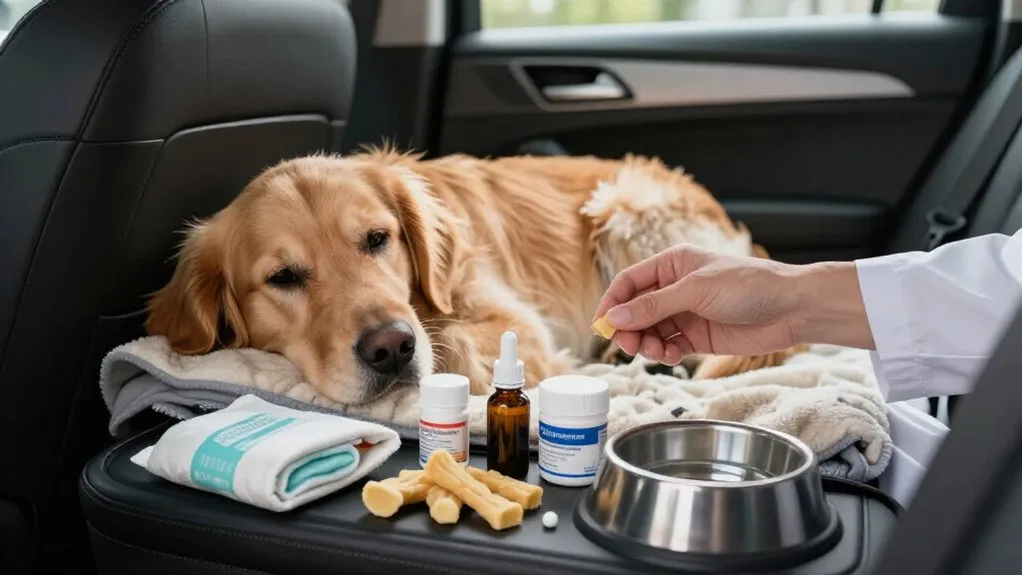
For most dogs, you can ask your veterinarian about maropitant (Cerenia), the only FDA-approved medicine for canine motion sickness and the best-supported option for preventing travel vomiting.
It’s commonly given about two hours before departure, exactly as prescribed. Your vet may instead recommend a weight-based plain antihistamine, but don’t use human combination products or Pepto-Bismol.
Pair medication with cool airflow, a secure forward-facing restraint, and gradual car acclimation. Continue for safety comparisons and travel-planning details.
Safe Canine Anti-Nausea Options
For reliable prevention of travel-related vomiting, veterinarians commonly recommend maropitant (Cerenia), the only FDA-approved medication for motion sickness in dogs. Your veterinarian may prescribe it about two hours before travel; the preventive dose differs from the dose used for acute vomiting, so don’t substitute dosing instructions. In a controlled trial, maropitant substantially reduced vomiting compared with placebo and usually causes little sedation.
Give tablets with a small amount of food if your veterinarian advises it, and report lethargy, poor appetite, hypersalivation, diarrhea, or persistent vomiting.
Your veterinarian may instead recommend off-label antihistamines, including dimenhydrinate, diphenhydramine, or meclizine. These require weight-based dosing and can cause sedation or anticholinergic effects. Don’t use combination products, and seek veterinary guidance before medication for glaucoma, obstruction, pregnancy, or nursing.
Motion Sickness Triggers in Dogs
Motion sickness occurs when travel movement makes your dog’s inner ear, visual, and body-position signals disagree, triggering nausea and sometimes vomiting. Rapid acceleration, braking, turns, and uneven movement in cars, boats, or planes intensify this sensory conflict. A restricted outside view, heat, strong odors, and poor ventilation may reduce tolerance.
Your dog is more vulnerable if they’re a puppy or young dog, haven’t been acclimated to travel, or have vomited on prior rides; anxiety can then create anticipatory nausea. A meal shortly before departure can increase vomiting risk.
Watch for lip-licking, yawning, drooling, panting, restlessness, or position changes before retching develops. If signs occur at rest, persist after travel, or include head tilt or loss of balance, contact a veterinarian about possible vestibular disease.
Results on a Two-Hour Drive
On a two-hour drive, a veterinarian-prescribed dose of maropitant given about two hours before departure can substantially reduce vomiting: in one controlled study of dogs with prior motion sickness, about 7% of treated dogs vomited compared with 55% given placebo. Your veterinarian should confirm that maropitant suits your dog’s age, health status, concurrent medicines, and reproductive status. Follow the prescribed travel-prevention dose rather than substituting a lower vomiting-treatment dose.
Giving it as directed, often with a small amount of food, may limit stomach upset. Contact your veterinarian if your dog develops persistent vomiting, marked lethargy, diarrhea, hypersalivation, or poor appetite. For future trips, record whether your dog vomits and when symptoms begin; that information helps your veterinarian assess response and adjust the travel plan safely.
Tablets, Injections, or Pheromones
You can ask your veterinarian whether an oral antiemetic tablet suits your dog’s travel schedule, as maropitant has strong evidence for preventing motion-sickness vomiting. If your dog can’t take tablets or needs clinical care, your veterinarian may select an injectable option based on its condition. Calming pheromone products may support relaxation, but they haven’t proven to prevent vomiting and shouldn’t replace effective medical treatment.
Motion Sickness Tablets
Several medications can help prevent canine travel vomiting, but maropitant (Cerenia) is the FDA-approved option with the strongest evidence. Give the prescribed tablet about two hours before departure, following your veterinarian’s weight-based directions and label instructions. In a controlled trial, dogs receiving maropitant vomited far less often than placebo-treated dogs. It blocks substance P signaling in vomiting pathways and usually causes less sedation than antihistamines.
Your veterinarian may instead recommend an off-label oral antihistamine, such as dimenhydrinate, diphenhydramine, or meclizine, when appropriate. These can cause drowsiness and may need repeat dosing. Never use combination human products; some contain unsafe ingredients. Confirm the product, dose, timing, and suitability first, especially if your dog has glaucoma, urinary obstruction, liver disease, or is pregnant or nursing.
Injectable Treatment Options
If your dog can’t reliably take a tablet or needs veterinary care for active vomiting, a veterinarian may use injectable maropitant (Cerenia) or choose another treatment based on the cause and severity of symptoms.
Injection can be useful when vomiting prevents oral dosing or when your dog requires assessment for dehydration, abdominal pain, toxin exposure, or a non-travel illness. Maropitant blocks neurokinin-1 receptors involved in the vomiting reflex, and veterinarians may use it when rapid antiemetic treatment is clinically indicated.
Don’t administer injectable medications yourself unless your veterinarian specifically prescribes and instructs you. The injection can cause pain or swelling at the site, and adverse effects may include lethargy, decreased appetite, diarrhea, or hypersalivation. Your veterinarian will select the dose, route, and timing.
Calming Pheromone Support
Calming support can help when anxiety worsens car sickness, but it doesn’t replace an antiemetic for dogs that vomit during travel. Dog-appeasing pheromone products, available as collars, diffusers, or sprays, may reduce travel-related fear in some dogs. They don’t sedate your dog or prevent nausea, and controlled evidence for motion-sickness relief specifically remains limited.
Use a pheromone spray only as directed; apply it to bedding or the vehicle before loading, never onto your dog. Pair it with car acclimation, secure forward-facing restraint, cool airflow, and odor reduction. If your dog drools, retches, or vomits, ask your veterinarian about prevention, such as maropitant. Seek veterinary advice before adding calming tablets or sedatives, because ingredients and drug interactions vary and sedation can impair travel.
Your Dog’s Age and Medications
Your puppy needs extra caution because age, body weight, and developing organ function can affect medication safety. For a senior dog, your veterinarian should account for health conditions and adjust dosing when needed. Tell your veterinarian about every prescription, over-the-counter product, and supplement your dog takes to prevent harmful interactions.
Puppies Need Extra Caution
Puppies need veterinary guidance before receiving any motion-sickness medicine because their age, weight, developing organs, and other medications can change which options are safe. You should never give a puppy an adult dose of Cerenia (maropitant) or an antihistamine without confirming weight and age with your vet, since immature kidneys and livers metabolize drugs differently.
You’ll also want to rule out interactions if your puppy takes other medications, like dewormers or vaccines-related treatments. The table below highlights key safety checkpoints you should discuss with your veterinarian before giving any motion-sickness remedy to a young puppy.
| Factor | Why It Matters | What You Should Do |
|---|---|---|
| Age/weight | Organs aren’t fully developed | Confirm vet-approved minimum age |
| Current medications | Risk of drug interactions | Share full medication list |
| Breed sensitivity | Some breeds metabolize drugs slower | Ask about breed-specific risks |
Always wait for your veterinarian’s explicit clearance before combining any over-the-counter or prescription medication, because even common drugs can quickly overwhelm a young puppy’s still-maturing nervous and digestive systems.
Senior Dogs and Dosing
Because senior dogs may process medications more slowly and often take treatments for chronic conditions, ask your veterinarian to review their age, weight, liver and kidney function, and full medication list before giving any motion-sickness drug. Older dogs may also have lower lean body mass, dehydration, or underlying disease that changes a drug’s effect. Don’t estimate a dose from age alone; your veterinarian should calculate it from current body weight, diagnosis, and the product’s approved or prescribed use.
Start with the lowest effective veterinarian-directed dose and follow the recommended timing and redosing plan. Monitor your dog during and after travel for excessive sleepiness, weakness, poor appetite, diarrhea, or persistent vomiting. Contact your veterinarian if signs become severe, prolonged, or different from usual behavior.
Medication Interaction Risks
Age, underlying disease, and other medications can change how safely a dog handles motion-sickness treatment. Tell your veterinarian about prescription, over-the-counter product, supplement, and medication your dog receives before giving maropitant, diphenhydramine, dimenhydrinate, or meclizine.
Antihistamines can add to sedation from tranquilizers, pain medicines, seizure drugs, or other sedating products, increasing fall risk and impairing alertness. Their anticholinergic effects may also worsen angle-closure glaucoma or urinary retention, particularly in dogs with obstruction. Don’t combine antihistamines or use human combination cold products, which may contain unsafe decongestants or acetaminophen.
Maropitant requires veterinary judgment in dogs with liver disease because hepatic metabolism may be altered. Puppies, seniors, pregnant dogs, and dogs with chronic illness need selection and dosing. Monitor for sleepiness, agitation, vomiting, diarrhea, or difficulty urinating, and call your veterinarian.
Giving Cerenia Two Hours Before
For best prevention, give Cerenia (maropitant) about two hours before you leave, following your veterinarian’s prescribed dose and instructions. This timing allows the medication to reach effective concentrations before vehicle motion triggers vomiting. In a controlled travel study of dogs with prior motion sickness, maropitant given two hours beforehand markedly reduced vomiting compared with placebo.
Use only the dose your veterinarian selects; the travel-prevention dose differs from doses used for other vomiting problems. You may give the tablet with a small amount of food if your veterinarian recommends it, as this can reduce stomach upset. Don’t give an extra dose because a trip is delayed or extended unless your veterinarian directs you to do so. Call veterinarian for vomiting, lethargy, diarrhea, or appetite loss.
Avoid Human Antihistamine Formulations
If your veterinarian recommends an OTC antihistamine, use only a plain product they’ve approved—not a multi-symptom human cold, flu, or sleep medicine. Combination products can contain acetaminophen, decongestants such as pseudoephedrine or phenylephrine, alcohol, or other active ingredients that may cause serious toxicity in dogs. “Nighttime” and “non-drowsy” labels don’t establish canine safety, and liquid products may include xylitol, which is dangerous even in small amounts.
Check the Drug Facts panel for every active and inactive ingredient, plus the concentration per tablet or milliliter. Don’t substitute formulations, split extended-release products, or use a human dose estimate. Your veterinarian should select the antihistamine, calculate a weight-based dose, and screen for glaucoma, urinary obstruction, interacting medications, and excessive sedation risk. Call if tremors, collapse, agitation occur.
Why Pepto-Bismol Can Be Dangerous
Although Pepto-Bismol may seem like an easy over-the-counter fix, don’t give it to your dog for car sickness unless your veterinarian specifically directs you to. Its active ingredient, bismuth subsalicylate, delivers a salicylate related to aspirin and hasn’t been proven to prevent canine motion sickness. Even small dosing errors can cause vomiting, gastric ulceration, bleeding, or salicylate toxicity, particularly in small dogs or dogs taking NSAIDs, corticosteroids, or anticoagulants.
- You might miss early toxicity because nausea and lethargy can resemble travel stress.
- Dark stools may mask gastrointestinal bleeding behind harmless-looking medication discoloration.
- A preventable emergency can turn a routine drive into a frightening crisis.
It can also interfere with other medicines, so use only a product and dose your veterinarian has explicitly approved beforehand.
Book a Pre-Travel Vet Visit
Rather than experimenting with Pepto-Bismol or other human remedies, schedule a pre-travel veterinary visit, especially if your dog vomits, drools heavily, panics, or seems unwell in the car. Your veterinarian can exclude ear disease, pain, gastrointestinal illness, and anxiety, then tailor prevention to your dog’s age, weight, history, and medicines. Ask for a trial dose before departure, because sedation or digestive effects may change travel plans.
| Discuss | Why it matters | Plan |
|---|---|---|
| Diagnosis | Rules out other causes | Exam/history |
| Maropitant | Approved vomiting prevention | Give as directed |
| Antihistamines | Off-label; may sedate | Confirm dose |
| Emergency signs | Repeated vomiting or collapse | Seek care |
Bring a medication list and describe timing, meal intake, and symptoms. Don’t use products containing salicylates or combination cold-drug ingredients unless your veterinarian specifically approves them first.
Conclusion
You don’t have to guess when it comes to your dog’s motion sickness. Cerenia remains the vet-approved gold standard, given two hours before travel, while pheromone diffusers and ginger can support milder cases. Skip human antihistamine formulations and never reach for Pepto-Bismol: its salicylates can seriously harm dogs. Factor in your dog’s age, weight, and current medications, then confirm your plan with a pre-travel vet visit. The right combination keeps your dog’s next car ride safe and symptom-free.