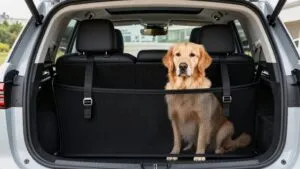
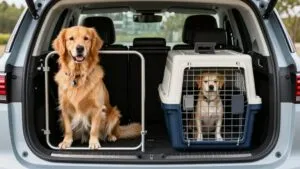
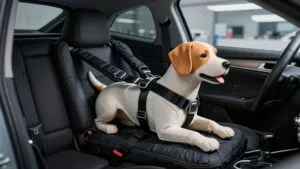
How to Choose a Dog Car Barrier: Mesh, Metal, Net or Divider?
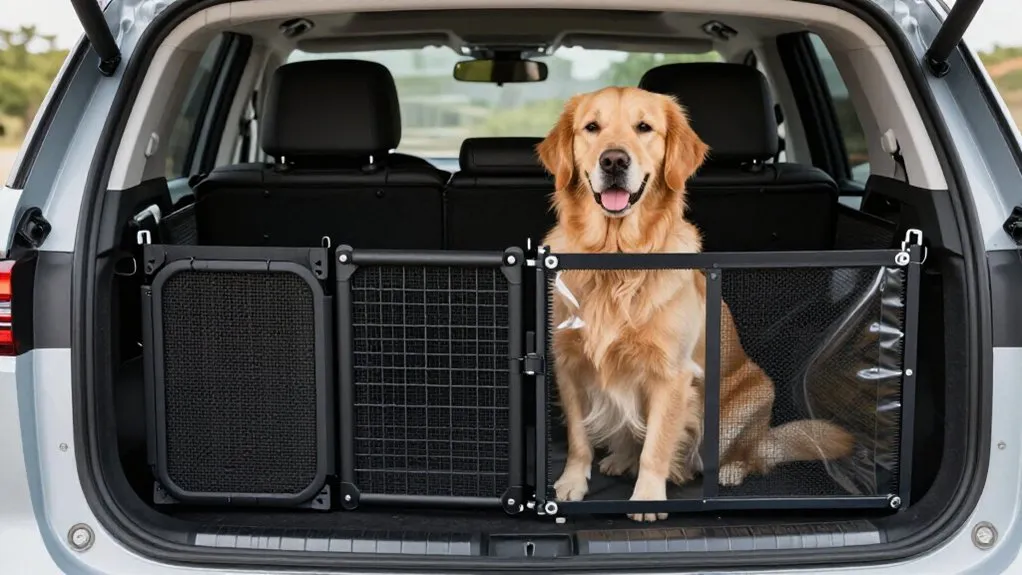
Choose a rigid, crash-tested steel barrier with structural mounts for most dogs, especially large, reactive, or escape-prone ones. Use fabric mesh or nets only for calm, small dogs needing temporary separation because they can stretch or tear.
Measure cargo width, height, and gaps; confirm seat movement, anchor strength, and rearview visibility.
For multiple dogs, install a rigid divider or crates. Avoid sharp edges, loose hardware, and headrest-only straps.
Next, learn how to fit and inspect it.
Choose Crash-Tested Steel Barriers
For the strongest separation between your dog and the passenger area, choose a steel barrier with documented crash testing or a manufacturer recommendation for your vehicle. Steel wire mesh and rigid frames resist bending better than fabric panels or nets, but mounting determines real-world protection.
Choose brackets that attach to factory-approved points, seat anchors, or other specified structural locations; headrest-only straps can shift under sudden braking. Confirm the barrier doesn’t block airbag deployment, seat travel, belt anchors, or rear visibility. Measure cargo width, roof clearance, and headrest spacing, then follow the installation instructions exactly.
After fitting, pull firmly on the panel and inspect every clip, bolt, and strap. Recheck fasteners regularly, replace corroded hardware, and use a secured crate or travel harness as protection.
Assess Dog Escape Behavior
How your dog responds to confinement should guide the barrier you choose. Observe your dog during short, supervised rides or a calm confinement trial at home. Does it settle, paw briefly, vocalize, chew, push forward, climb, or search for gaps?
A calm, small dog may do well behind breathable fabric mesh or a net used for temporary separation. However, repeated pawing, body-slamming, chewing, or climbing signals that soft, stretchable materials can fail to contain it. Choose a rigid, small-opening steel mesh barrier for persistent escape behavior; it resists claws and teeth better than fabric or netting.
Don’t assume a barrier alone restrains your dog in a crash. Pair confinement training with reward-based practice and use a fitted travel harness or crate when needed.
Inspect Cargo-Area Attachment Strength
A barrier’s strength matters only if its attachment points can hold it in place during hard braking or a collision. Check how the barrier connects to your vehicle’s structure, not just trim. Use approved cargo tie-downs, seat rails, or factory mounting points when the manufacturer permits them. Headrest-only straps can install quickly but may shift under high forces.
| Check | Pass condition |
|---|---|
| Anchors | No cracks, damaged threads, or loose hardware |
| Movement | No slipping, creaks, or more than minor deflection |
Measure anchor spacing and compare it with the barrier’s stated range. Fully engage hooks, fit safety clips, and tighten bolts to the specified torque. Push the center and corners firmly; it shouldn’t shift. Inspect straps, pads, and anchors before trips. Replace the barrier after any moderate collision.
Rigid Steel vs. Fabric Netting
Choose rigid steel when you need stable containment for a large, energetic, or determined dog, since it better resists pushing, claws, and weight. Fabric netting offers flexible, quick installation, and compact storage, but it suits small, calm dogs and temporary separation best.
Whichever you choose, match its size and mounting system to your dog’s behavior and your vehicle’s attachment points.
Steel Strength And Stability
Rigid steel barriers offer the most dependable separation when you travel with a large, energetic, or escape-prone dog. Their frames and wire panels resist pushing, clawing, and chewing far better than soft fabric netting, helping keep your dog behind the cargo area during driving. Choose powder-coated steel to limit corrosion; use small mesh openings if your dog can get teeth or paws through wider gaps.
Stability depends as much on mounting as material: brackets secured to factory points or vehicle structure generally move less than headrest-only straps. Measure your vehicle carefully, then confirm the barrier spans width and reaches roofline without gaps. Inspect bolts, clips, and joints regularly. Remember, a strong barrier isn’t a crash restraint; pair it with a secured crate or harness.
Fabric Netting Flexibility
Fabric netting offers a lighter, more flexible alternative to steel barriers when your dog is small, calm, and unlikely to push, climb, or chew. Its breathable surface can reduce fur snagging and feel less confining, while open mesh helps preserve visibility. It works best as a boundary, not a crash restraint.
Choose fabric only after evaluating behavior. A startled dog may lunge, and pawing, biting, or body weight can stretch, tear, or displace netting. Puppies and anxious, energetic, large, or escape driven dogs need rigid steel or sized crate instead.
Regardless of material, a barrier doesn’t prevent injury in a collision. Use a crash tested harness or secured crate for travel, and make sure the barrier doesn’t interfere with airbags, seat belts, or seat operation.
Installation And Storage
Installation is usually quicker with fabric netting: you can strap or clip it to headrest posts without tools and remove it for compact storage. Before each trip, check that straps, buckles, and attachment points are tight, undamaged, and clear of seat adjustments, airbags, and belt anchors. Fabric panels should lie taut; a sagging net can shift or leave gaps.
Rigid steel barriers take longer to fit. You may need to assemble panels, use brackets, or tighten bolts at approved vehicle points. Follow the maker’s instructions and recheck fasteners after initial use. Hard-mounted systems generally resist movement better than headrest-only straps, but no barrier replaces a properly secured harness or crate.
For storage, fold steel panels or remove them; keep hardware together, labeled, and dry.
Pet Size Considerations
Your dog’s size, strength, and behavior should determine the barrier material. Large, powerful, or highly active dogs can bend weak frames and force through fabric netting during braking or an escape attempt. Choose a rigid steel divider with secure, vehicle-compatible attachment points and small mesh openings if your dog pushes, claws, climbs, or chews. Steel better resists concentrated loading, but it still doesn’t replace a crash-rated crate or properly fitted travel harness.
For a small, calm dog, fabric mesh or netting may provide breathable, lightweight separation on routine trips. Inspect straps, seams, and anchors before every drive. Don’t use soft barriers for determined escape artists.
Measure your dog standing and seated height, then eliminate gaps around the sides and roof. Train calmly, and supervise.
Best for Multi-Dog Travel
For multiple dogs, choose a strong metal barrier that spans the full cargo width to limit gaps and withstand added pressure. You’ll get a more secure fit with adjustable mounting that attaches firmly to compatible vehicle points.
Use multi-panel barriers or crates to create separate zones, reducing distraction and conflict between dogs.
Prioritize Strong Metal Barriers
When you travel with multiple dogs, choose a rigid steel or powder-coated wire-mesh barrier that can withstand combined weight, pushing, and clawing. Rigid metal frames resist deformation better than fabric panels or stretchable nets, which can sag, tear, or shift when dogs lean against them. Choose heavy-gauge wire with small openings if any dog chews, claws, or attempts to climb.
Check that the barrier’s mounts attach securely to approved vehicle points and stay tight after each trip. Hard-mounted brackets generally limit movement more effectively than headrest-only straps. Inspect welds, joints, coating, and hardware regularly; replace rusted components or frayed straps immediately. Remember: a barrier separates dogs from the passenger area but doesn’t restrain them in a crash. Pair it with fitted harnesses or crates.
Ensure Full-Width Coverage
A strong barrier only works if it closes off the full opening between the cargo area and passenger compartment. For multi-dog travel, measure the opening at widest span, including spaces beside the seatbacks and near the C-pillars. A narrow center panel leaves escape routes: one dog can slip through a side gap, enter the cabin, and distract you while driving.
Choose a barrier with side wings or contoured panels that follow the vehicle’s interior shape. Check the top edge; climbers may exploit clearance below the roofline. Full-width coverage also keeps dogs separated from loose cargo, reducing the chance that animals or items move forward during braking. Don’t treat a barrier as a crash restraint. Secure each dog with a rated travel harness or crate.
Choose Adjustable Mounting Systems
Choose a barrier with adjustable width, height, and attachment points so it can close gaps across your vehicle’s cargo opening and remain secure as dogs shift or lean against it. Measure the cargo width, floor-to-roof clearance, and headrest-post spacing before buying, then compare them with the product’s stated adjustment range. For multiple dogs, choose a rigid system with side wings or angled panels that follows your vehicle’s contours and limits escape routes near pillars.
Prioritize brackets that attach to factory mounting points, seat anchors, or sturdy trim locations; these typically resist forward movement better than headrest straps alone. Check that adjustment knobs, clips, and bolts lock firmly after installation. Reinspect them before long trips, especially after removing or folding the barrier. Don’t block airbags, seatbelt anchors, or seat movement.
Create Separate Dog Zones
For multi-dog travel, create separate zones with a rigid, multi-panel barrier or divider that gives each dog a defined space and prevents crowding, fighting, or attempts to climb over one another. Position panels to block gaps at the sides and behind seats, then secure them to factory anchors, seat mounts, or other approved structural points. Rigid steel frames suit large, energetic, or reactive dogs; fabric mesh and nets can tear, stretch, or fail when dogs push, chew, or scramble.
Measure cargo width, height, and each dog’s resting area before buying. Give every dog enough room to lie down and turn comfortably, without allowing contact that triggers tension. Use a crash-tested crate or harness for each dog: a divider manages separation, not collision restraint.
Check Rear-Seat Folding Clearance
Before installing a dog car barrier, fold and unfold each rear seat section to confirm the barrier, brackets, and straps don’t block its travel or pinch against the upholstery.
Test the seats with the barrier adjusted to its normal driving position and with your cargo area loaded as you’d typically use it. Watch for contact at hinges, seatbelt buckles, release handles, headrests, and trim. A barrier that shifts or tightens as a seat moves can damage interior materials and may prevent you from quickly accessing the rear seating.
After testing, lock every seat upright and verify the barrier leaves belt anchors and seat releases unobstructed. If you use split-fold seats for long items, choose a layout that preserves the section you need most often.
Price Replacement Mounting Hardware
Once you’ve confirmed the barrier clears the folding seats, price replacement straps, clips, brackets, and mounting bolts before you buy. A low upfront price can become costly if proprietary parts are unavailable or require overseas shipping. Check the manufacturer’s parts catalog, warranty terms, and part numbers for every load-bearing attachment.
Ask whether straps have stated load ratings and whether brackets and bolts fit your vehicle without altering safety systems. Keep one spare strap and clip for long trips, but replace any frayed, stretched, corroded, or damaged component immediately. Follow the specified bolt grade and tightening instructions; generic substitutions may not match the original hardware’s strength or geometry. If a part fails, remove the barrier from service until you install approved replacements supplied by manufacturer directly.
Reject Sharp Exposed Edges
Inspect every panel edge, wire end, weld, corner, and mounting bracket before buying a dog car barrier, and reject any model with exposed sharp points or rough unfinished metal. Run your hand carefully along protected surfaces, checking for burrs, cracked coating, protruding cut wires, and poorly capped brackets. A frightened dog can lunge, scrape skin, snag fur, or injure a paw; you can too during loading. Smooth powder coating, rounded corners, and firmly fitted end caps reduce preventable contact injuries.
- Your dog deserves a barrier that won’t punish curiosity.
- One jagged wire can turn a routine stop frightening.
- Smooth edges protect adventurous paws during every jump.
- Capped hardware helps you load gear without painful surprises.
- Rejecting defects now can spare everyone needless distress later.
Verify Rearview Mirror Visibility
Choose a barrier that preserves a clear view through your rearview mirror and rear windows, since blocked sightlines can hide vehicles, pedestrians, and obstacles while reversing or changing lanes. Before buying, sit in your normal driving position and check the proposed mounting height and panel pattern. Fine wire mesh or low-profile designs usually preserve more usable visibility than solid dividers. Adjust headrest straps or side panels so they don’t cross the mirror’s central sightline. Then test it after loading your dog and cargo; movement can change what you see.
- Spot a child stepping behind your vehicle.
- See a cyclist before you merge lanes.
- Reverse calmly around low, hidden obstacles today.
- Keep your dog contained without sacrificing awareness.
- Drive with confidence when traffic shifts suddenly.
Conclusion
Choose a barrier that matches your dog’s size, escape habits, and travel setup. Prioritize crash-tested steel with strong cargo-area mounts, smooth edges, and clear rear-seat folding clearance. Fabric nets can contain calm dogs, but they won’t provide the rigidity or impact resistance of steel. Confirm rearview visibility, test every attachment, and price replacement hardware before buying.
For multiple dogs or determined climbers, use a rigid divider and secure each dog with appropriate restraint on trips.
Car Crate Fit Calculator
Size a large dog carrier for your car: IATA-based crate size for your dog, checked against your cargo area and hatch opening.