How to Calm an Anxious Dog in the Car: What Actually Works
You’ll help an anxious dog most by using a crash-tested harness, keeping the car cool and quiet, and building tolerance through brief engine-off sessions, then gentle five-minute rides. Reward relaxed behavior; don’t force entry or extend trips during distress.
Soft music and sunshades may reduce stimulation, but vomiting or persistent drooling needs veterinary advice for possible motion sickness. Clip a leash before opening the door. Next, you’ll see how to practice safely and spot signs.
Notice Calmer Breathing Within Minutes
If your dog begins panting, drooling, lip-licking, pacing, or vocalizing in the car, treat those signs as possible anxiety or motion sickness rather than disobedience. Calmer breathing can appear within minutes when you reduce immediate stressors, but it doesn’t confirm that the cause has resolved. Pull over safely if signs intensify, and never leave your dog unattended in a warm vehicle.
Keep the cabin cool, provide steady airflow, and reduce abrupt noise and motion where possible. Speak quietly and place a familiar blanket on a stable, nonslip surface. For future trips, build tolerance gradually: reward calm behavior first in a parked car, then with the engine on, followed by brief drives to pleasant destinations. Contact your veterinarian for vomiting, marked lethargy, or persistent distress.
Pack a Crash-Tested Harness
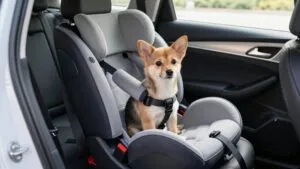
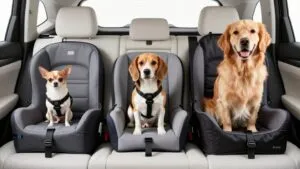
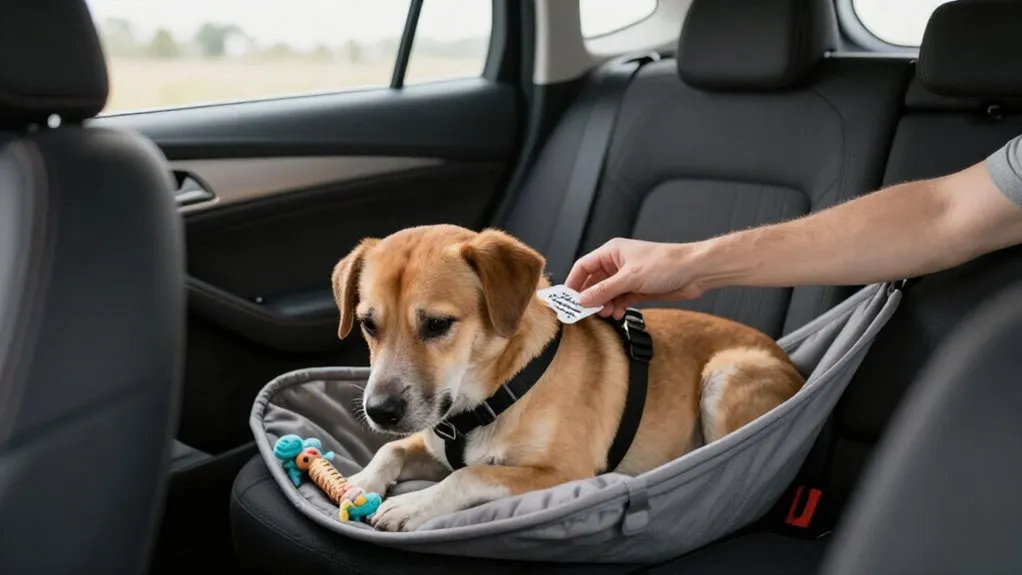
A crash-tested harness helps protect your dog, passengers, and driver by limiting movement and reducing ejection risk in a collision. It can also reduce distraction and give an anxious dog steadier, more predictable positioning. Choose a full-body model with documented independent crash-test results, not merely “seatbelt-compatible” marketing.
- Measure your dog’s neck and girth, then use the manufacturer’s size chart; a snug fit prevents escape and concentrated force.
- Attach the load-rated tether to an approved rear-seat LATCH, tether, or seatbelt anchor.
- Keep the tether as short as practical while allowing sitting and standing.
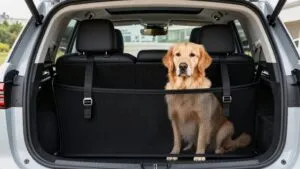
- Place your dog in the rear seat or secured cargo area, never before an active front airbag.
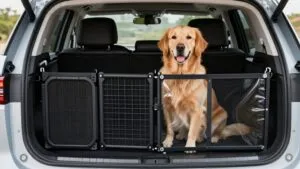
A crash-tested crate is safer. Inspect it before each trip and follow all instructions carefully.
Step 1: Park Near a Quiet Route
Once your dog is safely restrained, park where you can leave via a low-traffic, familiar route. A predictable first few minutes can limit sudden braking, sharp turns, horns, and visual activity, all of which may increase arousal or motion-related discomfort. Choose a time with lighter traffic, map a simple exit, and avoid busy intersections when practical.
Start with a short loop that ends somewhere pleasant, rather than at stressful destinations. Drive smoothly, allow following distance, and avoid rapid acceleration or last-second lane changes. Watch for panting, drooling, lip-licking, trembling, vomiting, or escalating vocalization. If these signs increase, pull over only when it’s safe, end the session, and make the next exposure shorter. Repeated calm, successful routes support desensitization; nausea or panic warrants veterinary advice.
Step 2: Play Calming Music Softly
Play calm, low-volume music to soften abrupt road noise and create a more predictable sound environment for your dog. Gentle instrumental tracks or quiet classical music may reduce arousal for some dogs, particularly when traffic, horns, and wind noise trigger hypervigilance. Keep the volume low enough that you can hear your dog and surrounding traffic; loud music, heavy bass, or sudden playlist changes can increase stress and impair your awareness.
Watch your dog’s response rather than assuming any genre works. Softer posture, less panting, and reduced vocalizing suggest the sound is helpful. If drooling, trembling, agitation, or vomiting continue, turn it off and address motion sickness or anxiety with your veterinarian. Music supports management, not secure restraint, safe driving, or veterinary care.
Step 3: Practice Engine-Off Car Sessions
Before asking your dog to tolerate motion, build comfort in the parked car with brief engine-off sessions. Park in a cool, quiet, safe location, secure your dog in the same crash-tested harness or well-anchored crate you’ll use for travel, and provide non-slip footing. Start with a few minutes, or less if your dog shows distress. Offer small, high-value treats for choosing to enter, sitting, or lying quietly; don’t lure or force a fearful dog inside.
Watch for panting unrelated to heat, drooling, lip-licking, trembling, escape attempts, or persistent vocalizing. If these signs increase, end the session calmly and make the next one easier. Repeat successful sessions several times weekly, lengthening time only when your dog remains relaxed. Keep doors secured, never leave your dog unattended.
Step 4: Drive a Five-Minute Loop
Start with a calm five-minute loop only after your dog can remain relaxed in the parked, engine-off car. Choose a quiet, familiar route with smooth roads and minimal stops. Secure your dog in a crash-tested harness or properly anchored crate before moving, and provide stable, non-slip footing.
Drive at an easy pace and keep the first trip brief. Pair calm body language, soft eyes, a loose posture, or quiet resting, with small, high-value treats when safe to deliver them. Don’t try to soothe panic by extending the ride.
If your dog pants, drools, repeatedly licks their lips, vocalizes, vomits, or cannot settle, return home and shorten the next session. Repeated nausea warrants veterinary advice; motion-sickness treatment may support training. Repeat successful loops before increasing duration.
Step 5: Block Views With Sunshades
Sunshades can reduce visual overstimulation for dogs that become hypervigilant or reactive to passing cars, people, and movement outside the windows. They won’t treat motion sickness or fear-based anxiety, but they can lower stream of triggers competing for your dog’s attention.
Use vehicle-specific rear-window or rear-side-window shades that attach securely and don’t block your mirrors or driving visibility. Keep windows and ventilation systems clear, and never cover a dog in a way that traps heat or limits airflow.
Introduce shades during short, low-stress practice drives and watch your dog’s body language. If panting, drooling, whining, or agitation continues, reduce the trip demands and speak with your veterinarian to assess nausea or other causes. Pair the calmer visual environment with gradual training and comfortable restraint.
Step 6: Clip Leash Before Opening Door
Clip your dog’s leash to a well-fitted harness before you open the car door, even after a calm ride. Car travel may leave anxious dogs overstimulated, nauseated, or startled by sounds and movement outside. A leash gives you control during the move from vehicle to unpredictable surroundings and reduces bolting risk into traffic, parking lots, or unfamiliar areas.
Attach the leash while your dog remains restrained, then open the door only enough to guide an orderly exit. Keep a short, comfortable distance; don’t yank or drag your dog. Use a harness rather than clipping to a collar, which can concentrate force on the neck if your dog lunges. If escape attempts or panic persist, ask your veterinarian or qualified behavior professional for guidance at once.
Look for a Loose Jaw
A loose, softly open jaw can signal that your dog is settling rather than escalating during or after a car ride. Read it alongside the whole body: relaxed eyes, neutral ears, softer facial muscles, and a loose posture provide stronger evidence of reduced arousal. A closed mouth, tight lips, hard stare, pinned ears, or tense body can indicate ongoing discomfort or fear.
Don’t assume every open mouth means calm. Heat, exertion, and stress can also cause panting, so check cabin temperature, airflow, and your dog’s ability to rest securely. Keep your dog restrained with a properly fitted travel harness or secured crate before you assess signals or open a door. Then quietly reinforce genuine relaxation with calm praise or a small treat, if safe.
Vomiting: Motion Sickness—Call Vet
Vomiting during car rides often points to motion sickness, particularly in younger dogs, and it can quickly intensify travel-related fear. Stop the car safely and call your veterinarian before another trip. Vomiting can reflect nausea, but repeated episodes also warrant assessment for other illness.
| Sign | What you should do |
|---|---|
| Drooling or lip-licking | End the ride; note timing. |
| Vomiting | Call your veterinarian for guidance. |
| Weakness, collapse, or blood | Seek urgent veterinary care. |
| Future rides | Use only veterinarian-recommended medication. |
Your veterinarian can assess motion sickness, rule out vestibular or gastrointestinal problems, and prescribe a correctly dosed antiemetic. Don’t give human medication without approval; safety varies by age, weight, breed, and health status. Keep your dog secured and cool, monitor, and postpone nonessential travel until veterinarian advises.
Wash the Harness Weekly
Because a travel harness rests against your dog’s coat and skin, wash it weekly—or sooner if it’s soiled—to remove dirt, saliva, and residues that may cause irritation. Follow the manufacturer’s care label: many harnesses tolerate hand-washing with mild, fragrance-free detergent and thorough air-drying, while heat can weaken webbing, padding, or buckles. Rinse completely, since detergent residue can aggravate sensitive skin.
Before each ride, inspect straps, stitching, attachment points, and hardware for fraying, cracks, corrosion, or damaged padding. Don’t use a harness until it is fully dry and fits correctly; damp fabric may chafe, and a loose or compromised restraint won’t protect your dog in a sudden stop. If you notice redness, hair loss, itching, or sores where the harness contacts skin, stop use and contact your veterinarian.
Conclusion
You can help your dog feel safer in the car by combining gradual practice, secure restraint, and a quiet, predictable environment. Watch body language, including relaxed breathing and a loose jaw, and stop before fear escalates. Prevent escapes by attaching the leash before opening the door. If vomiting, drooling, or panic continues, contact your veterinarian; motion sickness and anxiety may need medical guidance. Clean equipment regularly, and build progress through short, successful rides over time.