Can You Leave a Dog in the Car With the Windows Down? Why It’s Not Enough
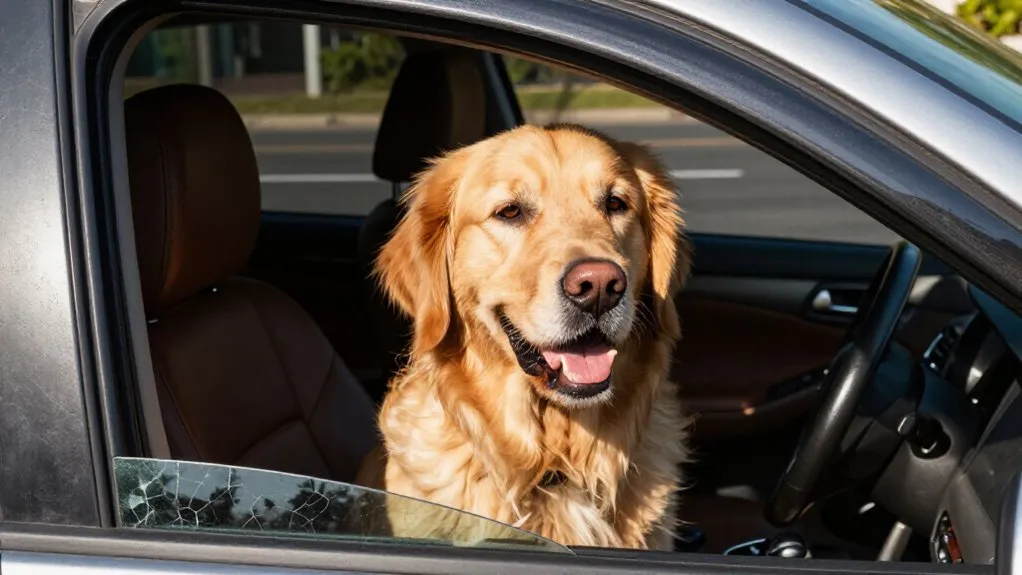
You can’t safely leave your dog in a car, even with the windows down. Airflow won’t stop cabin temperatures from climbing rapidly, and heat, humidity, sunlight, and hot asphalt can overwhelm panting within minutes.
Shade and water aren’t reliable safeguards, especially for flat-faced, senior, overweight, or ill dogs. A 70°F day can still become dangerous.
Keep your dog home in climate control, use curbside pickup, or arrange a pet sitter. Learn why these risks escalate.
Windows Down Won’t Prevent Overheating
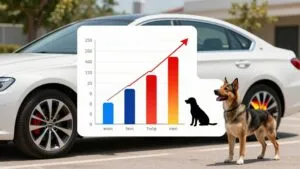
Cracking the windows doesn’t make a parked car safe for your dog. Cabin temperatures can climb about 20°F in 10 minutes and 30°F in 20 minutes, while a partially open window produces too little airflow to stop heat accumulation. Your dog cools itself mainly by panting, but trapped heat and humidity limit evaporation from the tongue and airways. As core temperature rises, dehydration, confusion, weakness, collapse, and heatstroke can follow rapidly.
You shouldn’t judge safety by how warm it feels outside or by a brief errand. Even temperatures in the mid-70s°F can become dangerous inside a vehicle. Puppies, senior dogs, flat-faced breeds, overweight dogs, and dogs with heart or respiratory disease can deteriorate especially fast. Leave your dog in a temperature-controlled location when unattended.
Shade Offers Little Protection
Shade may reduce direct sunlight, but it doesn’t make a parked car safe for your dog. A tree, awning, or building blocks some direct radiation, yet warm outdoor air, diffuse light, and reflected energy still heat the cabin. Vehicle glass continues to admit solar energy and retain heat, while seats, dashboards, and plastics absorb warmth and release it back into the enclosed space.
On a 70°F day, interior temperatures can enter dangerous range within minutes; research shows most heating occurs in the first 30 minutes.
Shade shifts as the sun moves, so protection can disappear. Humid air limits panting. Flat-faced, older, overweight, and heart or lung-compromised dogs face risk. Don’t rely on shade; take your dog with you or leave them at home instead.
Asphalt Radiates Heat Upward
Even in shade, hot asphalt adds another source of heat: it absorbs solar energy and radiates it upward toward the vehicle’s floor, tires, and cabin. That stored heat can continue warming the car after direct sunlight shifts, increasing the thermal load on your dog from below as well as above.
| Surface | Effect | Risk |
|---|---|---|
| Asphalt | Stores heat | Warms undercarriage |
| Tires | Transfer heat | Adds cabin warmth |
| Floor | Reradiates heat | Heats resting area |
| Cabin | Traps energy | Raises temperature |
You can’t make this exposure safe by lowering the windows. Air movement may feel cooler, but it doesn’t remove radiant heat or prevent a rise in body temperature. Panting becomes less effective as the cabin warms, and heat stress can progress quickly to weakness, collapse, organ injury, or death. Don’t leave your dog unattended; choose a temperature-controlled option instead.
Short-Nosed Dogs Overheat Faster
If you have a short-nosed dog, such as a Bulldog, Pug, or French Bulldog, its narrowed airways make panting far less effective for cooling. A parked car’s temperature can rise rapidly despite open windows, pushing your dog toward heatstroke within minutes. Give these breeds extra protection by never leaving them unattended in a vehicle.
Brachycephalic Airway Limitations
Short-nosed dogs—including Pugs, Bulldogs, Boston Terriers, and French Bulldogs—can overheat especially fast because their compressed airways make panting less efficient. Their anatomy often includes narrowed nostrils, an elongated soft palate, and a smaller windpipe, features associated with brachycephalic obstructive airway syndrome. When your dog pants, restricted airflow limits the evaporation that normally releases body heat.
Breathing itself may require extra effort, which adds physical stress and can further compromise cooling. Obesity, excitement, age, and existing heart or respiratory disease can increase this vulnerability. You may notice loud breathing, snorting, gagging, excessive drooling, weakness, or gums that look unusually red, pale, or blue. Don’t assume your dog can tolerate warmth because they seem accustomed to it. Short-nosed dogs need dependable climate control and supervision.
Rapid Heat Buildup Risks
How quickly can a parked car become dangerous for a short-nosed dog? On a mild day, cabin temperatures can climb about 20°F in 10 minutes and 30°F in 20 minutes, even when you leave windows cracked. The opening doesn’t create enough airflow to offset solar heat trapped inside.
For your dog, this creates a medical emergency faster than you may expect. Panting must evaporate moisture to release body heat, but a hot, humid cabin sharply limits that cooling. As core temperature rises, dehydration, weakness, disorientation, collapse, organ injury, and heatstroke can follow quickly.
You can’t judge safety by outside comfort or a breeze at the window. Don’t leave your dog unattended in a parked vehicle; take them with you or leave them safely home.
Breeds Needing Extra Protection
Brachycephalic breeds—such as Pugs, Bulldogs, Boston Terriers, and Pekingese—overheat faster because their shortened airways restrict efficient panting. When you leave one in a parked car, rising heat and humidity can overwhelm its limited ability to cool itself. Windows down don’t correct the cabin temperature or reduce the strain on breathing.
You should treat any panting increase, noisy or labored breathing, excessive drooling, weakness, vomiting, or gums that look bright red, pale, or blue as an emergency. Puppies, senior dogs, overweight dogs, and dogs with heart or lung disease need protection.
Don’t rely on shade, water, or cracked windows. Leave your dog at home for errands. During travel, use air conditioning, monitor your dog, and seek veterinary care immediately for heat-stress signs.
Humidity Raises Heat Stress Risk
High humidity slows evaporation, so your dog can’t cool itself effectively through panting. With the windows down, the car’s hot, moist air can still trap heat and accelerate dangerous overheating. Don’t assume your dog has extra time. Heat stress can escalate quickly.
Humidity Slows Cooling
Even with the windows down, humid air limits the evaporative cooling your dog depends on when panting. Humidity means the air holds water vapor, so moisture evaporates more slowly across respiratory surfaces. Inside a vehicle, solar heat can raise cabin temperature while high humidity prevents the environment from accepting heat efficiently.
This combination increases your dog’s heat burden and can accelerate dehydration, hyperthermia, weakness, confusion, vomiting, collapse, and heatstroke. Puppies, senior dogs, flat-faced breeds, overweight dogs, and dogs with heart or lung disease face danger. Don’t use windows, shade, or a breeze as safeguards on muggy days. Leave your dog at home or keep them with you in a climate-controlled space. If you suspect overheating, move your dog indoors and seek veterinary care immediately.
Panting Becomes Less Effective
When humidity is high, your dog’s panting can’t evaporate moisture efficiently from the tongue and airways, so it removes far less body heat. Panting works by moving warm, moist air out and replacing it with drier air; when cabin air already holds substantial water vapor, that exchange loses cooling power. Windows down don’t correct this problem, because they don’t control humidity or provide the sustained, cool airflow your dog needs.
You can’t judge safety by how hard your dog pants: rapid breathing may reflect rising heat strain rather than effective cooling. Puppies, seniors, overweight dogs, short-nosed breeds, and dogs with heart or airway disease have less reserve. Keep your dog out of an unattended vehicle, particularly on warm, humid days. Choose a climate-controlled alternative.
Heat Stress Escalates Quickly
Heat stress can escalate in minutes inside a vehicle because rising cabin temperature and humidity overwhelm your dog’s ability to release heat through panting. Humid air limits evaporation from tongue and airways, so each breath cools less effectively while body temperature climbs. As the cabin heats, dehydration, weakness, and confusion can develop, leaving your dog unable to seek airflow or water.
Heatstroke can trigger vomiting, collapse, seizures, organ injury, clotting abnormalities, and death without prompt veterinary care. Puppies, senior dogs, flat-faced breeds, overweight dogs, and pets with heart or lung disease face rapid danger. Open windows don’t control humidity or solar heat gain. Never leave your dog unattended; use climate control and seek emergency veterinary help for heavy panting, distress, bright-red gums, or collapse.
Choose Curbside Pickup Instead
Choose curbside pickup for errands so your dog can stay safely at home in a temperature-controlled space. Order groceries, prescriptions, and household essentials ahead, then collect them without leaving your dog unattended in a parked vehicle. This simple plan eliminates the rapid heat exposure that can overwhelm canine cooling mechanisms, even on mild days and even when windows are down.
Before you leave, provide fresh water, a comfortable resting area, and access to a reliably cooled or heated room. If your dog has a flat face, excess weight, advanced age, or heart or respiratory disease, treat this precaution as especially important. Use delivery, ask a household member to help, or schedule errands around your dog’s care needs. Pickup protects your dog from medical risk.
Cracked Windows Invite Theft
Cracked windows create an easy access point for theft or intrusion while doing little to protect your dog from dangerous cabin temperatures. An open gap can tempt someone to reach inside, open a door, steal belongings, or take your dog. Even a restrained dog may panic when a stranger approaches, increasing the risk of escape, injury, or a defensive bite.
Don’t assume a small opening makes your vehicle secure. Locking doors doesn’t eliminate risk if an intruder can manipulate a handle or break glass. Your safest choice is to take your dog with you only when you can remain together; otherwise, leave them home. This prevents theft, reduces stress, and avoids leaving your pet vulnerable to strangers, confinement, or emergencies beyond your control entirely.
70°F Can Still Be Dangerous
Even when the outdoor temperature is only 70°F, a parked car can become dangerously hot for your dog within minutes. Sunlight traps heat behind glass, and a cracked window doesn’t provide enough airflow to protect your dog’s core temperature.
- Cabin temperatures can climb about 20°F in 10 minutes.
- Panting becomes less effective as heat and humidity rise.
- Puppies, senior dogs, flat-faced breeds, and overweight dogs face greater risk.
- Heatstroke can cause collapse, organ damage, or death.
Don’t rely on shade, tint, or a light-colored car; they won’t prevent dangerous heating. A dog can’t sweat efficiently, so trapped heat overwhelms its primary cooling system. Never leave your dog unattended in a parked vehicle, even for a quick errand. Conditions can change faster than you expect.
Book a Pet Sitter
For errands that would leave your dog alone in a vehicle, book a trusted pet sitter instead. A qualified sitter keeps your dog in a temperature-controlled home environment, where heat stress, dehydration, and escape risks don’t escalate during an unpredictable delay. Choose someone who can provide fresh water, supervised potty breaks, and any medications your dog needs.
Before you leave, share your veterinarian’s contact information, emergency clinic details, feeding instructions, and your dog’s normal behavior and medical concerns. Ask the sitter to monitor for excessive panting, weakness, vomiting, collapse, or altered gum color and seek urgent veterinary care if signs develop. For puppies, seniors, flat-faced breeds, or dogs with heart or respiratory disease, arrange experienced care even for brief outings. Confirm reliable communication beforehand.
Conclusion
Can’t make a parked car safe for your dog by lowering the windows. Heat builds quickly, shade and asphalt add danger, and humidity limits your dog’s ability to cool through panting. Short-nosed breeds face even greater risk, but any dog can develop heatstroke at mild outdoor temperatures. Don’t take the chance for a quick errand. Use curbside pickup, leave your dog home, or book a pet sitter to protect their health and safety today.