Do Dog Anxiety Wraps Work for Car Rides? What the Evidence Says
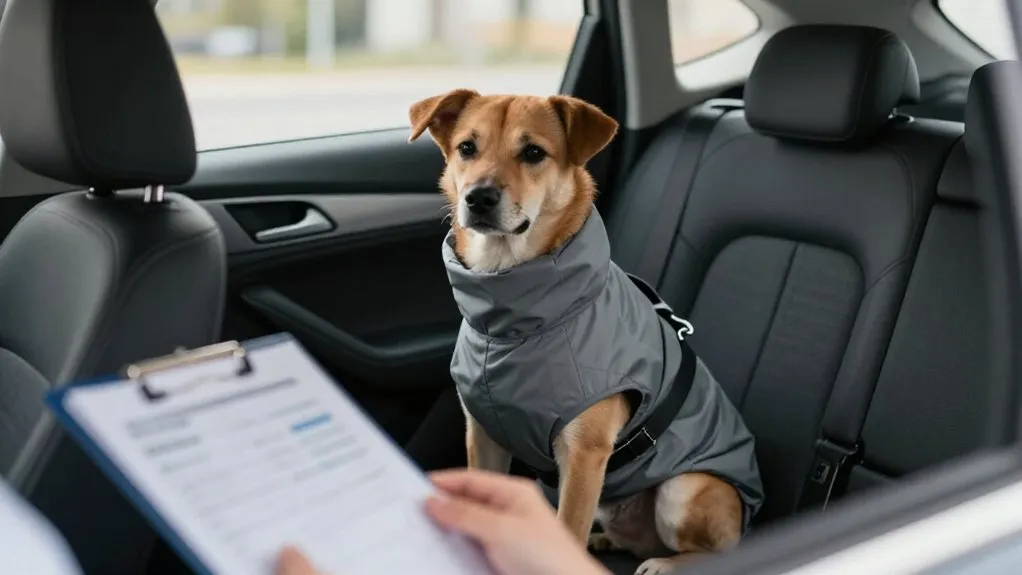
Dog anxiety wraps may take the edge off your dog’s car-ride arousal, but evidence is limited and mostly based on owner reports from noise-phobia studies, not travel trials. They don’t treat motion sickness, which often causes drooling, lip-licking, retching, or vomiting during movement.
Fit a wrap, pair it with restraint and car acclimation, and stop if discomfort rises. Persistent distress, vomiting, or poor recovery needs veterinary guidance. Next, assess fit and triggers.
Pressure Wraps: Real Calming Evidence?
Pressure wraps may help some dogs settle during stressful events, but the evidence doesn’t show a reliable, stand-alone treatment for car-ride anxiety. A systematic review found only four studies worth examining, and most relied on unblinded, owner-reported scores rather than objective behavior coding.
You’ll see real reductions in panting, trembling, and vocalization reported by owners, but physiological markers like cortisol and heart rate shift inconsistently across trials. Most supporting data come from thunderstorm and firework studies, not vehicle travel, so you can’t assume the same results in your car. If you try a wrap, fit it properly and let your dog acclimate before a trip, rushed introductions blunt any possible benefit. Treat it as one piece of your anxiety plan, not the whole solution.
Motion Sickness Versus Anxiety
Before relying on an anxiety wrap, determine whether your dog’s car distress is primarily motion sickness, anxiety, or both. Motion sickness reflects sensory conflict between vestibular, visual, and body-position signals, producing nausea, heavy salivation, lip-licking, retching, vomiting, or lethargy that usually begins during movement and eases when the car stops.
Anxiety can begin before departure or persist while parked. You’ll more often see pacing, whining, trembling, hypervigilance, or panting without vomiting. Yet the conditions commonly interact: a nauseating trip can condition fear of the car, while arousal can intensify nausea. Wraps may modestly help behavioral arousal, but they don’t treat vestibular nausea. If vomiting or marked drooling recurs, ask your veterinarian about motion-sickness treatment and a combined behavior plan. Track timing and signs carefully.
First Car Ride, Wrapped On
For your dog’s first ride wearing an anxiety wrap, treat it as a brief, low-stakes trial, not a test of whether the product “works.” Fit and acclimate the wrap indoors first, confirm that your dog can move, sit, lie down, and breathe comfortably, then use it for a short, familiar drive with secure restraint and a calm environment. Observe behavior rather than relying on a single impression.
Record panting, trembling, vocalizing, pacing, posture, drooling, lip-licking, or vomiting before and during the drive. If distress escalates, stop and reassess; the wrap won’t treat motion sickness or severe fear. Repeat comparable brief trips only if your dog remains comfortable, pairing them with gradual car acclimation. Evidence for wraps is limited, and car-specific benefits aren’t consistently established yet.
Vest Styles and Fit Options
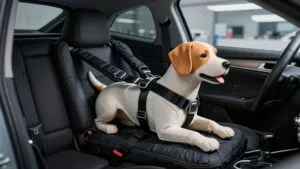
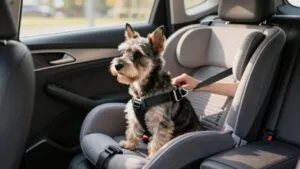
You’ll find anxiety vests in wraparound, shirt-style, and adjustable-strap designs, each providing different chest and torso coverage. Choose a fit that feels snug without limiting shoulder movement, breathing, or access to a secure car restraint. Adjustable straps can help you fine-tune contact, but introduce the vest gradually and watch for relaxed posture versus attempts to escape or freeze.
Common Anxiety Wrap Designs
Fit matters as much as vest style: most anxiety wraps use snug, adjustable fabric panels around the chest and torso to provide gentle, even pressure without restricting normal movement or breathing. Classic crossover vests fasten with broad flaps that overlap across the chest and back, creating distributed contact. Wraparound garments use longer bands around the torso, while pullover or zip-front styles resemble lightweight jackets and may cover more of the trunk.
However, research hasn’t established that one design produces superior calming effects in practice. Studies rarely quantify pressure or compare styles directly, and reported benefits rely largely on owner observations. For car travel, a wrap may reduce visible arousal for some dogs, but it won’t treat nausea, vestibular discomfort, or learned fear by itself.
Choosing the Right Fit
No vest style has proved superior, so choose one that matches your dog’s body shape and permits normal walking, sitting, lying down, and full chest expansion. A shorter-backed design may suit a compact dog; a longer, more contoured cut may better follow a lean dog’s outline. Select the manufacturer’s size using its stated measurements, then check movement indoors before any ride.
A vest should rest smoothly without bunching, twisting, or shifting as your dog changes position. Watch behavior rather than assuming snugness is calming: freezing, avoidance, altered gait, persistent scratching, or increased panting suggest discomfort or distress. Because car-specific evidence is sparse and pressure levels aren’t standardized, you can’t infer benefit from fit alone. Introduce the garment during calm home sessions and reassess calmly.
Adjustable Straps and Coverage
Adjustable straps let you fine-tune contact around the chest and torso, but tighter isn’t necessarily more calming. You should fit the vest snugly enough to maintain gentle, even contact without restricting shoulder movement, breathing, or normal posture. Evidence doesn’t establish an ideal pressure level, and car-ride studies remain sparse.
| Style | Coverage | What you monitor |
|---|---|---|
| Wraparound | Chest and trunk | Gait, panting, escape attempts |
| Vest | Torso and shoulders | Range of motion, heat, nausea |
Choose coverage that leaves the neck, abdomen, and legs free, then acclimate your dog indoors. During short drives, record panting, trembling, vocalizing, drooling, and repositioning. Loosen or remove it for freezing, overheating, rubbing, or distress. A fitted vest complements training and secure restraint; it won’t treat motion sickness or severe anxiety by itself.
Rear-Seat Placement Effects
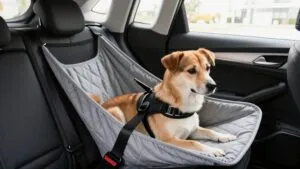
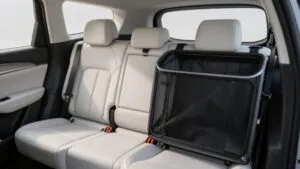
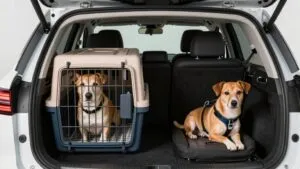
Placing your dog in the rear seat may reduce visual stimulation and increase distance from front-seat activity, which can lessen arousal for some dogs. A properly secured crate or harness can also limit shifting during turns, supporting more stable body positioning. However, placement won’t treat nausea or severe fear, so track behaviors such as panting, drooling, trembling, and vocalizing across rides.
Reduced Visual Stimulation
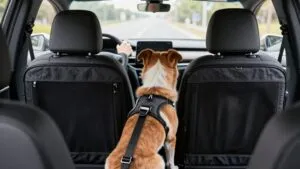
Visual input can amplify car-ride distress: passing scenery, traffic, and rapid motion through side windows may increase arousal in some dogs. During rear-seat travel, if your dog fixates, barks, pants, or scans, reduce visual stimulation with a securely installed travel crate, or by positioning an approved restraint so it can’t watch every passing cue. A partial visual barrier may help some dogs settle, provided it doesn’t impair ventilation, safety, or the dog’s ability to maintain a comfortable posture.
Evidence specifically testing visual restriction during car travel is limited, so treat it as an individualized environmental adjustment, not a proven anxiety treatment. Pair it with gradual exposure and monitor behavior: less scanning, vocalizing, or trembling suggests benefit. If drooling, lip-licking, or vomiting persist, ask your veterinarian.
Distance From Front Seats
Although rear-seat placement can increase distance from front-seat activity and airbags, evidence doesn’t show that it reliably reduces car-ride anxiety. If you use an anxiety wrap, treat rear-seat positioning as a safety and management choice, not evidence-based treatment.
| Observation | Clinical meaning |
|---|---|
| Less front-seat activity | May reduce distraction |
| Persistent panting | Assess triggers |
| Relaxed posture | Record change |
Research on pressure garments during travel remains sparse, and studies haven’t established that greater distance from people in front seats changes a wrap’s effect. Monitor your dog’s panting, trembling, vocalizing, posture, and recovery after rides. If distress continues despite rear-seat placement and a properly acclimated wrap, consider nausea, learned fear, or confinement as contributors. Use short, planned exposures and seek veterinary guidance for severe signs. Don’t assume location alone helps.
Stability During Turns
A secure rear-seat setup may limit sliding and abrupt body shifts during turns, which can reduce one physical contributor to car-ride distress. You can pair a fitted anxiety wrap with a crash-tested harness or secured carrier to help your dog maintain a stable posture during turns. This doesn’t establish that the wrap prevents turn-related anxiety: direct controlled studies during car travel remain scarce.
Still, less scrambling or bracing may lower stress behaviors, such as panting, trembling, vocalizing, or repositioning, for dogs. Avoid allowing your dog to ride loose, and don’t use the wrap as a restraint. Watch for drooling, lip-licking, or vomiting, because these signs can reflect motion sickness rather than instability. If distress persists, consult your veterinarian; behavior treatment or anti-nausea medication may be needed.
Using Wraps on Errands
For short errands, you can use an anxiety wrap as one part of a predictable travel routine, but don’t expect it to resolve car anxiety on its own. Put the correctly fitted wrap on before leaving, then pair it with the same calm sequence: toileting, a secure restraint, familiar bedding, and routes you can repeat. Let your dog wear it indoors first, so the garment doesn’t become another car cue.
During errands, watch behavior rather than assumptions: note panting, trembling, vocalizing, posture, and recovery after parking. Owner-reported benefits exist, but direct car-ride evidence remains limited, and physiologic findings are inconsistent. If your dog settles more readily across comparable trips, the wrap may offer a modest situational benefit. Keep departures and returns low-key, and record results.
When Wraps Can’t Help
Pressure wraps can’t resolve car distress driven by motion sickness, severe panic, pain, or an underlying medical condition. If your dog drools, lip-licks, vomits, or becomes increasingly distressed as the vehicle moves, nausea or vestibular discomfort may be the primary problem. A wrap won’t treat those drivers. Likewise, a dog that freezes, struggles to escape, redirects aggression, or cannot recover after rides needs a veterinary and behavior assessment, not a single accessory.
Evidence for wraps comes largely from owner-reported noise-phobia studies, while direct car-travel research remains sparse. You shouldn’t interpret temporary quietness as comfort; observe posture, breathing, vocalization, escape attempts, and recovery after the trip. Your veterinarian can evaluate pain or illness and discuss anti-nausea medication, behavioral treatment, or situational medication when clinically appropriate.
Wrapping Too Loose or Tight
Fit can determine whether a wrap is a tolerable adjunct or an added source of distress. A loose garment may shift during turns and braking, providing little consistent pressure while becoming another unpredictable sensation. An overly tight wrap can restrict shoulder movement, trap heat, or make panting and escape efforts worse. Because studies don’t establish a standardized therapeutic pressure, you shouldn’t assume tighter works better.
- Check that you can slide fingers comfortably beneath the fabric.
- Watch for normal gait, easy breathing, and relaxed movements from standing to lying down.
- Remove the wrap if you see freezing, increased panting, scratching, or attempts to wriggle free.
Let your dog’s observable behavior guide you: a well-fitted wrap shouldn’t impede movement or amplify car-related distress during practice rides.
Schedule a Pre-Trip Vet Exam
Before a longer trip, schedule a veterinary exam to distinguish learned car anxiety from motion sickness, pain, or another medical problem. Your veterinarian can assess for nausea, orthopedic discomfort, ear disease, or other conditions that may make travel distressing. Describe when signs begin and whether your dog drools, lip-licks, vomits, trembles, pants, or avoids the vehicle.
Video from brief rides can help clarify triggers and establish a baseline. If illness or motion sickness contributes, treating it may reduce distress more reliably than a pressure wrap. Ask about behavior modification, safe restraint, and whether situational medication is appropriate. A properly fitted wrap might be an adjunct after gradual acclimation, but it won’t replace diagnosis or a travel plan tailored to your dog’s specific behavioral needs.
Conclusion
An anxiety wrap may help your dog feel calmer on car rides, especially when mild fear, not nausea, drives the distress, but research remains limited and individual responses vary. You’ll get the best signal by pairing a well-fitted wrap with gradual, reward-based travel practice and safe rear-seat restraint. Don’t expect pressure alone to solve vomiting, panic, or pain. If signs persist or worsen, stop the trip plan and ask your veterinarian to assess motion sickness or anxiety.