What to Pack in a Dog Travel Bag So Nothing Gets Forgotten
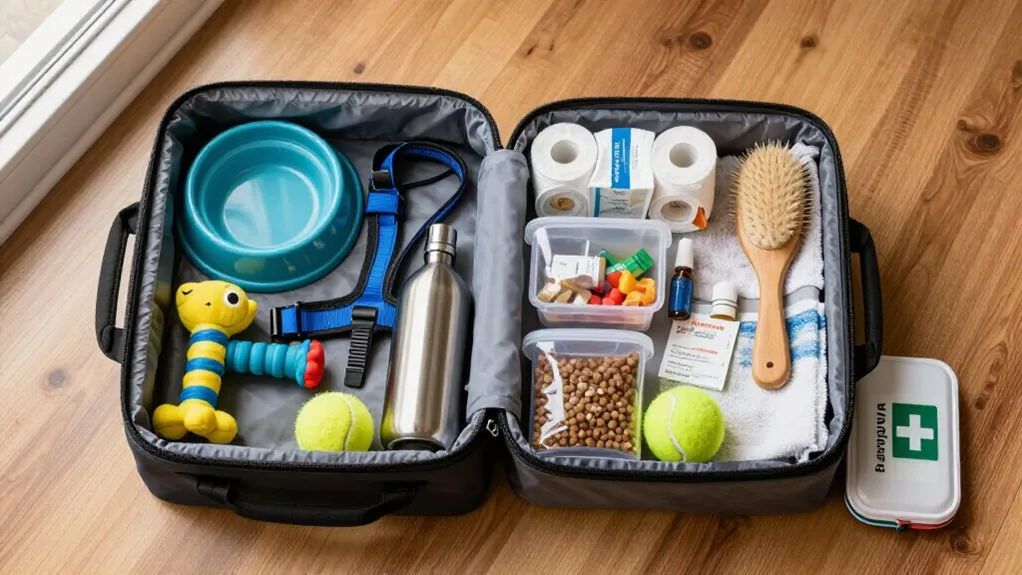
Pack your dog’s travel bag with three days of medications in original labels, dosing instructions, vaccination records, ID, and emergency contact cards.
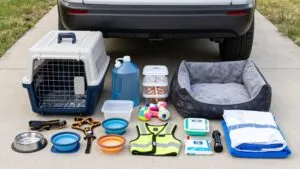
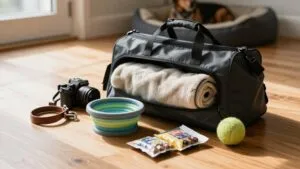
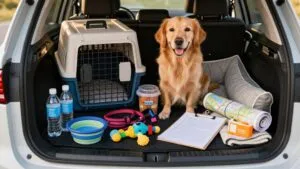
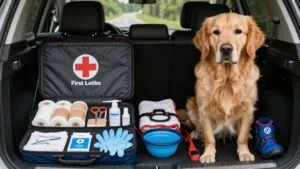
Bring extra food, water, two collapsible bowls, a secured harness, everyday and backup leashes, twelve poop bags, first-aid supplies, a blanket, toy, and recent photo.
For heat, add cooling gear and never leave your dog in a parked car.
Use a laminated checklist to prevent omissions. Keep going for smart packing details ahead.
Three-Day Medication Supply
Pack at least a three-day supply of your dog’s prescribed medications, even for a short trip, to cover delays, lost luggage, or an unexpected overnight stay. Keep pills in their original labeled bottles so you always know the dosage and prescribing vet. If you use a pill organizer for convenience, bring the original bottle too, in case a caregiver or vet needs to verify instructions.
Store medications in a sturdy, waterproof pouch separate from food and treats to prevent damage or contamination. Write out the dosing schedule on a card and tuck it inside the pouch, so anyone helping with care can follow it accurately. Refrigerate temperature-sensitive medications in an insulated cooler with ice packs, and check expiration dates before you leave.
Emergency Contact Card
An emergency contact card gives a finder, first responder, or veterinarian the information they need if you’re separated from your dog or can’t be reached. Keep a durable, water-resistant copy in your travel bag and another in a collar pouch. Use large, high-contrast text so someone can scan it quickly.
| Include | Why it matters |
|---|---|
| 24/7 owner and backup phones | Enables fast contact |
| Vet, ER, and medical alerts | Guides urgent care |
Add pet name, breed, microchip number and registry, rabies date, and an authorization note for emergency treatment. Include your signature and update date. Store a photo in your phone and cloud, and confirm the microchip registry lists current numbers and your travel address. Check every detail before leaving home and replace damaged copies promptly.
Carry-On Size Limits Explained
Airline carry-on limits determine whether your dog can travel in the cabin, so check your carrier’s current pet policy before choosing a travel bag or carrier. Most airlines require the carrier to fit completely beneath the seat ahead of you, and dimensions vary by aircraft and cabin. Measure your assembled soft-sided carrier, including pockets and expanded panels, then compare it with the smallest allowance on each flight segment.
Confirm weight limits, age rules, breed restrictions, and whether the pet carrier counts as your personal item. Choose a well-ventilated carrier that lets your dog stand, turn around, and lie down without forcing it closed. Book the pet space early, arrive with documents ready, and don’t assume a carrier accepted on one airline will qualify on another.
Two Collapsible Water Bowls
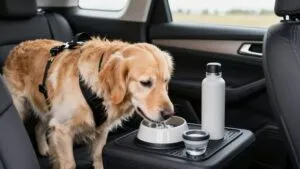
Pack two durable, food-grade collapsible bowls so you’ll always have a clean spare for water or meals. Choose a size that fits your dog’s muzzle and drinking needs, and keep both bowls within easy reach for rest stops. Rinse and dry them between uses to limit bacteria, dirt, and cross-contamination.
Pack A Spare Bowl
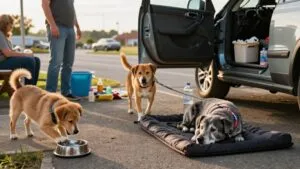
Bring two collapsible water bowls rather than relying on one: use one for drinking and keep the spare clean for feeding, extra water breaks, or a replacement if the first gets lost or dirty. Store both bowls where you can reach them during stops, and rinse them with water before use. Offer water especially after exercise, heat exposure, or long stretches in the car, but don’t let your dog drink from puddles or shared public bowls.
A separate bowl helps limit contamination when one becomes muddy or used for food. Empty leftover water before driving to prevent spills, then dry and repack each bowl after breaks. Before leaving, practice using them at home so your dog recognizes the bowl and drinks in unfamiliar places.
Choose Durable Materials
Choose two collapsible bowls made from food-grade silicone or sturdy, BPA-free material that won’t crack, retain odors, or collapse under your dog’s drinking pressure. Inspect each bowl for thick, flexible walls, a reinforced rim, and a stable, wide base that resists tipping on uneven ground. Avoid thin plastic, peeling coatings, sharp seams, or strong chemical smells, which can signal poor quality or create a safety concern.
Before leaving, wash both bowls and test them with water at home. Confirm that their folds open fully, hold enough water for your dog, and remain upright when filled. Choose dishwasher-safe bowls when possible, and replace any bowl that develops tears, deep scratches, sticky surfaces, or lingering odors. Durable bowls protect your dog’s drinking water and withstand daily use.
Keep Bowls Easily Accessible
Durable bowls only help if you can reach them quickly, so keep two collapsible water bowls in separate, easy-access locations. Put one in an outer pocket of your dog travel bag and another in the car’s door compartment or daypack. This backup lets you offer water promptly during rest stops, hikes, delays, or an unexpected spill without unloading everything.
Choose bowls that open with one hand and sit flat on stable ground. Before leaving, practice unfolding them and designate each storage spot so every caregiver can find one. Keep both away from sharp tools, chemicals, and loose items that could puncture or crush them. At each stop, place the bowl where your dog can drink safely, away from traffic, hot pavement, and vehicle doors.
Clean Between Uses
Clean each collapsible water bowl between uses to prevent saliva, dirt, and bacteria from building up during the trip. After every drink break, empty leftover water and rinse the inside and outer folds with clean water. Wipe away grit, grass, and food residue before collapsing it.
When you have access to soap, wash the bowl thoroughly, following manufacturer’s cleaning directions, then rinse until no suds remain. Dry it completely with a clean towel or let it air-dry before returning it to your travel bag. Keep a small zippered pouch for used bowls so they don’t touch food, medications, or clean supplies.
At stops, inspect seams and creases for trapped debris or damage. Use the spare while the other dries to keep water nearby.
Match Bowl Size
Match each collapsible bowl to your dog’s muzzle size and typical water intake so they can drink comfortably without frequent refills. A shallow, wide bowl suits short-nosed dogs and helps keep their faces clear of deep water, while a deeper, larger bowl works better for dogs with long muzzles or heavy drinking habits. Test both bowls at home before departure: your dog should reach the water easily without tipping, pawing, or straining.
Choose food-grade, BPA-free silicone with a stable, non-slip base or attachable rim. Pack two different sizes if your dog eats from one and drinks from the other, or use the second as a clean backup. Check capacity in ounces, fill only what they’ll drink at each stop, and rinse bowls after use.
Pack One Extra Leash
Pack a second sturdy leash and store it separately from your everyday one, so you’ll have a backup if the first is lost, chewed, wet, or damaged. Choose a leash with a secure clip, comfortable handle, and strength appropriate for your dog’s size and pulling habits. Keep the spare in a zippered pocket, glove compartment, or separate bag rather than attaching it to the primary leash.
Before leaving, inspect both leashes for frayed stitching, cracked material, rust, and unreliable hardware. A backup lets you safely manage bathroom breaks, hotel arrivals, roadside stops, and unexpected separations without improvising with rope or a collar alone. If your dog wears a harness, confirm the spare leash’s clip fits its attachment ring. Label it with your current number.
Heat Safety for Brachycephalic Dogs
Because brachycephalic dogs, such as Pugs, Bulldogs, Boston Terriers, and Shih Tzus, can overheat quickly, keep cooling and hydration supplies within immediate reach. Pack a insulated water bottle, collapsible bowl, cooling vest or damp towels, and a portable fan if you can use one safely. Offer small drinks often, plan shaded rest stops, and travel during cooler hours.
Never leave your dog in a parked vehicle, even briefly. Watch for heavy panting, noisy breathing, drooling, weakness, vomiting, or a bright-red or pale tongue. Stop activity immediately, move to air-conditioning or shade, wet the body with cool—not ice-cold—water, and contact a veterinarian urgently if signs don’t improve quickly.
Ask your veterinarian before travel whether your dog needs individual heat precautions, especially if it has prior breathing problems.
Hotel Check-In Vaccination Records
Along with heat-prevention supplies, keep your dog’s vaccination records easy to reach at hotel check-in. Store a printed copy in a waterproof sleeve near your reservation details, and save a legible digital backup on your phone. Confirm the property’s pet policy before departure: some hotels require proof of current rabies vaccination, while others may request additional vaccines or a health certificate.
Check that your veterinarian’s information, your dog’s name, vaccine dates, and expiration dates are visible. Bring originals when possible and copies for a pet-friendly hotel’s files. Keep records separate from medications and food to prevent damage or mix-ups. If staff can’t verify documents quickly, your check-in may be delayed, so review them before you leave home and confirm requirements with each stop again.
Pack Twelve Poop Bags
Twelve poop bags give you a practical minimum for a day of travel, covering routine potty breaks, unexpected delays, and a backup or two for messy cleanups. Choose thick, leak-resistant bags, and keep them in a dispenser clipped where you can reach it before every stop.
Heat, traffic, unfamiliar routes, or stomach upset can increase the number you need. Carry the rolls inside a sealed side pocket, away from food and medications, and tie used bags securely before placing them in an appropriate trash bin. Never leave waste near trails, parking areas, or hotel grounds.
- Protect the next traveler’s clean, welcoming stop.
- Spare yourself a stressful search when plans change.
- Keep your dog’s favorite walking areas pleasant.
- Leave every shared space safer and kinder.
Laminated Printable Packing Card
A laminated printable packing card keeps your dog’s travel essentials visible, organized, and protected from spills or rain. Create one before each trip, then check items off as they enter the bag. Group supplies by food, health, safety, comfort, and cleanup, and include quantities, medication times, and emergency numbers. Keep the card in an outer pocket, with a photo on your phone. Review it before departure and overnight stops; replace missing supplies immediately.
- Extra food and water protect your dog when delays stretch longer than expected.
- ID, records, and a recent photo support a fast response if you’re separated.
- A secured harness, leash, and first-aid kit help you handle risks calmly.
- A familiar blanket and toy give your dog comfort in unfamiliar places.
Conclusion
Before you leave, use your laminated packing card to check medications, vaccination records, emergency contacts, bowls, leash, poop bags, and airline carry-on limits. Pack for three days, even on short trips, and keep essentials within reach. Protect flat-faced dogs from heat by planning cool breaks and fresh water.
You’ll travel with fewer surprises when every item has a purpose. Recheck the bag before departure, then focus on keeping your dog safe, comfortable, and cared for.