Where to Put a Pet Carrier in the Car: Seat, Floor or Cargo?
Where to Put a Pet Carrier in the Car: Seat, Floor or Cargo?
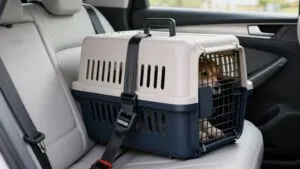
Place your pet’s carrier on the rear seat, secured through its belt guides, or on a flat, anchored SUV or wagon cargo floor. Keep it level, stable, and clear of frontal, side, knee, and curtain-airbag zones.
Don’t put carriers on seats unrestrained, stack them, or use the front passenger area. Use the front footwell only for a compact carrier that fits flat and can’t slide. Check latches, ventilation, and pet comfort before travel. Details follow.
Rear-Seat Seat-Belt Placement
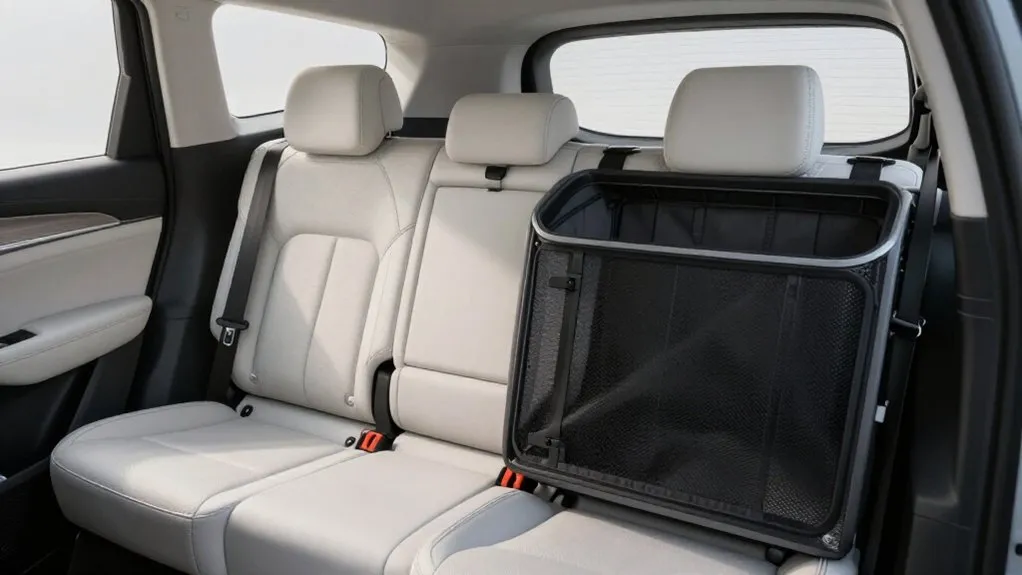
For most pets, the rear seat is the safest place for a carrier because it keeps them away from front airbags and reduces exposure to dashboard intrusion in a frontal crash. Position the carrier on the rear bench. Route the vehicle seat belt through the carrier’s designated guides, following its manual, and lock the belt if your vehicle permits.
Keep the carrier level and choose a size that lets your pet stand, turn, and lie down without room. For small dogs, a fitted booster or harness may suit the rear seat; use a carrier or appropriate restraint for other pets. Don’t let your pet ride loose, even for trips. Check ventilation, temperature, bedding, identification, and signs of nausea or respiratory distress before you leave.
Crash-Tested Carrier Stability
Crash-tested stability tells you whether a carrier can keep your pet contained and protected during a collision—not merely whether it fits in the car.
Controlled dynamic sled tests, often simulating a 30-mph frontal impact, assess the shell, door, latches, straps, and anchor points. They also track dummy movement and forces that may predict traumatic injury. Choose a carrier or crate with published independent crash-test results for your pet’s size and your vehicle setup.
Install it exactly as directed: a strong crate can fail if its tether, belt path, or hardware fails. Before every trip, inspect latches, straps, and shell for damage.
Soft-sided models may collapse; don’t assume airline approval proves crash protection. Secure it flat, then follow its tested mounting instructions without deviation.
Sudden Stops With a Cat
A sudden stop can turn an unsecured cat carrier into a projectile, even at low city speeds. Your cat may slam into the carrier’s interior, suffering bruising, dental trauma, fractures, or internal injury. Secure the carrier before every trip: place it flat, prevent rocking, and fasten it to the vehicle using a seat belt route or approved anchor points. Keep it out of the front airbag zone.
If you use a rear footwell, add a nonslip mat and confirm the carrier cannot slide forward. Leave extra following distance and brake smoothly. After a sudden stop, check your cat for labored breathing, limping, bleeding, pain, hiding, or unusual quietness. Keep the carrier closed and contact a veterinarian immediately; shock and internal injuries aren’t obvious.
Hard vs. Soft Carriers
Hard carriers generally provide better crash protection, while soft carriers can compress unless they’re specifically crash-tested. Choose a size that lets your pet stand, turn, and lie down, then secure it flat so it can’t slide or tip. Check that the carrier provides steady airflow without exposing your pet to drafts or overheating.
Crash Protection Differences
Although both styles can contain a pet, a properly secured hard-sided carrier generally offers better crash protection because its rigid shell resists crushing and helps preserve space around the animal.
In a collision, that structure may reduce chest compression and protect against intrusion. Choose a carrier with durable walls, reinforced doors, reliable latches, and a leakproof base. Inspect the shell for cracks and the hardware for wear before every trip.
Soft carriers are lighter and comfortable, but fabric panels and flexible frames can collapse or tear under crash loads. Some soft models have performed poorly in crash testing, so don’t assume a travel label means collision protection. If you use one, select a model crash-tested for vehicle use, with robust zippers and reinforced seams.
Space And Stability
Space and stability depend on both the carrier’s footprint and how securely you can position it in your vehicle. A rigid carrier takes more room, but its flat, solid base resists sagging and makes it easier to secure level on a rear seat or cargo floor. It’s usually the practical choice for a pet because it preserves interior space during braking.
A soft carrier can fit a small pet in a rear footwell, yet its sides and base may shift, collapse, or tilt if unsupported. Don’t wedge it where it can deform. Place either style, add a non-slip mat, and attach it to a seat belt or cargo anchors as the manufacturer directs. Push-test the setup before departure; it shouldn’t slide, rock, or rotate.
Ventilation And Comfort
Choose a carrier that keeps your pet comfortable without compromising airflow or protection: rigid carriers usually offer more reliable shape, multi-side ventilation, and stable room for bedding, while soft carriers may feel more den-like for an anxious small pet but can restrict air circulation if they sag or are covered.
| Type | Best comfort feature | Safety check |
|---|---|---|
| Rigid | Holds bedding flat | Keep vents clear |
| Soft | Cozy for small pets | Don’t cover mesh |
Place either style where vehicle vents can circulate air, never directly in a strong draft. Your pet should stand, turn, and lie down without pressing against walls. Check for panting, drooling, or lethargy; these can signal overheating or nausea. On warm days, stop, offer water, and never leave your pet in a parked car.
Number of Pets Traveling
With one pet, you can choose the most stable, well-ventilated location and secure the carrier against movement. If you’re traveling with multiple pets, give each animal a separate, properly anchored carrier rather than sharing space. Leave clearance between carriers so airflow isn’t blocked and pets can’t injure one another during sudden stops.
One Pet Setup
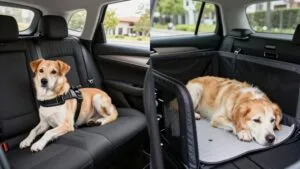
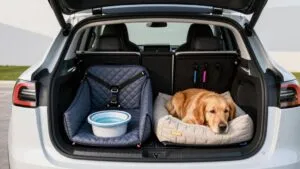
For one pet, place the carrier where you can secure it flat and prevent it from shifting, usually the rear seat, belted to the seat back, or the flat cargo floor in an SUV or wagon. Choose a location that matches your carrier’s size and lets it remain level without blocking ventilation. Keep your pet out of the front passenger seat: airbag deployment and dashboard intrusion raise injury risk in a crash.
Use the manufacturer’s belt path or approved cargo anchors, and add a nonslip mat beneath the base. Push the secured carrier from each side before leaving; it shouldn’t slide, tip, or rock. Check latches, shell integrity, airflow, and temperature before departure. Add familiar washable bedding, but don’t use loose items that obstruct ventilation.
Multiple Carrier Placement
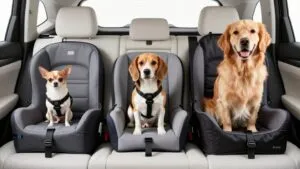
When traveling with multiple pets, give each animal its own properly sized carrier and secure every carrier independently rather than stacking, crowding, or relying on one restraint. Choose rear-seat positions for smaller carriers when their belts hold them firmly; use anchored cargo crates for larger dogs.
Keep cats, dogs, and medically fragile pets separated to limit stress and prevent bite injuries during sudden stops. Check airflow, temperature, latches, and each pet’s ability to lie naturally before departure.
| Pet setup | Practical placement | Essential check |
|---|---|---|
| Two small pets | Buckled rear-seat carriers | Test each belt |
| Two large dogs | Anchored cargo crates | Lock crate latches |
| Cat and dog | Separate secured carriers | Monitor distress signs |
| Senior or ill pet | Accessible rear carrier | Pack prescribed medication |
Recheck restraints during stops.
Space Between Carriers
Leave enough space between carriers to keep each pet’s vents clear and to prevent crates from striking one another during braking or turns. Don’t pack carriers tightly together or stack them, because blocked airflow can raise heat stress risk and shifting crates can cause impact injuries. Set each carrier level, then secure it with a seat belt, cargo anchor, or approved restraint.
Use nonslip mats, but don’t rely on them alone. Leave room to check pet breathing, posture, and access to water at stops without moving another carrier. Separate pets that become fearful, vocal, or reactive when confined nearby. For trips, monitor temperature and ventilation, especially in low footwells or cargo areas. If space is inadequate, take fewer pets or use a larger vehicle.
Front-Passenger Footwell Setup
Although the rear seat is generally safer, the front-passenger footwell can work for a small carrier if no safer rear-floor or rear-seat option fits. Use this location only for a compact carrier that sits completely flat without blocking pedal travel or crowding your passenger’s legs.
Place a grippy nonslip mat beneath it and push the carrier from every direction before leaving; it shouldn’t slide, tip, or rock during normal braking. Keep the door latched, inspect seams and hardware, and use a rigid, well-ventilated model when possible. This setup isn’t suitable for medium or large dogs: limited space and front-end intrusion can greatly increase injury risk.
Check your pet regularly, but pull over safely before addressing vomiting, panting, or distress. Offer water at planned stops.
Keep Carriers Clear of Airbags
Airbags deploy with extreme force, so keep any pet carrier out of their deployment zones—especially the front passenger seat and dashboard area. During a crash, a deploying bag can strike the carrier, compress it, or hurl it rearward. That impact can cause blunt trauma, fractures, head injury, or internal injury, even in a small pet.
Check the vehicle manual for frontal, side-impact, knee, and curtain-airbag locations. Don’t place a carrier against a seat’s outer edge, beneath the dashboard, or where a side airbag inflates. Choose the rear seat or an appropriate cargo area instead, then secure the carrier so it can’t shift into an airbag zone during braking or a collision. If placement is unclear, ask your dealer or consult the manufacturer’s diagrams before traveling.
Never Stack Pet Carriers
Never stack pet carriers in the car, even for a short trip. A sudden stop, turn, or collision can topple the upper carrier, compress its occupant, and turn both carriers into shifting hazards. Pressure on chest restricts breathing, while impact against hard shells may worsen orthopedic injuries or stress. Give every pet a separate, stable footprint.
- Place each carrier flat on a floor, rear seat, or anchored cargo surface.
- Keep ventilation openings clear and leave room to monitor each pet.
- Secure each independently; don’t use one as a base or platform.
If space is limited, take fewer pets per trip or use a larger, properly secured crate with separate compartments. Before driving, push each carrier from several directions; it shouldn’t rock, slide, or lean.
Check Carrier Door Latches
Before every drive, test the carrier door latch by closing it fully and pulling gently on the door from several angles. Inspect the latch, hinges, pins, and surrounding shell for cracks, bends, rust, loose screws, or worn plastic. A door that opens during braking or a collision can let your pet escape, sustain traumatic injuries, or distract you when control matters most.
Remove bedding or straps caught in closure path. For wire doors, confirm each locking point engages; for zipper carriers, fully close both pulls and use the manufacturer’s safety clip if provided. Replace damaged latches rather than improvising with tape or clips. Then secure the carrier itself; a sound door can’t protect a pet if the whole carrier shifts during abrupt braking or impact.
Conclusion
For most trips, secure your pet’s carrier on the rear seat with a seat belt, following the carrier maker’s instructions. If that isn’t possible, use a stable rear cargo area designed for passengers’ gear, not the front seat or an airbag zone.
Keep the carrier level, never stack carriers, and confirm every latch before driving. A properly sized, crash-tested hard carrier helps protect your pet during sudden braking, turns, or a collision while you drive.