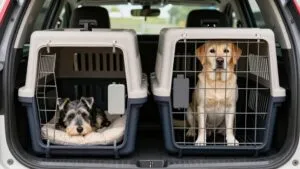
Travel Crate Size Chart: Pick the Right Crate by Dog Height and Length
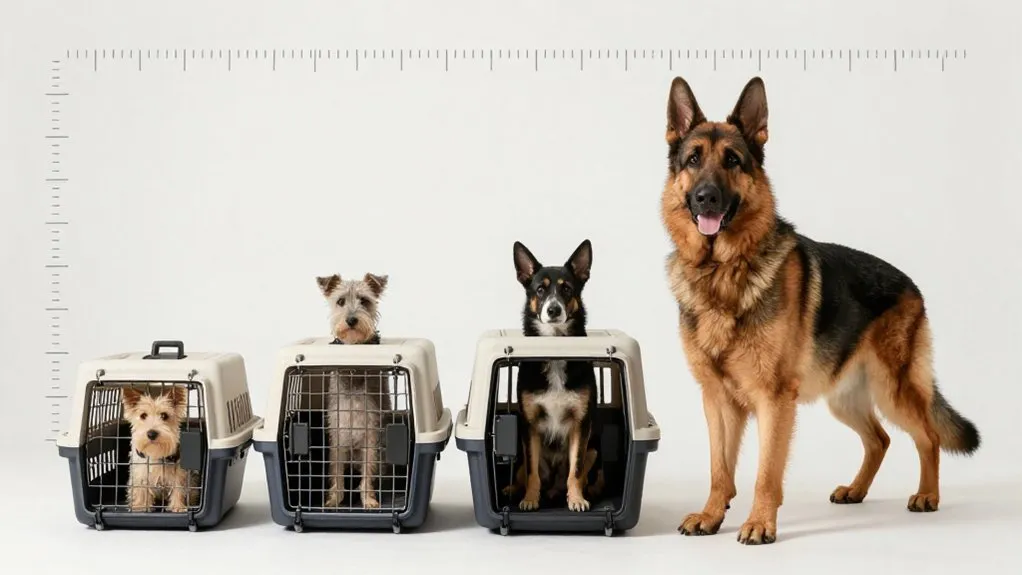
Choose a travel crate using your dog’s standing height, nose-to-tail-base length, and chest girth—not breed, weight, or a crate’s labeled size. Add 2–4 inches to length and at least 2 inches above standing height, then compare those figures with the manufacturer’s interior dimensions.
Your dog must stand, turn, and lie down without rubbing or crouching. For flights, confirm airline under-seat limits and ventilation rules. Next, you’ll find practical checks for fit, latches, and safe airflow ahead.
Measure Height at Withers
To measure your dog’s height for a travel crate, have them stand naturally on a level floor and measure from the ground to the withers, the highest point of the shoulders. Keep the tape vertical without compressing fur. A helper can offer a treat to help your dog remain calm and stand squarely; don’t force an anxious dog into position.
Record the measurement in inches and repeat it two or three times, using the largest consistent result. A relaxed, standing posture avoids a low reading that may leave inadequate headroom in transit. Check airline rules: carriers may assess clearance to top of head or erect ears when standing naturally. Select a crate whose interior height lets your dog stand without crouching or touching the roof.
Dog Length Crate Size Chart
Measure your dog from the tip of the nose to the base of the tail, excluding the tail, while they stand naturally on a level surface. Repeat it if they slouch or shift. Add 2 to 4 inches (5 to 10 cm) to their body length for a safe, comfortable travel minimum.
| Dog length | Add | Crate length |
|---|---|---|
| ≤18 in | 2 to 4 in | 18 to 24 in |
| 19 to 26 in | 2 to 4 in | 26 to 36 in |
| 27 to 36 in | 2 to 4 in | 36 to 48 in |
| >36 in | 2 to 4 in | 48 to 54+ in |
Choose within these ranges using the formula, not breed or weight. Your dog must be able to stand, turn, and lie naturally. For a puppy, use a divider in an adult-size crate. Check airline rules before booking. If you’re between sizes, choose larger for gentler movement and travel comfort.
Interior Dimensions vs. Nominal Size
The crate’s listed or nominal size—such as “36 inch”—usually refers to its exterior length, not the usable interior space your dog occupies.
Wall thickness, door frames, corners, and ventilation design can reduce the internal length and height. Before buying, find the manufacturer’s interior measurements—not just the product title—and compare them with your dog’s standing height and nose-to-tail-base length. Add 2 to 4 inches of clearance to each measurement.
That room helps your dog stand, lie, and reposition without being cramped. It matters during travel, when stress can make restricted movement harder. Measure the crate if possible if a listing is unclear. For travel, confirm the airline’s rules because carriers evaluate usable kennel space and may reject a crate that looks large enough from outside.
Crate Width by Body Girth
Measure your dog’s chest girth at its widest point, then compare it with the crate’s *interior* width—not its nominal size. Allow enough clearance for a natural turn and account for a thick coat, but avoid excess space that could let your dog slide during travel. Before departure, confirm your dog can stand, turn, and lie down comfortably in the fully assembled travel crate.
Measuring Chest Girth
Check your dog’s chest girth to confirm the crate is wide enough for safe, natural turning during travel. With your dog standing squarely, wrap a flexible tape around the broadest part of the ribcage, usually just behind the front legs. Keep the tape level and snug against the coat, without compressing fur or skin.
Record the measurement in inches or centimeters, then repeat it two or three times when your dog is calm. Use the largest consistent result and compare it with the manufacturer’s listed interior width, not the outside crate measurement. This check matters especially for broad-chested dogs such as Bulldogs or Boxers, whose body shape may not match breed or weight charts. If results vary, remeasure before travel and confirm airline rules.
Allowing Comfortable Clearance
To allow safe, comfortable turning, choose a crate with an interior width that exceeds your dog’s widest chest-girth measurement and doesn’t pinch the shoulders or hips. Your dog needs enough side-to-side room to shift position, turn without scraping the walls, and settle naturally during travel. Check the usable space inside the assembled crate, not exterior product dimensions, because wall thickness, door frames, and interior fittings can reduce room.
Watch your dog enter, stand, turn, and lie down before departure. Signs of inadequate clearance include bracing, hesitation, rubbing, awkward twisting, or persistent restlessness. Don’t assume breed or weight predicts body shape; broad-chested, muscular, or fluffy dogs may need more usable room. At the same time, avoid a cavernous crate that lets your dog slide during sudden stops.
Comparing Girth to Width
Your dog’s chest girth offers a practical cross-check for crate width, especially if they’re broad-shouldered, muscular, or heavily coated. Measure around the fullest part of your dog’s rib cage, just behind the front legs, while they stand naturally. Then compare that number with the crate’s interior width, not its exterior listing.
Girth doesn’t replace length and height measurements, but it helps reveal a crate that may feel restrictive during turns. Choose a width that lets your dog rotate without scraping shoulders or bracing against the walls. Check this in the crate before travel: your dog should turn, settle on their side, and reposition without strain. If the fit is borderline, select the wider compliant model rather than asking your dog to tolerate a squeeze.
Accounting for Coat Thickness
A dense, long, or double coat can add meaningful bulk at the shoulders and rib cage, so measure chest girth with the coat in its normal travel condition rather than pressing it flat. Use a flexible tape around the broadest part of your dog’s chest, just behind the front legs. Keep the tape level and snug enough to touch the fur without compressing it.
Record the largest reading after two or three calm measurements, since coats can shift. Then compare that circumference with the manufacturer’s interior width information and choose a model designed for your dog’s actual body profile. Thick-coated breeds may need more width than their weight or breed label suggests. Don’t use a tight grooming trim solely to make travel dimensions work.
Checking Travel Crate Fit
Measure inside wall to wall, not the exterior dimensions on a label. Watch your dog stand, turn, and settle naturally in the assembled crate. Their sides shouldn’t brush the walls or catch on door hardware, and they shouldn’t need to twist to turn around.
Width matters especially for broad-chested, muscular, pregnant, or heavily coated dogs. A crate that’s too narrow can restrict movement and increase stress; one excessively wide may let your dog slide in transit. If fit is borderline, choose the larger airline-approved option, then verify its internal dimensions and rules before travel.
Add Two Inches to Height
Add at least two inches to your dog’s standing height when choosing a travel crate, so they can hold their head naturally without rubbing the roof. Measure from the floor to the highest point of the head or upright ears while your dog stands squarely, not while they’re sitting, stretching, or slouching. Then use the crate’s interior height—not its outside measurement—to confirm clearance.
This modest allowance helps your dog stand, adjust posture, and travel with less risk of pressure or discomfort. Many sizing guides recommend two to four inches of extra height; choose closer to four for dogs with tall ears, thick bedding, or measurements that fall between crate sizes. Don’t rely on breed or weight charts alone. Confirm no ceiling contact at all.
Airline Under-Seat Height Caps
Airline under-seat height limits can override the clearance your dog would ideally need in a travel carrier. Before booking, check your airline’s maximum carrier height for your specific flight, since aircraft and seats can differ. Measure the carrier’s exterior height, including feet, seams, and handles, then compare it with the limit and your dog’s standing height.
A soft carrier may flex, but you shouldn’t rely on forcing it lower or making your dog crouch. Your dog still needs to lie down, turn around, and breathe without pressure on the head or body. If the approved under-seat space can’t safely accommodate those needs, don’t treat cabin travel as a sizing compromise. Ask the airline about alternatives, and consult your veterinarian if you have health concerns.
French Bulldog 24-Inch Crate
A 24-inch crate can suit a small French Bulldog, but you should confirm the fit with your dog’s measurements rather than breed or weight alone. Measure your dog while they stand naturally: from the floor to the top of the head, and from the nose to the base of the tail. Add two to four inches to each measurement, then compare those minimums with the crate’s interior, not exterior, dimensions.
Your Frenchie must be able to stand without hunching, turn around easily, and lie down in a natural position. Their compact, broad-chested build means width matters as well; check that they can rotate without squeezing their shoulders. If measurements approach the 24-inch interior limits, select the next size up, subject to travel provider’s rules.
Check Door Latch Security
Once you’ve confirmed the crate fits your French Bulldog, inspect the door latch before every trip. A failed latch can turn normal movement or travel stress into an escape risk, so don’t rely on a quick glance. With your dog safely outside, test the closure systematically:
- Close the door and pull it from angles; it shouldn’t open, flex, or rattle.
- Confirm both latch pins engage their receiving holes and aren’t bent, loose, or corroded.
- Check that screws, rivets, and the door frame are intact, no cracks at attachment points.
- Follow your airline’s kennel rules and replace damaged hardware rather than improvising repairs.
Never force a sticky latch. Clean it as directed, then retest it. This check keeps your dog secure.
Verify Ventilation on All Sides
Before every trip, inspect all sides of your French Bulldog’s crate for open, unobstructed ventilation panels. Frenchies can struggle to cool themselves because their short airways restrict efficient airflow, so ventilation isn’t optional. A travel crate should provide airflow on multiple sides while still protecting your dog from direct sun, rain, and cold drafts.
- Check that vents aren’t blocked by blankets, baggage, labels, or seat backs.
- Remove hair, dust, or debris from grilles and screen openings.
- Position the crate where vehicle air can circulate, never in a sealed trunk.
- Confirm airline rules; many require rigid kennels with ventilation on several sides.
Don’t cover the crate completely. Watch for heavy panting, distress, or weakness, and stop to cool your dog safely if these occur promptly.
Conclusion
Choose a travel crate by your dog’s actual measurements, not the label alone. Measure height at the withers, body length, and girth, then confirm the crate’s interior dimensions give safe clearance without excess space. Add the recommended height allowance, respect airline under-seat limits, and check ventilation and latch strength.
Your dog should be able to stand, turn, and lie naturally. When you verify these details before travel, you reduce stress and help protect them well.