Why Do Dogs Love Sticking Their Head Out the Car Window? The Science
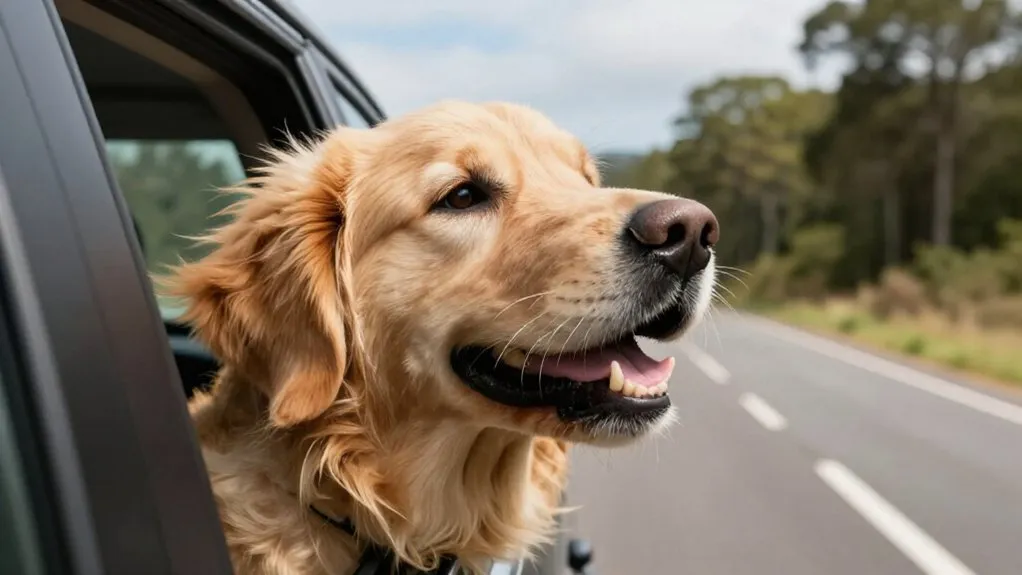
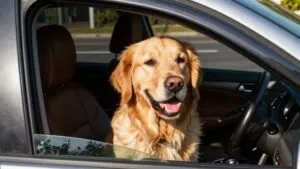
Your dog may love the car window because rushing air floods its nose with shifting odor molecules, creating a detailed, time-ordered map of animals, plants, people, and places.
The breeze can also speed evaporative cooling during panting, while fast-moving sights add stimulation for some dogs.
But not every dog enjoys it: motion sickness, anxiety, eye injury, and crash risks matter.
You’ll find safer ways to safely satisfy that sensory drive in the sections that follow.
Airborne Scents Overwhelm Canine Noses
For a dog, an open car window creates an intense moving map of smells. Your dog has roughly 100 million olfactory receptors, compared with about 6 million in you, so incoming odor molecules deliver far more detailed chemical information. Its olfactory-processing brain structures are also proportionally much larger, supporting rapid discrimination among overlapping odors.
As air rushes over the nose, it carries changing plumes and turbulent eddies that stimulate the nostrils continuously. Your dog’s exhaled air exits through side slits, helping avoid disruption of the incoming stream and preserving odor separation. This rapid nasal sampling elevates attention and exploratory arousal. Because novel sensory input can activate reward pathways, your dog may repeatedly orient toward the opening, pant, and sniff more intensely during car rides.
Roads Become Scent Maps
Those rapid bursts of odor don’t arrive as random noise: as your car moves, the road becomes a time-ordered scent map for your dog. Turbulent airflow organizes volatile compounds from animals, plants, people, and pavement into intermittent filaments. As you travel, your dog samples successive plume cross-sections, converting changing location into odor timing.
| Signal | Likely information |
|---|---|
| Stronger gradient | Source is nearer |
| New filament | Different roadside source |
| Faster arrivals | Higher relative speed |
| Mixed cues | Context from sights and sounds |
With tens to hundreds of millions of receptors and rapid sniffing, it can distinguish components within mixtures. Steep gradients may signal a source’s relative direction or recentness, while visual and auditory events help your dog interpret what that chemical route means. This information reinforces window-facing exploration.
Open Windows Cool Panting Dogs
A partly open window can help a panting dog shed heat by directing moving air across its face, tongue, and mouth. Dogs cool themselves mainly through panting, which evaporates moisture from the tongue and respiratory surfaces. When your car moves, airflow can speed that evaporation and may reduce the effort your dog uses to regulate body temperature.
The sensation also offers immediate relief, so your dog may lean toward the breeze or repeatedly seek the window during warm rides. However, airflow isn’t a substitute for safe temperature control. You should use air conditioning, offer water at stops, and never leave your dog in a parked car. Keep window narrow; restrain your dog while riding in traffic. Wind, debris, and sudden stops can cause injury.
Breed-Based Window Preferences
You may notice scent hounds orient toward the window for the rapidly changing odor stream, while sighthounds may respond more strongly to moving scenery. Breed-linked sensory traits can shape these tendencies, but they don’t predict every dog’s behavior.
Your dog’s temperament, prior experiences, and sensitivity to motion ultimately influence whether it seeks the window.
Scent Hounds and Smells
Although many dogs enjoy the rush of an open window, scent hounds may find it especially compelling because they’re bred to follow faint, complex odor trails. When you ride with a beagle, bloodhound, basset hound, or coonhound, moving air delivers rapidly changing odor plumes to its nose.
Dogs have roughly 100 million olfactory receptors, compared with about 6 million in people, and their olfactory brain tissue is proportionally far larger. For a scent hound, airflow can turn an ordinary route into chemical information about animals, food, people, and recent activity.
Lateral nostril slits direct exhaled air away from incoming scents, supporting continuous sampling. You may see persistent sniffing or attempts to approach the window. These behaviors reflect inherited scent-tracking motivation and learned reward.
Sighthounds and Visual Stimulation
Scent hounds often prioritize airborne odor, whereas sighthounds such as greyhounds, whippets, salukis, and borzois may find the fast-changing view outside a car window especially engaging. Their history emphasizes detecting and pursuing moving prey with vision, so rapidly shifting scenery can recruit attention systems tuned to motion.
As your vehicle moves, motion parallax makes nearby objects sweep past faster than distant ones, producing rich depth and movement cues. You may see a sighthound track passing animals, cyclists, or flickering edges, then orient its head and gaze toward the stream of information. Visual novelty can elevate arousal and sustain window-facing behavior, particularly when changing light, landscapes, and movement provide frequent new stimuli. This response reflects sensory specialization; it doesn’t mean every sighthound seeks this experience.
Temperament Over Breed
Breed can influence which cues a dog notices, but individual temperament usually predicts window-seeking behavior more directly. If your dog is curious, novelty-seeking, and comfortable with motion, it may repeatedly move toward an open window regardless of whether it is a scent hound, sighthound, or mixed breed. Airflow delivers rapidly changing odors, sounds, and visual motion, and a confident explorer may find that combination rewarding.
In contrast, a cautious, noise-sensitive, carsick, or easily overstimulated dog may turn away, even if its breed has strong sensory traits. Past experience also shapes the response: calm rides paired with interesting sights or your attention can reinforce window-facing. Watch your dog’s body language, relaxed posture, soft eyes, and voluntary engagement differ from panting, trembling, lip-licking, or attempts to escape.
Motion Sickness Limits Enjoyment
Even if your dog enjoys the scents and wind, motion can disrupt inner-ear balance signals and cause nausea. You may notice lip licking, drooling, yawning, whining, restlessness, or vomiting as travel sickness develops.
You can reduce discomfort with gradual car-training sessions, cool ventilation, stable restraint, and veterinary guidance when signs persist.
Inner Ear Conflicts
For some dogs, a car ride creates conflicting signals between the eyes and inner ear: passing scenery suggests rapid movement while the body experiences turns, braking, and acceleration. Your dog’s vestibular system in the inner ear detects position and motion. When that input doesn’t align with visual information, the brain must reconcile competing estimates of movement.
This sensory mismatch can reduce comfort and your dog’s interest in window exploration. Younger dogs may be more vulnerable because balance systems and travel experience are still developing. Calm, gradual rides can help your dog build predictable associations with travel. In contrast, abrupt driving and winding routes may intensify the conflict. You can improve stability by using a restraint, which limits unpredictable body movement during turns and stops.
Common Motion Sickness Signs
Motion sickness can quickly turn an exciting stream of scents and scenery into an unpleasant ride. You may first notice subtle behavioral changes: your dog repeatedly licks its lips, swallows, yawns, drools, or pants despite cool conditions. These responses often accompany nausea and heightened autonomic arousal.
Your dog may become unusually quiet, restless, clingy, or reluctant to look out the window; some dogs whine, tremble, or pace when possible. As discomfort increases, you might see excessive salivation, repeated retching, vomiting, or diarrhea. Watch the timing: signs that begin during vehicle movement and ease after travel strongly suggest motion-related nausea.
Puppies and younger dogs are often more susceptible because balance systems are still developing. Previous unpleasant rides can also condition anticipatory anxiety before departure.
Reducing Travel Nausea
Recognizing these signs early lets you reduce nausea before your dog begins to associate car rides with discomfort. Motion sickness often reflects a mismatch between vestibular signals and visual motion, especially in young dogs. Build tolerance through brief, stationary sessions, then short, smooth trips. Keep your dog secured facing forward, ventilate the car, and avoid a large meal beforehand. Reward relaxed body language, not frantic window seeking. Ask your veterinarian about anti-nausea medication when training alone doesn’t help.
| Strategy | Behavior-based purpose |
|---|---|
| Stationary car treats | Builds positive prediction |
| Short routes | Limits symptom exposure |
| Forward-facing restraint | Reduces visual conflict |
| Quiet, cool cabin | Lowers arousal |
Stop at drooling, lip-licking, vomiting, or withdrawal.
After parking, offer calm sniff breaks; don’t allow window hanging: wind and debris add overstimulation.
Train a Back-Seat Settle Cue
Teach a back-seat settle cue so your dog learns that car travel means resting securely rather than climbing toward an open window. Begin training in a parked car, using a secured back-seat harness or crate and high-value rewards. Say “settle,” lure your dog onto its mat, and reinforce relaxed body language: hips down, soft muscles, and attention away from the window. Practice brief repetitions until the cue predicts calm behavior and rewards.
Gradually add the engine, closed-door time, and short trips, rewarding before your dog stands, paws, or scans. This uses differential reinforcement: calm resting earns food or a chew, while window-oriented behavior doesn’t produce rewards. Keep sessions below your dog’s arousal threshold; if it can’t settle, shorten the ride or return to easier steps.
Flying Debris Can Injure Eyes
At road speed, dust, grit, insects, and small stones can strike a dog’s exposed eyes, causing irritation, corneal scratches, or more serious trauma.
Wind also dries the tear film that protects the cornea, while fast-moving particles can lodge beneath an eyelid. A dog may blink excessively, squint, paw at its face, develop redness, tearing, or light sensitivity. Because dogs often stay focused on rewarding scents and motion, they may not immediately withdraw from the window after an impact.
Keep your dog’s head inside the vehicle, or use properly fitted canine eye protection if exposure is unavoidable. After a ride, check for squinting, cloudiness, discharge, or persistent rubbing. Flush only with sterile saline if advised, and contact a veterinarian promptly; corneal injuries need treatment.
Lap Rides Aren’t Crash-Safe
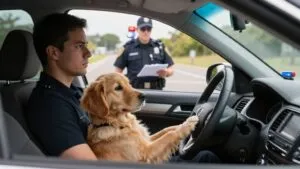
Although a dog may enjoy riding on your lap, that position provides no meaningful crash protection. During abrupt braking, your dog’s body continues moving forward because of inertia, while your arms can’t reliably counteract the force. A frightened dog may also twist, scramble, or leap toward an open window, making your driving less predictable.
- At city speeds, even a small dog can become a high-force projectile.
- Your body can’t serve as a stable barrier during a collision.
- A lap-riding dog can interfere with steering, braking, or your view.
Behaviorally, lap rides may feel reassuring because they provide warmth and contact, but comfort doesn’t reduce impact physics. Encourage calm travel routines before the vehicle moves, and avoid rewarding climbing forward or window-seeking behavior instead.
Secure Your Dog With Harness
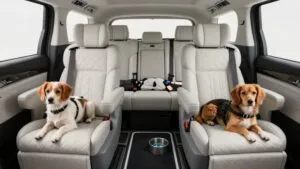
A crash-tested travel harness secures your dog to the backseat and limits dangerous forward motion during sudden braking or a collision. Choose a harness tested for your dog’s size and weight, then attach it directly to the vehicle’s seat-belt system according to manufacturer instructions. A standard walking harness may distribute leash pressure comfortably, but it isn’t necessarily engineered to withstand crash forces.
Proper restraint also changes behavior: it reduces pacing, climbing into the front seat, and repeated attempts to reach an open window. Reward calm sitting or lying down before and during short trips, gradually building a positive travel routine. Keep the window opening too narrow for your dog’s head or shoulders to pass through. This preserves some airflow and scents while reducing exposure to debris, eye irritation, and ejection risk.
Conclusion
When your dog leans into an open car window, you’re seeing sensory exploration, not simple joy. Fast-moving air delivers layered odors, cools a panting body, and turns the road into information-rich territory.
Yet enthusiasm doesn’t equal safety: motion sickness, eye injuries, and crash forces can quickly outweigh the reward. You can meet the same behavioral needs by offering sniff walks and securing your dog in the back seat with a crash-tested harness on every trip.