Can Dogs Ride in the Front Seat? Safety Risks and How to Do It Right
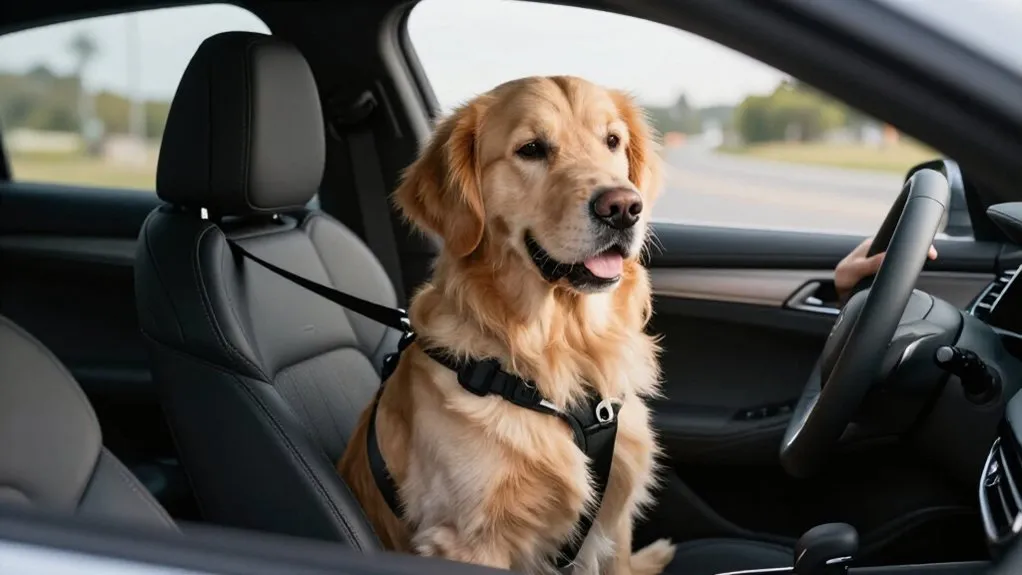
You shouldn’t let your dog ride loose in the front seat. A deploying airbag, dashboard impact, or sudden stop can seriously injure your dog and endanger everyone else, since an unrestrained dog becomes a projectile.
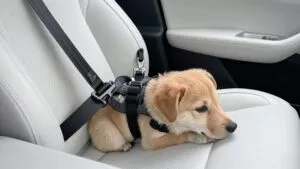
The rear seat is safer, using a fitted crash-tested harness tethered to the seat belt or a secured crate.
Never clip a tether to a collar or rely on passenger-seat sensors.
More safeguards can help if front travel’s unavoidable.
Front-Seat Airbags Endanger Dogs
Front-seat airbags can seriously injure or kill a dog because they deploy with force calibrated for adult human occupants. Even a small or medium-sized dog can suffer devastating blunt-force trauma when the bag inflates.
Your dog also sits close to the dashboard, where a crash can cause serious injuries through impact with hard interior surfaces. A harness doesn’t remove this danger; remaining within the airbag’s deployment zone still raises risk. Put your dog in the rear seat instead, ideally in a properly secured, crash-tested carrier or crate sized for them. If your vehicle has a disabled passenger airbag, choose the rear anyway: the dashboard and crash forces remain hazardous. Ask your veterinarian for travel guidance if your dog has injuries, anxiety, or special needs.
Unrestrained Dogs Become Projectiles
In a sudden stop or crash, an unrestrained dog keeps moving forward until something stops them, often the dashboard, windshield, or a person. Physics explains why: inertia carries your dog’s mass at its pre-crash speed, and the stopping impact converts momentum into force. Your dog may suffer severe trauma and strike you or another passenger.
| Dog and speed | Estimated crash force |
|---|---|
| 10 lb at 50 mph | About 500 lb |
| 80 lb at 30 mph | More than 2,400 lb |
| Unrestrained position | Risk to every occupant |
| Any size | Can injure occupants |
These commonly cited estimates illustrate scale, not every crash; vehicle, angle, and deceleration affect forces. Don’t rely on your arm or a collar. Choose a crash-tested harness tether or secured rear carrier on every trip.
Drive-Through Distractions
A dog riding beside you can turn a routine drive-through stop into a distraction: reaching for food, barking at staff, or shifting toward the window pulls your attention from traffic and controls. Even at low speeds, you still need to steer, brake, watch pedestrians, and respond to vehicles entering or leaving the lane. Don’t hand your dog treats, drinks, or food through the window; unfamiliar smells, voices, and movement can trigger excitement or sudden lunging.
Keep the window closed or only slightly open, and ask staff to place your order where your dog can’t grab it. If your dog becomes vocal, anxious, or restless, skip the drive-through and park safely instead. A routine practiced during trips helps dog feel secure without demanding your focus.
Front-Seat Dog Restraint Options
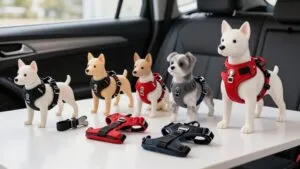
If your dog must ride up front, use a crash-tested harness tethered to the seat belt rather than a collar attachment. A secured travel crate offers stronger containment when your vehicle and dog’s size allow it, while a properly fitted safety barrier can limit dangerous movement.
These options reduce distraction and injury risk, but the rear seat remains the safer location away from airbags.
Crash-Tested Dog Harnesses
Although a crash-tested dog harness can limit movement and reduce the chance that your dog becomes a projectile, it doesn’t make the front seat as safe as the rear. Choose a harness crash-tested for your dog’s size and weight, not one with only a seat-belt loop. Attach its tether to the vehicle’s seat-belt system, not a collar, and follow manufacturer fitting instructions.
A snug harness should let your dog sit or lie down while preventing access to the dashboard, pedals, or driver. Check buckles, stitching, and tether length before trips. Never let your dog ride on your lap. Even with a harness, the passenger airbag and hard dashboard can cause injury. Whenever possible, put your dog in the back seat and use the harness.
Secured Travel Crates
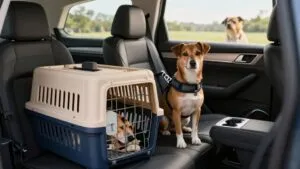
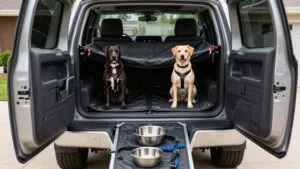
For many dogs, a crash-tested travel crate offers more protection than a harness, especially when you secure it in the rear seat or cargo area according to the manufacturer’s instructions. Choose a crate independently crash-tested for your dog’s size and weight, with a secure door, adequate ventilation, and anchoring points compatible with your vehicle. Measure your dog; the crate should prevent dangerous sliding without forcing an awkward posture.
Follow its installation guide exactly, using approved straps or vehicle anchors rather than loose seat placement. Keep the crate away from airbag zones whenever possible, because a front-seat location still exposes your dog to dashboard impact and crash forces. Introduce the crate with treats, then take drives. Check every connection before departure, and replace damaged hardware promptly.
Front-Seat Safety Barriers
Front-seat barriers and restraints can limit a dog’s movement, but they can’t remove the airbag and dashboard hazards that make the rear seat safer. If you must use the front, never let your dog ride loose, on your lap, or attached by a collar. Choose a crash-tested harness and tether sized for your dog; adjust it so your dog can sit or lie down but can’t reach pedals, controls, or the windshield.
A console carrier or seat-belt-secured carrier may contain a small dog, but neither eliminates airbag risk. Verify that any product has crash-test information, inspect connections before trips, and acclimate your dog with rewards. Even with an airbag disabled, dashboard impact still remains a serious risk; use a secured rear position whenever possible.
Passenger-Seat Weight Sensors
Passenger-seat weight sensors help your vehicle decide whether to activate the airbag, but they aren’t designed to protect dogs. Even if the system suppresses the airbag, your dog can still strike the dashboard or windshield in a crash. You’ll provide safer protection by securing them in a crash-tested carrier or harness in the rear seat.
How Weight Sensors Work
Although many vehicles use an occupant-classification sensor in the passenger cushion to estimate whether the seat holds an adult, child, or no one, you shouldn’t treat it as a safety system for your dog.
These systems measure pressure or load and may combine that reading with seat-belt status and seat position. They use manufacturer-specific thresholds to classify a human occupant, not an animal. A dog’s weight can fall near a cutoff, while shifting, curled posture, blankets, or cargo can alter the reading.
You can check the indicator and your owner’s manual, but don’t assume a displayed classification confirms safe travel. Keep your dog properly secured and prevent roaming or lap riding. For dependable guidance, consult your vehicle manufacturer and choose rear-seat travel when possible.
Airbag Deployment Risks
A passenger airbag can deploy with explosive force in a crash, causing severe or fatal injuries to a dog riding close to the dashboard. If your dog’s weight or position leads the occupant-classification system to enable the bag, the sensor can’t judge that the passenger is vulnerable. Sensor readings may change as your dog shifts, and the system’s status light isn’t a guarantee of protection.
| Sensor signal | Why it matters |
|---|---|
| Light says ON | Deployment may occur |
| Light says OFF | Don’t assume safety |
A deployed bag can strike your dog before they can react, causing head, neck, chest, or internal trauma. Dashboard contact and windshield impact can compound injuries, especially when your dog is unrestrained or seated forward.
Safer Seating Alternatives
Choose the rear seat as your dog’s usual travel spot, because passenger-seat weight sensors can’t reliably protect an animal from airbag deployment. These systems are designed to classify human occupants, and a dog’s shifting body position, size, or carrier may not trigger the response you expect. Even if an indicator suggests the airbag is off, don’t assume the front seat is safe: the dashboard, windshield, and crash forces still pose serious dangers.
Instead, secure your dog in the rear seat with a properly fitted crash-tested harness and vehicle-compatible seat-belt tether, or use a crash-tested carrier anchored according to its instructions. For small dogs, an enclosed carrier helps limit movement and projectile risk. Adjust restraints so your dog can sit or lie down without roaming.
Single-Cab Truck Travel
Single-cab trucks leave no rear seat, but your dog still shouldn’t ride loose beside you or on your lap. A loose dog can distract you, interfere with pedals or shifting, and become a projectile in a crash. The passenger airbag and dashboard also pose serious dangers, especially for small dogs. Before driving, choose a crash-tested carrier or harness rated for your dog’s size, then anchor it exactly as its manufacturer directs.
| Risk | What it can cause | Your action |
|---|---|---|
| Airbag | Severe blunt-force injury | Keep your dog outside its deployment zone |
| Movement | Distraction or ejection | Secure and recheck the restraint |
Build comfort gradually with parked-truck practice and short rides. Never use the bed, a lap, or an open window. Carry ID, a leash, and first-aid supplies.
No Safe Rear-Seat Alternative
When your vehicle has no safe rear-seat option, reduce risk rather than treating the front seat as equally safe. A single-cab truck or two-seat vehicle can leave you with difficult choices, but letting your dog ride loose isn’t one of them.
Use a properly sized, crash-tested carrier or crate that you can securely anchor according to its instructions. This setup limits movement, reduces driver distraction, and helps prevent your dog from becoming a projectile in a crash. Keep the carrier as far from the passenger-side airbag area as practical, and never place your dog on your lap.
Even if you can disable an airbag, the dashboard and windshield remain dangerous in a collision. Confirm product fit and vehicle compatibility before travel, and drive calmly.
Never Clip Harness to Collar
Although a collar works for everyday identification, you should never attach a car-seat tether or harness clip to it. In a sudden stop or crash, collar-based restraint concentrates force on your dog’s neck, which can damage the trachea, spine, or blood vessels. A proper vehicle harness spreads crash forces across sturdier parts of the body.
- Choose a harness with a back attachment point.
- Connect it directly to the vehicle’s seat-belt system.
- Check manufacturer instructions and independent crash-test information.
- Keep your dog rear-seated whenever possible.
- Replace damaged tethers or hardware immediately.
A collar can hold identification tags, but it isn’t safety equipment. If your dog must ride up front, a body-supporting restraint reduces neck loading, though airbags and dashboard impacts still make this location dangerous.
Test Harness Fit Before Departure
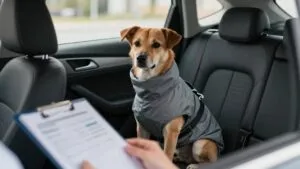
Before every trip, test your dog’s vehicle harness for a snug, comfortable fit and secure connection to the seat belt or approved tether. Follow manufacturer instructions and confirm the attachment matches your dog’s size and weight. You should fit two fingers beneath the straps without leaving enough slack for your dog to twist free or reach the dashboard. Check buckles, stitching, and tether hardware for wear, cracks, or loose clips.
With the car parked, let your dog sit, stand, and lie down; the restraint should permit those positions while limiting movement. Recheck the setup after your dog settles, since straps can shift under fur. If the harness isn’t crash-tested or fits poorly, choose a rated alternative. Whenever possible, secure your dog in the rear seat, away from airbags.
Conclusion
Your dog may enjoy riding beside you, but the front seat adds avoidable risks from airbags, distraction, and crash forces.
Whenever possible, secure your dog in the rear seat with a crash-tested harness attached to a vehicle anchor or in a properly secured crate. Never attach a restraint to a collar.
If front-seat travel is your only option, disable the airbag when permitted, confirm sensor guidance, and test the harness fit before you drive away.