Dog Travel Essentials Checklist: The Must-Haves vs Nice-to-Haves
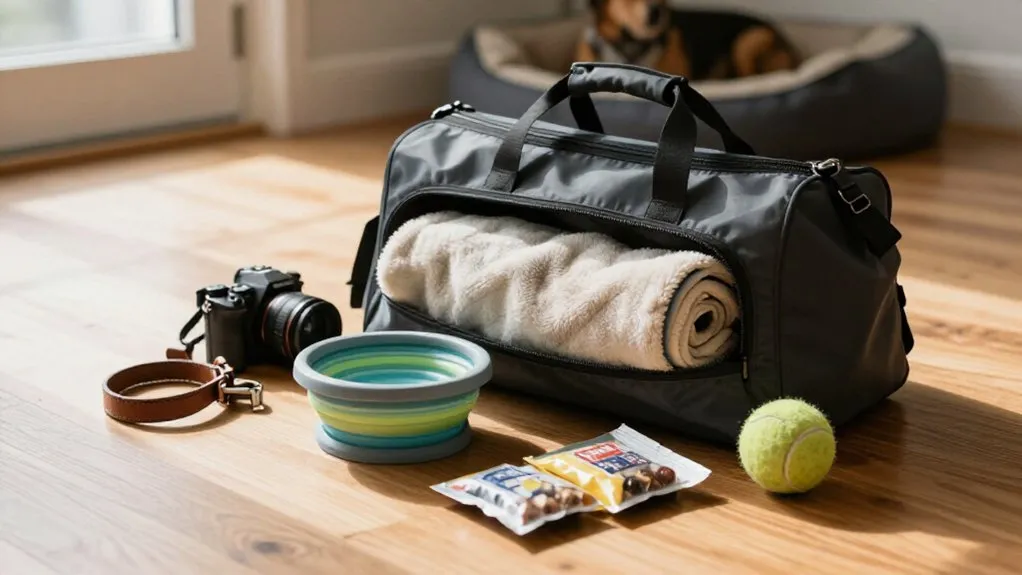
You’ll need a crash-tested crate or harness, visible ID, leashes, water, bowls, food, medications, first-aid supplies, and required rabies and veterinary records.
Pack about 1 ounce of water per pound daily, plus reserves, and secure your dog before driving. Never leave them unattended in a car.
Nice-to-haves include bedding, toys, and climate-specific gear.
For overnight trips, add extra food and medicine. Next, tailor gear to conditions.
Pack a Crash-Tested Travel Crate
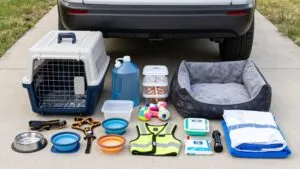
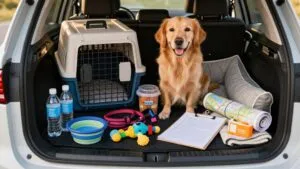
A crash-tested travel crate gives your dog the most reliable protection during car travel by limiting dangerous movement and reducing impact-related injury risk. Choose a model independently tested for vehicle crashes and sized so your dog can stand, turn, and lie down without excess space. Secure the crate exactly as its manufacturer directs, using approved anchor points rather than improvised straps.
Place it on a stable vehicle surface; don’t use the front passenger seat, where airbag deployment can cause severe injury. Inspect doors, latches, and attachment hardware before every trip. Acclimate your dog gradually at home, pairing calm crate time with rewards. During travel, maintain ventilation, avoid loose items nearby, and never leave your dog unattended in temperature-unsafe conditions. Replace damaged crates promptly afterward.
Compare Must-Have Travel Gear
Once your dog rides safely in a secured, crash-tested crate, compare the remaining travel gear by whether it protects health, meets carrier or local requirements, or simply improves comfort.
| Priority | Pack and verify |
|---|---|
| Safety | 6-foot leash, fitted tether-compatible harness, visible ID. |
| Health | Food + 3 to 7 extra days, water, labeled meds. |
| Hygiene | Bags, wipes, towel, absorbent pad. |
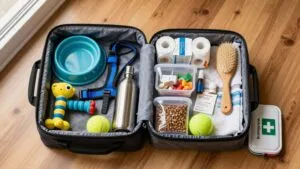
Verify that the harness fits under the two-finger rule and matches the manufacturer’s crash-test certification and stated weight limit. Carry a backup leash. Keep microchip registration current. Use premeasured meals, replace water frequently, and retain medicines in labeled packaging. Include tweezers, antiseptic wipes, bandage material, styptic powder, a thermometer, and emergency contacts. A bed or toy reduces stress, but it can’t substitute for restraint, hydration, identification, or cleanup.
Define Veterinary Health Certificates
Veterinary health certificates document that a licensed veterinarian examined your dog and found it fit for travel under the destination’s rules. Often called Certificates of Veterinary Inspection, these forms record your dog’s identity, examination date, vaccination status, and any required testing or parasite-control information. You may need one for airline, interstate, international, or destination requirements, but rules vary by carrier and destination.
Ask your veterinarian which certificate applies and when the examination must occur. Many certificates have narrow validity windows, so schedule the visit after confirming travel dates and entry requirements. Bring prior medical records, rabies documentation, and your dog’s microchip number if requested. Review the certificate for accurate owner contact details, destination information, and dates before departure. Keep the original accessible and carry copies.
Travel Water: Ounces by Weight
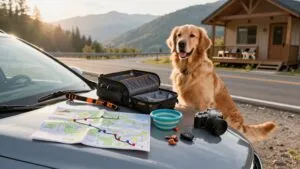
Plan for roughly 1 ounce of water per pound of your dog’s body weight daily, then increase availability during heat, exercise, or dry travel conditions. You should pack extra water to cover delays and offer small, frequent drinks rather than waiting for signs of thirst. Keep a clean, portable bowl accessible at every stop to support safe hydration.
Daily Water Needs
How much water should you pack? Begin with your dog’s usual daily intake, recorded for several ordinary days before departure. Travel can increase losses through heat, exercise, panting, dry air, and stress, so carry enough for the planned route plus a conservative reserve for delays or missed refill stops. Offer clean water at regular breaks and keep it accessible rather than waiting until your dog appears thirsty.
Monitor intake, urination, gum moisture, energy, and panting. Reduced drinking, repeated vomiting, diarrhea, lethargy, dry or tacky gums, sunken eyes, or persistent excessive panting warrant prompt veterinary advice. Don’t restrict water during travel unless your veterinarian gives a specific medical instruction. Use a portable bowl and familiar, safe water when possible to support steady hydration throughout travel.
Weight-Based Ounce Guidelines
A practical baseline is about 1 ounce of water per pound of body weight each day: a 20-pound dog typically needs roughly 20 ounces, while a 60-pound dog needs about 60 ounces. Use this estimate to calculate the minimum volume you should have available for a full day, and measure it with marked bottles or a calibrated bowl.
Keep a record if your dog has kidney disease, diabetes, urinary concerns, or a veterinarian-prescribed fluid plan, because standard formulas may not apply. Don’t force water or restrict access without veterinary direction. Track normal drinking at home before departure; a sustained, unexplained intake change can indicate illness and warrants veterinary advice. Count water in wet food only when your veterinarian confirms how to account for it.
Adjusting For Travel Conditions
Travel conditions can raise your dog’s water needs above the 1-ounce-per-pound daily baseline, especially during heat, humidity, high altitude, long walks, or stress-related panting. Monitor your dog’s intake and behavior rather than relying on a fixed travel calculation. Warm weather and exertion increase fluid loss through panting; dry air at altitude can do the same. Offer water at regular rest breaks, allowing calm, voluntary drinking. Don’t force large volumes after intense activity, which may trigger vomiting or discomfort.
Watch for tacky gums, reduced urine output, weakness, sunken eyes, or persistent panting, and stop activity promptly if these appear. Puppies, senior dogs, brachycephalic breeds, and dogs with kidney, heart, or endocrine disease need individualized veterinary guidance. Seek urgent care for collapse, vomiting, confusion, or heatstroke.
Packing Extra Water
Pack at least your dog’s expected daily water intake, roughly 1 ounce per pound of body weight per day, as a starting point, then add enough for 1 to 2 extra days and anticipated heat, activity, or delays. Use sealed containers and keep them accessible in the passenger area, not a hot trunk. Water demand rises with panting, dry air, exertion, diarrhea, fever, and some medications.
If your dog has kidney, heart, endocrine, or urinary disease, ask your veterinarian for an individualized target before departure. Don’t rely on unfamiliar roadside sources or untreated surface water, which may contain pathogens or irritants. Track drinking and urination; lethargy, tacky gums, vomiting, weakness, or reduced urination warrant prompt veterinary advice. Replace water that becomes contaminated, overheated, or frozen during travel immediately.
Portable Bowl Essentials
Choose a portable bowl that lets your dog drink safely at each stop without spilling, collapsing, or retaining residue. Pick food-grade silicone or BPA-free plastic; both resist bacterial buildup better than porous fabric designs.
Size the bowl to your dog’s weight: offer roughly 0.5 to 1 ounce of water per pound of body weight at each break, more in heat or after exercise. A 10-pound dog needs 5–10 ounces; a 60-pound dog needs 30–60 ounces. Collapsible bowls pack flat and clean easily, but you’ve got to rinse them after every use to prevent mold growth. Check seams and folds for cracks before each trip. Skip bowls with deep grooves—they trap bacteria and residue you can’t fully rinse out on the road.
Match Gear to Trip Length
How long you’ll be away should determine both the quantity and type of dog gear you bring. For a day trip, pack water, a portable bowl, waste bags, leash, visible ID, and a crash-tested restraint or secure crate. Add routine medications and a small first-aid kit when indicated by your route or dog’s health status.
For overnight or multi-day travel, calculate food and medication for every planned day, plus one to two extra days for delays. Use airtight food storage, label medications with dosing instructions, and carry vaccination records and emergency contacts. Bring washable bedding or familiar mat to support rest, and add climate-specific protection only when conditions warrant it. Recheck identification and microchip registration before departure, and keep supplies in one accessible bag.
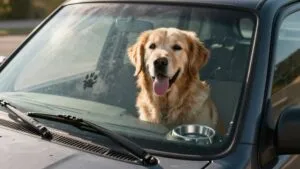
Never Leave Dogs in Cars
Because a parked car’s interior temperature can climb more than 20°F above the outside air within 10 minutes, you shouldn’t leave your dog unattended in a vehicle, even with windows cracked or in mild weather. Cracked windows don’t provide reliable ventilation, and shade can shift quickly. Dogs dissipate heat less efficiently than people, primarily through panting, so cabin heat can cause heat stress, organ injury, or death within minutes.
Before stopping, secure your dog at a safe, climate-controlled destination or take them with you. Plan fuel, restroom, meal, and pickup stops around places where dogs are permitted. If you see a dog in distress inside a vehicle, call local emergency services or animal control immediately. Warning signs include collapse, weakness, vomiting, or altered consciousness.
Beach Trips: Saltwater Rinses
After every beach outing, rinse your dog thoroughly with fresh water to remove salt, sand, and marine debris from the coat, paws, belly, and skin folds. Salt can dry and irritate the skin, while trapped grit may cause abrasions or worsen dermatitis. Use lukewarm, potable water; part the coat and flush between toes, under the collar area, and around the eyes without directing a strong stream into ears, nose, or eyes.
Check paws for cuts, lodged shells, tar, or fishing line. Dry thoroughly, especially wrinkles and between toes, to limit moisture-associated irritation. Prevent drinking seawater: ingestion can cause vomiting, diarrhea, dehydration, and dangerous sodium elevation. Offer fresh water frequently.
Contact a veterinarian promptly if your dog develops repeated vomiting, weakness, tremors, disorientation, or persistent diarrhea.
Fix Motion Sickness Mistakes
Motion sickness can turn routine travel into a safety concern, but you can often reduce it by correcting a few common mistakes. Don’t feed a large meal immediately before departure, and never let your dog ride unrestrained. Instead:
- Offer a light meal several hours before leaving.
- Keep the cabin cool, quiet, and well ventilated.
- Secure your dog in a crash-tested harness or stable crate.
- Schedule gradual practice rides, ending before nausea begins.
- Ask your veterinarian about approved anti-nausea medication and dosing.
Watch for drooling, swallowing, lip licking, vomiting, or lethargy. Stop safely for fresh air and water if signs develop.
Don’t give human drugs unless your veterinarian directs you; they can cause adverse effects. Seek advice if vomiting persists or your dog seems weak.
Bring Rabies Vaccination Records
Pack your dog’s current rabies vaccination certificate in both printed and digital form before you leave. Many airlines, border authorities, campgrounds, and boarding facilities require proof, and expired or incomplete records can delay entry or trigger quarantine rules. Verify requirements with your carrier and destination well ahead of departure.
- Certificate showing vaccine product, date, and expiration
- Veterinarian’s signature and clinic contact details
- Your dog’s matching name and microchip number
- A cloud backup accessible without mobile service
- Destination-specific import forms, if required
Keep originals in a waterproof pouch beside your travel documents. Photograph every page, confirm dates match your booking, and ask your veterinarian about health certificates required within pre-travel windows. These steps support rapid verification if your dog bites someone or needs veterinary care.
Conclusion
Your dog’s safety depends on preparation, not guesswork. You’ve identified the must-haves: a crash-tested crate, water, vaccination records, and health certificates, and you know which extras are optional. Don’t skip the non-negotiables: never leave your dog in a parked car, always verify documentation before you travel, and address motion sickness before symptoms escalate.
Match your gear to trip length and conditions, rinse off saltwater promptly, and you’ll reduce preventable risks substantially. Preparation isn’t optional; it’s the standard of care your dog deserves.