
What Temperature Is Too Hot for a Dog in a Car? The Danger Zone
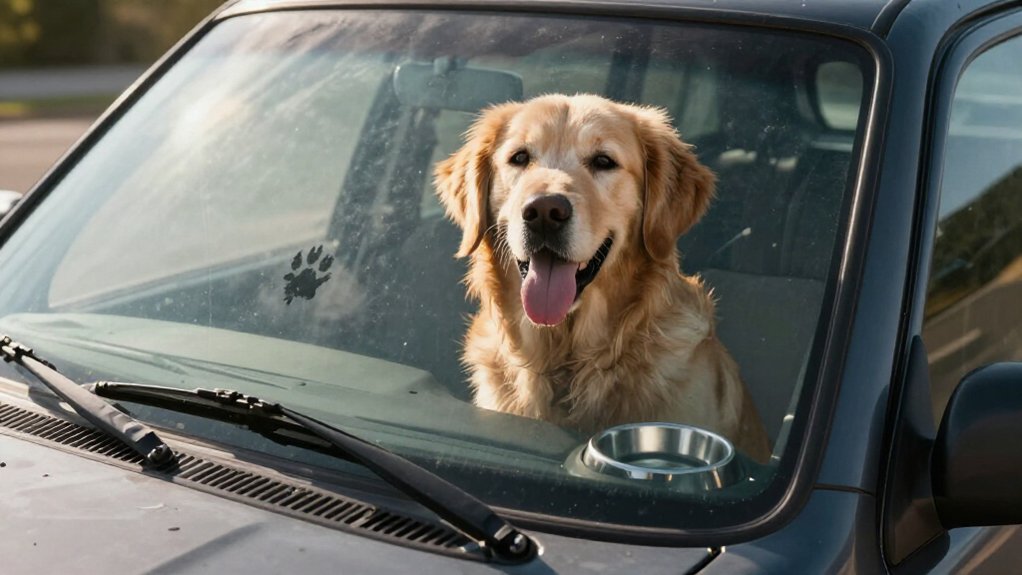
A parked car is too hot for your dog when outdoor temperatures exceed 70°F (21°C). Cabin air can approach 100°F (38°C) within 10 to 20 minutes and may climb higher, even with cracked windows or shade.
Heat and humidity impair panting, raising heatstroke risk, especially for flat-faced, older, overweight, or ill dogs. Don’t rely on water bowls or errands; leave your dog home, use curbside pickup, or maintain air conditioning and supervision. Risks and warning signs follow.
Cars Can Reach 120°F Fast
A parked car can become dangerously hot in minutes, not hours. You can’t use the outdoor temperature as a safety measure: on a 70°F day, cabin temperatures may approach 100°F within 10 to 20 minutes. In hotter conditions, a vehicle can reach 120°F rapidly and may exceed 140°F within an hour. Solar radiation passes through glass and warms interior surfaces; those surfaces then release heat into a ventilated cabin. This greenhouse effect concentrates the steepest temperature rise early, so an errand creates risk.
You shouldn’t rely on cracked windows, shades, shade parking, or a bowl of water. These measures don’t stop hazardous heat accumulation. Prevent exposure by taking your dog with you, leaving your dog home, or using air conditioning under supervision during travel.
Heatstroke Can Start Within Minutes
That rapid cabin heating can push a dog into heatstroke within minutes. In an enclosed vehicle, hot, humid air limits the cooling your dog gets from panting, so body heat accumulates quickly. A core temperature above 104°F is concerning; 106°F or higher indicates severe hyperthermia and a high risk of irreversible injury.
As temperature rises, cells and vessels sustain damage, triggering inflammation, clotting abnormalities, and fluid leakage. Brain swelling, seizures, kidney and liver injury, and collapse can follow.
Under high-heat conditions, thermal injury may begin in 10 to 15 minutes. Puppies, seniors, flat-faced breeds, overweight dogs, and those with heart or respiratory disease can deteriorate faster. If you notice panting, thick drool, weakness, vomiting, or unsteadiness, cool your dog and seek emergency veterinary care.
Cracked Windows Offer Little Relief
Cracking the windows doesn’t make a parked car safe for your dog: it provides too little airflow to counter the greenhouse effect, and cabin temperatures can still rise rapidly. Sunlight passes through glass and heats interior surfaces; that heat remains trapped, while a narrow opening cannot exchange enough air to control it.
Research-based guidance consistently finds that cracked windows, sunshades, and shade do not prevent dangerous temperature increases. On a 70°F day, a vehicle’s interior may approach 100°F within 10 to 20 minutes.
You can’t make a brief errand safe by leaving water or opening windows slightly. Avoid leaving your dog unattended in any parked vehicle during warm conditions. If travel is necessary, pre-cool the cabin, keep the air conditioning running, and supervise your dog.
Dogs Overheat Faster Than Humans
Your dog can’t cool itself as efficiently as you can because it relies primarily on panting, which fails as cabin air nears body temperature. Its smaller body can gain heat rapidly, pushing its normal core temperature toward dangerous levels within minutes. This creates greater heatstroke risk, especially for puppies, seniors, flat-faced breeds, and dogs with obesity or heart or lung disease.
Limited Cooling Mechanisms
Dogs overheat faster than humans because they rely primarily on panting—not widespread sweating—to release body heat. Panting cools your dog only when moisture can evaporate from the tongue, mouth, and airways. In warm, humid, or poorly ventilated conditions, evaporation slows, and each breath removes less heat. Unlike you, your dog has sweat glands mainly in the paw pads, which cannot provide meaningful whole-body cooling.
Thick coats, obesity, short muzzles, older age, youth, and heart or airway disease further limit heat loss. You shouldn’t assume water alone corrects this physiological constraint. Keep your dog in actively air-conditioned space, maintain unrestricted airflow, and supervise continuously during warm-weather travel. If panting becomes excessive or breathing appears labored, stop and move your dog to a cooler area immediately.
Rapid Internal Temperature Rise
A parked car can become dangerously hot within minutes, often faster than you expect: at 70°F (21°C) outdoors, the interior may approach 100°F (38°C) in 10 to 20 minutes. Solar radiation passes through the glass and heats interior surfaces; trapped heat then raises cabin air quickly. The steepest increase usually occurs during the first 10 to 20 minutes, so a brief errand can create a medical emergency.
On a 100°F (38°C) day, cabin temperatures may reach about 140°F (60°C) in less than an hour. As cabin air nears body temperature, panting loses its ability to release heat, while you can sweat over much of your skin. Cracked windows, shade, and water don’t stop this buildup. Don’t leave your dog unattended; maintain air conditioning and continuous supervision.
Smaller Bodies, Greater Risk
Even a moderately warm car can overwhelm a dog faster than it would a person. Dogs maintain a normal core temperature near 101 to 102.5°F, leaving little margin before heatstroke risk rises above about 105.8°F. Unlike you, your dog relies primarily on panting, not widespread sweat glands, to release heat. As cabin air approaches body temperature, panting no longer cools effectively.
Smaller dogs may heat up quickly because they have less total body mass and can’t escape trapped heat. Puppies, older dogs, obese dogs, flat-faced breeds, and dogs with heart or airway disease have even less reserve. Don’t judge safety by whether you feel tolerable: a 70°F day can produce a 100°F cabin within 20 minutes. Never leave your dog unattended; cooling fails rapidly.
Brachycephalic Breeds Face Higher Risk
If you have a flat-faced breed, such as a Pug, Bulldog, or Boston Terrier, your dog faces a higher risk of heatstroke in a parked car. Their shortened airways can limit airflow and make panting less effective as cabin temperatures rise. Don’t leave these dogs unattended in a vehicle; use continuous air conditioning and close monitoring during necessary travel.
Why Flat-Faced Dogs Overheat
Because flat-faced (brachycephalic) dogs have narrowed airways, they can’t pant as efficiently as dogs with longer muzzles. Their shortened skulls often accompany anatomical changes, including narrowed nostrils, elongated soft palates, and smaller windpipes, that restrict airflow and increase breathing effort.
This reduced airflow limits evaporative cooling, so your dog’s body temperature can rise quickly during heat exposure. If you have a Pug, Bulldog, French Bulldog, or similar breed, treat warm weather as a heightened medical risk. Obesity, older age, youth, heart disease, and respiratory disease further reduce heat tolerance.
Signs can progress rapidly. Watch for excessive panting, thick drool, bright-red gums, weakness, vomiting, or collapse. Move your dog to a cool area, begin cooling with cool water, and seek veterinary care if signs occur.
Breathing Challenges in Cars
In a parked car, brachycephalic dogs such as Pugs, Bulldogs, and French Bulldogs face a disproportionate risk because their already restricted airways limit effective panting as cabin temperatures rise. Their shortened skulls can narrow nostrils and air passages, increasing breathing effort. As air nears body temperature, panting removes less heat; airway resistance and stress can further impair airflow. You may see rapid, noisy breathing, extended neck posture, thick drool, or blue-tinged gums. These findings can precede collapse and heatstroke, which may injure the brain and organs. Progression can be rapid in hot vehicles; you shouldn’t regard these findings as minor or transient.
| Finding | Clinical meaning |
|---|---|
| Noisy, labored panting | Rising respiratory distress |
| Bright red or blue gums | Compromised heat tolerance |
| Weakness or collapse | Medical emergency |
Extra Precautions for Brachycephalic Breeds
Brachycephalic breeds—including Pugs, Bulldogs, Boston Terriers, and French Bulldogs—face a heightened risk of heatstroke in cars because narrowed airways make panting less efficient and increase breathing effort. You shouldn’t leave these dogs unattended in a parked vehicle when outdoor temperatures exceed 70°F (21°C). A cracked window, shade, water, or sunshade won’t stop rapid heating.
Before travel, cool cabin with air conditioning, maintain airflow, and watch your dog continuously. Plan stops with cool water, but don’t rely on water to compensate for a warm car. Act at the first signs of distress: excessive panting, thick drool, bright-red gums, restlessness, weakness, or vomiting. Move your dog into air conditioning, apply cool water—not ice—and contact a veterinarian immediately, even if it seems better.
Choose Curbside Pickup Instead
When you need to run an errand on a warm day, choose curbside pickup or delivery rather than leaving your dog in the car. These options eliminate the period of unattended vehicle confinement, when interior temperatures can rise quickly enough to overwhelm canine cooling mechanisms.
Schedule pickup for a time when your dog can stay home in a cool, secure environment. Order groceries, prescriptions, and household supplies online before you leave. If curbside service isn’t available, use delivery or arrange care before shopping.
Don’t rely on a checkout line or a fast stop: most vehicle warming occurs early in an errand. Planning ahead protects dogs with reduced heat tolerance, including puppies, seniors, and medically vulnerable animals. This approach prevents avoidable exposure during routine errands.
Shade Doesn’t Prevent Dangerous Heating
Shade may make a parked car feel less intense from outside, but it doesn’t stop the cabin from trapping heat or becoming dangerous for a dog. Vehicle glass and metal absorb and retain solar energy, while limited airflow allows interior temperatures to rise quickly. Even on a 70°F day, a car can approach 100°F within 10 to 20 minutes. Moving shade, reflected heat from pavement, and humid conditions can further reduce your margin for safety.
Your dog cools primarily by panting. As cabin air nears body temperature, panting loses effectiveness, and core temperature can climb toward heatstroke levels. Cracked windows and sunshades don’t provide reliable cooling. Higher risk affects flat-faced, young, old, overweight, and heart or respiratory-compromised dogs. Never leave your dog unattended there.
Water Bowls Don’t Prevent Heatstroke
A water bowl supports hydration, but it can’t cool the trapped air in a parked car or prevent a dog’s core temperature from rising. Drinking replaces some fluid loss, but it doesn’t lower dangerous body heat or restore effective panting when cabin air is hot. As temperatures climb, water may quickly warm, spill, or go untouched by a distressed dog. You can’t use a full bowl as a safety measure; heatstroke can develop while water remains available.
- A dog stands over a warm bowl, panting rapidly in stale air.
- Thick drool strings from the mouth as the tongue turns bright red.
- The dog becomes unsteady beside untouched water while core temperature rises.
Provide water during travel, but keep cabin cooled and monitor your dog.
Leave Dogs Home Above 70°F
Once outdoor temperatures reach 70°F (21°C), leave your dog at home rather than unattended in a parked car. At this temperature, cabin heat can approach 100°F (38°C) within 10 to 20 minutes, with much of the rise occurring early. Cracked windows, shade, and water don’t stop greenhouse-driven heating or make panting effective.
Dogs normally maintain a core temperature near 101–102.5°F (38.3–39.2°C). As cabin air warms, they can’t release heat adequately through panting. Puppies, older dogs, flat-faced breeds, overweight dogs, and dogs with heart or airway disease face greater risk. Don’t rely on a quick errand: dangerous overheating can develop before you return.
Plan errands without your dog, or keep the vehicle air-conditioned and supervise continuously. If overheating signs appear, cool your dog and seek emergency veterinary care.
Conclusion
Your dog can develop heatstroke quickly in a parked car, even with cracked windows, shade, or water. Interior temperatures can exceed 120°F, and risk rises when outdoor temperatures reach 70°F or higher. You should never leave your dog unattended; brachycephalic, older, young, overweight, or ill dogs face added danger. Choose curbside pickup, pet-free errands, or climate-controlled alternatives.
If your dog shows heavy panting, weakness, vomiting, or collapse, seek emergency veterinary care without any delay.
