How to Keep a Dog Cool in the Car on Hot Summer Road Trips
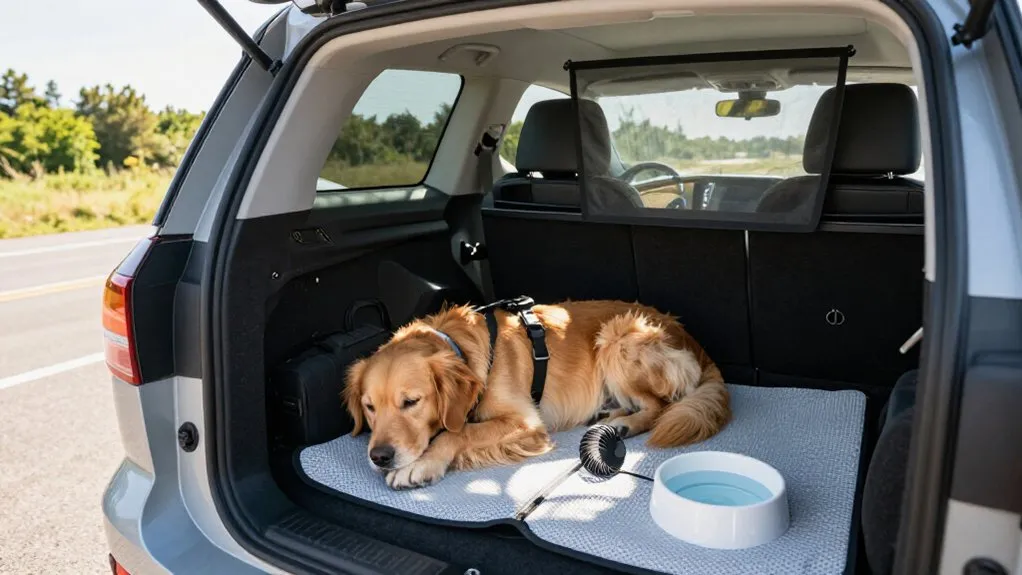
Pre-cool your car, then keep air conditioning reaching your dog’s secured, ventilated crate at rear-seat level. Use window shades and a cooling mat, but never rely on cracked windows or leave your dog parked unattended.
Monitor a thermometer at your dog’s height, offer cool water every one to two hours, and stop for heavy panting, weakness, vomiting, or thick drool. Check paws after pavement walks.
Next, learn how to spot heat stress and car sickness.
Cool Cabin Before Departure
Before your dog gets in, start the engine and run the air conditioning until the cabin feels comfortably cool throughout, including the rear seating or crate area. Upholstery, glass, and metal retain heat, so opening doors doesn’t make a hot car safe. Set a cool temperature, aim vents toward your dog’s travel position without blasting its face, and verify airflow reaches cargo areas.
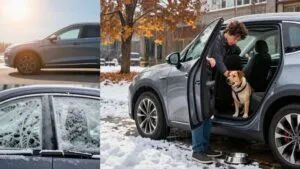
Use sunshades to reduce solar load, but don’t treat shade or cracked windows as climate control. Recheck the cabin before loading, particularly after delays. Never leave your dog unattended in a parked vehicle: temperatures rise rapidly, and severe heatstroke can develop within 20 minutes. If air conditioning fails or traffic prevents safe cooling, stop at a climate-controlled location and revise your plan.
Pack a Canine Cooling Mat
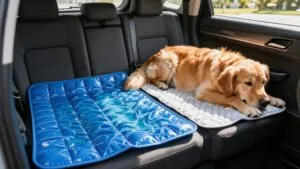
Pack a canine cooling mat to give your dog a cooler, stable place to rest while the air conditioning runs. These mats lower the contact surface by several degrees, supporting comfort but never replacing climate control, water, or supervision. Choose a size that covers your dog’s usual lying area and secure it so it can’t slide.
- Select non-toxic, chew-resistant materials rated for your dog’s weight.
- Use gel or phase-change mats for power-free trips.
- Bring freezer packs only when the manufacturer permits them.
- Check the surface with an infrared thermometer and let your dog move off.
Powered models can sustain greater cooling, but verify 12V compatibility, ventilation, and power draw. Keep covers clean and dry; stop using any mat that leaks, overheats, or shows damage.
Step 1: Install Rear-Window Sunshades
Install rear-window sunshades to reduce direct solar heat on your dog’s travel area, especially when the sun hits the back seat or cargo space. Choose vehicle-specific shades that cover rear side glass without obstructing the driver’s view or required mirrors. Mesh or reflective designs cut radiant heat and glare, helping keep your dog out of intense sunlight during the drive.
Secure each shade firmly so it can’t detach, flutter, or interfere with window operation. Check visibility after installation, including blind spots and rearward sightlines. Sunshades lower solar load, but they don’t cool the cabin enough on their own.
Keep air-conditioning running and monitor your dog for heavy panting, drooling, restlessness, or weakness. Remove or reposition shades if they restrict airflow or compromise safe driving.
Step 2: Secure a Ventilated Travel Crate
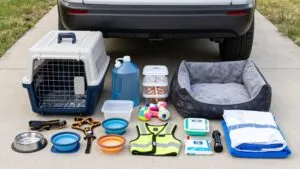
A well-secured, well-ventilated travel crate gives your dog a stable, shaded space while allowing air-conditioned cabin air to circulate. Choose a crate large enough for your dog to stand, turn, and lie down naturally, with rigid sides or mesh panels that don’t block airflow. Secure it to vehicle anchor points or seat belts according to the manufacturer’s instructions; an unsecured crate can shift or become a projectile during sudden braking or a crash. Position it away from direct sun and never in a cargo area without reliable conditioned airflow.
Keep vents unobstructed by blankets, luggage, or seatbacks, and check that air reaches crate level, not merely the front seats. Use a crash-tested crate when possible, especially for highway travel. Inspect latches before every departure.
Step 3: Offer Chilled Water at Stops
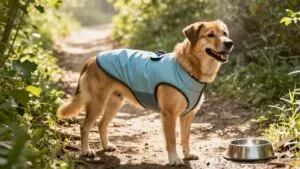
At every stop, offer your dog fresh, cool water in a portable bowl to replace fluids lost through panting and reduce heat stress. Bring an insulated bottle and refill it with safe drinking water before departure. Offer small amounts at least every one to two hours, especially after walking or during humid weather, when panting removes more moisture.
Let your dog drink voluntarily and pause somewhere shaded and dog-friendly; never leave it alone in the car while you get supplies. Don’t force water if your dog is severely panting or struggling to breathe, because swallowing may be difficult. Instead, offer sips once breathing settles. Avoid salty broth, sugary drinks, and excessive ice-cold water, which can upset the stomach. Pack a spill-proof bowl and extra water for trips.
Step 4: Monitor Rear-Seat Temperature Continuously
Because rear-seat temperatures can differ from those near the driver, place a reliable thermometer at your dog’s height and check it throughout the trip. Use a sensor with a clear display and, if possible, high-temperature alerts. Secure it away from direct sunlight, air vents, and your dog’s reach so it measures the surrounding air accurately.
Check the reading before departure, after you adjust the climate controls, and at regular intervals during traffic, climbs, and stops. Compare it with the front-seat reading; a cool dashboard doesn’t prove the rear compartment is safe. If the rear temperature rises or becomes inconsistent, adjust cabin airflow and air conditioning promptly. Verify that rear vents remain open and unobstructed. Don’t rely on cracked windows or shade to control heat.
Step 5: Pause if Dog Pants Heavily
Treat heavy or escalating panting as a warning to stop, not as something the air conditioning can simply mask. Pull over at the next safe location and assess your dog in an air-conditioned or shaded area. Rapid, noisy, or persistent panting, especially with thick drool, restlessness, bright-red or pale gums, weakness, vomiting, or poor coordination, can signal dangerous heat stress.
Stop the trip until your dog’s breathing settles and they are alert and responsive. Offer small amounts of cool water only when they can swallow comfortably; don’t force it during severe distress. Use lukewarm water and airflow to begin cooling, and seek urgent veterinary care if signs persist, worsen, or include collapse or seizures. Heatstroke can injure organs even after your dog seems better.
Step 6: Remove Cooling Gear at Arrival
Once you arrive, remove cooling mats, damp towels, and other cooling gear, then check that your dog has returned to normal breathing and behavior. Don’t leave wet gear on during unloading or while settling indoors: prolonged dampness can chill your dog, irritate skin, or encourage chewing. Remove harness-mounted fans and disconnect power cords before your dog exits, preventing tangles or accidental injury.
Offer a quiet, shaded, climate-controlled place to rest and small amounts of water if your dog can swallow comfortably. Watch closely for persistent heavy panting, weakness, vomiting, confusion, or collapse. These signs can indicate heat illness that needs prompt veterinary assessment, even after the trip ends. Keep your dog with you; never leave them alone in a parked vehicle, even briefly again.
Confirm Normal Gum Color
Check your dog’s gums after the journey: healthy gums are usually moist and pink, while bright red, very pale, bluish, gray, or dry, tacky gums can signal heat stress, poor circulation, or dehydration. Lift the lip in good light and compare the color with your dog’s normal baseline; naturally dark-pigmented gums require close attention to moisture and any newly pale or blue areas.
Press a pink section gently for one second, then release. Color should return within about two seconds; delayed refill can indicate compromised circulation. If abnormal color persists, or your dog seems weak, disoriented, collapses, or struggles to breathe, treat it as an emergency. Move into air-conditioning, begin lukewarm-water cooling with airflow, and call an emergency veterinarian. Even after improvement, veterinary assessment remains essential.
Fix Car-Sickness Drooling
Car-sickness drooling often starts before vomiting, so act early if your dog begins salivating heavily, lip-licking, yawning, whining, or seeming restless in the car. Immediately pull over safely, keep the cabin cool, and let your dog rest in a secure harness or crate. Fresh air conditioning and a forward-facing view may reduce motion-related nausea. Offer small sips only after breathing settles; don’t force water or food. Ask your veterinarian about approved anti-nausea medication before travel, especially if episodes recur.
| Sign | What you see | Your action |
|---|---|---|
| Nausea | Rope-like saliva | Stop and ventilate |
| Vomiting | Hunched posture | Call your vet |
Never give human medicines. Repeated drooling, vomiting, weakness, or abnormal gum color needs veterinary advice promptly, because nausea and overheating can overlap during hot travel at times.
Inspect Paws for Heat Burns
Hot pavement can injure a dog’s paw pads within minutes, so inspect paws at every stop—especially after walking on asphalt, blacktop, or sun-exposed concrete. Lift every foot and check pads, toes, and spaces between toes for redness, swelling, blisters, cuts, discoloration, or tenderness. Watch for limping, licking, or reluctance to walk; these signs can indicate a burn.
Use the seven-second hand test: press the back of your hand against pavement. If you can’t hold it comfortably for seven seconds, don’t let your dog walk there. Choose grass, shade, or booties instead. If you suspect a burn, move your dog indoors or into air conditioning, rinse paws with cool water, and call a vet. Don’t pop blisters or apply creams, which can worsen injury if licked.
Conclusion
Keeping your dog cool in the car requires planning, monitoring, and quick action on every trip. You’ll reduce heat risk when you pre-cool the cabin, block sun, use ventilated restraints, and provide chilled water during shaded stops.
Never leave your dog unattended, even briefly. At arrival, remove cooling gear, check gum color, manage unusual drooling, and inspect paws. If you see heavy panting, weakness, vomiting, or pale gums, stop traveling and seek veterinary care immediately.