Where to Put a Dog Crate in the Car: Cargo Area vs Back Seat
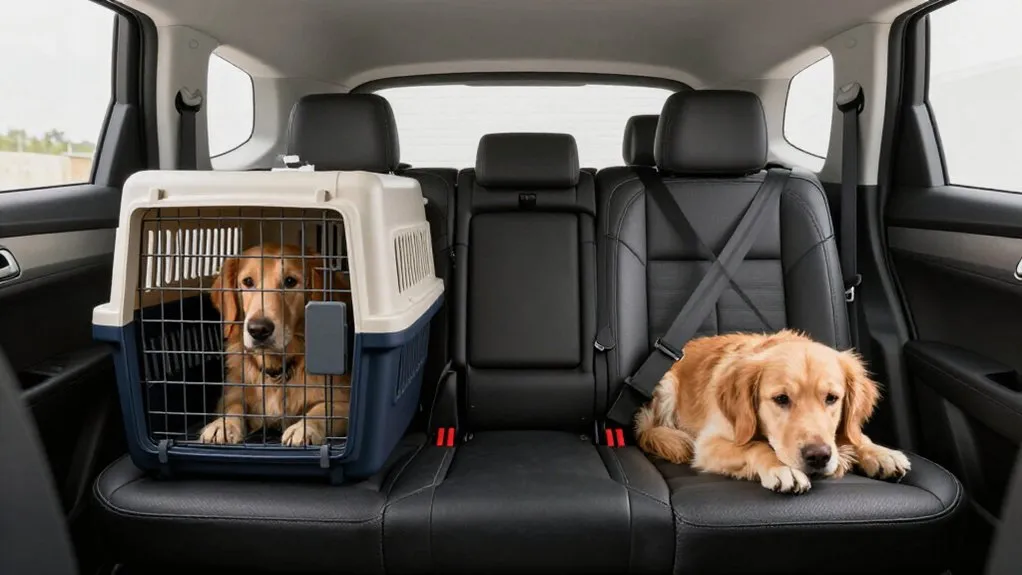
Put your dog’s crate in the lowest, most stable, well-ventilated location your vehicle safely allows: usually the cargo floor behind locked rear seats, if airflow and temperature remain safe.
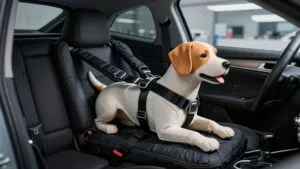
If cargo space is unsuitable, set a sized crate flat on the back seat and secure it through approved belt guides or frame points. Keep it outside airbag zones, verify hatch clearance and seat stability, and check crash-test results. Next, you’ll find anchoring and comfort checks.
Prioritize Crate Ventilation and Stability
Prioritize a crate location that gives your dog steady airflow and a stable, low position in the vehicle. In many SUVs, minivans, and wagons, the cargo area behind the rear seats supports a larger, well-ventilated crate close to the floor. Measure the space first, including hatch clearance, so the crate fits without blocking its door or ventilation panels.
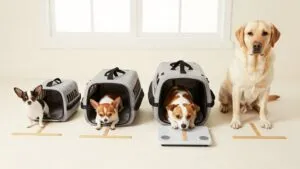
Choose a crate that lets your dog stand, turn, sit, and lie down, yet doesn’t leave enough room for excessive sliding. Secure it to cargo anchors or seat-belt anchor points with straps; an unsecured crate can shift or flip during hard braking. Use anchor points, and keep bedding non-slip and secured. Don’t fully cover the crate in warm conditions. Remove your dog’s collar to prevent snagging.
Consider Your Dog’s Motion Sickness
If your dog gets motion sick, place the secured crate where it stays level, well ventilated, and away from direct sun—often low in the cargo area behind the rear seats. Watch for drooling, lip licking, swallowing, whining, restlessness, or vomiting; these signs can begin before the car moves because travel anxiety may contribute.
Keep bedding non-slip and avoid heavy meals for several hours before departure, unless your veterinarian advises otherwise. Offer cool airflow and make frequent quiet stops on longer trips. If the cargo area feels warmer or bouncier in your vehicle, a securely positioned back-seat crate may be the better choice. Ask your veterinarian about persistent signs or medication options; never give drugs without veterinary guidance and practice short calm rides first.
Check Crash-Test Ratings
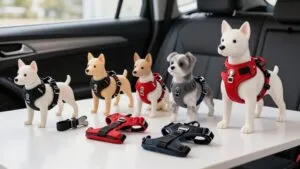
Check independent crash-test ratings before choosing a travel crate, carrier, or harness. These simulated-collision assessments show whether a restraint contains your dog, limits movement, and keeps its hardware intact. Look for Center for Pet Safety or independent-lab results—not just a “crash-tested” label—and match the tested anchor method to your vehicle.
| Test | What it measures | Prefer |
|---|---|---|
| Crate/carrier | Containment, frame failure | Rigid anchors |
| Harness | Neck and spinal loads | Tested tether |
| Anchor test | Strap or latch strength | ISOFIX/LATCH |
Read the report for dog’s weight range, peak acceleration, ejection risk, and failure points. Hard, reinforced crates with frame connections generally outperform soft carriers or loose straps. Route seat belts as directed; use strength-rated cargo anchors, never elastic cords. A rating protects your dog when you install the product as tested.
Hatch Clearance vs Seat Folding
Measure the hatch opening height and width before choosing a crate, and leave enough room to load it without forcing or tipping it. Check the rear seats’ fold angle, since partially folded seats can press against the crate or limit a secure, level position. With the hatch closed, confirm it can’t contact the crate, which could damage the carrier or stress your dog during travel.
Measuring Hatch Opening Height
Start with the hatch opening, not just the cargo bay: a crate can fit behind the rear seats yet still be too tall to load safely through the opening. With the hatch fully raised, measure the vertical distance from the cargo floor at the loading threshold to the lowest point of the opening, including trim, latch housings, and protruding weather seals. Then compare that number with the crate’s outside height, allowing extra room to lift and guide it without forcing the crate, scraping the vehicle, or jolting your dog.
Measure at several points because many hatch openings curve downward near the sides. Also check that the hatch closes without touching the crate. A tight fit can damage the crate or prevent closure. Choose carefully.
Checking Seat Fold Angles
Before choosing a crate position, fold the rear seats through their full range and note the angle at which they rest. Some seatbacks lie nearly flat, while others stop on a slope or leave a raised hinge gap. Test your crate’s base against that surface without your dog inside.
A tilted or uneven base can make the crate shift, alter its center of gravity, and leave your dog bracing during turns or sudden braking. Check whether the folded seat contacts the crate shell, door, or anchor straps; pressure against these points can damage hardware or prevent secure restraint. If the crate must sit partly on folded seats, use only a level, manufacturer-approved support arrangement and verify that vehicle anchors remain usable. Choose a stable configuration.
Allowing Crate Loading Space
Once you’ve confirmed a level, stable crate base, make sure you can load and unload the crate without forcing it past the hatch opening or folding seats farther than their safe resting position. Measure the crate’s widest and tallest points, then compare them with the usable opening and interior path. A cargo area may fit a crate once inside but still be impractical if you must twist, lift awkwardly, or scrape it across trim.
In a back seat, fold only as the manufacturer permits and confirm each seatback locks fully before driving. Keep a clear route so you can transfer your dog calmly after the crate is secured. If loading requires force or compromises a seat latch, choose a smaller crate or another location.
Preventing Hatch Contact
Check hatch clearance with the crate in its intended position, including any bedding or hardware that adds height. Slowly close the hatch while someone watches; it must not touch, press, or flex the crate. Contact can damage the hatch, loosen a crate’s securement, and, in an emergency, hinder access to your dog. Test the crate door too, because it needs enough room to open for loading and removal.
If the hatch clears only when you fold the rear seats, don’t assume that arrangement is safer. Folded seats can create an uneven platform, reduce anchor points, or let the crate shift toward the front. Measure layouts, then choose the lowest stable position that preserves hatch clearance, ventilation, and secure anchoring. Recheck after adding gear.
Best Placement for Senior Dogs
For a senior dog, choose a crate location you can reach easily without asking them to jump or climb. Secure the crate low and firmly to limit shifting, protect sore joints, and provide non-slip bedding for stable footing. Keep the area well ventilated and temperature-controlled, since older dogs may tolerate heat and cold poorly.
Prioritize Easy Entry
Senior dogs benefit most from the crate location that lets them enter and exit with the least climbing, twisting, or jumping. Arthritis, balance changes, and weaker hind legs can make a high cargo opening or a leap onto a back seat painful and risky. Compare your vehicle’s entry heights and door openings before choosing. A low rear hatch, minivan sliding door, or accessible rear door may let your dog step into the crate instead of scrambling over a seat edge.
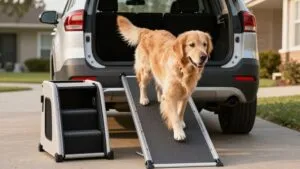
Use a nonslip ramp or broad steps when no low-entry option exists. Introduce the aid gradually with treats, never pulling your dog or forcing a jump. Keep the crate door facing the easiest approach, and leave clearance for you to support your dog if needed.
Choose Stable Crate Placement
Once your dog is inside, place the crate low, level, and firmly secured so it can’t slide, tip, or shift during braking or turns. For senior dogs, an SUV, wagon, or minivan cargo area behind rear seats is often most stable: it keeps crate low and away from front-seat airbags. Attach it to approved cargo tie-downs with straps, following crate and vehicle instructions.
Check that every connection stays tight and that the crate door can open quickly after a stop. In a sedan or when cargo space isn’t available, position a properly sized crate flat on the back seat and route the seat belt through its designated guides. Never place it on a seat edge or in an open truck bed.
Reduce Joint Strain
Choose a low, level crate position that lets your older dog step in and out with minimal climbing, twisting, or jumping. In many SUVs and minivans, the cargo floor behind the rear seats provides the lowest, most stable option. If you use the back seat, choose a crate that sits flat on the cushion and avoid lifting your dog over a high door sill.
Match the crate to your dog’s size so they can stand, turn, and lie down without bracing against the sides. Add thin, non-slip bedding to improve footing without creating an unstable surface. Secure the crate to prevent sliding during stops, which can jar sore hips or arthritic joints. Use a ramp or sturdy steps when the vehicle entry is elevated.
Maintain Comfortable Temperatures
Because older dogs regulate body temperature less efficiently, place the crate where airflow is reliable and the cabin temperature stays stable, usually the climate-controlled cargo area behind the rear seats in an SUV or minivan. Run climate control before loading your dog and check the crate area with a thermometer; dashboard settings don’t guarantee matching rear temperatures. Keep vents open; avoid thick covers that trap heat and restrict circulation.
Secure crate low, out of direct sun; use side-window sunshades if needed. During stops, assess dog for panting, shivering, lethargy, or restlessness. Never leave them parked in the vehicle, even briefly. If your vehicle’s cargo area lacks vents or becomes warmer or colder than the passenger cabin, choose a anchored back-seat position with steady airflow instead.
Verify Rear-Seat Belt Routing
Before you rely on a rear-seat belt to secure a dog crate, verify that the belt routes through the crate’s designated attachment points or around its rigid frame without blocking the door, bending the crate, or leaving excessive slack.
Check the belt’s path with the crate empty, buckle it, and pull firmly in every direction. Webbing must not cross sharp edges, pinch ventilation panels, or interfere with your dog’s entry. Push the crate; it shouldn’t slide, tip, or rotate appreciably. Lock the retractor when your vehicle permits it. Don’t route a belt over a soft-sided crate unless its maker approves that method. Your dog needs rechecked tension because bedding or crate movement can create slack. Stable securement limits crate motion during braking or a crash.
Replaceable Parts and Warranty Coverage
A secure belt route protects your dog only while the crate’s hardware remains sound, so inspect its replaceable parts and warranty terms before relying on it for car travel. Check the door latch, hinges, belt guides, tie-down rings, fasteners, and any removable floor or divider before every trip. Replace components only with manufacturer-approved parts; improvised clips, straps, or mismatched hardware can change how the crate performs under sudden braking.
Read the warranty closely: it may cover defects but exclude crash damage, wear, misuse, or unapproved modifications. Keep your receipt, registration, and inspection records. Ask whether replacement parts remain available for your model. Retire the crate if its structural components loosen, deform, or no longer lock securely. Don’t let warranty coverage ever replace regular inspection.
Avoid Crates With Sharp Edges
Choose a crate with smooth, rounded edges and protected hardware so your dog can’t be cut, snag, or injured if the vehicle stops suddenly. Examine every surface before you buy, then recheck it after travel and cleaning. Wire ends, cracked plastic, exposed rivets, bent door bars, and rough welds can injure paws, skin, eyes, or gums when a crate shifts.
- Run a cloth slowly along seams, doors, and vents; snagging signals a hazard.
- Open and latch the door repeatedly; it shouldn’t pinch fur, toes, or your fingers.
- Remove your dog’s collar inside the crate to prevent it catching on hardware.
Choose durable construction with recessed latches and intact protective caps. Replace damaged crates or components promptly. Smooth, well-maintained surfaces help your dog stay safe.
Check Airbag Deployment Zones
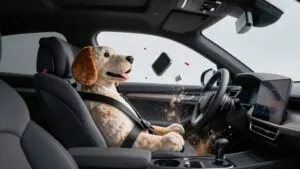
Keep your dog’s crate clear of airbag deployment zones, especially the front passenger area, where an inflating airbag can strike the crate with tremendous force. Airbags protect people, but their rapid expansion can crush a carrier or propel it toward your dog. Before every trip:
- Read your vehicle manual to identify front, side, curtain, and knee-airbag locations.
- Never place a crate on the front passenger seat, even if you disable that seat’s airbag.
- Position and anchor the crate behind the rear seats in an SUV or securely on the rear seat, away from side-airbag paths.
Vehicle designs vary, so inspect seat labels, pillar markings, and the owner’s manual rather than guessing. Keep it low and stable, ventilated, and sized for comfortable movement on trips.
Conclusion
Choose the crate location that keeps your dog secure, well ventilated, and away from airbags. Test both the cargo area and back seat for stability, hatch clearance, and safe belt routing before traveling. Use a crash-tested crate when possible, and follow its manufacturer instructions. If your dog gets motion sick or has mobility limits, pick the position that reduces movement and lifting. Inspect edges, latches, replacement parts, and warranty support so you can travel together.