What to Pack for a Road Trip With a Dog: Car, Hotel and Emergency Gear
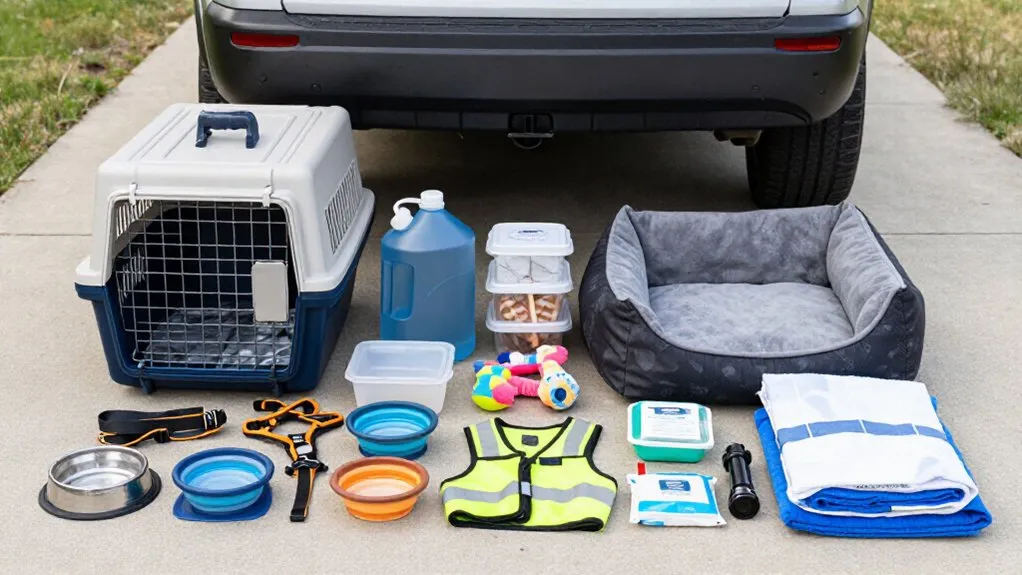
Pack a crash-tested harness or properly fitted carrier, a correctly sized seatbelt tether, and ID tags with current contact info. Bring printed vaccination records, especially rabies proof, plus food, water, and scaled first-aid supplies for your trip’s length.
Check hotel pet weight limits before you book, and plan rest stops every two to three hours. Watch brachycephalic breeds closely for heat stress, and secure your dog before opening any door. The details below cover exactly how much to pack and why it matters.
Crash-Tested Dog Harnesses
A crash-tested dog harness should be your first safety item for any road trip. An unsecured dog becomes a projectile during sudden braking or a collision, risking injury to your dog and everyone in the vehicle. You need a harness certified through independent crash testing, such as the Center for Pet Safety’s program, not a manufacturer’s marketing claim alone.
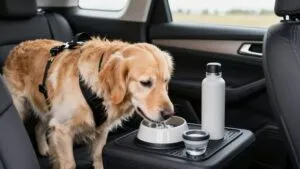
Check that the harness attaches directly to a seatbelt or secured tether, and confirm the fit: you should slide two fingers between the straps and your dog’s body, no more. Inspect the webbing, buckles, and stitching before every trip, and replace the harness after any collision, since impact can compromise its structural integrity even without visible damage.
Dog Road Trip Packing List
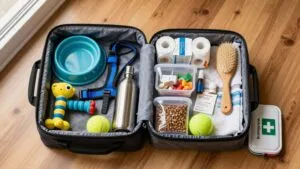
Several categories of gear determine whether your dog travels safely and comfortably: identification, food and water, medication, waste management, and bedding. Before departure, verify ID tags list your phone and a secondary contact; record the microchip number separately. Carry printed vaccination and exam records, medication details, allergy information, and a recent photo.
| Category | Minimum packing standard |
|---|---|
| Food and water | Trip supply plus two extra days; two bowls and potable water |
| Health and control | Daily medications plus 3 to 5 days; two fixed-length leashes |
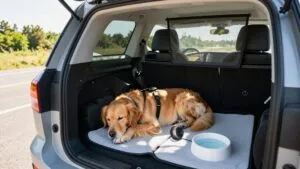
Store food airtight and medications in original labeled containers with dosing instructions. Pack two or more poop bags per dog daily, wipes, towels, a stain remover, and familiar bedding. Use a non-slip washable seat cover, cargo barrier, and reflective light for roadside stops.
Carrier Size Measurement Terms
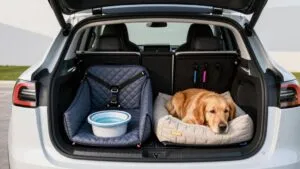
After packing the basics, confirm that your dog’s carrier fits both the dog and the vehicle. Manufacturers list exterior length, width, and height; use these measurements to verify cargo-area clearance, hatch opening, and door access. Then check interior dimensions, which determine usable space after wall thickness, padding, and hardware are considered.
Measure your dog from nose to tail base while standing, floor to head or ear tip, and shoulder width. The carrier must let your dog stand without crouching, turn around, and lie in a natural position. Don’t rely on a label such as “medium”; brands size carriers differently.
Confirm the crate’s weight rating, ventilation openings, and secure latch separately. For a crash-tested crate, follow the manufacturer’s fit instructions and vehicle-specific installation limits exactly.
First-Aid Supply Quantities
Pack enough bandages, gauze, antiseptic wipes, and cleaning supplies to treat minor injuries until you reach veterinary care. Carry all prescribed medications plus at least three extra days’ doses, along with emergency food and water for each travel day and likely delays. Adjust every quantity to your trip length, your dog’s size, and remote-route risks.
Bandage And Gauze Amounts
Your dog’s first-aid kit needs enough bandage material to handle more than one incident, since a single cut pad or roll won’t cover a trip spanning several days. Pack at least six sterile gauze pads in mixed sizes, plus two sterile nonstick pads for abrasions. Include two rolled gauze bandages, preferably 2-inch and 3-inch widths, to secure dressings on different body areas.
Carry one self-adhering cohesive wrap; add a second roll for trips longer than a weekend or for large dogs. Bring medical tape to anchor gauze where cohesive wrap won’t hold. Keep materials sealed, dry, and accessible. Use padding to control minor bleeding, but don’t wrap tightly; check toes for swelling, coolness, or discoloration.
Replace used or contaminated supplies promptly. Seek veterinary care for deep wounds, persistent bleeding, or punctures.
Medication Supply Guidelines
Several medications deserve a spot in the kit, not just the ones your dog takes daily. Pack a three-day emergency buffer of all prescriptions, labeled clearly with dosage and administration times to prevent errors during travel-induced schedule shifts. Store chronic-condition medications in a pill organizer, and keep insulin or other temperature-sensitive drugs in an insulated carrier with cold packs, especially during warm-weather stops.
Include vet-approved anti-diarrheal medication, an antihistamine for allergic reactions (confirm dosage with your vet beforehand), and any prescribed anti-nausea medication for car sickness. Never substitute human medications without explicit veterinary guidance, since common drugs like ibuprofen are toxic to dogs.
Keep a written dosage chart with your vet’s phone number attached, so any caregiver can administer medication correctly if you’re incapacitated or separated from your dog.
Cleaning And Antiseptic Quantities
A handful of antiseptic wipes won’t cut it if a scrape turns dirty mid-trail, so bring enough to clean a wound thoroughly at every application: figure on four to six wipes per incident rather than one. Pack at least one travel-size bottle of saline or diluted antiseptic solution for flushing deeper cuts, since wipes can’t clear embedded debris alone. Carry extra gauze pads—plan on three to four per wound, since bandages loosen or soak through and need repeat cleanings.
Don’t skimp on styptic powder; a single dab rarely stops bleeding from a torn nail, so keep a full container on hand. Replace opened antiseptic solution every few months, as heat and air exposure degrade its effectiveness. Store everything in a sealed, waterproof bag.
Emergency Food And Water
Pack at least three extra days of your dog’s regular food, pre-portioned in airtight bags or containers, plus a small reserve of nonperishable emergency food. Keep the reserve separate from daily meals and label it with the product name, feeding directions, expiration date, and your dog’s weight. Carry sufficient potable water to avoid relying on unfamiliar sources during a breakdown, closure, or contamination event.
Use sealed bottles or a dedicated jug; protect water from heat, sunlight, and chemical exposure. Include a collapsible bowl and water purification tablets only as a contingency, following the manufacturer’s directions. Don’t introduce unfamiliar emergency food unless necessary, since abrupt dietary changes can trigger vomiting or diarrhea. Replace food and water before expiration, after temperature exposure, or whenever packaging is damaged.
Trip Length Supply Planning
Scale your dog’s first-aid supplies to the trip length, remoteness, and access to veterinary care, rather than carrying a generic kit. For an overnight highway trip near clinics, pack enough antiseptic wipes, gauze pads, self-adhering bandage, saline, tweezers, styptic powder, and disposable gloves for minor incident. For each additional travel week, add a second set of core wound-care items and replace anything opened, wet, expired, or contaminated.
Remote routes, hiking, water exposure, or dogs prone to torn nails justify extra bandages, irrigation saline, tick-removal tools, and an emergency blanket. Carry prescribed medications separately, with three extra days and dosing instructions. Don’t improvise human medications; many are toxic to dogs. Check expiration dates before departure, keep supplies dry and temperature-stable, and confirm emergency-veterinary locations.
Check Hotel Pet Weight Limits
Before you book a room, confirm the hotel’s pet weight limit, since many properties cap dogs at 50 or 80 pounds regardless of breed or temperament. Ask whether staff weigh dogs at check-in and whether the limit applies to each pet or the combined weight of multiple animals. Verify the policy directly with the specific property because brand-level listings can be outdated.
Record the employee’s name, date, and confirmation number. Carry your dog’s current weight from a recent veterinary visit plus reservation details. Don’t assume a service designation or a calm disposition overrides a stated restriction. If your dog exceeds the limit, choose another hotel before departure. Also confirm pet fees, deposits, room restrictions, and unattended-dog rules. Avoid refusal, delays, and costly last-minute rebooking.
Brachycephalic Breeds and Heat Risks
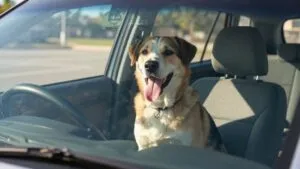
Because flat-faced breeds like bulldogs, pugs, and boxers can’t pant efficiently to cool themselves, they face a dramatically higher risk of heatstroke on road trips. You need to monitor your dog’s breathing, gum color, and energy level constantly, since early symptoms escalate fast in this population. Keep the cabin temperature below 75°F using dual-zone climate control or clip-on fans, and never leave your dog unattended in a parked vehicle, even briefly.
Pack cooling mats, a frozen water bottle, and a portable fan for crate ventilation. Watch for excessive drooling, bright red gums, or collapse, and treat these as emergencies requiring immediate veterinary attention. Choose routes with shaded parking, and avoid midday travel during summer heat.
Rest Stop Potty Routine
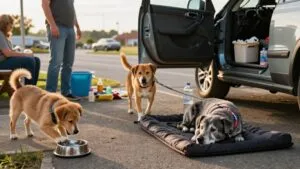
Heat management works best alongside a predictable rest-stop routine. Plan bathroom, water, and brief movement breaks every two to three hours, adjusting sooner for puppies, seniors, anxious dogs, or dogs taking medications. Choose a quiet, shaded area away from traffic, standing water, discarded food, and wildlife. Bring a leash, waste bags, portable water bowl, fresh water, and sanitizing wipes.
Offer small amounts of water, then allow time for urination and bowel movements. Don’t force exercise during hot conditions; use a short walk to relieve stiffness and assess alertness, breathing, gum color, and gait. Collect waste and inspect paws for heat, cuts, salt, or debris before returning to the vehicle. Record unusual vomiting, diarrhea, straining, or reduced urination, and contact a veterinarian if signs persist.
Preventing Door-Darting Escapes
Door-darting can occur at fuel stops, rest areas, hotels, and any time a car or room door opens, so establish a controlled exit routine before traveling. Keep your dog secured before you open any door, and don’t rely on verbal recall around traffic, strangers, or unfamiliar sounds. Pack and practice these safeguards:
- A fitted leash and secure harness, attached before opening doors.
- A portable crate or barrier for hotel-room entries and vehicle loading.
- High-value treats to reinforce “wait,” “stay,” and release cues.
Require your dog to sit behind the threshold, then open the door gradually. Scan the area, maintain leash control, and release only when conditions are safe. At hotels, block doorway during housekeeping or arrivals. Tell companions: restrain your dog before opening doors.
Pack Proof of Rabies Vaccination
Along with preventing escapes, keep proof of your dog’s current rabies vaccination in the vehicle. Hotels, boarding facilities, campgrounds, emergency clinics, and jurisdictions may require immediate documentation. Don’t rely on a photo alone: carry the original certificate or a legible paper copy, and save a backup offline on your phone. Confirm that the record lists your dog’s identity, vaccine product, administration date, expiration date, and veterinarian’s signature or clinic details.
- Keep one copy in a waterproof document sleeve.
- Store a digital scan in an offline folder.
- Check expiration dates before departure and schedule boosters promptly.
If your dog bites someone or requires urgent care, you’ll need verifiable records without delay. Keep your veterinarian’s phone number with the certificate and replace damaged or outdated copies.
Conclusion
Before you leave, secure your dog in a crash-tested harness or correctly sized carrier, pack the listed supplies, and verify hotel weight rules. Carry rabies documentation and a stocked first-aid kit with measured quantities. Protect brachycephalic dogs from heat, schedule frequent leash-controlled potty stops, and prevent door-darting at every exit. Keep water, cooling options, and emergency contacts accessible.
You’ll reduce predictable risks when you plan, monitor, and adjust promptly throughout the trip as conditions change.