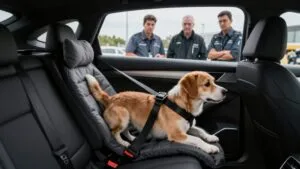
Inflatable vs Hard Back Seat Extender: Which Holds Up to a Big Dog?
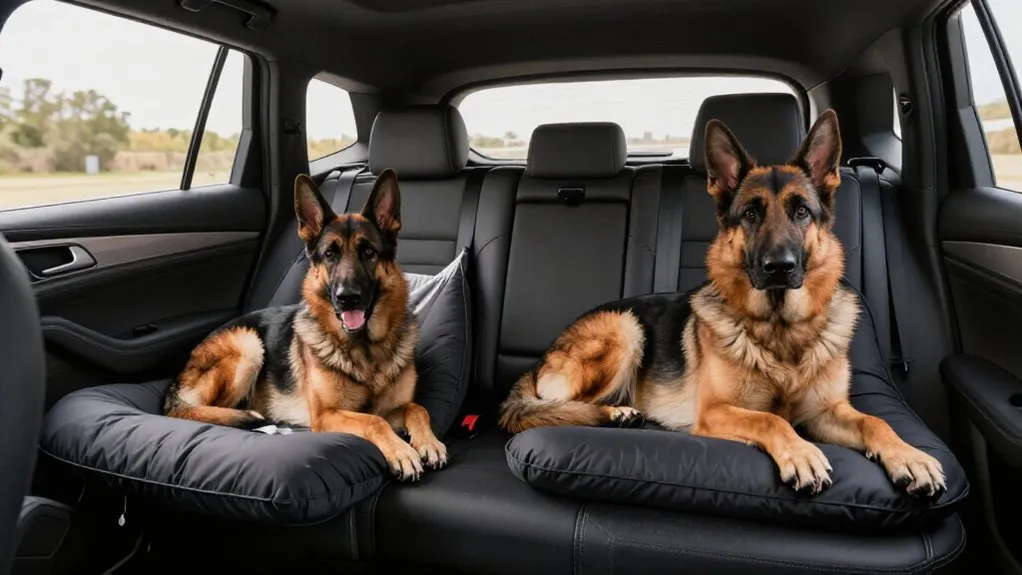
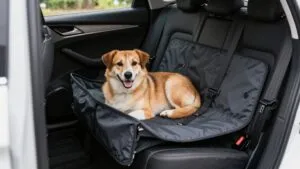
For a big dog, you’ll get safer support from a properly secured rigid back-seat extender. Rigid panels spread weight across the seat, resist compression and side-to-side movement, and are more likely to stay level when a 90-pound dog braces during braking.
Inflatable extenders can work for shallow footwells, but pressure loss, seams, and concentrated paw loads add risk. Check straps, headrest fit, buckles, and tether access.
The sections below help you match support to your vehicle.
Large-Dog Weight Limits
For large dogs, treat advertised weight limits as manufacturer claims rather than universal safety guarantees. Check your dog’s weight, the combined weight of any second dog, and the product’s vehicle-specific support before every trip. Basic inflatable extenders commonly claim 100 to 250 lb, while premium versions may list 300 to 400 lb; reviews often find dependable use nearer 90 to 120 lb dogs. Rigid extenders commonly claim 200 to 600+ lb, but their practical limit still depends on anchoring and fit.
| Extender | Reported claim |
|---|---|
| Basic inflatable | 100 to 250 lb |
| Premium inflatable | 300 to 400 lb |
| Rigid platform | 200 to 600+ lb |
Don’t rely on a 550-lb listing without test details. Inspect straps, mounting points, and seat contact; stop using it if it shifts, sags, leaks, or blocks belt buckles. Choose a conservative margin for repeated travel and braking.
Air Chambers vs Rigid Panels
Rigid panels generally provide the safer foundation for a big dog because they spread weight across the seat base, resist lateral deformation in turns, and preserve a level surface during braking. Unlike air-filled chambers, a rigid platform transfers concentrated paw and body loads through its panel and into the supported seat area. That structure limits local sag, so you’ll maintain more consistent contact between the extender and upholstery.
Inflatable designs depend on internal pressure, seam integrity, and complete inflation; claws, sharp debris, valve leaks, or temperature-related pressure changes can reduce firmness. Don’t choose a rigid model without a stated load rating, reinforced attachment points, and a non-slip underside. Check that its dimensions fully bridge your vehicle’s rear footwell without leaving unsupported edges or gaps.
Braking Stability With 90-Pound Dogs
When you brake hard with a 90-pound dog in the back seat, a rigid seat extender is more likely to retain a level, gap-free surface than an inflatable one. Under sudden deceleration, your dog’s momentum loads the platform forward and downward. A hard base spreads force across the seat cushion and supported edges, limiting compression and forward slide.
It preserves predictable footing, reducing the chance that paws reach the footwell gap. An inflatable chamber can compress unevenly as pressure shifts beneath concentrated paws or shoulders. A leak, seam weakness, or pressure loss further reduces support. Neither extender provides crash protection: secure your dog with a properly fitted, vehicle-rated harness used according to its instructions, and ensure seat-belt buckles and tether anchors remain clearly accessible.
Inflation Time vs Strap Setup
Inflatable seat extenders usually install faster: you inflate the chamber, position it across the rear footwell, and secure its straps, but you must confirm full, even pressure and unobstructed belt buckles or tether anchors. A pump speeds the task, but cold air, valve leaks, or underinflation can leave the surface soft. Hard extenders require panel alignment and strap tensioning, but need no pressure checks.
- Inflate until the chamber feels uniformly firm, not drum-tight.
- Press each corner to detect sag or shifting.
- Route straps flat, without twists or pinch points.
- Recheck buckles and tether access after loading your dog.
For a large dog, test the platform with hand pressure, then drive briefly and inspect tension. Stop if anchors are blocked, straps loosen, or firmness drops.
Headrest Fit by Vehicle
Across vehicle types, headrest geometry determines whether a seat extender’s upper straps can hold a stable, level platform. In SUVs, trucks, and sedans with tall, fixed headrests, you can route straps low around the posts or headrest body, reducing upward slip. Check that straps lie flat and don’t cross release buttons or sharp trim.
In vehicles with integrated, nonremovable, narrow, or forward-tilted headrests, measure clearance before buying. A rigid extender may sit unevenly if its strap angle pulls the platform upward; an inflatable may conform better but still needs secure anchor points. Avoid attaching to active headrest guides or relying on unsupported seatback edges. After installation, press downward and side-to-side; if the platform shifts, retension straps or choose a vehicle-specific design before carrying dog.
Warranty Length and Patch Kits
Warranty terms and included repair supplies matter most for inflatable seat extenders, because punctures, valve leaks, and seam failures can reduce support without obvious warning. Before you carry a large dog, compare coverage, exclusions, and claims process. A patch kit helps only if it matches chamber material and adhesive cure requirements; it won’t correct a failed valve or separated load-bearing seam.
- Confirm warranty duration and air-loss coverage.
- Check for a TPU/PVC-compatible patch, adhesive, and instructions.
- Inflate, load-test, and recheck pressure before each trip.
- Replace the extender after leaks or seam separation.
Hard platforms rarely include patch kits; instead, prioritize coverage for structural breakage, strap hardware, and detached seams. Keep receipts and photographs, since manufacturers may require proof of purchase and defect documentation.
Claw Punctures and Chew Damage
Claws and chewing create a primary damage risk for inflatable seat extenders: a puncture, weakened seam, or damaged valve can cause pressure loss and reduce support beneath a large dog. PVC or TPU chambers can resist ordinary contact, but a nail snag or persistent chewing can breach the coating and create a slow leak.
Before each trip, inspect seams, valves, and fabric-covered edges for cuts, bubbling, abrasion, or soft spots. Keep nails trimmed, use a fitted protective cover, and don’t leave a chew-prone dog unattended with the extender. Test inflation after loading; sagging or shifting means it isn’t providing reliable gap coverage. Patch only damage within the manufacturer’s stated limits; replace the unit if a seam, valve, or structural chamber fails or leaks during use.
Cleaning Muddy Paw Prints
You can wipe muddy prints from inflatable surfaces with a damp cloth, but avoid abrasive cleaners that may weaken coated fabric or air seals. On rigid extender panels, use a mild cleaner and dry the surface fully to preserve traction. Check seams, valves, and non-slip layers after cleaning before you drive.
Wiping Down Inflatable Surfaces
For muddy paw prints on an inflatable seat extender, wipe the coated PVC or TPU surface promptly with a damp microfiber cloth and mild soap, then dry it fully before storage. Don’t soak seams, valves, or fabric overlays: standing moisture can encourage residue buildup and may compromise adhesive-sealed areas over time.
- Lift loose grit with cloth, keeping abrasive particles away from seam edges.
- Wipe from center outward, using minimal water around the inflation valve.
- Rinse the cloth frequently so mud doesn’t scratch the protective coating.
- Air-dry it open indoors, away from direct heat and sharp objects.
Before riding, inspect the chamber for trapped grit, tackiness, seam lifting, or slow air loss. If you find damage, deflate it and follow the manufacturer’s repair instructions immediately.
Cleaning Rigid Extender Panels
Because rigid extender panels provide a stable, wipe-clean base, remove muddy paw prints with a damp microfiber cloth and mild soap before grit dries and abrades the waterproof cover.
Support the panel from below, and avoid soaking seams, strap anchors, or exposed plywood edges. Use a soft brush only for dried soil, lightly so you don’t scuff 600D fabric or drive particles into stitching. Wipe again with clean water, then towel-dry the surface and leave doors open until dry.
Don’t use bleach, solvents, ammonia, or abrasive pads; they can weaken coatings, adhesives, and water resistance. Check for lifted seams, cracks, or frayed cover material after cleaning. Damage can create edges or reduce load support, so repair or replace the extender before carrying your dog.
Senior Dogs and Road Trips
For senior dogs, choose a rigid, level seat extender that supports their joints and limits sliding during turns or braking. Help your dog enter with a ramp or steps, and confirm the extender doesn’t block harness-anchor access. Plan regular rest breaks for gentle movement, comfort checks, and fresh water.
Joint Support And Stability
When a senior or large dog rides in the back seat, a rigid extender can protect joint comfort by creating a level, continuous surface that prevents paws and hips from dropping into the footwell gap. Its firm base distributes weight across the seat instead of concentrating force beneath one shoulder or hip.
On long trips, you should check four stability cues:
- A non-slip bottom limits platform drift during corners.
- A rigid core stays level when your dog shifts weight.
- Reinforced straps keep the surface aligned with the seat base.
- Accessible anchors preserve a direct harness-tether angle.
Inflatable chambers can cushion pressure, but they may compress under concentrated loads or lateral forces. Deformation alters tether geometry, leaving arthritic dogs bracing on unstable surfaces when braking.
Easier Vehicle Entry
A stable seat extender can also make vehicle entry and exit less demanding for senior dogs on road trips. It bridges the footwell, giving your dog a continuous landing area instead of a narrow seat edge or unsupported gap. For a senior large dog, this reduces twisting, overreaching, and balance recovery after climbing through the door.
A hard extender offers a more predictable step surface because its rigid base resists compression under concentrated paw loads. It must fit the seat width, sit level, and remain secured; check that it doesn’t obstruct buckles or alter harness-tether geometry. An inflatable model needs full inflation and correct sizing; air loss or lateral deformation can change footing. Use a ramp or steps when your dog can’t safely jump.
Breaks, Comfort, And Hydration
Plan regular stops so your senior dog can relieve itself, drink water, and reset stiff joints before discomfort affects balance or behavior. A firm, level hard extender usually supports a heavy dog’s hips more consistently than an inflatable surface, which can compress under concentrated weight. At each stop:
- Offer small amounts of fresh water; don’t encourage rapid gulping after heat exposure.
- Walk slowly on level ground, watching for limping, wobbling, or reluctance to turn.
- Check the platform for sagging, leaks, shifted straps, and blocked harness anchors.
- Let your dog lie on a dry, non-slip surface before you resume.
Use a crash-tested harness attached to the vehicle’s designated tether point, not the extender. In warm weather, ventilate the cabin and never leave your dog unattended.
Choose by Door-Sill Height
Measure the vertical drop from your rear seat’s top surface to the door sill before choosing an extender: a taller drop demands a rigid, properly sized hard platform that stays level under a big dog’s weight. If the sill sits far below the cushion, a soft air-filled extender can bow into the gap when your dog steps near the edge, raising instability and misstep risk. Choose a hard model whose supported span reaches the door-side edge without overhang. Confirm its dimensions match your seat width, and secure its straps to approved headrest points.
Keep seat-belt buckles and tether anchors unobstructed. For a shallow drop, an inflatable may work if it’s inflated, restrained, and checked for leaks each trip. Don’t use it if it sags.
Conclusion
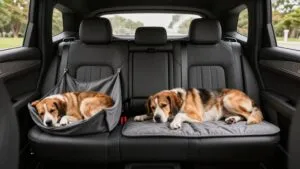
Choose a hard back seat extender if your big dog weighs about 90 pounds, brakes hard, or climbs aboard daily. Rigid panels spread load, resist claw damage, and stay stable when straps fit your headrests correctly. Use an inflatable model only when its rated capacity, chamber design, and anchor points match your dog and vehicle. Check door-sill height for senior dogs, inspect attachments before each trip, and secure your dog with a crash-tested restraint system.
Back Seat Platform Size Calculator for Dogs
Enter your back seat, footwell and dog measurements to see if your dog fits on the seat alone or needs the footwell gap bridged.