Dog Ramp vs Lift Harness for Senior Dogs: Which Helps More?
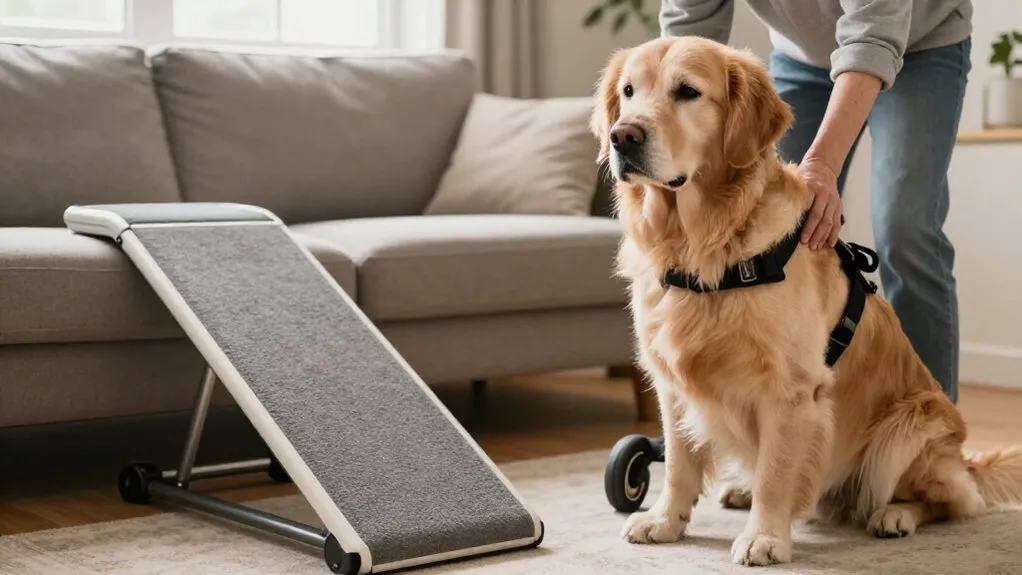
A ramp helps your senior dog when they can bear weight, balance, and walk steadily. Its continuous, non-slip incline replaces jumping and steep stairs, reducing abrupt joint loading.
Choose a lift harness when weakness, pain, wobbling, or difficulty rising makes transfers unsafe. Dogs with moderate arthritis may benefit from both: use the ramp for access and harness for support.
Seek veterinary advice for decline, knuckling, or bladder changes; the guidance ahead helps you choose safely.
Stairs Versus Car Entry
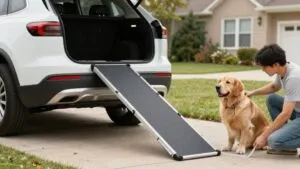
For bed, sofa, and car access, ramps usually suit senior dogs that can still walk but shouldn’t jump or repeatedly negotiate steps. Ramps remove stair-like changes in elevation, helping long-backed breeds, arthritic seniors, and dogs with back concerns (PawKit). For high vehicle boots, choose a long, stable model; short, steep ramps raise slip risk (PetPalHQ).
| Setting | Ramp choice | Practical check |
|---|---|---|
| Bed or sofa | Match height with gentle length | Keep floor space clear |
| Car | Fit trunk geometry and storage | Check grip, hinges, and load rating |
Your ramp fit the trunk and store, or you may stop using it. Train gradually beside furniture, rewarding approach rather than luring an anxious dog up the surface. Clean traction material, inspect hinges and feet, and replace a flexing or worn ramp.
Incline Walking Versus Supported Lifting
Once a senior dog reaches the ramp, the key question becomes whether it can walk the incline independently or needs you to share its weight.
A ramp suits a dog that can place weight reliably, maintain balance, and move with a steady gait. You provide supervision, traction, and a slope while your dog controls its own pace. This preserves movement and may build confidence.
Choose a lift harness when weakness, wobbling, pain-related hesitation, or poor balance makes unsupported walking unsafe. You can steady the rear end or support the body during transfers, reducing fall risk. Don’t use a harness to hoist a dog that can’t bear weight at all. Your veterinarian or canine rehabilitation therapist can assess function and neurologic signs to guide you.
Hip Extension and Joint Load
Ramps can reduce the abrupt hip extension and joint loading that occur when your senior dog jumps, climbs standard steps, or scrambles into a vehicle. By replacing a vertical push-off with a continuous incline, they generally lower peak forces through painful hips, knees, and compensating limbs. This can be particularly helpful with osteoarthritis or hip dysplasia, when stiffness and muscle loss make explosive movements difficult.
A lift harness changes the load differently: you support part of your dog’s body weight during a maneuver. It may limit painful weight-bearing when weakness, balance loss, or postoperative restrictions prevent safe independent climbing. However, it doesn’t eliminate joint demands if your dog still takes steps or twists while moving. Ask your veterinarian or rehabilitation professional to assess pain.
Ramp Setup vs Harness Fastening
Beyond joint loading, daily usability often determines whether a mobility aid actually helps your dog. A ramp takes planning: you must place it on a stable, non-slip surface, secure both ends, and allow enough room for a gradual incline. Once positioned, however, it can support predictable, repeated trips with minimal handling.
A harness is more portable, but you must fasten it correctly each time. Measure according to the manufacturer’s chart, adjust straps snugly without restricting breathing, and keep support panels aligned under the intended body area. Quick-fit designs can reduce delays, yet rushed fitting may concentrate pressure or permit slipping. Choose the option you can use calmly and consistently; monitor hesitation, skin irritation, and pain afterward. Ask your veterinarian or rehabilitation professional for guidance.
Body Size and Vehicle Height
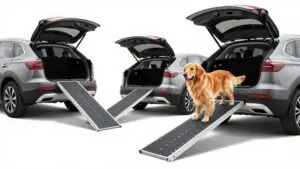
Vehicle height and your dog’s body size strongly affect which aid is practical and safe. A small dog may manage a properly sloped ramp well, but a tall SUV can require eight or more feet of ramp to keep the incline gentle.
For a large dog, that length may be difficult to carry and position; a fitted lift harness can provide controlled support during entry. Yet you shouldn’t manually hoist a heavy dog or one that’s non-weight-bearing, because this can strain your back and worsen pain. Choose a ramp rated above your dog’s weight when they can walk steadily; choose harness support when balance or hind-limb strength limits safe climbing. Measure tailgate height, assess gait, and ask your veterinarian or rehabilitation professional for guidance.
Ramp Tread Replacement Costs
After you’ve selected a ramp that fits your dog and vehicle, plan for periodic tread replacement to preserve traction and reduce fall risk. Budget for replacement material, adhesive, and, if needed, professional installation rather than assuming the original surface will last for the ramp’s lifetime. Cost varies with ramp width, tread type, and whether the manufacturer sells a fitted kit; proprietary parts may cost more than cut-to-size alternatives.
Inspect the surface monthly for flattening, peeling, loose edges, or visible wear. Replace it promptly if your dog hesitates, slips, or changes gait on the ramp. Maintaining a reliable tread protects a senior dog’s confidence and may prevent painful compensatory strain. Keep receipts and confirm replacement instructions, warranty terms, and compatible materials before you purchase supplies.
Wet Ramp Slip Hazards
Wet conditions can sharply reduce ramp traction, especially when rain, dew, mud, or snow coats worn or smooth tread. For a senior dog with arthritis, hip disease, weakness, or poor balance, one slip can trigger pain, panic, or a fall that worsens joint injury. Before each use, inspect the surface and remove moisture, grit, and ice.
Choose a ramp with intact, high-traction covering, firm footing, and minimal flex. Keep the incline shallow, leash your dog calmly, and supervise every crossing. Don’t rely on a wet ramp if your dog hesitates, skids, or cannot place paws securely. Use a harness for controlled support instead, and ask your veterinarian or rehabilitation professional to reassess mobility needs. Wait until the surface is dry before your dog climbs again.
Ramp Storage Footprint
A foldable ramp can reduce storage demands, but you’ll still need space for its folded length and safe access near where your dog uses it. A lift harness requires far less storage space and can usually hang on a hook, supporting frequent use. Choose the option you can store and retrieve easily, because inconvenient equipment is less likely to protect your senior dog’s mobility.
Foldable Ramp Storage
When storage space is limited, a foldable ramp can make daily mobility support more practical without sacrificing a safer, gradual incline. Choose a model that folds flat or telescopes and verify its locked dimensions before buying.
You need enough clearance to unfold it fully at the intended height, because a shortened ramp may become too steep for painful joints. Measure the storage area, doorway, vehicle, and deployment path; a ramp that’s easy to retrieve is more likely to be used consistently. Store it indoors, away from moisture and temperature extremes, to protect traction material and hinges.
Before each use, inspect latches, feet, surface grip, and frame rigidity. Even compact designs must meet your dog’s weight rating and provide a stable, non-slip walking surface throughout.
Harness Space Requirements
Unlike a ramp, a lift harness has a minimal storage footprint: most models can hang from a hook, fold into a drawer, or fit in a small travel bag. This matters if you live in an apartment, share a vehicle, or need support equipment available during travel. A rear-support sling typically occupies little more space than a leash, while full-body designs remain compact when folded.
You can keep one near the door for short toileting trips or in your car for appointments. However, storage convenience shouldn’t determine selection alone. Choose a harness that fits your dog’s chest, torso, and support needs; poorly fitted straps can concentrate pressure and cause discomfort. If your dog walks, a ramp may reduce joint demands but needs more space.
Rear-Leg Weakness Support
If your senior dog’s hind legs tremble, buckle, or struggle to bear weight, prompt veterinary assessment can identify pain, neurologic disease, or muscle loss. A properly fitted rear-support harness lets you steady gait and assist standing while your dog continues to use available strength. Ramps reduce joint strain for dogs that can walk independently, but they can’t provide the balance support needed when rear-leg weakness causes instability.
Recognizing Rear-Leg Weakness
Rear-leg weakness often appears as a subtle change in how your senior dog rises, walks, or manages everyday movements. You may notice hesitation after resting, difficulty climbing, reduced push-off, or a swaying hindquarters. Toenails may scuff, legs may cross, and your dog may sit abruptly or avoid slippery floors. Stiffness, pain, muscle loss, and altered gait can reflect osteoarthritis, hip disease, cruciate injury, spinal disease, or age-related muscle decline.
Watch for changes that worsen quickly, one-sided weakness, knuckling, loss of coordination, or new urinary or bowel changes. These signs warrant prompt veterinary assessment. Your veterinarian can evaluate pain, nerve function, joint stability, muscle mass, and walking pattern; imaging or mobility scoring may clarify the cause. Early evaluation helps you protect comfort and function safely.
Harness Support for Mobility
When hind-limb weakness makes standing, walking, or climbing unsteady, a properly fitted lift harness lets you support part of your dog’s weight while preserving safe, assisted movement. Choose a rear-support sling when your dog can still bear some weight but needs help rising, toileting, or negotiating brief changes in level. A full-body design may improve balance when weakness affects more than the hindquarters.
Fit matters: measure the chest and torso, adjust straps snugly without restricting breathing, and keep the handle positioned to lift evenly. Support only enough to steady each step; don’t hoist a non-weight-bearing dog. Watch for pain, skin rubbing, fatigue, or worsening gait. Your veterinarian or canine rehabilitation therapist can assess neurologic or orthopedic causes and tailor safe assistance as needs change.
Ramp Limits for Stability
Although a ramp can reduce joint strain, it can’t provide the hands-on stabilization that a dog with substantial rear-leg weakness may need. If your dog’s hind limbs buckle, cross, drag, or lose traction, they may fall even on a well-designed incline. Osteoarthritis, hip dysplasia, IVDD, cruciate injury, and muscle loss can reduce weight-bearing and balance, particularly during descent.
A non-slip, shallow ramp lowers flexion demands, but it doesn’t redistribute your dog’s weight or correct an unstable gait. Supervise every use, and don’t encourage independent ramp climbing when weakness is progressing. A rear-support or full-body harness can let you steady the pelvis, assist movements, and reduce fall risk while your dog still contributes weight-bearing. Ask your veterinarian or canine rehabilitation professional to assess pain, neurologic function, and appropriate support.
Arthritis Severity Guides Choice
Arthritis severity should guide whether you choose a ramp, a lift harness, or both, because each device addresses a different level of functional loss. If your dog has mild to moderate stiffness but can bear weight and walk steadily with confidence, a long, non-slip ramp reduces jumping and joint motion. Choose a shallow incline, ideally under 20 degrees when arthritis is pronounced.
If your dog hesitates, buckles, struggles to rise, or needs help on stairs, a fitted harness lets you offload their weight and prevent falls. Combining helps dogs with moderate disease: the ramp reduces joint strain, while the harness provides balance support. With severe pain, weakness, or declining mobility, don’t rely on equipment alone. Ask your veterinarian to assess pain, gait, and neurologic function.
Conclusion
Choose the aid that matches your dog’s mobility, body size, and daily setting. A non-slip ramp usually reduces lifting demands and supports gentler joint motion when your dog can walk safely on an incline. A lift harness offers better control when rear-leg weakness, pain, or severe arthritis limits stepping. You’ll need secure setup, dry traction, and proper fit. Ask your veterinarian or rehabilitation professional to assess comfort, safety, and changing needs, and update the plan.