Where Should a Dog Ride in an SUV? Safest Spots Ranked
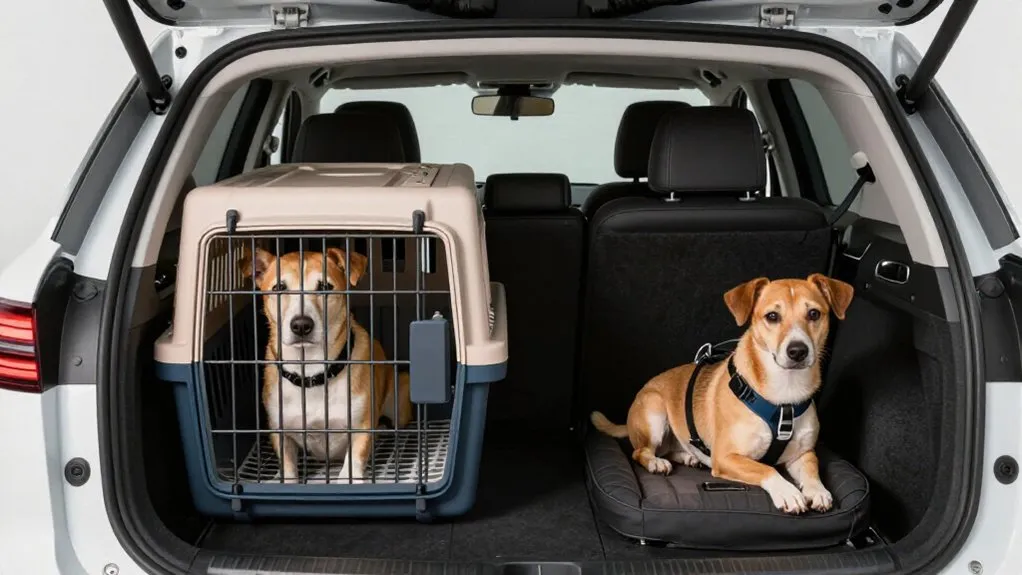
For most dogs, choose the second row with a properly fitted, crash-tested harness secured as directed; rear-center is often safest because it’s farther from doors and curtain-airbag paths.
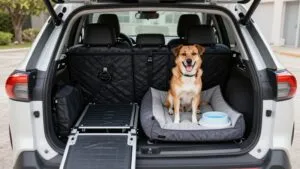
Use the cargo area only for a correctly sized, crash-tested crate secured to approved anchors, positioned forward of the hatch. Never use the front passenger seat, laps, or loose travel.
For motion sickness, prioritize a stable, low, secured crate or middle-row restraint. The details ahead clarify those choices.
Second-Row Seating Safety Verdict
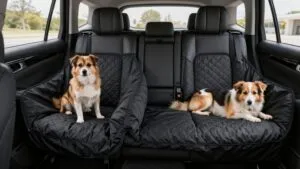
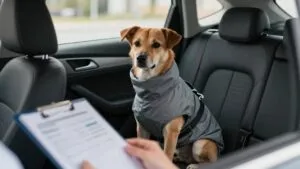
For most dogs, the second row is a strong SUV seating choice when you use a properly fitted, crash-tested restraint. Keep your dog off the front passenger seat, where airbags and abrupt braking can cause severe injuries. For a small dog, the rear-center position can limit exposure to side impacts, provided you can install an approved restraint correctly and your vehicle manual permits the attachment method.
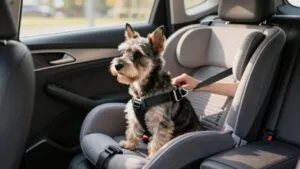
Use a Center for Pet Safety-certified harness secured to the seat belt or approved anchor point; don’t clip a tether to a collar. Check that the harness stays snug without restricting breathing or shoulder movement. Never let your dog ride loose, on a lap, or on the floor between captain’s chairs. Before each trip, inspect buckles, webbing, and anchors.
Account for Dog’s Crate Size
Crate size can determine whether the cargo area or a rear seat provides the safer ride for your dog. Choose a crash-tested crate that lets your dog stand, turn, and lie down naturally but doesn’t leave enough extra space for forceful sliding in a collision. Measure the crate and your SUV’s usable floor area before you buy.
A crate that sits flat, clears the liftgate, and can be secured according to its instructions is generally the better cargo choice. If it’s too tall, wide, or long to remain stable there, use a rear seat only when the manufacturer has crash-tested that installation. Never wedge an oversized crate between seats or let it block your view or escape routes. Check latches and anchors before each trip.
Side-Curtain Airbag Coverage
Side-curtain airbags can change the safest spot for your dog because they deploy rapidly from the roof rails along the side windows during a side impact or rollover. They inflate within milliseconds and can strike, shift, or entangle an unsecured dog, carrier, or roof-routed tether.
Check your owner’s manual: coverage can reach the third row, and it differs by SUV.
| Placement | Airbag concern |
|---|---|
| Center rear seat | Usually less direct window-curtain exposure |
| Outboard seat | Highest deployment-path exposure |
Secure a crash-tested harness through the seat belt, or use a carrier only as its manufacturer permits. Keep straps away from roof rails and windows.
Don’t place your dog on the floor between captain’s chairs; it may enter the deployment envelope. Verify coverage maps before choosing a position.
Rear Hatch Crumple-Zone Exposure
In a rear-end crash, the hatch-area crumple zone absorbs impact energy, but it can leave a dog in the cargo space closer to intrusion. Don’t assume the rear cargo area is safest without considering your SUV’s structure and a properly sized, crash-tested restraint. When possible, use a protected rear-seat position or a tested crate placement that keeps your dog farther from the hatch.
Rear Impact Risk
Rear-impact risk deserves special attention because a dog riding close to an SUV’s rear hatch has less space between its restraint and a potential impact zone. That limited buffer can expose your dog to greater injury risk in a rear-end collision, particularly if a crate, barrier, or tether shifts.
You can reduce avoidable risk by choosing a crash-tested, size-appropriate restraint and securing it exactly as its manufacturer directs. Check that crate latches, anchor straps, and cargo-floor attachment points are undamaged and tight before every trip. Don’t let your dog ride loose in the cargo area; sudden impact can turn the dog and unsecured gear into hazards. In three-row SUVs, restrain your dog behind captain’s chairs rather than immediately beside the hatch when space permits.
Crumple Zone Function
An SUV’s rear crumple zone is designed to absorb crash energy, but a dog riding directly against the hatch may still sit close to the area most affected in a rear-end collision. These engineered sections deform to lengthen deceleration and manage forces before they reach the passenger cabin.
That protection helps, yet it doesn’t make hatch-adjacent placement equally protective in every SUV or crash severity. You can increase your dog’s safety margin by positioning its restraint forward of the hatch when your vehicle’s layout allows. Follow the manufacturer’s tested installation instructions, use designated anchors, and match the restraint to your dog’s size and weight. A proper fit limits motion during rapid deceleration. Check attachments each trip; damage or slack can weaken restraint control substantially.
Cargo Area Vulnerability
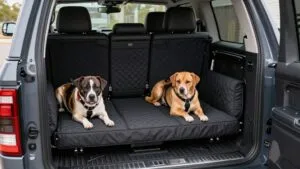
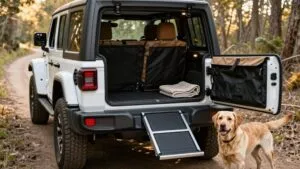
Although a cargo area can safely carry a dog when you use an appropriate, secured restraint, it places the dog nearest the rear hatch and the vehicle’s rear crash structure. In a rear-end collision, that proximity can expose your dog to intrusion as the hatch, bumper, and cargo-floor components absorb crash energy. Protection varies substantially by SUV design, impact speed, striking vehicle, and the depth of space behind the restraint.
A loose dog faces especially high risk: it can slam into the hatch, cargo barrier, or hard interior surfaces. You should never assume a cargo divider alone provides crash protection. Choose only a size-appropriate crate or harness with credible crash-test evidence, secure it exactly as directed, and inspect anchors, latches, and restraint straps before every trip.
Safer Seating Alternatives
For many dogs, moving from the cargo area to a protected rear-seat position can reduce direct exposure to the rear hatch’s crumple zone. In a three-row SUV, place a larger dog on the third-row bench directly behind captain’s chairs when your vehicle’s layout and restraint system allow it. Subaru and Center for Pet Safety testing identified this pocket as a protective option for dogs over 20 pounds. For a small dog, a crash-tested carrier in the rear-seat center can limit side-impact exposure.
Secure every harness to the seatbelt or approved anchor, and follow its instructions. Don’t put crates on seats unless their manufacturer has crash-tested that installation. Match the restraint to your dog’s size, check latches before departure, and maintain cool airflow during travel.
Motion-Sick Dog Seating
If your dog gets motion sick, don’t place them in the front seat, where airbags and driver distraction add serious risk. Use a properly secured crate or crash-tested restraint in the middle row when possible, as its more stable position may limit sway. Consider the rear cargo area only when you can secure a correctly sized crate, maintain airflow, and monitor your dog’s comfort with breaks and veterinary guidance.
Front Seat Motion Risks
Motion sickness doesn’t make the front passenger seat a safer choice for your dog. The front airbag can deploy with tremendous force during a crash, seriously injuring or killing an animal, especially one positioned close to the dashboard. Sudden braking also throws a dog forward, and a loose pet can interfere with pedals or distract you.
Don’t let a nauseated dog ride unrestrained beside you. Instead, address nausea with your veterinarian before travel; they can evaluate causes and recommend appropriate medication. Keep trips calm, cool, and brief while you assess what helps. Never rely on a window view, your hand, or a lap ride as restraint. Choose a size-appropriate, crash-tested restraint installed as directed. Stop safely if vomiting, drooling, repeated swallowing, or distress develops.
Middle Row Stability
Although the middle row may feel steadier than the front, it’s safe for a motion-sick dog only when you use a properly fitted restraint. Secure a dog in the center rear seating position with a crash-tested pet seat or carrier approved for seat installation. This location can limit side-to-side sway and places your dog farther from door impacts than an outboard seat.
For a larger dog, attach a Center for Pet Safety-certified harness to the vehicle’s seatbelt system exactly as its instructions require. Keep the tether short enough to control movement without forcing an awkward posture. Don’t let your dog ride loose or lie on the floor between captain’s chairs; sudden braking can turn it into a projectile. Check fit and anchors before leaving.
Rear Cargo Considerations
Rear cargo can work well for a motion-sick dog when you use a correctly sized, crash-tested crate secured on the flat cargo floor. A low, level placement may limit the swaying and visual motion that can make some dogs uncomfortable, while keeping them away from the driver. Choose a crate that lets your dog stand, turn, and lie down without excess space; too much room increases impact movement. Follow crate maker’s anchoring instructions and use designated cargo tie-downs only when approved.
Add a nonslip mat beneath the crate if it doesn’t interfere with restraint system. Check rear ventilation and temperature at your dog’s level, and never leave them loose behind a barrier. Before departure, inspect latches, straps, and anchors for damage or slack carefully.
Travel Sickness Prevention
For a dog prone to travel sickness, place a properly restrained crate or carrier low on a flat floor surface, typically the SUV’s cargo floor, rather than on an elevated seat, unless the manufacturer has crash-tested it for seat mounting. Floor placement limits swaying and visual motion, which can ease nausea while preserving crash protection. Size the enclosure so your dog can stand, turn, and lie down but can’t slide or be thrown inside.
Secure it to approved cargo anchors exactly as its instructions require, and use an anti-slip mat only if the maker allows it. Keep the cabin cool, ventilated, and quiet; offer breaks and water on longer drives. Avoid a large meal before departure. If vomiting persists, ask your veterinarian about motion-sickness treatment options.
Verify Cargo Tie-Down Ratings
Before you secure a crate or tether in an SUV’s cargo area, verify that each tie-down point is rated and approved by the vehicle manufacturer for the load and restraint system you plan to use. Check your owner’s manual and the restraint maker’s instructions; cargo loops may be intended only for light luggage, not crash forces. Don’t assume LATCH anchors, seatback latches, or trim-mounted hooks can restrain your dog’s crate unless both manufacturers explicitly allow it.
Match the anchor’s stated capacity to the loaded crate and your dog, plus the restraint’s required configuration. Inspect loops, bolts, straps, and attachment hardware before every trip; don’t use damaged components. Secure the crate in the tested orientation and tighten straps as directed. Properly rated anchors help prevent
Budget for Crate Replacement
Set aside funds to replace a travel crate after any crash, major impact, or visible damage, even if it still appears usable. Crash forces can stress plastic, deform doors, weaken fasteners, or compromise attachment points in ways you can’t reliably inspect. A crate that survived one event may not manage the next one as designed.
Include replacement costs in your pet-travel budget, along with a compatible anti-slip mat and manufacturer-approved tie-down hardware. Keep the receipt, model details, and crash-test documentation so you can match the size and installation method that protected your dog. After an incident, inspect your dog and ask a veterinarian to assess pain, shock, or injuries. Don’t reuse a damaged crate simply to save money; your dog’s safety comes first.
Avoid Front-Seat Airbag Risks
Even the best crate or harness can’t offset the danger of placing a dog in the front passenger seat. A frontal collision can trigger an airbag with tremendous speed, striking your dog’s head, neck, or chest at close range.
Airbags protect properly positioned adult people; they aren’t designed for canine bodies. Move your dog to a rear seating area or appropriately prepared cargo space instead.
- Keep the front cabin clear of pets.
- Prevent a startled dog from reaching pedals or controls.
- Reduce distraction when traffic demands your full attention.
- Choose rear locations with stable protection from cabin intrusion.
- Check your owner’s manual for airbag warnings and pet guidance.
In a crash, distance from the dashboard matters. Your dog deserves a space built for survival.
Confirm Seatbelt Harness Fit
A seatbelt harness protects your dog only when it fits closely and connects to the vehicle exactly as its crash-test instructions require. Measure your dog before every purchase, then follow the harness maker’s vehicle-routing diagram rather than improvising with a leash or cargo tie-down.
- Adjust straps so you can slide two fingers beneath them, without slack.
- Center the chest plate over the breastbone, clear of the throat.
- Confirm buckles lie flat and webbing isn’t twisted or frayed.
- Thread the SUV belt through the labeled path and lock it as directed.
- Test the connection: your dog can sit and lie down, but can’t reach the seat edge.
Recheck fit after weight changes, thick coats, or growth; a loose harness magnifies crash forces and risks injury.
Conclusion
For most dogs, you’ll provide the safest ride in a secured crate or crash-tested harness on the second-row seat. This position usually offers better protection from rear-impact crush zones and avoids front-seat airbag hazards. Check that your crate fits securely, use rated cargo or seat anchors as directed, and confirm your dog’s harness fits properly.
Consider motion sickness and side-curtain airbag coverage before choosing a spot. Never let your dog ride loose, regardless of trip length.